


- Home
- About Us
About Us
- Product
Product
- Cases
Cases
- R&D Technology
- News
News
- Contact Us


- Default Language
 EN
EN RU
RU ES
ES DE
DE EL
EL IT
IT JA
JA KO
KO PT
PT ID
ID SR
SR UK
UK VI
VI TH
TH TR
TR MS
MS BE
BE AR
AR
呼和浩特市2025 Latest Price Trend, Influencing Factors and Purchase Guide for Sewage Treatment Systems
Date:July 13, 2025ID: 2186Views: 1484
Haipuou Environmental Protection Group Co., Ltd. is engaged in the construction of sewage treatment projects and the production and sales of water treatment equipment. Our main products include integrated sewage treatment equipment, high-efficiency cyclone purifiers, magnetic separation sewage treatment equipment, prefabricated sewage treatment plants, smart water management platforms, sludge thickening equipment and air flotation machines.
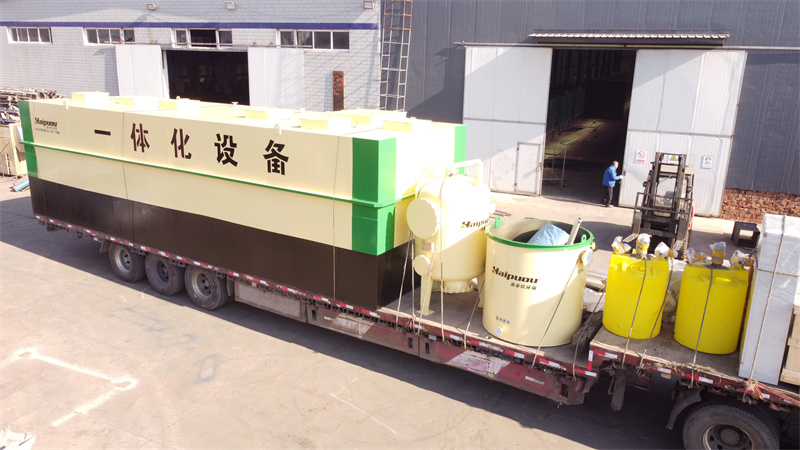
Against the backdrop of stricter environmental regulations and growing demand for water resource recycling, an increasing number of enterprises, communities and rural areas have started building sewage treatment systems. Nevertheless, the price of sewage treatment systems remains a top concern for buyers. System costs vary drastically across different application scenarios and discharge standards, ranging from tens of thousands to millions of RMB. Combined with the latest market quotations of 2025, this article analyzes key price-influencing factors and offers scientific purchasing advice to help buyers control budgets effectively and cut unnecessary expenses.
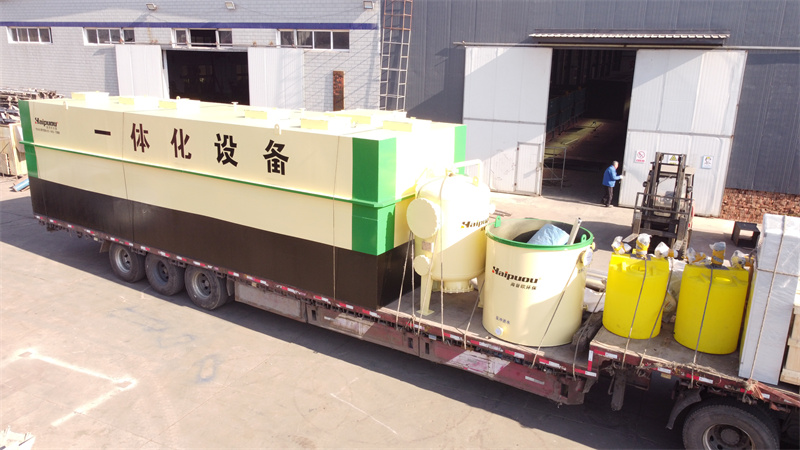
I. Price Ranges for Different Sewage Treatment Systems (Latest Data in 2025)
The price of a sewage treatment system is closely tied to its application scenario. Differences in treatment capacity and water quality requirements lead to varied equipment configurations and technical processes, forming wide price gaps. The following price references are summarized from manufacturer quotations and actual engineering cases. Exact costs should be calculated according to project conditions.
1. Domestic Sewage Treatment Systems (For Residential Communities, Hotels and Office Buildings)
Small-scale systems (Capacity: 5-50 tons/day): 30,000 - 150,000 RMB per set
Core configuration: Bar screen + regulating tank + biological contact oxidation process + sedimentation tank + disinfection equipment. Widely used in small communities and single buildings with small land occupation and medium automation.
Medium-scale systems (Capacity: 50-500 tons/day): 180,000 - 800,000 RMB per set
Core configuration: Upgraded to A/O (Anoxic-Oxic) or MBR (Membrane Bioreactor) process. Suitable for large communities and hotels. The effluent can meet Grade A Level 1 standard specified in Discharge Standard of Pollutants for Municipal Wastewater Treatment Plants (GB18918-2002).
2. Industrial Wastewater Treatment Systems (For Factories and Industrial Parks)
Conventional industrial wastewater (Food processing, textile wastewater): 12,000 - 30,000 RMB per ton per day
Example: A 100-ton/day food wastewater system costs about 150,000 - 300,000 RMB. It is equipped with oil separation tanks and air flotation devices, mainly adopting A/O or SBR processes.
Highly refractory industrial wastewater (Chemical industry, electroplating wastewater): 30,000 - 80,000 RMB per ton per day
Example: A 50-ton/day electroplating wastewater system needs chelating precipitation and advanced oxidation to remove heavy metals and high-concentration COD. The total cost ranges from 1.5 million to 4 million RMB, with extra modules for sludge dewatering and hazardous waste disposal.
3. Decentralized Rural Sewage Treatment Systems (For Villages and Rural Settlements)
Individual household & combined household units (Capacity: 0.5-5 tons/day): 8,000 - 30,000 RMB per set
Mostly integrated buried AO equipment with easy installation and unattended operation, ideal for scattered rural households.
Village centralized systems (Capacity: 50-200 tons/day): 120,000 - 500,000 RMB per set
Pipeline laying accounts for 30%-40% of the total investment. The process combines ecological treatment such as constructed wetlands with biological treatment to balance environmental performance and low operating costs.
II. Five Core Factors That Determine the Price of Sewage Treatment Systems
After reviewing price ranges, it is necessary to figure out the reasons for huge price gaps. The following five factors directly affect the final quotation and serve as key negotiation points with manufacturers.
1. Treatment Capacity: The Basis for System Scale
Treatment capacity is the primary pricing factor. Generally speaking, the larger the scale, the lower the unit cost. For instance:
A 10-ton/day system costs roughly 15,000 - 20,000 RMB per ton;
A 100-ton/day system can cut the unit cost to 8,000 - 12,000 RMB per ton.
Buyers should define the capacity based on average daily discharge and peak flow. Over-sizing will lead to unnecessary costs, while insufficient capacity will fail to meet environmental standards.
2. Water Quality Indicators: Key to Process Complexity
Pollutant composition and concentration determine the technical process and overall cost. Key indicators include:
COD: Domestic sewage has COD of 300-500mg/L, while industrial wastewater may reach several thousand mg/L. High COD requires advanced oxidation and anaerobic digestion;
Ammonia nitrogen and total phosphorus: Municipal sewage needs nitrogen and phosphorus removal. Breeding wastewater with high ammonia nitrogen requires enhanced biological denitrification;
Heavy metals such as chromium and nickel: Electroplating and chemical wastewater contain heavy metals, which need special processes like chelating precipitation and ion exchange. The equipment cost is more than 50% higher than conventional systems.
3. Process Selection: Technical Route Decides Cost Grade
Different processes vary greatly in equipment investment and operating expenses. Cost comparison of mainstream processes for ordinary domestic sewage is shown below:
Process Type | Core Advantages | Application Scenarios | Relative Cost
Biological Contact Oxidation | Simple O&M, Small Footprint | Small Domestic Sewage | 1.0 (Baseline)
A/O Process | Excellent Nitrogen & Phosphorus Removal | Municipal & Community Sewage | 1.2-1.5
MBR Process | Premium Reusable Effluent | High-end Communities & Industrial Reuse | 2.0-2.5
Constructed Wetland | Low Cost, Eco-friendly | Rural Low-concentration Sewage | 0.6-0.8
4. Equipment Configuration: Core Components Affect Price and Service Life
Brand, material and automation level directly affect pricing:
Material: Carbon steel equipment is cheaper (3,000-5,000 RMB per ton/day). Corrosion-resistant 304/316L stainless steel costs 8,000-12,000 RMB per ton/day, suitable for industrial wastewater;
Automation: Manual control lowers costs but requires on-site staff. A fully automatic PLC system with online monitoring instruments raises total cost by 10%-20% yet cuts labor expenses;
Brand: Domestic pumps and blowers offer high cost performance. Imported brands such as Grundfos and Ebara cost 30%-50% more with better stability.
5. Installation and Operation: Non-negligible Hidden Costs
Most buyers only focus on equipment price while ignoring long-term installation and maintenance costs:
Installation cost: Civil construction, pipeline laying and hoisting account for 20%-30% of total investment. Transportation and construction difficulties in remote rural areas may push costs up by 15%;
O&M cost: Including electricity for blowers and pumps, chemical agents and sludge disposal. Domestic sewage costs 0.5-1 RMB per ton for operation, while industrial wastewater costs 2-5 RMB per ton due to high chemical dosage.
III. Three Practical Tips to Improve Cost Performance
With a clear understanding of pricing factors, you can select cost-effective systems within budget. The following methods will help you avoid common pitfalls.
1. Clarify Actual Demands and Reject Over-engineering
First confirm effluent standards: Conventional A/O process is sufficient to meet Grade B Level 1 discharge requirements. Only adopt MBR for reclaimed water reuse such as irrigation and toilet flushing to avoid extra expenditure for ultra-high standards;
Calculate actual water discharge: Set capacity based on the average volume of the latest 3 months with a 10%-20% margin, instead of fully matching peak flow.
2. Compare Full Life-cycle Cost Instead of One-off Quotation
Some manufacturers attract clients with low upfront prices yet supply poor-quality equipment with high long-term maintenance costs. Require suppliers to provide a full life-cycle cost report including:
Initial investment (Equipment + Installation);
5-year operation cost (Electricity + Chemicals + Repairs);
Equipment depreciation (Conventional sewage equipment has a service life of 8-15 years).
Example: A carbon steel unit with a 50,000 RMB lower initial price may incur 80,000 RMB more in repair fees within 5 years due to poor corrosion resistance, making it less economical.
3. Select Qualified Manufacturers with Comprehensive After-sales Service
Prioritize qualification: Choose contractors with professional environmental engineering contracting qualifications and ISO9001 certification. Unqualified products may fail environmental acceptance and lead to costly rework;
Guaranteed service: Require free commissioning, 1-2 years of warranty and regular technical guidance. Many suppliers offer entrusted operation service to prevent equipment breakdown caused by improper operation.
IV. Answers to Common Price Misconceptions
Misconception 1: Imported equipment is always better and more expensive. Domestic leading manufacturers such as OriginWater and Beijing Enterprises Water Group have achieved equivalent core technologies. The localization rate of MBR membranes and blowers exceeds 90%. Domestic equipment costs 30%-40% less with 24-hour on-site after-sales service, which fits most domestic projects.
Misconception 2: Integrated equipment is always cheaper than customized systems. Integrated units are only suitable for small flow and simple water quality such as single-household rural sewage. For projects over 50 tons/day or complex industrial wastewater, customized processes deliver lower unit cost and more stable treatment performance.
Misconception 3: Only calculate equipment cost and ignore pipeline expenses. In decentralized rural projects, pipeline laying including trenching and backfilling may account for over 40% of total investment. Ask suppliers to offer a total quotation covering equipment, pipelines and installation to avoid budget overruns.
Conclusion
Sewage treatment system pricing is flexible, determined jointly by treatment capacity, water quality, technical processes and equipment configurations. When purchasing in 2025, define your effluent standards and capacity first, then evaluate overall cost performance based on initial investment plus long-term operation expenditure instead of merely chasing the lowest price. Scientific equipment selection and reliable manufacturers can satisfy environmental requirements while optimizing long-term expenses.
If you need detailed cost analysis for food factories, residential districts and other scenarios, submit your project parameters for customized quotation evaluation.
Related Products
Related News
- 呼和浩特市New Trends in the Development of the MBR Membrane Wastewater Treatment Industry: A Professional Guide to Selecting Source Manufacturers
- 呼和浩特市How to Select Wastewater Treatment Equipment for Pig Farms? In-depth Review of Trusted Industry Service Providers
- 呼和浩特市Hard-to-Treat Slaughterhouse Wastewater? Tested & Recommended High-Adaptability Wastewater Treatment Solutions for 2026
- 呼和浩特市How to Select Integrated Wastewater Treatment Equipment? In-depth Review of Trustworthy Source Manufacturers Recognized by Industry Insiders
- 呼和浩特市How to Select Buried Integrated Wastewater Treatment Equipment? Strength Evaluation of Reliable Brands in 2026
- 呼和浩特市Inventory of New Coal Mine Water Treatment Technologies! How to Select Cost-Effective Manufacturers & Avoid Common Pitfalls
- 呼和浩特市Textile Printing & Dyeing Wastewater Treatment Is Tough? These Four Powerful Enterprises Easily Solve Core Industry Pain Points
- 呼和浩特市Authoritative Evaluation of High-Salinity Wastewater Treatment Equipment | Top Recommended Brands of 2026
- 呼和浩特市Which Supplier Offers Reliable Integrated Sewage Treatment Equipment? Multi-dimensional Actual Test Comparison & Top Recommended Brands Released
- 呼和浩特市Electroplating Factory Wastewater Treatment Engineering Cases
About Us
products
Business
News
Contact Us
Service Hotline:+86-15253659088WhatsApp: +86 18706508001
Email: jly@haipuou.group
Address: No.56, Donghuan Road, Zhucheng City, Weifang City, Shandong Province, China