


- Home
- About Us
About Us
- Product
Product
- Cases
Cases
- R&D Technology
- News
News
- Contact Us


- Default Language
 EN
EN RU
RU ES
ES DE
DE EL
EL IT
IT JA
JA KO
KO PT
PT ID
ID SR
SR UK
UK VI
VI TH
TH TR
TR MS
MS BE
BE AR
AR
吉安市A Complete Guide for Small Sewage Treatment Stations: Technical Selection, Operation & Maintenance Optimization and Effluent Compliance
Date:July 13, 2025ID: 2262Views: 1163
Haipuou Environmental Protection Group Co., Ltd. is engaged in the construction of sewage treatment projects and the manufacture and sales of water treatment equipment.Main products: integrated sewage treatment equipment, high-efficiency cyclone purifiers, magnetic separation sewage treatment equipment, prefabricated sewage treatment plants, intelligent water service platforms, sludge thickening equipment, air flotation machines, etc.
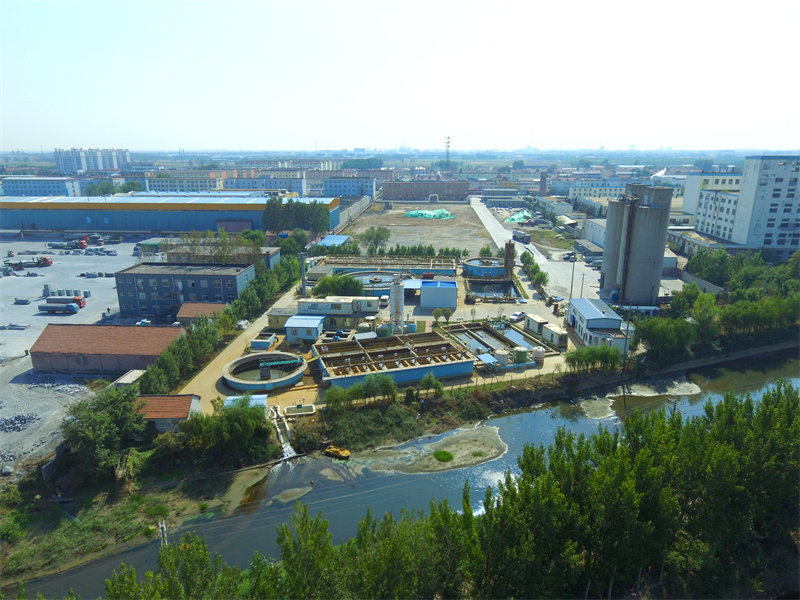
I. Core Value and Technical Selection Principles for Small Sewage Treatment Stations
As the "capillaries" of water environment treatment in towns and villages, small sewage treatment stations generally have a treatment capacity ranging from 50 to 5000 cubic meters per day. They are widely applied in township residential areas, industrial parks and rural communities. Their core value lies not only in ensuring that sewage is treated locally up to discharge standards, but also in building a recycling ecological system through resource reuse such as reclaimed water irrigation and landscape water replenishment.
Comparison of Mainstream Technical Routes and Applicable Scenarios

Key selection principles: Processes equipped with heating systems (e.g. heating devices for biochemical tanks) are preferred for cold northern regions. The constructed wetland plus pond renovation model is recommended for rural areas, which can cut construction costs by 30%. Pre-treatment sections such as bar screens and regulating tanks must be enhanced for industrial wastewater.
II. Key Operational Pain Points and Systematic Solutions
1. Low Temperature and Low Load Difficulty: Technical Breakthroughs for Northern Areas
Newly built small stations in northern China often suffer from influent load below 10% of the designed value and water temperature as low as 2℃, which sharply reduces microbial activity and lowers nitrogen and phosphorus removal efficiency by more than 60%. A township sewage station in northern China achieved great improvements via three renovations:
•Reduce the effective tank volume to 40% of the original size and raise the sludge load to 0.3kgBOD5/(kgMLSS·d)
•Install a solar-assisted heating system to stabilize the water temperature in biochemical tanks at 15℃±1.3℃
•Switch to intermittent aeration mode, saving 455,000 kW·h of electricity annually
After reconstruction, the effluent COD was reduced to 32mg/L and ammonia nitrogen to 1.2mg/L, fully meeting Grade A requirements of DB11/307—2013.
2. Renovation of Buried Sewage Stations: Solve Aging and Low-efficiency Problems
According to the 2025 industry survey, 65% of buried stations that have been running for more than 5 years have hydraulic defects and insufficient biochemical efficiency. Core renovation technologies include:
•Hydraulic system reconstruction: Lower the elevation of the intercepting well to -4.2m and extend the HRT of the regulating tank from 3.6h to 12h to resolve overflow and water fluctuation issues
•Biochemical system upgrade: Adopt multi-surface hollow ball packing with 95% porosity and jet aerators to improve oxygen transfer efficiency by 30%
•Integrated intelligent control: Real-time regulation of DO and ORP through PLC + IoT system, cutting daily blower operation time to 8 hours
A renovation project in Jiangsu Province showed that the COD removal rate rose from 75% to 90%, operating costs dropped by 42%, and the payback period was only 2.5 years.
3. Operation and Maintenance of Rural Stations: Low-cost Compliance Routes
Longtou Village in Jinzhou City adopted the "abandoned pond + wetland system" and set a model for low-cost operation:
•Infrastructure construction: Make full use of existing ponds to save land acquisition costs; villagers participated in construction to cut labor costs by 30%
•Daily operation: Adopt the mode of village collective inspection plus professional company maintenance, with water treatment energy cost as low as 0.08 RMB per ton
•Function expansion: Treated sewage is reused for farmland irrigation and landscape replenishment, saving 18,000 tons of water every year
This model has passed two winters of field tests. The system can run stably even at -10℃, with effluent reaching Class III surface water standard.
III. Standardized Operation Management: Upgrade From Compliance to High Efficiency
1. Precise Regulation of Process Parameters

2. Full Lifecycle Equipment Management System
•Three-level inspection system: Operators conduct basic inspections twice per shift; engineers carry out professional checks once a week; third-party organizations perform precision testing every quarter
•Digital ledgers: Establish electronic archives for blowers, water pumps and other key equipment; maintenance records and fault history can be checked via QR code
•Preventive maintenance: Set an alarm threshold of 75℃ for bearing temperature to avoid equipment burnout, reducing the downtime rate from 15% to 5%
3. Key Points for Compliance Management
•Follow the discharge standard DB37 4809—2025: The ammonia nitrogen limit is relaxed to 3mg/L in winter (November to March), while total phosphorus is strictly controlled below 0.3mg/L
•Install online COD and ammonia nitrogen monitors; data is uploaded to the environmental supervision platform every two hours
•Maintain electronic ledgers and preserve operation records and monitoring reports for at least 3 years
IV. Future Development Trend: Intelligent and Low-carbon Transformation
1. Modular prefabrication: FRP precast units cut on-site assembly time by 70%, ideal for rapid emergency projects
2. Photovoltaic powered process: A 5-10kW photovoltaic system combined with micro-aeration reduces carbon emissions by 40%
3. Digital twin operation: Process simulation enables minute-level parameter adjustment, raising the accuracy of fault early warning to 92%
4. Market expansion: The market scale for small sewage treatment station renovation is expected to exceed 12 billion RMB by 2028
Conclusion
Efficient operation of small sewage treatment stations requires balanced technical adaptation, refined operation and controllable costs. Northern projects focus on temperature rise and load adjustment; rural areas adopt eco-friendly low-cost modes; township stations prioritize intelligent upgrading and stable compliance. As environmental standards become stricter and technologies advance, small sewage stations are transforming from end-of-pipe treatment to water recycling, becoming a core pillar in water pollution prevention and control.
Prev: Must-read for Small and Medium-sized Enterprises: How to Select Manufacturers of Small Sewage Treatment Equipment? 3 Cost Control Methods + 5 Strength Verification StandardsNext: Full Analysis of Quotations for Metallurgical Wastewater Treatment Equipment in 2026: Influencing Factors, Application Cases and Model Selection Guide
Related Products
Related News
- 吉安市New Trends in the Development of the MBR Membrane Wastewater Treatment Industry: A Professional Guide to Selecting Source Manufacturers
- 吉安市How to Select Wastewater Treatment Equipment for Pig Farms? In-depth Review of Trusted Industry Service Providers
- 吉安市Hard-to-Treat Slaughterhouse Wastewater? Tested & Recommended High-Adaptability Wastewater Treatment Solutions for 2026
- 吉安市How to Select Integrated Wastewater Treatment Equipment? In-depth Review of Trustworthy Source Manufacturers Recognized by Industry Insiders
- 吉安市How to Select Buried Integrated Wastewater Treatment Equipment? Strength Evaluation of Reliable Brands in 2026
- 吉安市Inventory of New Coal Mine Water Treatment Technologies! How to Select Cost-Effective Manufacturers & Avoid Common Pitfalls
- 吉安市Textile Printing & Dyeing Wastewater Treatment Is Tough? These Four Powerful Enterprises Easily Solve Core Industry Pain Points
- 吉安市Authoritative Evaluation of High-Salinity Wastewater Treatment Equipment | Top Recommended Brands of 2026
- 吉安市Which Supplier Offers Reliable Integrated Sewage Treatment Equipment? Multi-dimensional Actual Test Comparison & Top Recommended Brands Released
- 吉安市Electroplating Factory Wastewater Treatment Engineering Cases
About Us
products
Business
News
Contact Us
Service Hotline:+86-15253659088WhatsApp: +86 18706508001
Email: jly@haipuou.group
Address: No.56, Donghuan Road, Zhucheng City, Weifang City, Shandong Province, China