


- Home
- About Us
About Us
- Product
Product
- Cases
Cases
- R&D Technology
- News
News
- Contact Us


- Default Language
 EN
EN RU
RU ES
ES DE
DE EL
EL IT
IT JA
JA KO
KO PT
PT ID
ID SR
SR UK
UK VI
VI TH
TH TR
TR MS
MS BE
BE AR
AR
张家口市A Complete Guide to the Selection, Application and Operation & Maintenance of Sewage Treatment Equipment for Towns and Villages — Boosting Rural Ecological Revitalization
Date:July 13, 2025ID: 2198Views: 1316
Haipuou Environmental Protection Group Co., Ltd. specializes in the construction of sewage treatment projects as well as the production and sales of water treatment equipment. Its main products cover integrated sewage treatment equipment, high-efficiency cyclone purifiers, magnetic separation sewage treatment equipment, prefabricated sewage treatment plants, smart water management platforms, sludge thickening equipment and air flotation machines.
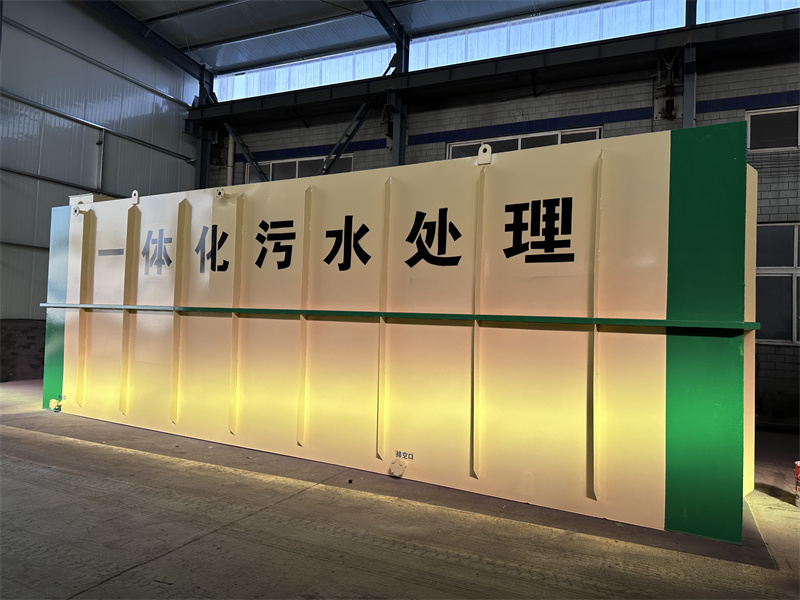
With the in-depth implementation of the rural revitalization strategy, ecological environment governance in towns and villages has become a top priority. Rural sewage is characterized by scattered distribution, large water volume fluctuations, complex water quality and limited treatment space. Traditional centralized sewage treatment modes can hardly meet such demands. As a targeted solution, rural sewage treatment equipment has become core environmental protection equipment for improving rural water environment and protecting soil quality by virtue of modular design, low cost and easy operation and maintenance. This paper comprehensively analyzes the core value and practical essentials of rural sewage treatment equipment from the dimensions of technical features, selection principles, application scenarios and operation management, so as to provide professional reference for rural sewage treatment projects.
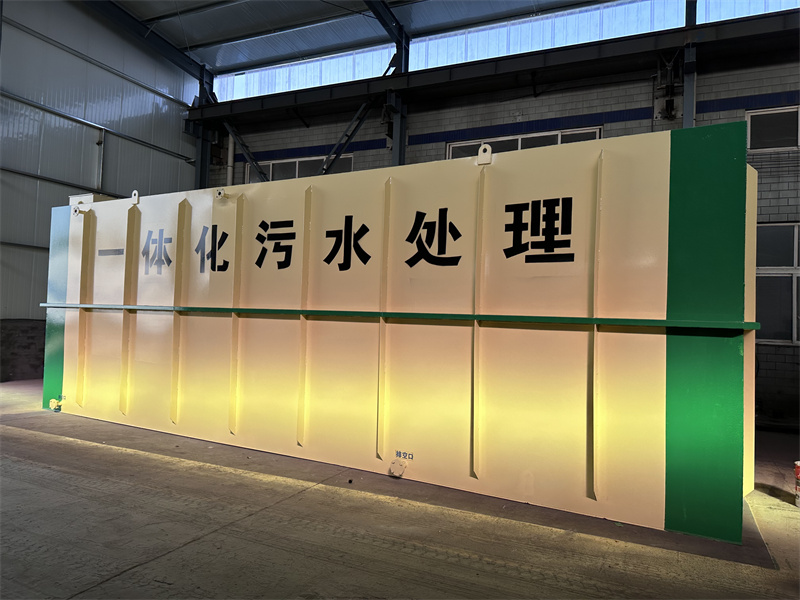
I. Core Technical Features and Adaptability Advantages of Rural Sewage Treatment Equipment
The R&D and application of rural sewage treatment equipment always focus on "adapting to rural scenarios". Its technical characteristics and advantages highly match the actual demands of rural sewage treatment:
Modular design for flexible adaptation to scattered scenarios. The equipment adopts unit assembly structure. Treatment modules can be increased or decreased flexibly according to sewage discharge (5-500m³/d) without large-scale civil works. It is especially suitable for scattered villages with difficult sewage collection. The installation cycle is shortened to 15-30 days, which greatly reduces construction costs.
Low energy consumption plus high treatment efficiency to balance economy and environmental protection. In view of rural power supply conditions, core processes such as aeration and sedimentation are optimized. The unit water treatment energy consumption is as low as 0.3-0.8kWh/m³. Some eco-friendly equipment can be powered by solar energy. Meanwhile, biological treatment technologies (A/O, MBR, SBR) combined with ecological purification processes can achieve removal rates of over 85% for COD, 80% for BOD5, 75% for ammonia nitrogen and 70% for total phosphorus. The effluent can steadily meet Grade B Level 1 or Grade A Level 1 standard specified in Discharge Standard of Pollutants for Municipal Wastewater Treatment Plants (GB18918-2002).
Easy operation and maintenance with strong anti-shock capacity to fit rural management conditions. The equipment features high integration. Key components are made of corrosion-resistant materials with low replacement frequency. Only 1 to 2 part-time staff are required for daily maintenance, who can complete inspection and residue cleaning after simple training. Besides, an optimized water quality buffer system can cope with sewage fluctuations including morning and evening flow peaks, dilution in rainy seasons and high concentration in dry seasons, delivering more stable treatment performance than traditional processes.
Small land occupation suitable for rural land resources. Most equipment is installed fully or partially underground, occupying only 1/3-1/5 of the land area of conventional sewage treatment plants. It can be arranged on corner plots and idle land without affecting agricultural production and village planning. The buried structure also restrains odor diffusion and gains acceptance among villagers.
II. Main Types and Applicable Scenarios of Rural Sewage Treatment Equipment
According to rural sewage quality, discharge volume, geographical conditions and economic level, mainstream rural sewage treatment equipment can be divided into four categories with differentiated application scenarios:
Biofilm treatment equipment (MBR membrane bioreactor, biological contact oxidation equipment). The core principle is that microorganisms attach to carrier materials to form biofilm and degrade organic pollutants. MBR equipment produces high-quality effluent which can be directly reused for farmland irrigation and landscape water. It fits villages with strict Grade A Level 1 discharge standards and water shortage. Biological contact oxidation equipment has low investment and stable operation, matching medium-sized villages with a flow rate of 50-200m³/d.
Activated sludge treatment equipment (Integrated SBR and CASS equipment). Microorganisms are suspended in sewage for biochemical reaction through aeration, featuring high treatment efficiency and strong anti-shock load capacity. It is applicable to township central areas and core villages with large sewage discharge (100-500m³/d) and fluctuating water quality. Automatic control reduces manual labor.
Ecological treatment equipment (constructed wetland, oxidation pond, ecological filter tank). Sewage is purified through the synergy of soil, plants and microorganisms. It requires little or no electricity with ultra-low operating costs. It suits remote flat villages with abundant land and low sewage concentration (COD≤300mg/L). The treatment process realizes ecological restoration and landscape integration, while occupying land area of about 1-3m² per cubic meter of sewage.
Small integrated treatment equipment (integrating sedimentation, biochemical reaction and disinfection). Pretreatment, biochemical treatment, advanced treatment and disinfection are integrated into a single tank. It is compact and easy to install with a treatment capacity of 5-50m³/d, perfectly solving decentralized sewage problems for single villages or several households. It can be installed above ground or underground, with ultraviolet light, chlorine dioxide and other disinfection options to meet local environmental regulations.
III. Key Indicators and Decision-making Logic for Equipment Selection
Reasonable equipment selection directly determines treatment effect and operating cost. Comprehensive evaluation shall be carried out based on the following core indicators:
Sewage characteristic matching. Clarify sewage sources (domestic sewage, small amount of breeding wastewater or agricultural product processing wastewater), daily discharge, water quality parameters (COD, BOD5, ammonia nitrogen, total phosphorus) and flow fluctuation coefficient first. For example, equipment with strong resistance to organic load impact shall be selected for concentrated breeding areas, while Grade A Level 1 effluent equipment is required around drinking water source protection zones.
Geographical and resource conditions. Modular and portable equipment is preferred for mountain villages; water reuse equipment is recommended for water-deficient regions; ecological equipment or integrated equipment with energy storage is selected in areas with unstable power supply.
Economic level and operation capacity. Villages with sufficient funds can choose highly automatic MBR or SBR equipment with minimal maintenance. Underdeveloped rural areas can adopt ecological equipment or low-cost biological contact oxidation equipment to cut initial investment and long-term operating expenses.
Policies and discharge standards. Strictly comply with local environmental protection requirements and confirm effluent standards (Grade B Level 1 / Grade A Level 1 / farmland irrigation standard). Villages near rivers and lakes must meet stricter discharge standards to prevent water pollution.
IV. Key Points for Equipment Installation, Operation and Maintenance
Stable operation depends on standardized installation and scientific management. Attention shall be paid to the following links:
Pre-installation preparation. Keep the site far away from drinking water sources and residential areas and reserve maintenance space. The foundation shall be leveled and compacted. Anti-seepage treatment is required for buried equipment to avoid groundwater contamination. Construct grating tanks and regulating tanks to remove large sundries and stabilize water quality and flow.
Standard installation. Complete module assembly, pipeline connection and electrical commissioning strictly in accordance with product manuals to ensure normal operation of aeration and stirring systems. Inspect sealing performance thoroughly to prevent water and air leakage. Joint commissioning shall be conducted until the effluent meets the standard before official operation.
Daily operation management. Inspect operating conditions (voltage, electric current, aeration intensity) every day; clean grating residues and check packing materials weekly; test effluent quality monthly. Regularly maintain blowers, water pumps and replace wearing parts. Keep operation logs including running data and maintenance records for fault tracing and optimization.
Troubleshooting. If effluent COD rises, insufficient aeration or aging biofilm may be the cause, so adjust aeration volume or replace packing materials. Foul odor results from excessive anaerobic reaction; increase aeration and clean sediment. In cold winter regions, take thermal insulation measures to prevent pipeline cracking.
V. Industry Development Trend and Policy Support
In recent years, the central government has continuously increased investment in rural sewage treatment. The 14th Five-Year Plan for Urban Sewage Treatment and Resource Reuse clearly puts forward the target of raising the rural domestic sewage treatment rate to about 40% by 2025, which brings broad market prospects for the industry. Three major development trends are emerging:
Intelligent upgrading. IoT sensors and remote monitoring systems are integrated to realize real-time tracking of water quality, energy consumption and operating status, supporting early fault warning and remote control to lower maintenance difficulty.
Resource recycling. Combine sewage treatment with farmland irrigation and landscape water supply, and develop integrated treatment-reuse equipment to improve water utilization efficiency.
Low-carbon development. Adopt clean energy such as solar and wind power, optimize processes to cut energy consumption and carbon emissions in line with the dual-carbon goals.
Rural sewage treatment equipment is essential for improving rural living environment and promoting ecological revitalization. Its selection, application and maintenance shall balance technical adaptability, economic feasibility and environmental sustainability. With continuous technological upgrading and favorable policies, such equipment will develop toward higher efficiency, intelligence and environmental friendliness, laying a solid foundation for building livable and prosperous countryside. If you need customized selection schemes or technical parameters for specific rural projects, please consult professional environmental protection equipment suppliers for accurate solutions.
Related Products
Related News
- 张家口市New Trends in the Development of the MBR Membrane Wastewater Treatment Industry: A Professional Guide to Selecting Source Manufacturers
- 张家口市How to Select Wastewater Treatment Equipment for Pig Farms? In-depth Review of Trusted Industry Service Providers
- 张家口市Hard-to-Treat Slaughterhouse Wastewater? Tested & Recommended High-Adaptability Wastewater Treatment Solutions for 2026
- 张家口市How to Select Integrated Wastewater Treatment Equipment? In-depth Review of Trustworthy Source Manufacturers Recognized by Industry Insiders
- 张家口市How to Select Buried Integrated Wastewater Treatment Equipment? Strength Evaluation of Reliable Brands in 2026
- 张家口市Inventory of New Coal Mine Water Treatment Technologies! How to Select Cost-Effective Manufacturers & Avoid Common Pitfalls
- 张家口市Textile Printing & Dyeing Wastewater Treatment Is Tough? These Four Powerful Enterprises Easily Solve Core Industry Pain Points
- 张家口市Authoritative Evaluation of High-Salinity Wastewater Treatment Equipment | Top Recommended Brands of 2026
- 张家口市Which Supplier Offers Reliable Integrated Sewage Treatment Equipment? Multi-dimensional Actual Test Comparison & Top Recommended Brands Released
- 张家口市Electroplating Factory Wastewater Treatment Engineering Cases
About Us
products
Business
News
Contact Us
Service Hotline:+86-15253659088WhatsApp: +86 18706508001
Email: jly@haipuou.group
Address: No.56, Donghuan Road, Zhucheng City, Weifang City, Shandong Province, China