


- Home
- About Us
About Us
- Product
Product
- Cases
Cases
- R&D Technology
- News
News
- Contact Us


- Default Language
 EN
EN RU
RU ES
ES DE
DE EL
EL IT
IT JA
JA KO
KO PT
PT ID
ID SR
SR UK
UK VI
VI TH
TH TR
TR MS
MS BE
BE AR
AR
齐齐哈尔市A Full Analysis of Complete Wastewater Treatment Equipment from Technical Composition to Selection Guide: Industrial and Municipal Sewage Treatment Solutions
Date:July 13, 2025ID: 2196Views: 1389
Haipuou Environmental Protection Group Co., Ltd. specializes in the construction of sewage treatment projects and the production and sale of water treatment equipment. Our main products include integrated sewage treatment equipment, high-efficiency cyclone purifiers, magnetic separation wastewater treatment equipment, prefabricated sewage treatment plants, smart water management platforms, sludge thickening equipment, air flotation machines and other products.
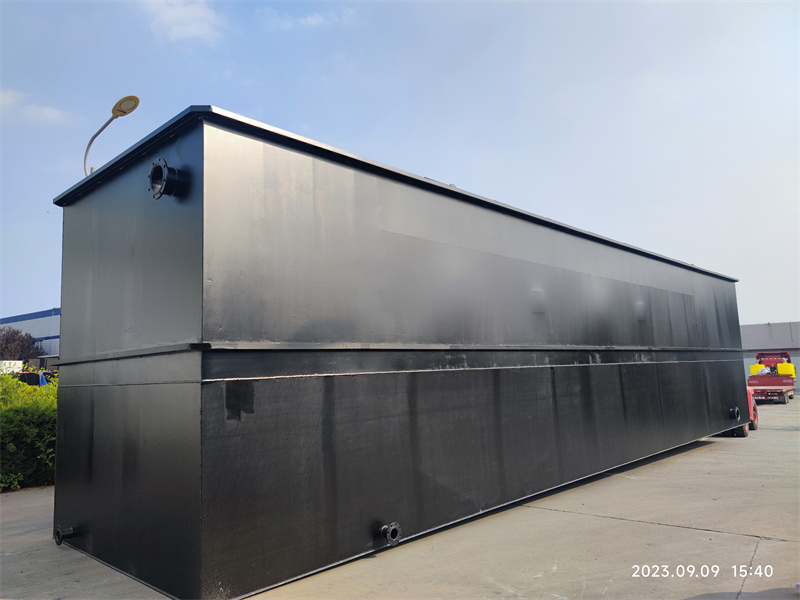
Against the backdrop of rapid industrialization and urbanization, wastewater discharge keeps rising and water composition becomes increasingly complex, bringing higher requirements for wastewater treatment efficiency and compliance rate. As an integrated and standardized sewage treatment solution, complete sets of wastewater treatment equipment have become core facilities for industrial enterprises and municipal projects to achieve compliant discharge and resource recycling, thanks to their high efficiency, stable performance, small footprint and high automation. This article comprehensively illustrates the core value and practical significance of complete wastewater treatment equipment from technical composition, selection criteria, application scenarios and development trends.
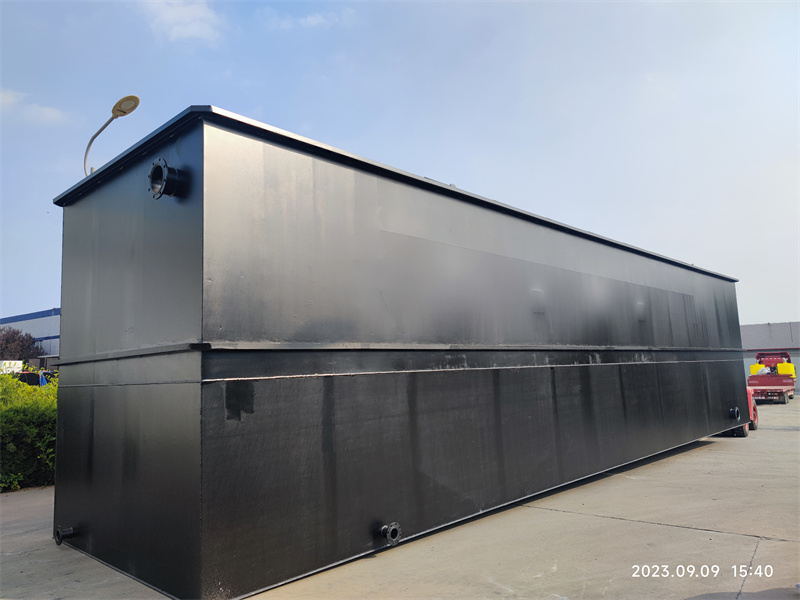
I. Core Composition and Technical Logic of Complete Wastewater Treatment Equipment
Complete wastewater treatment equipment is not a single unit, but an integrated system composed of pretreatment, main treatment, advanced treatment and auxiliary subsystems. Its core logic is to efficiently remove pollutants through graded treatment and precise regulation.
The pretreatment system serves as the first barrier of wastewater treatment. It mainly separates suspended solids, floating debris and large particles to reduce the load on subsequent treatment units. Key equipment includes bar screens for intercepting large impurities, equalization tanks for stabilizing water quality and flow, sedimentation tanks for preliminary solid-liquid separation, and demulsifiers for oily wastewater. The pretreatment effect directly determines the stable operation of the whole set. Especially in industrial wastewater treatment, the pretreatment process should be customized according to water quality characteristics such as pH value, temperature and pollutant concentration.
Main treatment unit is the core stage for pollutant degradation. It is divided into two technical routes: biochemical treatment and physical-chemical treatment according to wastewater properties:
Biochemical treatment: Suitable for biodegradable organic wastewater such as food processing sewage and domestic sewage. Processes including activated sludge method and biofilm method (MBR membrane bioreactor, SBR sequencing batch reactor) decompose organic pollutants via microbial metabolism, with COD removal rate reaching 80%-95%.
Physical-chemical treatment: Designed for refractory industrial wastewater from chemical industry, pharmaceutical manufacturing and electroplating industries. Technologies such as coagulating sedimentation, advanced oxidation (Fenton oxidation, ozonation) and adsorption (activated carbon, molecular sieve) are adopted to remove heavy metals and toxic organics through chemical reactions or physical separation.
Advanced treatment system further cuts down COD, ammonia nitrogen, total phosphorus and trace pollutants to meet stricter discharge standards such as Class III surface water and water reuse criteria. Popular technologies include ultrafiltration (UF), reverse osmosis (RO) and disinfection equipment (UV, chlorine dioxide). Membrane separation technology has been widely applied in reclaimed water reuse projects for its stable effluent quality.
Automatic control system. Modern complete wastewater treatment equipment is generally equipped with PLC control system, which monitors real-time indicators including pH, DO and ORP. It automatically adjusts chemical dosage, aeration intensity and pump frequency to realize unattended operation, lowering labor cost while improving treatment precision.
II. Core Considerations for Equipment Selection Matching Actual Demands
The selection of complete wastewater treatment equipment requires comprehensive evaluation based on wastewater sources, treatment objectives and operating costs to avoid resource waste or substandard treatment caused by rigid unified schemes.
Water quality and flow analysis. First, identify pollutant types (organics, heavy metals, nitrogen and phosphorus) and concentrations through water testing, and calculate wastewater discharge and fluctuation range. For instance, chemical wastewater with high salinity and toxic substances prefers impact-resistant combined physical-chemical and biochemical processes; municipal domestic sewage can adopt high-efficiency biochemical equipment such as integrated MBR units.
Compliance with treatment standards. Equipment selection shall follow discharge or reuse requirements. Discharge into municipal pipe networks needs to meet Grade III standard in Integrated Wastewater Discharge Standard (GB 8978-1996); direct discharge to natural water bodies shall reach Grade A Level 1; reused water for greening and toilet flushing must comply with Reuse of Urban Recycling Water — Water Quality Standard for Urban Miscellaneous Water Consumption (GB/T 18920-2020).
Operating cost and maintenance convenience. Long-term expenditure mainly comes from energy consumption (aeration, water pumps), chemical consumption (flocculants, disinfectants) and sludge disposal. The unit water treatment cost of different processes shall be compared during selection. Maintenance difficulty including membrane cleaning cycle and wearing part replacement frequency should also be considered. Small and medium-sized enterprises should prioritize complete equipment with simple operation and low failure rate.
Land occupation and installation conditions. Modular integrated equipment (buried type, container type) reduces land area by 30%-50% compared with traditional civil engineering, which is ideal for industrial parks with limited space. Large municipal sewage projects can adopt split customized equipment according to terrain to balance treatment efficiency and space utilization.
III. Typical Application Fields and Treatment Performance
The flexibility of complete wastewater treatment equipment enables it to adapt to diverse scenarios. Practical cases of three core application fields are shown below:
Industrial wastewater treatment. In electroplating industry, wastewater containing chromium, nickel and other heavy metals is treated by the combined process of equalization tank, chemical precipitation, filtration and reverse osmosis. The heavy metal removal rate exceeds 99%, and the treated water can be recycled in production lines to achieve zero liquid discharge. For food processing industry, the equipment combining bar screen, air flotation and UASB anaerobic reactor efficiently treats high-concentration organic wastewater with COD removal rate over 90%, and recovers biogas energy through anaerobic fermentation.
Municipal wastewater treatment. Aimed at scattered population and fluctuating sewage volume in small towns, integrated municipal sewage treatment equipment such as SBR units realizes full automatic operation from water intake to effluent. The treatment capacity ranges from 50m³/d to 5000m³/d with stable Grade A Level 1 effluent, solving the problems of long construction cycle and high investment of conventional sewage plants.
Emergency sewage treatment. In sudden water pollution incidents such as chemical leakage and urban waterlogging, mobile container-type wastewater treatment units can be rapidly deployed. Sewage is collected via temporary pipelines, and pollutants are quickly eliminated through advanced oxidation and adsorption to prevent pollution spread.
IV. Technical Trend: Integration of Intelligence and Green Development
Driven by the Dual Carbon goals and stricter environmental policies, complete wastewater treatment equipment is upgrading toward intelligent operation and energy conservation:
Intelligence: IoT sensors collect real-time operating data, and AI algorithms predict potential faults and optimize process parameters. For example, machine learning-based aeration adjustment can cut energy consumption by 15%-20%;
Green development: New-generation equipment focuses more on resource recovery. Precious metals can be recycled from wastewater via membrane concentration technology, and biogas can be produced from sludge anaerobic digestion to turn waste into wealth;
Material innovation: Corrosion-resistant and wear-resistant ceramic membranes, low-cost biochar adsorbents further improve equipment stability and economic efficiency.
Conclusion
Complete wastewater treatment equipment is a key facility for sewage recycling and green development. Its technical level directly affects environmental protection implementation and enterprises' sustainable development. Proper equipment selection should consider not only short-term treatment effect, but also long-term operating cost and technical upgrading potential. Enterprises are suggested to cooperate with professional environmental protection suppliers. With water quality testing, process simulation and field investigation, customized solutions with advanced technology, economic cost and convenient maintenance can be formulated to boost water pollution control and ecological protection.
Related Products
Related News
- 齐齐哈尔市New Trends in the Development of the MBR Membrane Wastewater Treatment Industry: A Professional Guide to Selecting Source Manufacturers
- 齐齐哈尔市How to Select Wastewater Treatment Equipment for Pig Farms? In-depth Review of Trusted Industry Service Providers
- 齐齐哈尔市Hard-to-Treat Slaughterhouse Wastewater? Tested & Recommended High-Adaptability Wastewater Treatment Solutions for 2026
- 齐齐哈尔市How to Select Integrated Wastewater Treatment Equipment? In-depth Review of Trustworthy Source Manufacturers Recognized by Industry Insiders
- 齐齐哈尔市How to Select Buried Integrated Wastewater Treatment Equipment? Strength Evaluation of Reliable Brands in 2026
- 齐齐哈尔市Inventory of New Coal Mine Water Treatment Technologies! How to Select Cost-Effective Manufacturers & Avoid Common Pitfalls
- 齐齐哈尔市Textile Printing & Dyeing Wastewater Treatment Is Tough? These Four Powerful Enterprises Easily Solve Core Industry Pain Points
- 齐齐哈尔市Authoritative Evaluation of High-Salinity Wastewater Treatment Equipment | Top Recommended Brands of 2026
- 齐齐哈尔市Which Supplier Offers Reliable Integrated Sewage Treatment Equipment? Multi-dimensional Actual Test Comparison & Top Recommended Brands Released
- 齐齐哈尔市Electroplating Factory Wastewater Treatment Engineering Cases
About Us
products
Business
News
Contact Us
Service Hotline:+86-15253659088WhatsApp: +86 18706508001
Email: jly@haipuou.group
Address: No.56, Donghuan Road, Zhucheng City, Weifang City, Shandong Province, China