


- Home
- About Us
About Us
- Product
Product
- Cases
Cases
- R&D Technology
- News
News
- Contact Us


- Default Language
 EN
EN RU
RU ES
ES DE
DE EL
EL IT
IT JA
JA KO
KO PT
PT ID
ID SR
SR UK
UK VI
VI TH
TH TR
TR MS
MS BE
BE AR
AR
荆门市Beauty salon sewage treatment equipment solves environmental protection problems in the industry and serves as a core choice for compliant operation.
Date:July 13, 2025ID: 2182Views: 1501
Haipuou Environmental Protection Group Co., Ltd. specializes in the construction of sewage treatment projects as well as the production and sales of water treatment equipment. Its main products are integrated sewage treatment equipment, high-efficiency cyclone purifiers, magnetic separation sewage treatment equipment, prefabricated sewage treatment plants, smart water service platforms, sludge thickening equipment, air flotation machines and other products.
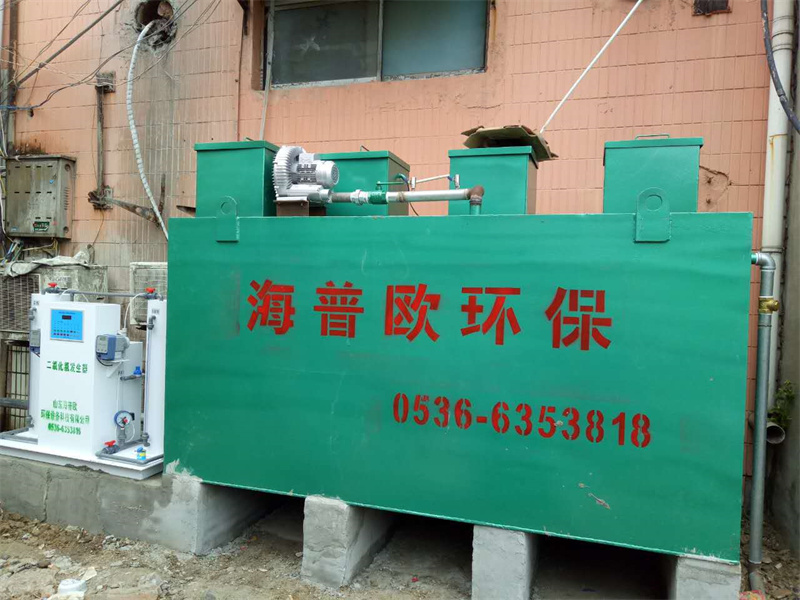
With the rapid expansion of the beauty industry, beauty salons are high-traffic service venues. The daily wastewater contains a great deal of special pollutants including cosmetic residues, hair, detergent and skin metabolites. Direct discharge will clog municipal pipelines, contaminate soil and water bodies, and even result in fines for violating environmental regulations. As dedicated environmental protection equipment, beauty salon sewage treatment equipment solves this problem effectively and has become essential for modern salons to operate legally and sustainably.
I. Characteristics of Beauty Salon Sewage: Why Specialized Treatment Equipment Is Mandatory
Beauty salon sewage differs greatly from ordinary domestic sewage due to its complex pollutant composition, which makes dedicated equipment indispensable.
Special pollutants: The wastewater contains surfactants, essence and heavy metals (found in some whitening skincare products) from cosmetics, as well as suspended solids such as hair and cutin generated during beauty and hairdressing services. Ordinary sewer pipelines cannot filter or break down these substances effectively.
Direct environmental hazards: Untreated sewage easily blocks municipal pipelines. If it seeps into soil and water, it will disrupt the ecological balance of microorganisms, damage the surrounding environment, and even threaten human health through the food chain.
Policy compliance requirements: In accordance with the Discharge Standard of Pollutants for Municipal Wastewater Treatment Plants (GB 18918-2002) and local environmental rules, beauty salons as service industry polluters must ensure that discharge indicators including COD, BOD, SS and pH meet local standards. Non-compliant discharge will lead to business suspension or administrative penalties.
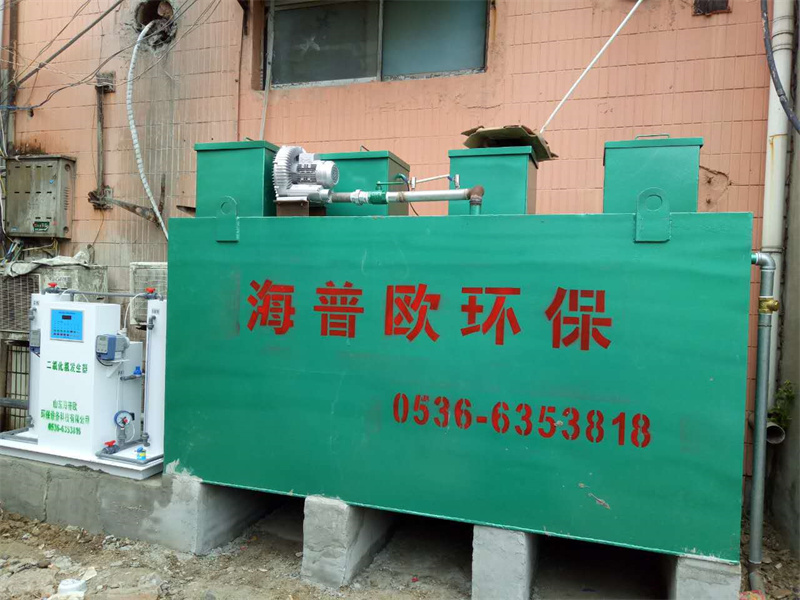
II. Beauty Salon Sewage Treatment Equipment: Core Functions and Technical Principles
Professional beauty salon sewage treatment equipment is more than a simple filter. It is an integrated system covering pretreatment, biochemical treatment and disinfection to meet the unique treatment needs of salon wastewater.
1. Pretreatment: Trap Suspended Solids and Protect Subsequent Units
Pretreatment lays the foundation for stable operation by removing physical impurities and preventing blockage.
Bar screen filtration: Fine screens inside the equipment intercept hair, cotton scraps and cutin residues efficiently. Manual cleaning is simple and convenient.
Equalization tank buffer: Medium and large-sized units are equipped with small equalization tanks to balance fluctuating water flow during peak business hours, so the follow-up treatment units will not be overloaded.
2. Biochemical Treatment: Decompose Organic Pollutants and Lower COD/BOD
Beauty salon sewage has high COD and BOD levels. Biochemical processes are adopted to break down organic contaminants, which is critical for reaching discharge standards. The most widely used process is biological contact oxidation. Porous packing materials such as elastic fillers are placed inside the biochemical tank. Aerobic microorganisms attached to the fillers decompose surfactants, essence and other organics into harmless carbon dioxide and water, drastically cutting pollutant concentrations before disinfection.
3. Disinfection: Kill Harmful Bacteria to Meet Discharge Standards
Salon wastewater may carry skin bacteria, so disinfection serves as the final safety barrier.
UV disinfection: Small units adopt ultraviolet disinfection modules with no chemical residue and low power consumption, ideal for small water volumes of 1-5 tons per day in small salons.
Ozone / sodium hypochlorite disinfection: Medium and large chain salons can choose ozone or sodium hypochlorite disinfection with high efficiency for larger water flow. The system automatically controls chemical dosage to avoid secondary pollution caused by excessive dosing.
4. Core Advantages Tailored for Salon Operation
Beyond pollutant removal, the equipment is fully designed to fit salon operation conditions:
Compact footprint: The integrated unit has a small size and can be placed in restroom corners, basements or outdoor small spaces without building an independent wastewater station.
Automatic operation: The intelligent control system monitors water level and treatment progress automatically without full-time staff. Operators only need to replace consumables such as UV lamps and filter screens regularly to cut labor costs.
Low operating cost: Daily power consumption is only 1-3 kWh. Disinfection consumables have a long service life; UV lamps can last up to 8,000 hours, bringing excellent long-term cost performance.
III. Equipment Selection Guide: Avoid Pitfalls and Ensure Compliance
With various products on the market, salons must select equipment scientifically according to business scale, wastewater volume and local policies to prevent substandard discharge caused by improper purchase.
Match equipment capacity with daily water output: Calculate daily sewage volume first. Small salons produce 0.5-2 tons per day, medium ones 3-5 tons, and large ones over 5 tons. Choose corresponding models such as 1 ton/day or 5 tons/day. Insufficient capacity leads to sewage accumulation while over-sizing wastes energy.
Comply with local discharge standards: Requirements vary across regions. Some cities limit COD to ≤50mg/L while others set the limit at ≤60mg/L. Consult local environmental bureaus before purchasing and ask manufacturers to provide third-party test reports to prove stable effluent quality.
Check material and after-sales service: Prioritize units made of stainless steel or fiberglass with strong corrosion resistance and anti-aging performance for an 8-10 year service life. Confirm whether suppliers provide installation guidance and regular maintenance to prevent long downtime due to equipment breakdown.
Choose integrated equipment: Most salons prefer integrated units that require no on-site assembly. Installation can be finished within 1-3 days. The fully sealed design prevents odor leakage, which fits indoor service environments perfectly.
IV. Growing Necessity Amid Strict Environmental Supervision
In recent years, environmental authorities have tightened supervision over service industry pollution. Beauty salons have been listed as key small-scale polluting entities in many regions. The 2023 Circular on Strengthening Ecological Environment Supervision for Service Industries mandates that hairdressing and beauty venues must build supporting wastewater treatment facilities. Violators will face fines of over 50,000 RMB under the Environmental Protection Law, and serious violations will result in forced business closure. Installing dedicated sewage treatment equipment is not merely a policy requirement, but also a highlight to upgrade brand image. As consumers become more environmentally conscious, green and compliant operation will boost customer trust and create differentiated competitive advantages.
V. Conclusion: Eliminate Environmental Risks with Proper Equipment
Service quality is the core competitiveness of beauty salons, while environmental compliance is the bottom line of business. With targeted technical design, beauty salon sewage treatment equipment solves pollution problems, meets regulatory requirements and adapts to salon operation conditions. Investing in professional equipment fulfills environmental obligations and guarantees stable long-term business development. It is recommended to choose qualified manufacturers with proven project cases to secure reliable product quality and after-sales service, achieving compliant discharge and worry-free operation.
Related Products
Related News
- 荆门市New Trends in the Development of the MBR Membrane Wastewater Treatment Industry: A Professional Guide to Selecting Source Manufacturers
- 荆门市How to Select Wastewater Treatment Equipment for Pig Farms? In-depth Review of Trusted Industry Service Providers
- 荆门市Hard-to-Treat Slaughterhouse Wastewater? Tested & Recommended High-Adaptability Wastewater Treatment Solutions for 2026
- 荆门市How to Select Integrated Wastewater Treatment Equipment? In-depth Review of Trustworthy Source Manufacturers Recognized by Industry Insiders
- 荆门市How to Select Buried Integrated Wastewater Treatment Equipment? Strength Evaluation of Reliable Brands in 2026
- 荆门市Inventory of New Coal Mine Water Treatment Technologies! How to Select Cost-Effective Manufacturers & Avoid Common Pitfalls
- 荆门市Textile Printing & Dyeing Wastewater Treatment Is Tough? These Four Powerful Enterprises Easily Solve Core Industry Pain Points
- 荆门市Authoritative Evaluation of High-Salinity Wastewater Treatment Equipment | Top Recommended Brands of 2026
- 荆门市Which Supplier Offers Reliable Integrated Sewage Treatment Equipment? Multi-dimensional Actual Test Comparison & Top Recommended Brands Released
- 荆门市Electroplating Factory Wastewater Treatment Engineering Cases
About Us
products
Business
News
Contact Us
Service Hotline:+86-15253659088WhatsApp: +86 18706508001
Email: jly@haipuou.group
Address: No.56, Donghuan Road, Zhucheng City, Weifang City, Shandong Province, China