

- Home
- About Us
About Us
- Product
Product
- Cases
Cases
- R&D Technology
- News
News
- Contact Us


- Default Language
 EN
EN RU
RU ES
ES DE
DE EL
EL IT
IT JA
JA KO
KO PT
PT ID
ID SR
SR UK
UK VI
VI TH
TH TR
TR MS
MS BE
BE AR
AR
辽源市Buried Integrated Domestic Sewage Treatment Equipment: A New Solution to Rural Sewage Problems
Date:July 13, 2025ID: 2200Views: 1125
Haipuou Environmental Protection Group Co., Ltd. specializes in the construction of sewage treatment projects and the production and sales of water treatment equipment. Our main products are integrated sewage treatment equipment, high-efficiency cyclone purifiers, magnetic separation sewage treatment equipment, prefabricated sewage treatment plants, smart water management platforms, sludge thickening equipment and air flotation machines.
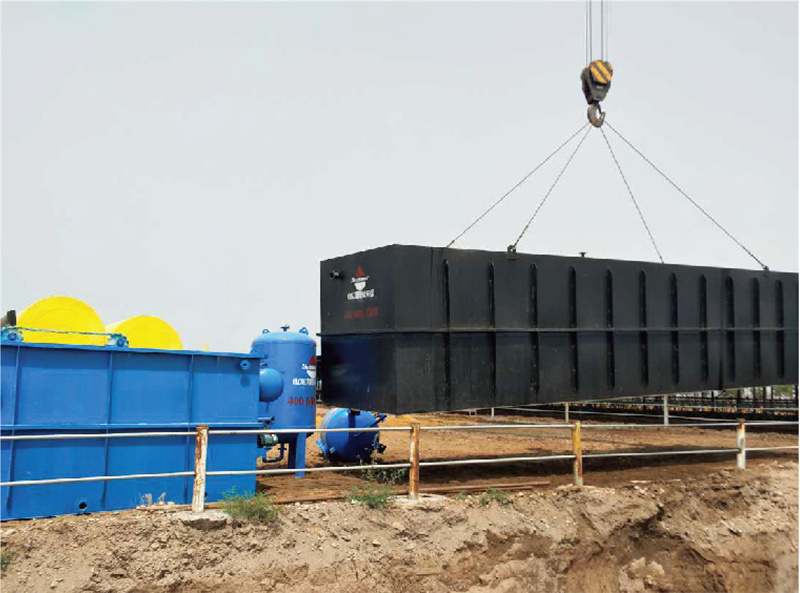
With the in-depth advancement of the rural revitalization strategy, the improvement of rural living environments has become a key priority, and domestic sewage treatment is a critical component. Traditional sewage treatment models suffer from high infrastructure costs, large land occupation and difficult operation and maintenance, which cannot meet the actual demands of rural areas. The emergence of buried integrated domestic sewage treatment equipment provides an efficient, economical and convenient new solution to rural sewage problems, and it is gradually becoming the mainstream choice for rural sewage treatment.
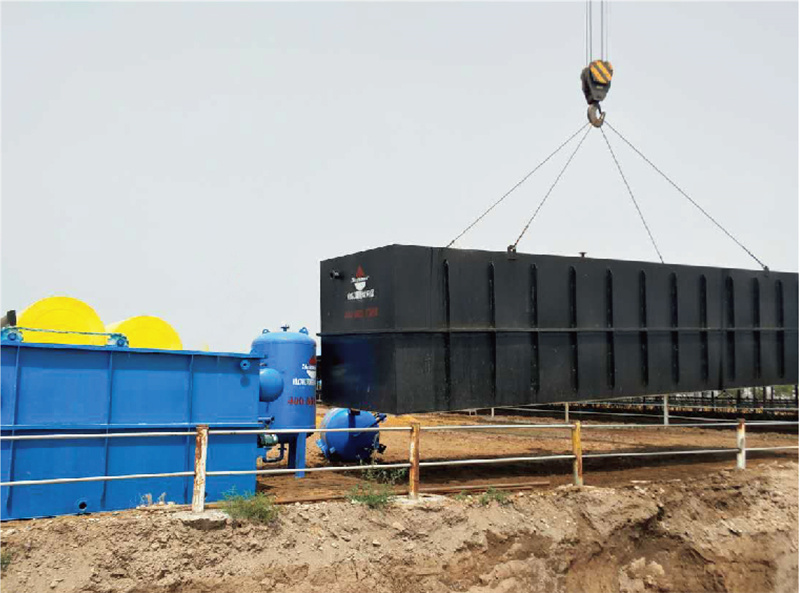
I. Core Advantages of Buried Integrated Domestic Sewage Treatment Equipment
(1) Space Saving, Adaptable to Complex Terrains
Buried integrated domestic sewage treatment equipment adopts underground installation. The main body is buried underground, and the ground can be secondarily utilized for greening and hardening, which effectively saves land occupation. This feature makes it have prominent advantages in rural areas with tight homesteads and complex terrain. It does not require large-scale land leveling and can flexibly adapt to different geographical environments.
(2) Integrated Design, Simplifying the Construction Process
The equipment integrates multiple units including pretreatment, biological treatment and advanced treatment into a whole, without the need to separately construct multiple structures such as grating tanks, grit chambers and biochemical tanks. This integrated design greatly simplifies the construction process of sewage treatment projects, shortens the construction cycle, reduces project construction costs, and meanwhile lessens the construction impact on the surrounding environment.
(3) Efficient Treatment with Qualified Effluent Water Quality
This equipment adopts advanced biological treatment technologies such as A/O process and MBR process, which can efficiently remove pollutants including COD, BOD, ammonia nitrogen and total phosphorus in domestic sewage. Through reasonable process design and parameter regulation, the effluent quality of the equipment can steadily reach Grade A Level 1 standard or higher in the Discharge Standard of Pollutants for Municipal Wastewater Treatment Plants (GB18918-2002), meeting the requirements of rural sewage discharge or reuse.
(4) Intelligent Operation and Maintenance to Cut Management Costs
Buried integrated domestic sewage treatment equipment is equipped with advanced intelligent control systems to realize real-time monitoring, remote control and automatic adjustment of equipment operating status. Managers can check operating parameters and water quality data at any time through mobile APP or computer client, and troubleshoot equipment failures timely. Meanwhile, the equipment requires little maintenance work and does not need a professional operation and maintenance team, lowering the management cost of rural sewage treatment.
II. Application Scenarios of Buried Integrated Domestic Sewage Treatment Equipment
(1) Rural Residential Areas
Rural residents live scattered with small and fluctuating sewage discharge volume. We can flexibly select equipment models according to village population and sewage output to realize on-site treatment and reuse of sewage, solving the problems of difficult sewage collection and treatment in rural areas.
(2) Small Towns
The sewage treatment demand of small towns falls between cities and rural areas. Traditional centralized sewage treatment plants require high construction costs and large pipe network investment. Buried integrated domestic sewage treatment equipment can serve as a supplementary or alternative solution for small town sewage treatment, especially suitable for small towns with small population and weak economic foundation.
(3) Tourist Scenic Spots
Sewage discharge in tourist areas has obvious seasonality and volatility; sewage volume surges in peak seasons while remaining low in off-seasons. The buried integrated equipment can flexibly adjust operating load according to tourist reception capacity to guarantee effective sewage treatment and avoid resource waste caused by building large sewage treatment facilities.
(4) Industrial Parks
Some small industrial parks and enterprises produce a small amount of domestic sewage with stable water quality. This equipment can meet their sewage treatment needs to achieve standard discharge or recycling, cutting enterprises' environmental protection costs.
III. Technical Development Trend of Buried Integrated Domestic Sewage Treatment Equipment
(1) Continuously Improved Intelligence Level
With the continuous development of IoT, big data, artificial intelligence and other technologies, the intelligence level of the equipment will keep rising. Future units will be equipped with more advanced monitoring and control functions, supporting real-time detection of water quality indicators, automatic fault diagnosis and early warning, as well as intelligent optimization of operating parameters, further boosting operating efficiency and stability.
(2) Continuous Innovation in Process Technology
To meet stricter effluent standards and lower energy and reagent consumption, process technology will keep innovating. New biofilm technology, advanced oxidation technology, membrane separation technology will be widely adopted to improve pollutant removal efficiency and reduce treatment costs.
(3) Higher Degree of Resource Recycling
While disposing sewage, resource recycling is the future development trend. The equipment will pay more attention to reclaimed water reuse for farmland irrigation, landscaping and toilet flushing to improve water resource utilization efficiency. Meanwhile, sludge produced in the treatment process will be recycled into organic fertilizer for soil improvement to turn waste into treasure.
IV. Conclusion
With outstanding merits including small footprint, integrated structure, high treatment efficiency and intelligent operation, buried integrated domestic sewage treatment equipment provides an ideal solution for decentralized domestic sewage treatment in rural areas and other regions. As technology advances and application scenarios expand, this equipment will play an increasingly vital role in improving rural living environment and promoting ecological civilization construction. We firmly believe that buried integrated sewage treatment equipment will become mainstream equipment in domestic sewage treatment, making greater contributions to sustainable water resource utilization and environmental protection.
Related Products
Related News
- 辽源市New Trends in the Development of the MBR Membrane Wastewater Treatment Industry: A Professional Guide to Selecting Source Manufacturers
- 辽源市How to Select Wastewater Treatment Equipment for Pig Farms? In-depth Review of Trusted Industry Service Providers
- 辽源市Hard-to-Treat Slaughterhouse Wastewater? Tested & Recommended High-Adaptability Wastewater Treatment Solutions for 2026
- 辽源市How to Select Integrated Wastewater Treatment Equipment? In-depth Review of Trustworthy Source Manufacturers Recognized by Industry Insiders
- 辽源市How to Select Buried Integrated Wastewater Treatment Equipment? Strength Evaluation of Reliable Brands in 2026
- 辽源市Inventory of New Coal Mine Water Treatment Technologies! How to Select Cost-Effective Manufacturers & Avoid Common Pitfalls
- 辽源市Textile Printing & Dyeing Wastewater Treatment Is Tough? These Four Powerful Enterprises Easily Solve Core Industry Pain Points
- 辽源市Authoritative Evaluation of High-Salinity Wastewater Treatment Equipment | Top Recommended Brands of 2026
- 辽源市Which Supplier Offers Reliable Integrated Sewage Treatment Equipment? Multi-dimensional Actual Test Comparison & Top Recommended Brands Released
- 辽源市Electroplating Factory Wastewater Treatment Engineering Cases
About Us
products
Business
News
Contact Us
Service Hotline:+86-15253659088WhatsApp: +86 18706508001
Email: jly@haipuou.group
Address: No.56, Donghuan Road, Zhucheng City, Weifang City, Shandong Province, China