


- Home
- About Us
About Us
- Product
Product
- Cases
Cases
- R&D Technology
- News
News
- Contact Us


- Default Language
 EN
EN RU
RU ES
ES DE
DE EL
EL IT
IT JA
JA KO
KO PT
PT ID
ID SR
SR UK
UK VI
VI TH
TH TR
TR MS
MS BE
BE AR
AR
包头市Catering Sewage Treatment Equipment is the key to solving wastewater problems and provides dual guarantees for catering enterprises to achieve environmental compliance and cost reduction.
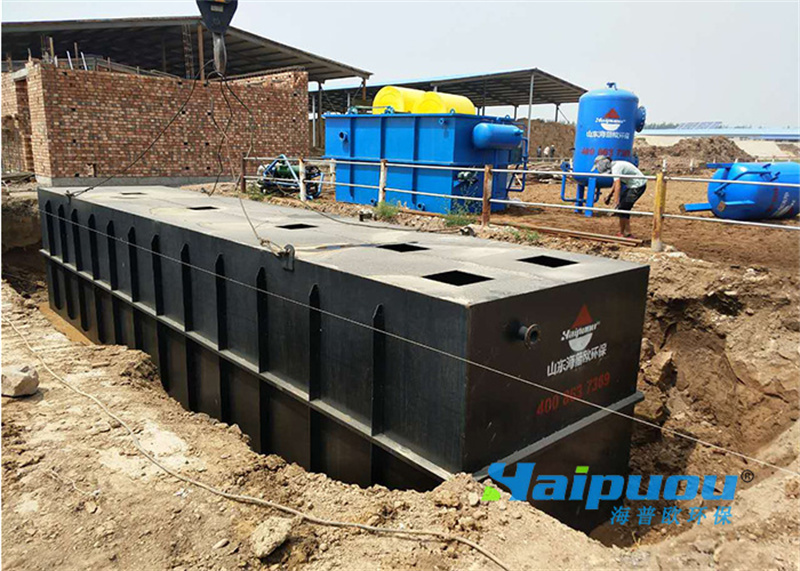
Amid increasingly fierce competition in the catering industry, environmental compliance has become the lifeline for enterprises to survive and develop. Catering wastewater, the major pollutant generated during daily operation, contains high-concentration grease, food residues and detergent residues. It not only clogs municipal pipelines and causes water pollution, but also exposes restaurants to heavy fines and business suspension ordered by environmental authorities. As a targeted solution, catering wastewater treatment equipment helps enterprises achieve compliant discharge and cut operating costs through efficient treatment, serving as core support for the green transformation of catering businesses.
I. Why Catering Enterprises Must Equip Wastewater Treatment Equipment: Analysis Based on Policies and Practical Pain Points
1. Tightening Regulations: Environmental Compliance Becomes a Mandatory Rule
In recent years, China has continuously strengthened environmental supervision over the catering sector. The Water Pollution Prevention and Control Law stipulates clearly that catering wastewater must be pre-treated to meet the Standard for Wastewater Discharge into Urban Sewers (GB/T 31962-2015) before being discharged into municipal pipe networks. Enterprises with substandard discharge will face cumulative daily fines up to one million RMB per violation. Cities including Beijing and Shanghai have formulated catering environmental access lists, making wastewater treatment equipment a mandatory requirement for store opening and annual inspection. For instance, a chain catering brand in Shanghai was fined 500,000 RMB in 2024 for operating without compliant equipment, which led to COD concentration exceeding the standard by three times. Three of its stores were shut down, resulting in direct economic losses exceeding two million RMB.
2. Hidden High Costs Caused by Untreated Wastewater
Direct discharge of raw wastewater may save equipment investment in the short term, yet bring far higher hidden costs in the long run. On the one hand, animal and vegetable grease condenses into solid dirt inside sewers and causes blockages. Enterprises need to pay thousands of RMB for each pipeline dredging service. On the other hand, overflowing wastewater pollutes surrounding neighborhoods and triggers resident complaints, damaging brand reputation and reducing customer flow. A community fast-food restaurant once suffered sewer backflow due to direct wastewater discharge. It paid 80,000 RMB as compensation to nearby residents and lost 30% of customers amid negative public opinions, resulting in a net loss.
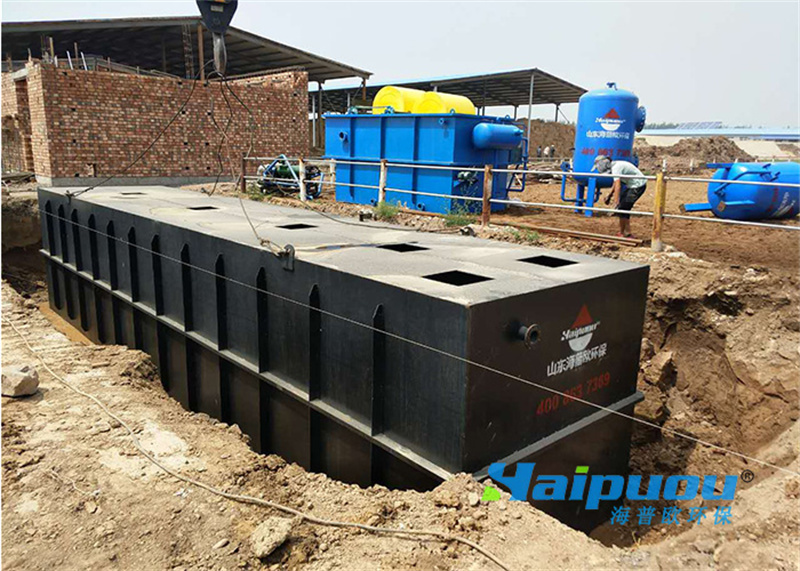
II. Core Technologies of Catering Wastewater Treatment Equipment: Process Selection and Advantages for Different Scenarios
The technical solution shall be determined according to business scale, wastewater output and water quality characteristics. Three mainstream processes are available on the market, each designed for specific application scenarios with unique strengths:
1. Physical Oil Separation Equipment: For Small Catering Businesses (Daily Discharge < 50 Tons)
This equipment adopts gravity separation plus filter screen filtration. Inclined oil baffles make grease float upward naturally, and multi-layer filters intercept food scraps and fine suspended solids. Featuring compact size (fits kitchen corners), easy installation without civil construction and low maintenance (only 1-2 manual cleanups per month), it is ideal for snack bars, fast-food outlets and small hot pot restaurants. A physical oil separator with honeycomb inclined tubes achieves an oil-water separation rate above 95%, reducing oil content in effluent below 5mg/L to fully meet sewer access standards. Priced between 10,000 and 30,000 RMB, it brings a short payback period of 6 to 8 months.
2. Combined Air Flotation & Biochemical Equipment: For Medium and Large Catering Businesses (Daily Discharge: 50-200 Tons)
Large hotels, food courts and chain restaurants generate complex wastewater rich in starch, protein and emulsified oil, which requires the combined air flotation and biochemical process. The air flotation unit produces microbubbles to capture emulsified oil and colloidal particles. Then aerobic microorganisms in the biochemical tank decompose organic pollutants such as COD and BOD. This equipment delivers high treatment efficiency, with effluent reaching Grade A standard of GB 18918-2002 Pollutant Discharge Standard for Urban Sewage Treatment Plants. Treated water can be reused for garden irrigation and toilet flushing to realize dual water usage. After installing this system, a five-star hotel saved 20 tons of water every day, cutting annual water bills by over 30,000 RMB and receiving a 50,000 RMB government subsidy as a Green Hotel.
3. Intelligent Integrated Equipment: For High-End Restaurants and Commercial Complexes
With the development of IoT technology, intelligent integrated equipment has become popular. It integrates oil separation, air flotation, disinfection and real-time monitoring, running automatically under PLC control. It continuously tracks operating conditions (grease level, screen clogging) and water quality indicators (COD, SS), and pushes data and fault alerts via mobile APP. A commercial complex deployed such equipment, which automatically adjusts processing capacity according to business hours of different catering tenants to cut energy waste. Real-time data is directly connected to local environmental supervision platforms to achieve full transparency, eliminating manual report filling and greatly lowering management costs.
III. Equipment Selection Guide: 4 Key Criteria to Ensure Proper Matching and High Efficiency
Blind procurement without considering actual demands will lead to substandard effluent or excessive maintenance costs. Catering enterprises need to focus on four dimensions:
1. Calculate Wastewater Output Accurately to Avoid Overcapacity or Overload
Enterprises shall estimate daily wastewater volume based on passenger flow and menu (reference value: 0.05-0.1 ton per diner per meal), and reserve capacity for business expansion within 1-2 years. For example, a chain restaurant planning to open new branches within half a year will face insufficient capacity if it purchases a 50-ton/day unit now and needs extra investment later. Conversely, a small fast-food shop buying a 100-ton/day machine will suffer energy waste with an additional electricity cost of 200-300 RMB per day.
2. Verify Authorized Certifications and Reject Unqualified Products
Qualified wastewater treatment equipment must hold CCEP environmental product certification and ISO9001 quality certification. Many local environmental bureaus also require products to be listed on official filing catalogs. Buyers must ask manufacturers to provide certification documents to avoid three-no products. Uncertified equipment often fails to meet discharge standards and brings compliance risks. A hot pot restaurant once saved 10,000 RMB by purchasing an uncertified unit, yet the effluent still exceeded oil limits. Fined 30,000 RMB by regulators, it finally had to replace the whole set with compliant equipment and spent an extra 50,000 RMB in total.
3. Prioritize Easy Maintenance to Reduce Long-Term Operating Expenses
Long-term costs depend largely on maintenance convenience. Enterprises should check automatic oil scraping and residue discharge devices to cut manual labor, corrosion-resistant materials such as 304 stainless steel for a service life of 8-10 years, and after-sales services including on-site installation, 1-2 regular inspections per year and 24-hour emergency repair. One catering business spent 24,000 RMB annually hiring workers to clean the machine without automatic slag removal. After upgrading to an automated model, its yearly maintenance cost dropped to only 5,000 RMB.
4. Apply for Environmental Subsidies Based on Local Policies
Many local governments offer special subsidies covering 10%-30% of equipment costs to encourage catering businesses to install wastewater treatment systems. Enterprises can consult environmental bureaus or sub-district offices about application requirements. Shenzhen offers a maximum subsidy of 50% for intelligent wastewater equipment, while Hangzhou provides annual environmental rewards of 20,000-30,000 RMB for restaurants with fully compliant discharge. Making full use of policy incentives reduces investment and shortens the payback period.
IV. Industry Trends: Technological Innovation Delivers Win-Win Results for Environmental Protection and Economic Benefits
Driven by the dual-carbon goals and the green upgrade of the catering industry, wastewater treatment equipment is developing toward higher efficiency, lower energy consumption and smarter operation. Three major trends are emerging:
1. Resource Recovery: Turn Waste into Valuable Materials Beyond Compliant Discharge
Traditional equipment only focuses on reaching discharge standards, while new-generation systems prioritize resource recycling. High-efficiency oil separators extract animal and vegetable grease from wastewater as raw materials for biodiesel, bringing an income of 800-1000 RMB per ton. Dewatered and dried sludge can be used as organic fertilizer for farming. A large catering group recovered 50 tons of waste grease every year, earning an extra 40,000 RMB and cutting sludge disposal costs by 20,000 RMB to achieve a win-win situation.
2. Energy-Saving Design to Reduce Operational Burden
Manufacturers reduce power consumption via technical upgrades. Variable frequency motors adjust rotation speed automatically according to water flow and cut energy use by 30%. Solar-assisted aeration reduces electricity bills for biochemical tanks. After installing energy-saving equipment, a chain restaurant lowered daily power cost from 80 RMB to 50 RMB, saving 11,000 RMB annually with remarkable long-term returns.
3. Customized Solutions for Specialized Catering Scenarios
Customized equipment is developed for high-grease hot pot restaurants, barbecue shops and western restaurants. Heating and thermal insulation devices are added to prevent grease solidification and pipe blockage for hot pot wastewater. Enhanced demulsification processes are adopted for western restaurant sewage with high detergent content to guarantee COD compliance. Scenario-based customization improves treatment efficiency and better matches actual operational needs.
Conclusion
For catering enterprises, wastewater treatment equipment is not merely a compliance tool for policy supervision, but a strategic asset to lower operating costs and lift brand value. As environmental regulations grow stricter, businesses shall select suitable equipment and processes based on their scale, keep up with technological progress, and turn environmental investment into profit growth. In the future, with the popularization of resource recovery and intelligent technologies, wastewater treatment facilities will become core competitive advantages for green catering businesses and support the sustainable development of the whole industry.
Related Products
Related News
- 包头市New Trends in the Development of the MBR Membrane Wastewater Treatment Industry: A Professional Guide to Selecting Source Manufacturers
- 包头市How to Select Wastewater Treatment Equipment for Pig Farms? In-depth Review of Trusted Industry Service Providers
- 包头市Hard-to-Treat Slaughterhouse Wastewater? Tested & Recommended High-Adaptability Wastewater Treatment Solutions for 2026
- 包头市How to Select Integrated Wastewater Treatment Equipment? In-depth Review of Trustworthy Source Manufacturers Recognized by Industry Insiders
- 包头市How to Select Buried Integrated Wastewater Treatment Equipment? Strength Evaluation of Reliable Brands in 2026
- 包头市Inventory of New Coal Mine Water Treatment Technologies! How to Select Cost-Effective Manufacturers & Avoid Common Pitfalls
- 包头市Textile Printing & Dyeing Wastewater Treatment Is Tough? These Four Powerful Enterprises Easily Solve Core Industry Pain Points
- 包头市Authoritative Evaluation of High-Salinity Wastewater Treatment Equipment | Top Recommended Brands of 2026
- 包头市Which Supplier Offers Reliable Integrated Sewage Treatment Equipment? Multi-dimensional Actual Test Comparison & Top Recommended Brands Released
- 包头市Electroplating Factory Wastewater Treatment Engineering Cases
About Us
products
Business
News
Contact Us
Service Hotline:+86-15253659088WhatsApp: +86 18706508001
Email: jly@haipuou.group
Address: No.56, Donghuan Road, Zhucheng City, Weifang City, Shandong Province, China