

- Home
- About Us
About Us
- Product
Product
- Cases
Cases
- R&D Technology
- News
News
- Contact Us


- Default Language
 EN
EN RU
RU ES
ES DE
DE EL
EL IT
IT JA
JA KO
KO PT
PT ID
ID SR
SR UK
UK VI
VI TH
TH TR
TR MS
MS BE
BE AR
AR
广西省Complete Guide to Technical Selection, Compliance Standards & Operation & Maintenance Management of Marine Sewage Treatment Plants
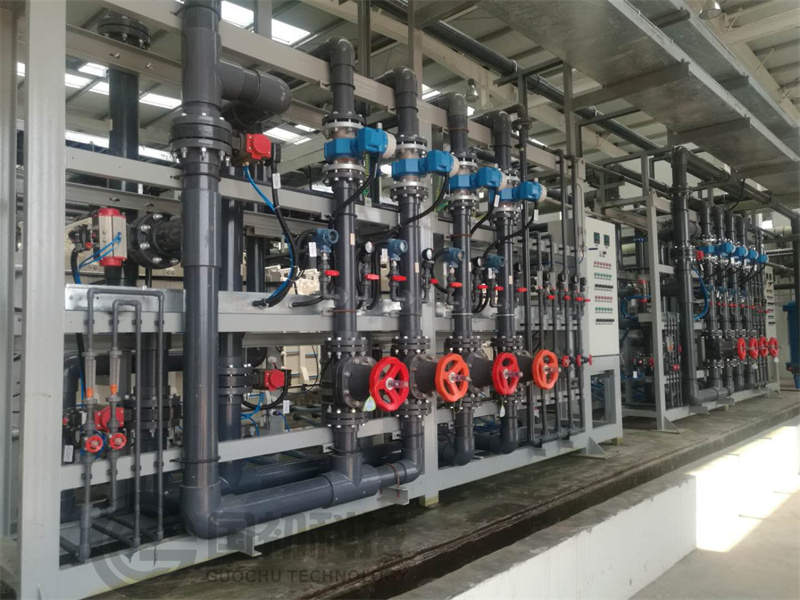
With increasingly stringent global marine environmental regulations and stricter pollution control for inland waterway shipping, marine sewage treatment plants have become core equipment for all types of vessels to operate in compliance and protect aquatic ecosystems. This article systematically analyzes the professional applications and management solutions of marine sewage treatment plants from six dimensions: equipment definition, mainstream technologies, compliance standards, key selection criteria, operation & maintenance specifications and industry trends, offering comprehensive references for ship operators, equipment purchasers and maritime practitioners.
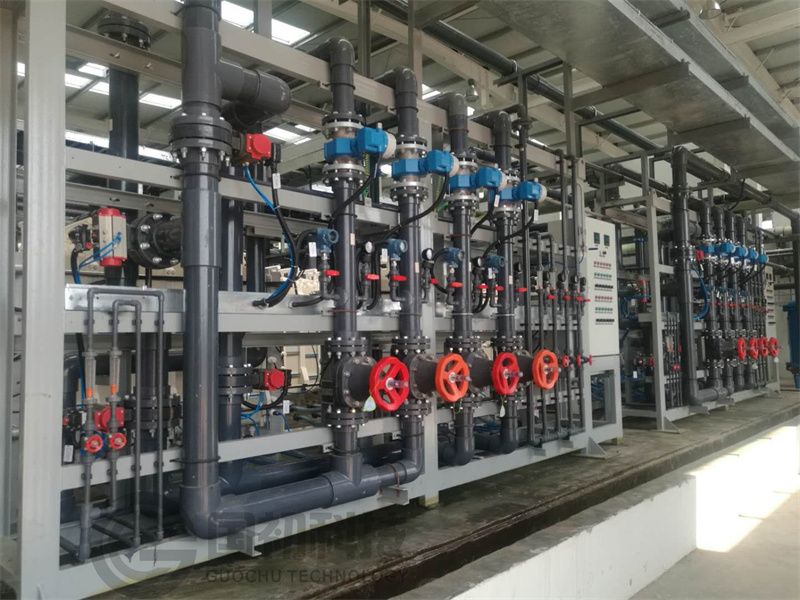
I. Core Definition & Application Scope of Marine Sewage Treatment Plants
Marine sewage treatment plants are special environmental protection equipment designed exclusively for onboard operation. They treat domestic sewage, oily wastewater and other waste water generated on ships, enabling safe discharge or onshore storage after meeting international conventions and domestic discharge standards.
The equipment is widely applicable to ocean-going cargo ships, coastal passenger vessels, inland waterway ships, engineering vessels, official ships and offshore platforms. Its main treatment targets include:
Domestic sewage: waste water from lavatories, medical rooms, livestock enclosures and mixed domestic drainage;
Oily wastewater: bilge water, oil tank washing water and other oil-laden effluents;
Other miscellaneous drainage: galley wastewater, tank washing water (compatible with certain integrated equipment).
As critical anti-pollution facilities on vessels, marine sewage treatment plants must withstand harsh onboard conditions including vessel rolling & pitching, salt spray corrosion, confined installation space and fluctuating power supply. Meanwhile, they shall obtain type approval from maritime authorities and pass Port State Control (PSC) inspections.
II. Main Technical Principles & Performance Comparison of Marine Sewage Treatment Plants
Currently, biological treatment, membrane separation and physical-chemical treatment serve as core technical routes for marine sewage plants. Different processes fit distinct vessel types and discharge requirements, as detailed below:
1. Biological Contact Oxidation Process (Mainstream Basic Technology)
Centered on activated sludge and biofilm, it degrades pollutants such as COD, BOD₅ and ammonia nitrogen via aeration oxygen supply, with supporting crushing, sedimentation and disinfection units for full purification.
Advantages: mature technology, low capital cost and easy maintenance, suitable for medium & small-sized vessels;
Disadvantages: average shock load resistance, relatively large footprint and regular sludge removal required.
2. Membrane Bioreactor (MBR Process, Premium Mainstream)
Combines membrane separation modules with bioreactors to replace traditional sedimentation tanks, efficiently intercepting sludge and pathogenic bacteria and producing effluent far exceeding national standard limits.
Advantages: stable crystal-clear effluent, excellent nitrogen & phosphorus removal, compact layout and low sludge yield;
Disadvantages: high equipment cost, regular cleaning & replacement of membrane modules and slightly higher energy consumption.
3. Electrolysis / UV Disinfection Process
Kills coliform bacteria and other pathogens through electrolytic chlorine generation or ultraviolet irradiation, usually adopted as a post-treatment process to guarantee disinfection compliance.
Advantages: high disinfection efficiency, no residual chemical agents and high automation;
Disadvantages: must be matched with upstream biological/physical-chemical units; unable to degrade organic pollutants when used alone.
4. Physical-Chemical Separation Process (Specialized for Oily Wastewater)
Adopts gravity separation, coalescence oil removal and centrifugal separation to rapidly separate oil from water, reducing oil content in effluent below 15ppm to satisfy IMO standards.
Advantages: fast treatment speed, no biological sludge and perfect fit for engine room oily wastewater;
Disadvantages: only effective for oil contaminants, incapable of removing organics from domestic sewage.
III. Core Compliance Standards & Discharge Requirements for Marine Sewage Treatment Plants
The design, installation and operation of marine sewage treatment plants must strictly comply with international conventions and domestic laws. Non-compliance will result in fines, vessel detention and other penalties:
1. International Standard (MARPOL Annex IV)
Applicable vessels: international voyaging ships of 400 GT and above, or certified to carry 15 persons or more;
Discharge rules: treated effluent from approved equipment required within 3 nautical miles offshore; maceration + disinfection mandatory for 3–12 nautical miles; untreated sewage discharge permitted beyond 12 nautical miles;
Core indicators: faecal coliform ≤1000 per 100mL, suspended solids ≤50mg/L.
2. Domestic Standards (GB 3552-2018, GB/T 10833-2023)
Inland waterways and sea areas within 3 nautical miles offshore: strictest limits apply: BOD₅≤25mg/L, COD≤120mg/L, suspended solids ≤30mg/L;
Equipment requirements: China Classification Society (CCS) type approval compulsory, sludge moisture content ≤80%, residues must be harmlessly treated and landed ashore;
Supervision rules: vessels shall carry valid anti-pollution certificates. Switch to storage mode in case of equipment malfunction; illegal direct discharge is prohibited.
IV. Key Factors for Marine Sewage Treatment Plant Selection
Vessel type & navigation waters: compact standard-compliant units for inland ships; MBR systems meeting MARPOL standards for ocean-going vessels; coastal vessels need to satisfy both domestic and international requirements;
Treatment capacity & space layout: match throughput based on vessel crew quota and daily sewage output; prioritize integrated compact units to save cabin space;
Material & working condition adaptability: core components adopt anti-corrosion materials such as 316L stainless steel and UPVC; equipment shall be shockproof and salt-spray resistant with protection class ≥IP65;
O&M cost & automation level: prefer low-energy, low-chemical-consumption units with remote monitoring to reduce crew operation workload and maintenance expenses;
Certifications: CCS and maritime administration type approval certificates are mandatory to pass PSC inspections and domestic ship surveys.
V. Installation, Operation, Maintenance & Daily Management Specifications for Marine Sewage Treatment Plants
1. Installation Specifications
Equipment fixed with shockproof fasteners; double-sealed pipelines to prevent leakage caused by vessel rolling;
Rational layout of inlet, outlet and sludge discharge pipelines, equipped with emergency holding tanks for equipment maintenance;
Electrical systems comply with marine power supply standards with complete insulation and earthing to avoid short circuits and corrosion.
2. Daily O&M Key Points
Regularly inspect core components including aeration blowers, water pumps and membrane modules; clear screen debris to prevent blockage;
Add microbial strains and disinfectants as required, monitor effluent water quality to maintain stable compliant indicators;
Discharge excess sludge periodically and deliver to onshore receiving facilities as regulated; ocean sludge dumping is forbidden;
Maintain complete O&M logs recording operating parameters and maintenance records for maritime inspection.
3. Emergency Handling
Immediately close discharge valves and switch to sewage storage mode upon equipment breakdown; arrange repairs after berthing. Over-standard discharge is strictly forbidden to avoid maritime penalties.
VI. Industry Development Trends of Marine Sewage Treatment Plants
Integrated compact design: combined domestic & oily sewage treatment units become mainstream, cutting space occupation and maintenance links;
Intelligent upgrading: equipped with PLC automatic control, online water quality monitoring and remote diagnosis systems to realize unattended operation and data traceability;
Low-carbon & energy-saving: low-power aeration and anti-fouling membrane technologies are widely adopted to reduce vessel energy consumption and operating costs;
Zero-discharge orientation: full onshore storage of sewage is promoted in inland waterways and key sea areas, driving equipment to combine closed storage with high-efficiency treatment.
Conclusion
Marine sewage treatment plants are fundamental guarantees for green vessel operation, directly affecting maritime compliance, ecological protection and corporate reputation. Ship operators shall select compliant, well-matched equipment according to navigation waters and vessel parameters, implement standardized O&M management strictly, and follow technological upgrading trends. Efficient, stable and eco-friendly sewage treatment solutions will support the high-quality green development of the shipping industry.
Related Products
Related News
- 广西省New Trends in the Development of the MBR Membrane Wastewater Treatment Industry: A Professional Guide to Selecting Source Manufacturers
- 广西省How to Select Wastewater Treatment Equipment for Pig Farms? In-depth Review of Trusted Industry Service Providers
- 广西省Hard-to-Treat Slaughterhouse Wastewater? Tested & Recommended High-Adaptability Wastewater Treatment Solutions for 2026
- 广西省How to Select Integrated Wastewater Treatment Equipment? In-depth Review of Trustworthy Source Manufacturers Recognized by Industry Insiders
- 广西省How to Select Buried Integrated Wastewater Treatment Equipment? Strength Evaluation of Reliable Brands in 2026
- 广西省Inventory of New Coal Mine Water Treatment Technologies! How to Select Cost-Effective Manufacturers & Avoid Common Pitfalls
- 广西省Textile Printing & Dyeing Wastewater Treatment Is Tough? These Four Powerful Enterprises Easily Solve Core Industry Pain Points
- 广西省Authoritative Evaluation of High-Salinity Wastewater Treatment Equipment | Top Recommended Brands of 2026
- 广西省Which Supplier Offers Reliable Integrated Sewage Treatment Equipment? Multi-dimensional Actual Test Comparison & Top Recommended Brands Released
- 广西省Electroplating Factory Wastewater Treatment Engineering Cases
About Us
products
Business
News
Contact Us
Service Hotline:+86-15253659088WhatsApp: +86 18706508001
Email: jly@haipuou.group
Address: No.56, Donghuan Road, Zhucheng City, Weifang City, Shandong Province, China