


- Home
- About Us
About Us
- Product
Product
- Cases
Cases
- R&D Technology
- News
News
- Contact Us


- Default Language
 EN
EN RU
RU ES
ES DE
DE EL
EL IT
IT JA
JA KO
KO PT
PT ID
ID SR
SR UK
UK VI
VI TH
TH TR
TR MS
MS BE
BE AR
AR
丽江地区Complete Guide to Water Treatment Equipment: Classification, Selection, Application Scenarios & Operation Maintenance
Date:July 13, 2025ID: 2290Views: 997
Haipuou Environmental Protection Group Co., Ltd. specializes in the construction of sewage treatment projects, as well as the manufacturing and sales of water treatment equipment. Our main products include integrated sewage treatment equipment, high-efficiency cyclone purifiers, magnetic separation wastewater treatment equipment, prefabricated sewage treatment plants, smart water management platforms, sludge thickening equipment, dissolved air flotation (DAF) machines and other environmental protection equipment.
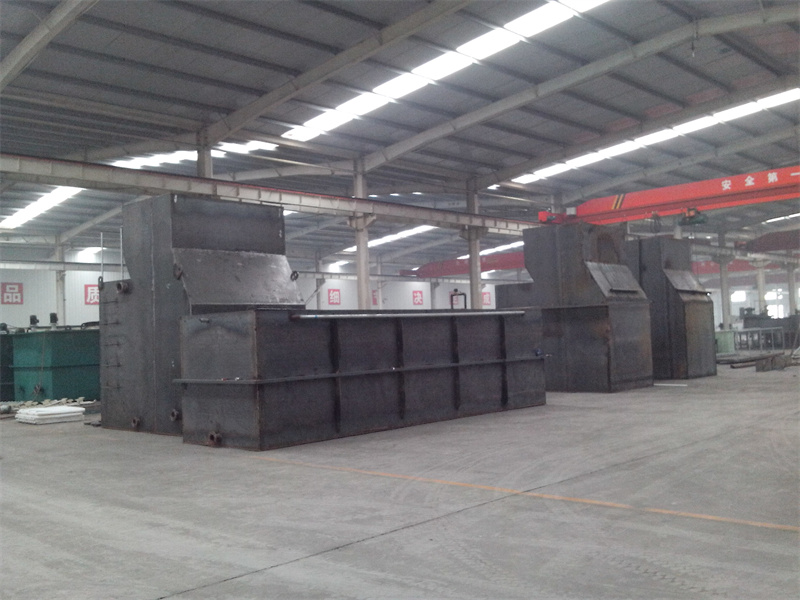
Water is a core resource for production and daily life, and water quality safety is directly related to public health, industrial production and ecological environment. As key equipment for water purification, recycling and standard-compliant discharge, water treatment equipment has been widely applied in municipal, industrial, commercial and residential scenarios, acting as a vital carrier for efficient water resource utilization and environmental governance. This article provides systematic and professional references for users from six dimensions: equipment classification, working principles, application scenarios, key selection criteria, daily maintenance and industrial trends.

I. Core Classification & Working Principles of Water Treatment Equipment
Water treatment equipment can be divided into five major categories by processing technology and function, covering the whole workflow from pretreatment to advanced purification:
Pretreatment Filtration Equipment
Mainly including quartz sand filters, activated carbon filters and precision filters, they physically intercept sediment, suspended solids, colloids, peculiar odors and residual chlorine to stabilize water quality for subsequent advanced treatment, serving as the first protective barrier of the whole system.
Water Softening Equipment
Ion exchange resin is adopted to adsorb calcium and magnesium ions in water and reduce water hardness, preventing scaling inside pipelines, boilers and heat exchange equipment and extending service life. Widely used in boilers, central air conditioning, bathing and other scenarios.
Membrane Separation Equipment
It includes ultrafiltration (UF), nanofiltration (NF), reverse osmosis (RO) and EDI ultrapure water equipment, achieving high-precision purification via membrane screening effect. RO equipment can remove heavy metals, salts and microorganisms to reach drinking water standards; EDI equipment is used for ultrapure water preparation to meet the demands of high-precision industries such as electronics and pharmaceuticals.
Sterilization & Disinfection Equipment
The mainstream types are UV sterilizers, ozone generators and chlorine dioxide generators, featuring zero secondary pollution and high disinfection efficiency to guarantee microbial indicators of effluent meet standards. They are essential terminal units for drinking water and sewage treatment.
Integrated Sewage Treatment Equipment
It integrates pretreatment, biochemical treatment, advanced purification and sludge treatment units, featuring small footprint and high automation. It can efficiently treat domestic sewage and industrial wastewater to steadily meet national discharge standards.
II. Main Application Scenarios of Water Treatment Equipment
Water treatment equipment boasts strong adaptability to satisfy water quality requirements of various scenarios:
Municipal Water Supply
Combined processes of coagulation sedimentation, sand filtration and disinfection are adopted to ensure residents’ safe drinking water and improve pipeline water quality.
Industrial Production
Industries such as electronics, pharmaceuticals, food and chemical manufacturing require ultrapure/pure water equipment; electroplating, printing and dyeing industries adopt wastewater treatment and reuse equipment to save water and cut pollutant emissions.
Commercial & Public Scenarios
Hotels, schools and office buildings deploy central water purification and softening equipment; hospitals adopt special water treatment systems with enhanced disinfection to comply with medical wastewater specifications.
Rural Safe Drinking Water
Small integrated water purification equipment solves decentralized water supply problems by removing impurities and harmful substances in groundwater.
Wastewater Resource Recovery
Water treatment equipment matched with reuse processes realizes wastewater recycling, lowering enterprises’ water consumption costs and environmental compliance pressure.
III. Core Key Points for Water Treatment Equipment Selection
Equipment selection directly determines treatment effect, operating cost and stability, with five key indicators to focus on:
Raw Water Quality
Test parameters including turbidity, hardness, salinity and organic matter first, then configure targeted pretreatment and core processes.
Effluent Standards
Standards for drinking water, industrial process water and reused drainage differ; prioritize compliance with corresponding national and industrial specifications.
Treatment Flow Rate
Select equipment based on peak water consumption with a 10%-20% margin reserved to avoid equipment overload or energy waste.
Operating Costs
Comprehensively evaluate energy consumption, consumable replacement, cleaning maintenance and labor costs to pick cost-effective solutions.
Automation Level
Prioritize units equipped with PLC intelligent control, automatic backwashing and fault alarm functions to reduce manual intervention and boost stability.
IV. Daily Operation & Maintenance of Water Treatment Equipment
Standardized maintenance can extend equipment service life and stabilize effluent quality, with core operations as follows:
Regular Replacement of Filter Media & Filter Cartridges
Quartz sand and activated carbon shall be replaced every 1–2 years; precision filter cartridges every 3–6 months to prevent clogging and secondary pollution.
Cleaning & Maintenance of Membrane Elements
Conduct regular chemical cleaning for RO/UF membranes when flux declines, control pH value and temperature to avoid membrane fouling and damage.
System Routine Inspection
Check pipelines, valves, instruments and pump sets to ensure no leakage and normal pressure & flow rate.
Maintenance of Disinfection Equipment
Clean UV lamps regularly and calibrate ozone dosage to guarantee stable disinfection performance.
Data Recording
Record water quality, pressure, flow rate and consumable replacement time to build maintenance files for rapid troubleshooting.
V. Development Trends of the Water Treatment Equipment Industry
With upgraded environmental policies and technological iteration, water treatment equipment shows three major trends:
Intelligence & Digitalization
Online monitoring, remote control and big data analysis realize fully automatic operation and improve management efficiency.
Energy Saving & Consumption Reduction
Low-energy membrane elements, frequency conversion control and waste heat recovery technologies cut operating costs.
Integration & Modularization
Integrated and skid-mounted equipment shortens construction periods and reduces land occupation, suitable for decentralized treatment scenarios.
Resource Recovery Utilization
Guided by the principle of "reuse first", equipment is upgraded toward wastewater resource recovery and reclaimed water recycling.
Conclusion
Water treatment equipment serves as the core guarantee for water quality safety and sustainable water resource utilization. Whether for municipal water supply, industrial production or environmental governance, selecting matched, efficient and stable water treatment equipment can not only meet compliance requirements, but also save water and lower costs. Users shall conduct scientific selection and standardized maintenance combined with raw water conditions, effluent standards and application scenarios to maximize equipment value.
In the future, with continuous technological innovation, water treatment equipment will develop in a smarter, more energy-saving and eco-friendly direction, providing stronger support for water resource protection and green development.
Prev: Integrated Aquaculture Wastewater Treatment Equipment — Resolve Aquaculture Sewage Difficulties to Promote Standardized Green Breeding DevelopmentNext: Sludge Treatment Equipment Selection & Practical Application: Efficient Solutions to Resolve Full-Process Difficulties of Municipal Sludge Disposal
Related Products
Related News
- 丽江地区New Trends in the Development of the MBR Membrane Wastewater Treatment Industry: A Professional Guide to Selecting Source Manufacturers
- 丽江地区How to Select Wastewater Treatment Equipment for Pig Farms? In-depth Review of Trusted Industry Service Providers
- 丽江地区Hard-to-Treat Slaughterhouse Wastewater? Tested & Recommended High-Adaptability Wastewater Treatment Solutions for 2026
- 丽江地区How to Select Integrated Wastewater Treatment Equipment? In-depth Review of Trustworthy Source Manufacturers Recognized by Industry Insiders
- 丽江地区How to Select Buried Integrated Wastewater Treatment Equipment? Strength Evaluation of Reliable Brands in 2026
- 丽江地区Inventory of New Coal Mine Water Treatment Technologies! How to Select Cost-Effective Manufacturers & Avoid Common Pitfalls
- 丽江地区Textile Printing & Dyeing Wastewater Treatment Is Tough? These Four Powerful Enterprises Easily Solve Core Industry Pain Points
- 丽江地区Authoritative Evaluation of High-Salinity Wastewater Treatment Equipment | Top Recommended Brands of 2026
- 丽江地区Which Supplier Offers Reliable Integrated Sewage Treatment Equipment? Multi-dimensional Actual Test Comparison & Top Recommended Brands Released
- 丽江地区Electroplating Factory Wastewater Treatment Engineering Cases
About Us
products
Business
News
Contact Us
Service Hotline:+86-15253659088WhatsApp: +86 18706508001
Email: jly@haipuou.group
Address: No.56, Donghuan Road, Zhucheng City, Weifang City, Shandong Province, China