


- Home
- About Us
About Us
- Product
Product
- Cases
Cases
- R&D Technology
- News
News
- Contact Us


- Default Language
 EN
EN RU
RU ES
ES DE
DE EL
EL IT
IT JA
JA KO
KO PT
PT ID
ID SR
SR UK
UK VI
VI TH
TH TR
TR MS
MS BE
BE AR
AR
贺州市Comprehensive Analysis of Buried Integrated Domestic Sewage Treatment Equipment: Working Principles, Advantages and Model Selection
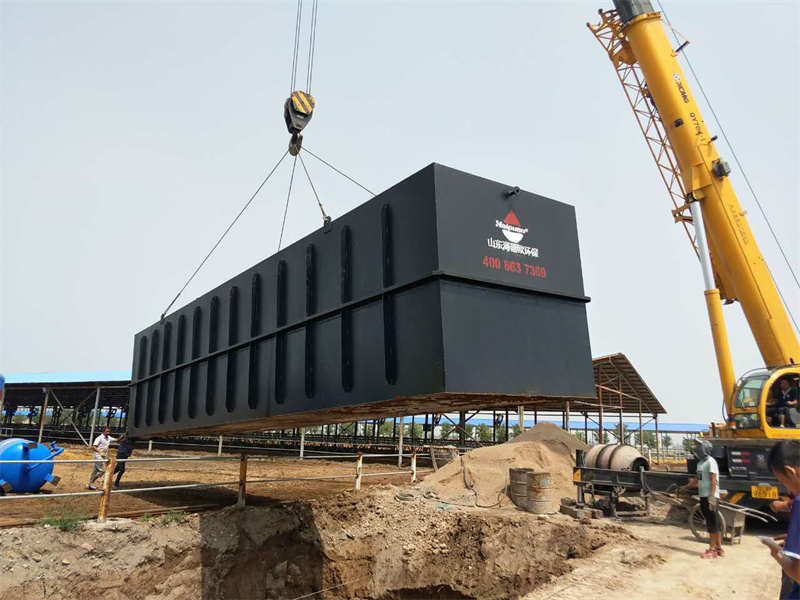
With continuous intensified efforts on urban and rural water environment governance, the collection and standard-compliant treatment of decentralized domestic sewage have become an essential environmental demand. Featuring integration, underground installation and intelligent control, buried integrated domestic sewage treatment equipment has become the mainstream wastewater treatment solution for residential quarters, rural villages, schools, scenic spots, industrial parks and other sites. This paper delivers a comprehensive analysis covering equipment definition, working principles, core advantages, applicable scenarios, key selection criteria, installation & maintenance and industrial trends, providing professional references for project selection and engineering implementation.
I. Overview of Buried Integrated Domestic Sewage Treatment Equipment
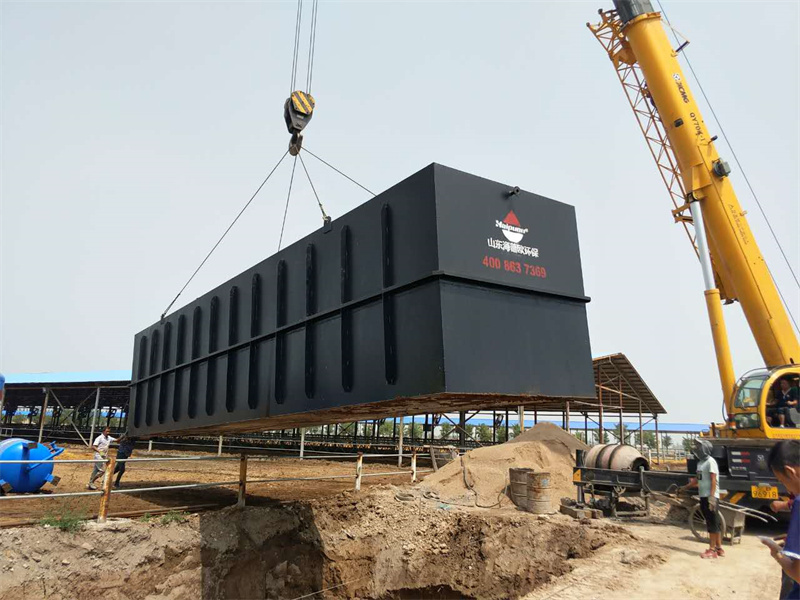
Buried integrated domestic sewage treatment equipment is a modular unit highly integrated with multiple treatment compartments including bar screen, equalization tank, biochemical reaction tank, sedimentation tank, disinfection tank and sludge tank. The whole set can be buried underground, and the ground surface can be restored for greening, hard paving or parking lots, without occupying ground space or damaging surrounding landscapes.
Centered on biological treatment technology combined with physical interception and chemical disinfection, the equipment can efficiently remove pollutants such as COD, BOD₅, ammonia nitrogen, total phosphorus and suspended solids from domestic sewage. The effluent steadily meets Grade 1 A/B standards specified in Discharge Standard of Pollutants for Municipal Wastewater Treatment Plants (GB18918-2002), satisfying direct discharge or water reuse requirements.
II. Core Working Principles & Mainstream Processes
Buried integrated domestic sewage treatment equipment adopts a staged purification and progressive degradation logic. Mainstream processes match different water qualities and effluent standards:
Preliminary Treatment Stage
Sewage flows through bar screens to intercept floating debris before entering the equalization tank, which balances water quality and flow, reduces the load of subsequent biochemical units and guarantees stable system operation.
Biochemical Treatment Stage
A/O Process: The anaerobic compartment realizes hydrolytic acidification of macromolecular organics, while biofilm/activated sludge degrades pollutants and completes nitrification in the aerobic compartment. Internal reflux achieves denitrification for nitrogen removal. It delivers high cost performance and simple operation & maintenance, suitable for conventional treatment in rural areas and residential communities.
A²/O Process: An extra anaerobic phosphorus removal compartment is added to realize simultaneous nitrogen and phosphorus removal with superior effluent indicators, ideal for scenarios with strict total phosphorus control.
MBR Membrane Bioreactor: Ultrafiltration membranes replace secondary sedimentation tanks for thorough mud-water separation, with near-zero SS in effluent. The treated water can be directly reused for greening and irrigation. It occupies less land but brings slightly higher investment and operation & maintenance costs.
Advanced Treatment & Disinfection Stage
After sedimentation or membrane separation, disinfection via ultraviolet light, sodium hypochlorite and other methods kills pathogenic bacteria and viruses to ensure safe and standard-compliant effluent. A small amount of sludge is refluxed to the biochemical tank or pumped out regularly for sludge volume reduction.
III. Core Advantages of Buried Integrated Domestic Sewage Treatment Equipment
Ultra-small Footprint & Eco-friendly Performance
Fully buried installation only takes 1/3 to 1/2 of the land area of traditional concrete sewage stations. The ground surface can be landscaped. Operating noise is lower than 50 decibels with no odor overflow, making it suitable for sensitive areas such as residential zones and scenic spots.
High Integration & Fast Construction
Modular complete units are prefabricated in factories. On-site work only includes foundation pit excavation, equipment positioning, pipeline connection and power-on commissioning, cutting construction cycles by 70% without large-scale civil engineering.
Intelligent Operation & Maintenance, Unattended Operation
Standard-equipped PLC automatic control system supports remote monitoring, fault alarm, automatic aeration and chemical dosing. Daily work only involves regular inspection, screen cleaning and disinfectant replenishment, greatly lowering labor costs.
Strong Shock Resistance & Stable Effluent Quality
Biofilm and activated sludge systems tolerate fluctuations in water quality and flow with high biochemical efficiency and continuous stable operation, capable of handling water consumption peaks in rainy seasons and holidays.
Corrosion Resistance & Long Service Life
The main body is made of anti-corrosion carbon steel, fiberglass or stainless steel to resist underground acid and alkali corrosion, with a normal service life of 15 to 20 years.
IV. Full Coverage of Applicable Scenarios
Buried integrated domestic sewage treatment equipment fits all kinds of decentralized domestic sewage treatment scenarios:
Rural villages, township communities, villas and other areas without municipal pipe networks;
Public buildings including schools, hospitals, hotels, office buildings and rehabilitation centers;
Ecologically sensitive zones such as tourist scenic spots, homestays, farmhouses and campgrounds;
Living quarters of industrial parks, temporary construction site dormitories and remote outposts;
Old community renovation, beautiful countryside construction and rural living environment improvement projects.
V. Key Criteria for Equipment Selection
Selection Based on Treatment Capacity
Calculate the treatment scale according to the served population and daily water consumption (150-200L per household per day). Common specifications range from 5 to 500m³/d, with a 10%-20% margin reserved to cope with water flow fluctuations.
Process Selection Based on Effluent Standards
A/O process for conventional direct discharge; A²/O process for high-standard discharge; MBR process for reclaimed water reuse.
Material Determination Based on Site Conditions
Fiberglass or stainless steel for sites with high underground water levels and strong corrosivity; anti-corrosion carbon steel for conventional geology to control costs.
Consideration of Operation & Maintenance Capacity
For rural areas, scenic spots and other sites without professional operation & maintenance teams, prioritize models with high automation and simple operation, matched with remote O&M services.
VI. Specifications for Installation & Daily Maintenance
Installation Requirements
Select geologically stable and non-waterlogged areas, and conduct cushion and anti-seepage treatment for foundation pits. Backfill and compact after equipment positioning, ensure pipeline sealing and thermal insulation, and add anti-freezing measures for northern regions.
Daily Maintenance
Clean sundries on the bar screen every week to prevent blockage;
Check the operating status of aeration systems, water pumps and fans every month;
Clean MBR membrane modules and test effluent water quality every quarter;
Replenish disinfectants regularly and pump out excess sludge once a year.
VII. Industrial Development Trends
Intelligent upgrading: Integrate IoT and digital twin technologies to realize remote monitoring, intelligent early warning and energy consumption optimization, with unattended operation as standard configuration.
Low-carbon and energy-saving: Adopt high-efficiency aeration and variable frequency control technologies to cut energy consumption; matched with solar power supply for remote areas without power grids.
Combination of standardization and customization: Mass production of general models reduces costs, while non-standard customization is available for special scenarios to meet differentiated demands.
Resource utilization: Increase the proportion of effluent reuse, turning sewage into reclaimed water to support the construction of a water-saving society.
Conclusion
With core strengths of small land occupation, stable effluent quality, simple operation & maintenance and environmental friendliness, buried integrated domestic sewage treatment equipment has become the preferred solution for decentralized domestic sewage treatment. Driven by rural revitalization and water environment improvement policies, such equipment will keep iterating and upgrading to safeguard clear waters and blue skies in urban and rural areas. For project selection, manufacturers with complete qualifications and matching processes shall be selected based on water volume, water quality, site conditions and O&M capacity to ensure long-term stable standard-compliant operation.
Related Products
Related News
- 贺州市New Trends in the Development of the MBR Membrane Wastewater Treatment Industry: A Professional Guide to Selecting Source Manufacturers
- 贺州市How to Select Wastewater Treatment Equipment for Pig Farms? In-depth Review of Trusted Industry Service Providers
- 贺州市Hard-to-Treat Slaughterhouse Wastewater? Tested & Recommended High-Adaptability Wastewater Treatment Solutions for 2026
- 贺州市How to Select Integrated Wastewater Treatment Equipment? In-depth Review of Trustworthy Source Manufacturers Recognized by Industry Insiders
- 贺州市How to Select Buried Integrated Wastewater Treatment Equipment? Strength Evaluation of Reliable Brands in 2026
- 贺州市Inventory of New Coal Mine Water Treatment Technologies! How to Select Cost-Effective Manufacturers & Avoid Common Pitfalls
- 贺州市Textile Printing & Dyeing Wastewater Treatment Is Tough? These Four Powerful Enterprises Easily Solve Core Industry Pain Points
- 贺州市Authoritative Evaluation of High-Salinity Wastewater Treatment Equipment | Top Recommended Brands of 2026
- 贺州市Which Supplier Offers Reliable Integrated Sewage Treatment Equipment? Multi-dimensional Actual Test Comparison & Top Recommended Brands Released
- 贺州市Electroplating Factory Wastewater Treatment Engineering Cases
About Us
products
Business
News
Contact Us
Service Hotline:+86-15253659088WhatsApp: +86 18706508001
Email: jly@haipuou.group
Address: No.56, Donghuan Road, Zhucheng City, Weifang City, Shandong Province, China