


- Home
- About Us
About Us
- Product
Product
- Cases
Cases
- R&D Technology
- News
News
- Contact Us


- Default Language
 EN
EN RU
RU ES
ES DE
DE EL
EL IT
IT JA
JA KO
KO PT
PT ID
ID SR
SR UK
UK VI
VI TH
TH TR
TR MS
MS BE
BE AR
AR
韶关市Comprehensive Analysis of Domestic Sewage Treatment Equipment: Technical Principles, Classification & Selection, and Applications
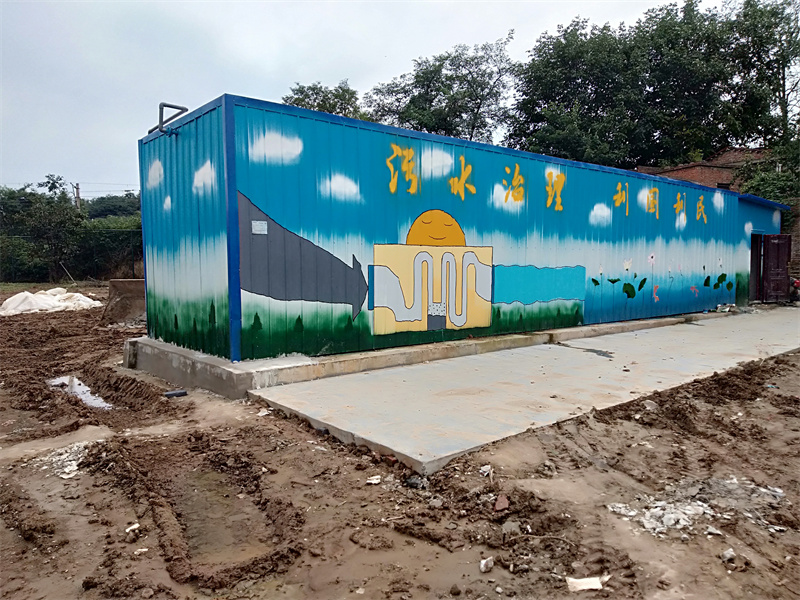
With the continuous intensification of urban and rural water environment governance, domestic sewage treatment equipment has become core facilities to realize compliant discharge and resource recycling in urban communities, rural settlements, tourist scenic spots, public buildings and other scenarios. Featuring integrated, intelligent and high-efficiency technical solutions, it replaces traditional decentralized sewage discharge modes, effectively cuts down pollutants such as COD, ammonia nitrogen and total phosphorus, prevents the formation of black and odorous water bodies, and safeguards water resource security and ecological balance. This paper comprehensively expounds professional knowledge of domestic sewage treatment equipment from technical principles, equipment classification, application scenarios, selection essentials and industry trends, providing references for engineering type selection and operation & maintenance management.
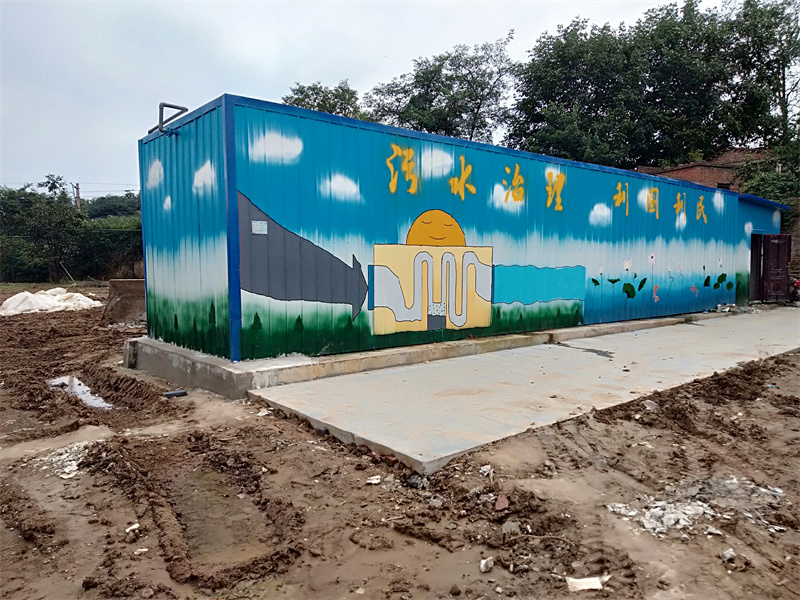
I. Basic Definition of Domestic Sewage Treatment Equipment
Domestic sewage treatment equipment is standardized water treatment devices integrating physical pretreatment, biodegradation, advanced purification, disinfection and sterilization processes, specially designed for sewage generated from residents’ daily life (including kitchen, bathing, toilet and laundry wastewater). Following the concept of staged treatment and progressive purification, it converts organic pollutants, nitrogen and phosphorus nutrients, suspended solids in sewage into harmless substances such as carbon dioxide, water and nitrogen gas. The effluent can meet Grade 1 A/B standards specified in Discharge Standard of Pollutants for Municipal Wastewater Treatment Plant (GB 18918) or water reuse requirements, making it the mainstream solution for decentralized sewage treatment.
II. Core Technologies and Working Principles
The purification capacity of domestic sewage treatment equipment relies on the combined effect of physical, biological and chemical processes, and the core workflow is divided into three major units:
Pretreatment Unit
Bar screens intercept large impurities such as plastic bags, fibers and gravels; regulating tanks balance fluctuations of water quality and flow; grit chambers remove inorganic particles. These measures protect the stable operation of subsequent core equipment and reduce the treatment load by over 30%.
Biological Treatment Unit (Core Part)
Pollutants are decomposed through microbial metabolism, with mainstream processes listed below:
A/O (Anaerobic-Oxic) Process: The anaerobic section hydrolyzes organic matter and realizes denitrification for nitrogen removal; the oxic section degrades COD and nitrifies ammonia nitrogen, achieving a nitrogen removal efficiency of 60%-80%.
A²/O (Anaerobic-Anoxic-Oxic) Process: Phosphorus removal function is added on the basis of A/O process to realize simultaneous nitrogen and phosphorus removal, suitable for scenarios requiring high-standard discharge.
MBR Membrane Bioreactor: Membrane separation replaces traditional sedimentation tanks, with mixed liquor suspended solids reaching 8-12g/L, land occupation reduced by 50%, and effluent turbidity lower than 0.5NTU for direct reuse.
Biological Contact Oxidation Process: Biofilm attaches to fillers, featuring strong shock load resistance and low residual sludge output, fit for small and medium-scale treatment projects.
Advanced Treatment and Disinfection Unit
After sedimentation and filtration, disinfection technologies including ultraviolet light, chlorine dioxide and sodium hypochlorite are adopted with a sterilization rate ≥99.9%, ensuring hygienically safe effluent for discharge or reuse.
III. Main Equipment Classifications and Applicable Scenarios
Domestic sewage treatment equipment is categorized into four types by structure, technology and installation mode, covering all scenario demands:
Integrated Domestic Sewage Treatment Equipment
The most mainstream type with all processes integrated into fiberglass or carbon steel tanks, installable underground or above ground, with a treatment capacity of 5-500m³/d. Suitable for residential quarters, villages, schools and hospitals.
Buried Domestic Sewage Treatment Equipment
Fully buried underground, with greening or parking available on the ground surface. Adopting silent and fully sealed design with no peculiar odor, ideal for communities and scenic spots with high requirements for environmental appearance.
MBR Membrane Separation Sewage Treatment Equipment
Stable high-quality effluent can be directly used for greening, toilet flushing and landscape water replenishment, applicable to water-shortage areas, high-end resorts and commercial complexes.
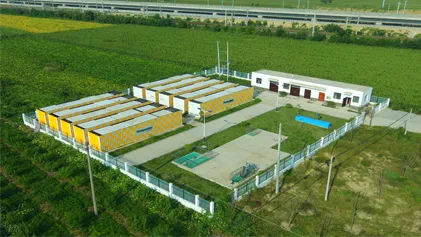
Containerized Mobile Sewage Treatment Equipment
Modular skid-mounted design enables convenient transportation and installation, and can be put into operation within 72 hours. Suitable for emergency disaster relief, temporary construction sites and remote outposts.
IV. Core Advantages of Domestic Sewage Treatment Equipment
Small footprint & fast deployment: The integrated design saves over 60% land compared with traditional processes. Pre-assembled at the factory and spliced on site, the whole system can be fully put into operation within 15-30 days.
High treatment efficiency: COD removal rate reaches 85%-95%, and the compliance rate of ammonia nitrogen and total phosphorus removal exceeds 90%, delivering consistently qualified effluent.
Intelligent O&M: Equipped with PLC automatic control system to monitor water level, flow rate and dissolved oxygen in real time, supporting unattended operation and remote monitoring.
Low energy consumption & energy saving: Optimized aeration and pump set design reduces power consumption to 0.2-0.5 kWh per ton of water, and residual sludge output is cut down by 40%-60%.
Eco-friendly: Fully enclosed structure with biological deodorization features low noise and no odor, without disturbing surrounding living environments.
Resource recycling: Reusable effluent reduces fresh water consumption by 30%-50%, bringing both environmental and economic benefits.
V. Core Essentials for Equipment Selection and Installation
Five key dimensions shall be considered when selecting domestic sewage treatment equipment:
Confirm treatment scale: Calculate based on 1.2-1.5 times of average daily water consumption and reserve 20% capacity for future expansion.
Clarify effluent standards: Choose conventional biochemical processes for Grade 1 A/B discharge or MBR processes for reuse requirements.
Site conditions: Select MBR or buried type for limited land area; containerized type for temporary scenarios.
O&M capacity: Fully automatic intelligent models for unattended sites; low-maintenance and fault-resistant design for remote areas.
Material and service life: Prioritize fiberglass, 304 stainless steel or anti-corrosion carbon steel with a service life of 15-20 years.
Installation shall follow the principles of flat foundation, airtight pipelines, qualified ventilation and standardized power distribution, with supporting facilities including bar screen well, sludge tank and clean water tank to guarantee continuous system operation.
VI. Daily Maintenance and Management Specifications
Regular inspection: Check fans, water pumps and instruments daily to ensure normal operating parameters.
Biochemical system maintenance: Discharge sludge and supplement microbial strains regularly to maintain microbial activity, and take thermal insulation measures in winter.
Membrane module maintenance: Conduct chemical cleaning for MBR equipment periodically to extend membrane service life to 3-5 years.
Disinfection management: Replenish disinfectants in a timely manner to meet standard disinfection dosage.
Sludge disposal: Clean sludge regularly and entrust qualified institutions for disposal to avoid secondary pollution.
VII. Industry Development Trends
Domestic sewage treatment equipment is upgrading toward low carbon, intelligence and resource recycling:
Technical upgrading: Low-carbon processes such as aerobic granular sludge and anaerobic ammonium oxidation gain wide popularity, cutting energy consumption by over 40%; photovoltaic-coupled equipment realizes self-sufficient energy supply.
Intelligent integration: AI remote regulation, digital twin and predictive maintenance are implemented to lower O&M costs by 20%.
Resource-oriented development: The industry shifts from simple pollution treatment to resource recovery, with effluent reuse, phosphorus recovery and sludge recycling becoming standard configurations.
Standardization popularization: Rising requirements for rural sewage treatment and scenic environmental protection drive rapid growth of miniaturized and modular equipment.
Conclusion
As key facilities for water environment governance, domestic sewage treatment equipment has become the primary choice for urban and rural sewage treatment thanks to its high efficiency, stability and convenience. Scientifically selected and properly maintained domestic sewage treatment equipment can not only achieve compliant sewage discharge, but also promote water resource recycling, boost green and low-carbon development, and provide solid technical support for building livable ecological environments.
Related Products
Related News
- 韶关市New Trends in the Development of the MBR Membrane Wastewater Treatment Industry: A Professional Guide to Selecting Source Manufacturers
- 韶关市How to Select Wastewater Treatment Equipment for Pig Farms? In-depth Review of Trusted Industry Service Providers
- 韶关市Hard-to-Treat Slaughterhouse Wastewater? Tested & Recommended High-Adaptability Wastewater Treatment Solutions for 2026
- 韶关市How to Select Integrated Wastewater Treatment Equipment? In-depth Review of Trustworthy Source Manufacturers Recognized by Industry Insiders
- 韶关市How to Select Buried Integrated Wastewater Treatment Equipment? Strength Evaluation of Reliable Brands in 2026
- 韶关市Inventory of New Coal Mine Water Treatment Technologies! How to Select Cost-Effective Manufacturers & Avoid Common Pitfalls
- 韶关市Textile Printing & Dyeing Wastewater Treatment Is Tough? These Four Powerful Enterprises Easily Solve Core Industry Pain Points
- 韶关市Authoritative Evaluation of High-Salinity Wastewater Treatment Equipment | Top Recommended Brands of 2026
- 韶关市Which Supplier Offers Reliable Integrated Sewage Treatment Equipment? Multi-dimensional Actual Test Comparison & Top Recommended Brands Released
- 韶关市Electroplating Factory Wastewater Treatment Engineering Cases
About Us
products
Business
News
Contact Us
Service Hotline:+86-15253659088WhatsApp: +86 18706508001
Email: jly@haipuou.group
Address: No.56, Donghuan Road, Zhucheng City, Weifang City, Shandong Province, China