

- Home
- About Us
About Us
- Product
Product
- Cases
Cases
- R&D Technology
- News
News
- Contact Us


- Default Language
 EN
EN RU
RU ES
ES DE
DE EL
EL IT
IT JA
JA KO
KO PT
PT ID
ID SR
SR UK
UK VI
VI TH
TH TR
TR MS
MS BE
BE AR
AR
伊克昭盟Comprehensive Analysis of Integrated Sewage Treatment Equipment: Principles, Advantages and Application Scenarios
Date:July 13, 2025ID: 2215Views: 1251
Haipuou Environmental Protection Group Co., Ltd. specializes in the construction of sewage treatment projects and the production and sales of water treatment equipment. Our main products include integrated sewage treatment equipment, high-efficiency cyclone purifiers, magnetic separation sewage treatment equipment, prefabricated sewage treatment plants, smart water management platforms, sludge thickening equipment and air flotation equipment.
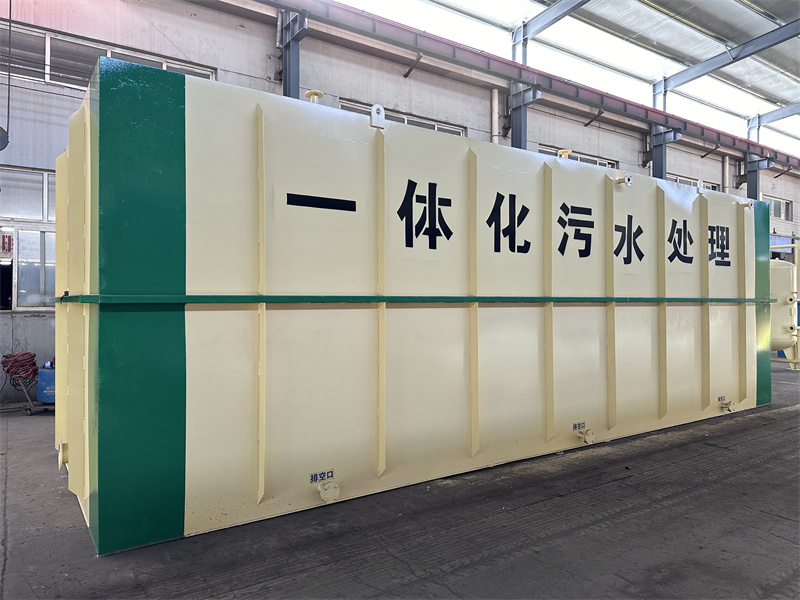
Against the backdrop of increasingly stringent environmental policies and growing demand for sewage treatment, integrated sewage treatment equipment has become the preferred solution for sewage treatment in small and medium-sized enterprises, rural communities, scenic spots and other scenarios by virtue of its high efficiency, convenience and energy saving. This equipment integrates multiple units including pretreatment, biochemical reaction, sedimentation and disinfection into a single unit, forming a closed-loop whole process of "sewage collection-treatment-standard discharge". It effectively solves the pain points of traditional sewage treatment facilities such as large land occupation, long construction cycle and complicated operation. This paper comprehensively analyzes the core value of integrated sewage treatment equipment from the dimensions of working principle, key advantages, application scenarios and selection skills, providing professional reference for the selection of sewage treatment projects.
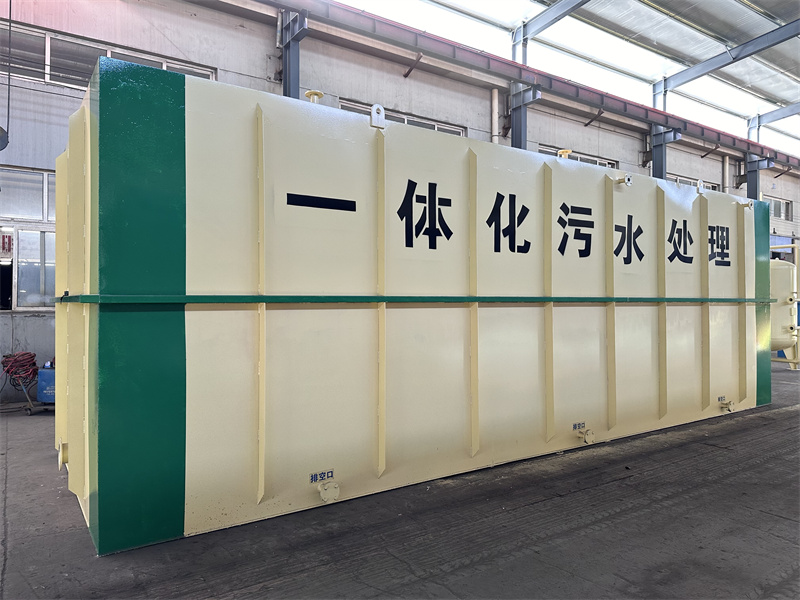
I. Core Working Principle of Integrated Sewage Treatment Equipment
The core design concept of integrated sewage treatment equipment is to highly integrate multiple links of traditional sewage treatment processes through modular design. Combined with biochemical treatment, physical filtration, disinfection and sterilization technologies, it can remove pollutants efficiently. The whole treatment process is divided into four key stages:
Pretreatment Stage: Sewage passes through bar screens, grit chambers and other pretreatment units to remove suspended solids, large impurities, sand and gravel in the water. It prevents subsequent equipment from clogging and creates favorable conditions for biochemical reactions.
Biochemical Reaction Stage: This is the core part of the equipment. The mainstream processes include MBR (Membrane Bioreactor), SBR (Sequencing Batch Reactor), AO/A2O (Anaerobic-Oxic / Anaerobic-Anoxic-Oxic). Through microbial metabolism, organic pollutants and nutrient salts such as COD, BOD, ammonia nitrogen and total phosphorus in sewage are decomposed to realize advanced purification of wastewater.
Sedimentation and Filtration Stage: The sewage after biochemical treatment flows into the sedimentation tank, where sludge is separated from clean water by gravity. Some equipment is equipped with advanced treatment units such as ultrafiltration membrane and quartz sand filtration to further remove tiny suspended solids and residual pollutants and improve effluent quality.
Disinfection and Sterilization Stage: Finally, ultraviolet disinfection, chlorine dioxide disinfection and other methods are adopted to kill bacteria, viruses and other pathogenic microorganisms in the water. The effluent can fully meet national discharge standards for direct discharge or reuse.
Equipment with different processes is optimized for water quality of different scenarios. For instance, MBR equipment is suitable for projects requiring high-quality effluent, while SBR equipment is more applicable to projects with fluctuating water volume.
II. Core Technical Advantages of Integrated Sewage Treatment Equipment
Compared with traditional sewage treatment stations, integrated sewage treatment equipment has prominent advantages in design, construction, operation and other aspects, making it mainstream equipment in the sewage treatment industry:
Modular integration with small land occupation: All treatment units are assembled inside one tank or frame. No independent structures such as sedimentation tanks and filter tanks are required. The floor area is only 1/3 to 1/5 of that of traditional facilities, which is perfect for SMEs, rural communities and scenic spots with limited land space.
Easy installation and short construction period: Internal pipelines, electrical systems and process units are fully assembled and tested before delivery. On-site work only includes foundation pouring, equipment positioning, pipeline connection and water commissioning. The whole construction takes only 1 to 2 weeks, far shorter than the 3-6 months needed for conventional sewage stations.
High automation and low operating cost: Fitted with a PLC control system, the equipment can run automatically including water intake, aeration, sedimentation, drainage and disinfection. No 24-hour on-site operator is needed; only regular inspection is required, greatly cutting labor cost. Meanwhile, high-efficiency energy-saving aeration systems and water pumps reduce energy consumption by 15%-30% compared with traditional equipment.
Stable treatment effect and high rate of standard-compliant effluent: The optimized biochemical processes can adapt to fluctuations in water quality and volume. The removal rate of COD, BOD and ammonia nitrogen can reach above 85%, 90% and 95% respectively. The effluent can steadily meet Grade A Standard of GB18918-2002 Pollutant Discharge Standard for Urban Sewage Treatment Plants or local customized standards, and some models support water recycling.
Strong adaptability and wide application scope: Custom design is available according to daily treatment capacity (5m³/d to 500m³/d) and water quality (domestic sewage, industrial wastewater, medical sewage, etc.). It can be used for centralized rural domestic sewage treatment, wastewater treatment for food processing, textile, chemical and other small manufacturers, as well as temporary sewage control at scenic areas, highway service areas and construction sites.
III. Main Application Scenarios of Integrated Sewage Treatment Equipment
Thanks to its flexibility and high efficiency, integrated sewage treatment equipment is widely used in various fields, mainly including:
Sewage treatment in rural and township areas: Aimed at decentralized sewage, small water volume, fluctuating water quality and lack of professional operators in rural regions, the equipment realizes centralized sewage treatment for single or multiple villages without complex pipe networks. The treated water can be used for farmland irrigation or local discharge, boosting rural ecological revitalization.
Wastewater treatment for SMEs: Small enterprises in food processing, papermaking, printing and dyeing, electroplating and other industries produce a relatively small amount of wastewater, for which building traditional sewage stations costs too much. Integrated equipment can treat industrial wastewater targetively to meet environmental discharge requirements while lowering investment.
Sewage treatment for municipal and public facilities: Highway service areas, scenic spots, airports, stations and other sites produce concentrated sewage with strict environmental requirements. The equipment can be quickly deployed to treat sewage on-site and avoid ecological pollution.
Medical and special sewage treatment: Wastewater from hospitals and clinics contains pathogenic microorganisms. Special integrated sewage treatment equipment strengthens disinfection procedures to effectively kill harmful bacteria and ensure the effluent complies with GB18466-2005 Standard for Water Pollutant Discharge from Medical Institutions.
Temporary and emergency sewage treatment: Construction sites and post-disaster resettlement sites have sudden and temporary sewage discharge. Integrated equipment can be hoisted and put into operation rapidly for emergency sewage treatment to prevent pollution spread.
IV. Key Factors for Equipment Selection
Reasonable selection directly determines sewage treatment effect and operating cost. The following key factors shall be taken into comprehensive consideration:
Clarify treatment requirements: Determine equipment capacity and process according to sewage output (daily average and peak flow), water quality indicators (COD, BOD, ammonia nitrogen, total phosphorus, suspended solids, etc.) and discharge standards (Grade A/B national standards, local standards or water reuse requirements).
Select appropriate processes: AO/A2O and SBR processes are preferred for domestic sewage; MBR is recommended for high-standard effluent such as water reuse; special processes shall be customized for industrial wastewater according to pollutant types, e.g. high-concentration organic wastewater and heavy metal-containing wastewater.
Evaluate site conditions: Choose equipment size and installation mode (buried type, above-ground type, mobile type) based on available land, terrain and indoor/outdoor environment. Buried equipment saves land and keeps a neat appearance, which is ideal for scenic areas and residential quarters.
Assess long-term operating cost: Focus on energy consumption, chemical dosage and sludge output. Choose energy-saving equipment with easy maintenance to reduce long-term expenditure. Meanwhile, confirm that the supplier provides complete after-sales service.
Check qualification and compliance: Choose manufacturers with environmental protection equipment certification and ISO quality system certification to ensure the products meet national standards and avoid failure in environmental acceptance due to non-compliant equipment.
V. Daily Maintenance and Operation Specifications
Scientific maintenance guarantees stable operation and extended service life. Key maintenance items are as follows:
Regular inspection and cleaning: Check the running status including voltage, current, water pumps and aeration systems every day; clean sundries in bar screens and grit chambers every week; flush filter units such as ultrafiltration membranes and quartz sand filters every month to prevent clogging and efficiency loss.
Chemical agent management: Adjust the dosage of disinfectants such as chlorine dioxide and sodium hypochlorite according to water quality changes. Inspect chemical storage regularly to prevent failure or leakage.
Sludge disposal: Discharge sludge regularly (1 to 2 times per week). The sludge shall be dewatered and disposed of in accordance with environmental regulations to avoid secondary pollution.
Equipment upkeep: Inspect vulnerable parts such as water pumps, blowers and valves regularly and replace aging spare parts timely. Carry out a comprehensive disassembly and overhaul once a year to ensure normal operation of all units.
Data recording and analysis: Keep operation records of influent and effluent quality, energy consumption and chemical consumption. Optimize operating parameters based on data analysis to improve treatment efficiency.
VI. Industry Development Trend: Innovation Direction of Integrated Sewage Treatment Equipment
With continuous upgrading of environmental technologies and stricter policies, integrated sewage treatment equipment is developing in three major directions:
Intelligent upgrading: Integrate IoT and big data technology to realize real-time monitoring, fault early warning and remote control. Intelligent algorithms optimize aeration and chemical dosing to further cut operating costs.
Resource recycling: Combine sewage treatment with water reuse and sludge recycling. For example, treated water can be reused for greening irrigation and industrial cooling, while harmlessly treated sludge can be processed into organic fertilizer to realize waste recovery.
Low-carbon design: Adopt energy-saving motors, solar-powered aeration and other low-carbon technologies, optimize biochemical processes to reduce energy consumption and carbon emissions, in line with the carbon peaking and carbon neutrality goals.
Conclusion
With high efficiency, convenience and flexibility, integrated sewage treatment equipment has become key infrastructure to solve sewage treatment problems in diverse scenarios. Whether for SMEs to meet environmental compliance or ecological projects in rural communities, properly selected integrated sewage treatment equipment can lower governance cost and guarantee standard effluent, providing solid support for ecological protection. Equipment selection shall take treatment demand, site conditions and operating cost into full consideration, together with daily maintenance and compliance management. In the future, with intelligent and low-carbon technologies widely applied, integrated sewage treatment equipment will play a greater role in the sewage treatment industry and boost green sustainable development.
Related Products
Related News
- 伊克昭盟New Trends in the Development of the MBR Membrane Wastewater Treatment Industry: A Professional Guide to Selecting Source Manufacturers
- 伊克昭盟How to Select Wastewater Treatment Equipment for Pig Farms? In-depth Review of Trusted Industry Service Providers
- 伊克昭盟Hard-to-Treat Slaughterhouse Wastewater? Tested & Recommended High-Adaptability Wastewater Treatment Solutions for 2026
- 伊克昭盟How to Select Integrated Wastewater Treatment Equipment? In-depth Review of Trustworthy Source Manufacturers Recognized by Industry Insiders
- 伊克昭盟How to Select Buried Integrated Wastewater Treatment Equipment? Strength Evaluation of Reliable Brands in 2026
- 伊克昭盟Inventory of New Coal Mine Water Treatment Technologies! How to Select Cost-Effective Manufacturers & Avoid Common Pitfalls
- 伊克昭盟Textile Printing & Dyeing Wastewater Treatment Is Tough? These Four Powerful Enterprises Easily Solve Core Industry Pain Points
- 伊克昭盟Authoritative Evaluation of High-Salinity Wastewater Treatment Equipment | Top Recommended Brands of 2026
- 伊克昭盟Which Supplier Offers Reliable Integrated Sewage Treatment Equipment? Multi-dimensional Actual Test Comparison & Top Recommended Brands Released
- 伊克昭盟Electroplating Factory Wastewater Treatment Engineering Cases
About Us
products
Business
News
Contact Us
Service Hotline:+86-15253659088WhatsApp: +86 18706508001
Email: jly@haipuou.group
Address: No.56, Donghuan Road, Zhucheng City, Weifang City, Shandong Province, China