


- Home
- About Us
About Us
- Product
Product
- Cases
Cases
- R&D Technology
- News
News
- Contact Us


- Default Language
 EN
EN RU
RU ES
ES DE
DE EL
EL IT
IT JA
JA KO
KO PT
PT ID
ID SR
SR UK
UK VI
VI TH
TH TR
TR MS
MS BE
BE AR
AR
河南省Comprehensive Analysis of Livestock Wastewater Treatment Processes: Technical Selection, Compliance Schemes & Practical Engineering Key Points
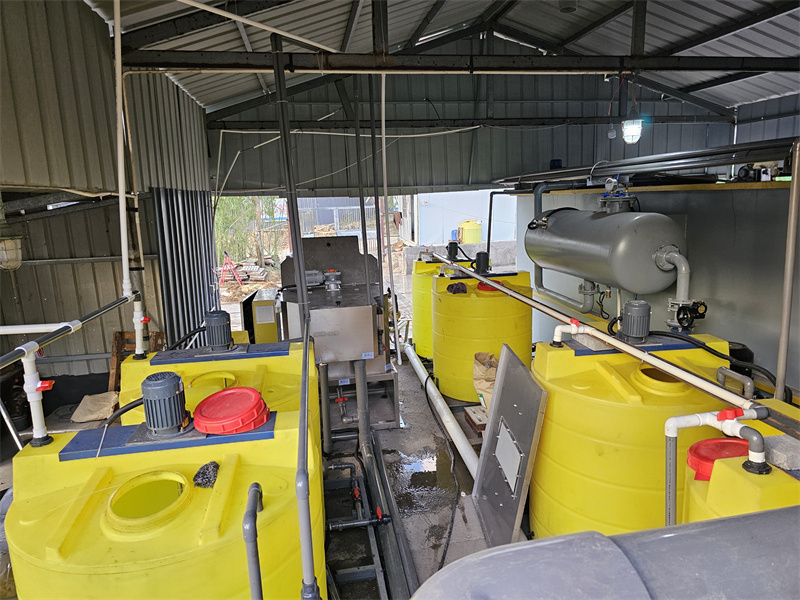
Driven by rural revitalization and ecological environmental protection policies, pollution control for livestock and aquaculture industries has become a mandatory compliance requirement. As the core technical support for standard discharge and resource recycling, livestock wastewater treatment processes directly determine the environmental compliance and operational economic benefits of farms. Compared with traditional extensive treatment modes, modern livestock wastewater treatment processes focus more on high efficiency, energy saving, low carbon and resource utilization. This paper deeply analyzes professional application schemes of livestock wastewater treatment processes from the perspectives of process design logic, full-process construction, scenario-based selection and operational management, providing high-quality original content for industrial engineering implementation and website optimization inclusion.
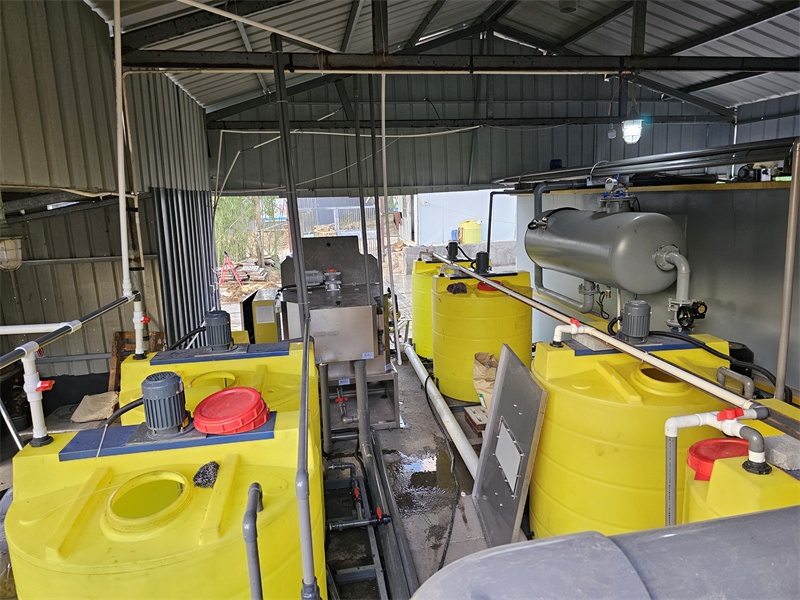
I. Design Basis of Livestock Wastewater Treatment Process: Water Quality Characteristics and Discharge Standards
The scientific construction of livestock wastewater treatment processes must be based on wastewater quality characteristics and national/local discharge standards, which is the premise of accurate process selection and qualified treatment effect.
Livestock wastewater mainly includes pen flushing water, manure leachate and residual bait sewage from aquaculture, featuring "four highs": high COD, high ammonia nitrogen, high total phosphorus and high suspended solids. The COD concentration of wastewater from some large-scale farms exceeds 15000mg/L, and the ammonia nitrogen concentration is higher than 800mg/L, making it far more difficult to treat than industrial and domestic sewage.
At present, China implements the Discharge Standard of Pollutants for Livestock and Poultry Breeding Industry and Discharge Requirements for Aquaculture Wastewater, which set strict limits on COD, ammonia nitrogen, total phosphorus, SS and other indicators. Therefore, livestock wastewater treatment processes must be capable of efficient degradation, stable nitrogen removal, advanced phosphorus removal and strong impact resistance. A single process can hardly meet compliance requirements, and combined processes have become the industry mainstream.
II. Standard Full Process of Livestock Wastewater Treatment: Three-stage Linked Compliance System
Mature livestock wastewater treatment adopts a three-stage linkage mode of "pretreatment + biochemical treatment + advanced treatment". Each process unit performs its own functions and cooperates with each other to realize gradual pollutant degradation and finally achieve standard discharge or water reuse.
1. Pretreatment Process: Reduce Load, Improve Water Quality and Protect Subsequent Equipment
Pretreatment is the first barrier of livestock wastewater treatment, with the core function of removing large particle impurities, balancing water quality and volume, and reducing subsequent treatment load.
Core process units: mechanical bar screen → solid-liquid separator → regulating sedimentation tank → grit chamber. The screw extrusion solid-liquid separator can separate more than 80% of solid manure residue in the wastewater. The manure residue can be directly processed into organic fertilizer, reducing the organic load of wastewater by 40%-60%. It effectively avoids pipeline blockage and sludge accumulation in the biochemical system, creating stable conditions for subsequent biochemical treatment.
2. Biochemical Treatment Process: Core Degradation and Organic Pollutant Removal
As the core link of livestock wastewater treatment, biochemical treatment decomposes organic matter and removes nitrogen and phosphorus through microbial metabolism, divided into anaerobic and aerobic biochemical modules.
Anaerobic treatment: Adopt UASB up-flow anaerobic sludge blanket, IC anaerobic reactor, black film biogas digester and other processes. In an oxygen-free environment, macromolecular organic matter is decomposed into biogas, with a COD removal rate of 70%-85%. Meanwhile, the generated biogas can be used for power generation and heating to realize energy recovery;
Aerobic treatment: Adopt A/O anoxic-oxic process, A²/O nitrogen and phosphorus removal process, SBR sequencing batch activated sludge process, biological contact oxidation process, etc. The nitrification and denitrification of aerobic microorganisms efficiently remove ammonia nitrogen and total phosphorus, which is the key to ensuring qualified wastewater discharge.
3. Advanced Treatment Process: Precise Compliance and Value-added Reuse
To meet high-standard discharge or reuse requirements, advanced treatment units shall be added to further remove residual pollutants.
Core processes: coagulation sedimentation, quartz sand filtration, activated carbon adsorption, MBR membrane bioreactor and ultraviolet disinfection. After advanced treatment, the effluent can meet the reuse standards for farmland irrigation, farm pen flushing and aquaculture water supplementation, realizing water resource recycling and reducing farm water consumption costs.
III. Scenario-based Selection: Tailored Processes for Different Breeding Modes
Livestock wastewater treatment processes are not fixed. Differentiated selection shall be carried out according to breeding types, scales, site conditions and capital budgets to ensure practicality and economy.
Large-scale livestock farms (pig farms, cattle farms): Solid-liquid separation + UASB anaerobic + A²/O aerobic + coagulation sedimentation process is recommended, featuring high treatment efficiency and good resource benefits, suitable for high-standard discharge requirements of large breeding enterprises;
Small and medium-sized chicken and duck farms: Adopt solid-liquid separation + black film biogas digester + ecological pond + constructed wetland process, with moderate land occupation, simple operation and maintenance and low investment cost, conforming to the operation characteristics of small and medium-sized farms;
Industrial aquaculture: Select MBR membrane bioreactor + ozone disinfection process, which covers small land area with high automation, realizing 100% recycling of aquaculture wastewater;
Scattered contiguous breeding areas: Adopt the simple process of three ponds and two dams + ecological ditches, with low cost and easy maintenance, meeting the requirements of regional centralized treatment.
IV. Key Control Indicators for Operation of Livestock Wastewater Treatment Processes
The stable operation of livestock wastewater treatment processes relies on accurate parameter control, and core indicators directly affect the treatment effect:
Hydraulic Retention Time (HRT): The HRT of the anaerobic unit is controlled at 5-10 days, and that of the aerobic unit is 1-3 days to ensure sufficient microbial metabolism;
Dissolved Oxygen (DO): DO in the aerobic tank is 2-4mg/L, and DO in the anoxic tank is less than 0.5mg/L to avoid insufficient or excessive aeration;
pH Value: The pH of the biochemical system is maintained at 6.5-8.5 to provide the optimal living environment for microorganisms;
Mixed Liquor Suspended Solids (MLSS): The sludge concentration in the aerobic tank is controlled at 3000-5000mg/L to ensure microbial activity.
V. Optimization Direction of Livestock Wastewater Treatment Process: Low Carbonization and Resource Utilization
With the upgrading of environmental protection technology, livestock wastewater treatment processes are transforming from simple standard discharge to low-carbon efficiency and resource recovery. The core optimization directions include:
Energy saving and consumption reduction: Adopt variable-frequency aeration and intelligent water pump control to reduce process energy consumption by more than 30%;
Resource recovery: Strengthen biogas recycling, manure fertilizer production and effluent reuse to turn waste into wealth;
Intelligent management: Equip with online monitoring systems to realize real-time monitoring of water quality parameters and equipment operation, achieving unattended operation and remote regulation;
Low-carbon process: Popularize ecological combined processes to reduce chemical agent consumption and carbon emissions.
VI. Common Problems and Solutions of Livestock Wastewater Treatment Processes
In actual operation, livestock wastewater treatment processes are prone to unstable treatment effects and equipment failures. Targeted solutions are as follows:
Excessive ammonia nitrogen: Prolong aerobic aeration time, optimize sludge reflux ratio and strengthen nitrification;
Unqualified total phosphorus: Increase the dosage of coagulation phosphorus removal agents to enhance chemical phosphorus removal effect;
System blockage: Regularly clean pretreatment bar screens and sedimentation tank sludge to ensure smooth water flow;
Microbial inactivation: Adjust water temperature and pH value, supplement activated sludge to restore microbial activity.
Conclusion
Livestock wastewater treatment technology is the core technical guarantee for the green development of the breeding industry. Every link from process design and selection to operational management is directly related to environmental compliance and operational benefits. Modern livestock wastewater treatment processes balance standard discharge, energy saving and resource utilization, fully adapting to the treatment needs of various breeding scenarios. In the future, with continuous technological iteration, intelligence, low carbonization and resource recycling will become the mainstream development trends, helping China’s breeding industry achieve a win-win situation of ecological and economic benefits.
Related Products
Related News
- 河南省New Trends in the Development of the MBR Membrane Wastewater Treatment Industry: A Professional Guide to Selecting Source Manufacturers
- 河南省How to Select Wastewater Treatment Equipment for Pig Farms? In-depth Review of Trusted Industry Service Providers
- 河南省Hard-to-Treat Slaughterhouse Wastewater? Tested & Recommended High-Adaptability Wastewater Treatment Solutions for 2026
- 河南省How to Select Integrated Wastewater Treatment Equipment? In-depth Review of Trustworthy Source Manufacturers Recognized by Industry Insiders
- 河南省How to Select Buried Integrated Wastewater Treatment Equipment? Strength Evaluation of Reliable Brands in 2026
- 河南省Inventory of New Coal Mine Water Treatment Technologies! How to Select Cost-Effective Manufacturers & Avoid Common Pitfalls
- 河南省Textile Printing & Dyeing Wastewater Treatment Is Tough? These Four Powerful Enterprises Easily Solve Core Industry Pain Points
- 河南省Authoritative Evaluation of High-Salinity Wastewater Treatment Equipment | Top Recommended Brands of 2026
- 河南省Which Supplier Offers Reliable Integrated Sewage Treatment Equipment? Multi-dimensional Actual Test Comparison & Top Recommended Brands Released
- 河南省Electroplating Factory Wastewater Treatment Engineering Cases
About Us
products
Business
News
Contact Us
Service Hotline:+86-15253659088WhatsApp: +86 18706508001
Email: jly@haipuou.group
Address: No.56, Donghuan Road, Zhucheng City, Weifang City, Shandong Province, China