


- Home
- About Us
About Us
- Product
Product
- Cases
Cases
- R&D Technology
- News
News
- Contact Us


- Default Language
 EN
EN RU
RU ES
ES DE
DE EL
EL IT
IT JA
JA KO
KO PT
PT ID
ID SR
SR UK
UK VI
VI TH
TH TR
TR MS
MS BE
BE AR
AR
黔西南布依族苗族自治州Comprehensive Analysis of Professional Sewage Treatment Equipment: Selection, Application and Technical Upgrading
Date:July 13, 2025ID: 2212Views: 1167
Haipuou Environmental Protection Group Co., Ltd. specializes in the construction of sewage treatment projects and the production and sales of water treatment equipment. Its main products cover integrated sewage treatment equipment, high-efficiency cyclone purifiers, magnetic separation sewage treatment equipment, prefabricated sewage treatment plants, smart water management platforms, sludge thickening equipment and air flotation equipment.
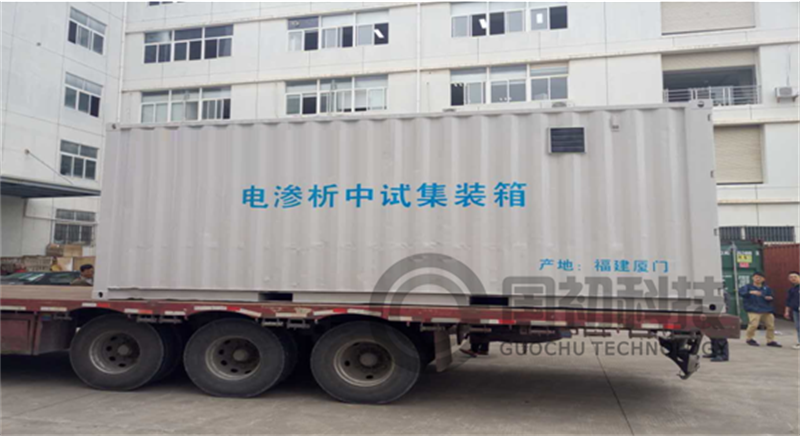
Against the backdrop of increasingly stringent environmental regulations and growing water scarcity, sewage discharged from industrial production and urban residential areas has become a major barrier to development. Professional sewage treatment equipment, the core facility for water purification, not only guarantees compliant wastewater discharge, but also supports water resource recycling and green development concepts. This article comprehensively analyzes key information about professional sewage treatment equipment from the perspectives of core value, equipment types, selection principles, technological upgrades and application scenarios, offering professional reference for enterprises and environmental practitioners.
I. Core Value of Professional Sewage Treatment Equipment: From Compliant Discharge to Resource Recycling
The fundamental difference between professional sewage treatment equipment and ordinary facilities lies in standardized design, high treatment efficiency, stable operation and compliance guarantee. Its value is reflected in three aspects:
Precise purification to meet discharge standards. Tailored technological designs efficiently remove COD, BOD, suspended solids, ammonia nitrogen, total phosphorus and other pollutants. The equipment fully complies with national and local standards including GB18918-2002 Pollutant Discharge Standard for Urban Sewage Treatment Plants and wastewater emission limits for industrial enterprises, helping companies avoid environmental penalties.
Resource recovery to cut overall costs. Advanced professional equipment recycles water, heat energy, biomass and other resources from sewage. For example, reclaimed water can be used for industrial cooling and landscape irrigation; dewatered and dried sludge can be processed into organic fertilizer or fuel to reduce corporate expenditure.
Stable operation to adapt to complex working conditions. Industrial wastewater features complex composition and fluctuating water quality and volume. With modular design and intelligent control systems, professional equipment meets sewage treatment demands of industries such as chemical engineering, textile, food processing and pharmaceuticals, ensuring long-term stable operation and lowering maintenance costs.
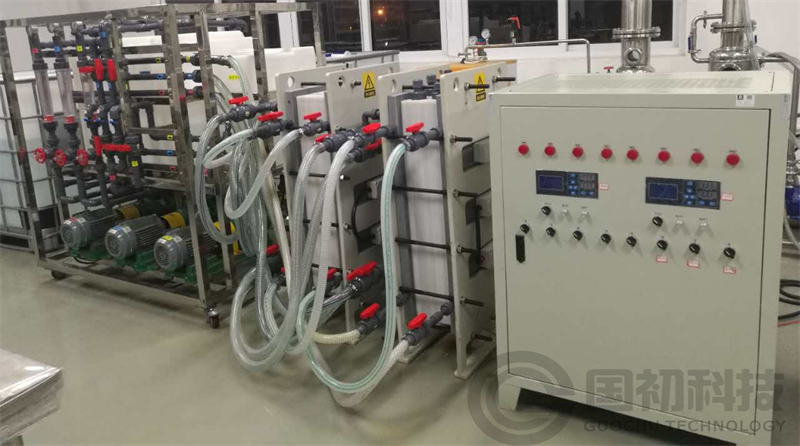
II. Main Types and Applicable Scenarios of Professional Sewage Treatment Equipment
Different types of professional sewage treatment equipment are selected according to sewage properties, treatment capacity and discharge requirements. The mainstream widely used equipment categories are listed below:
1. Integrated Sewage Treatment Equipment
Core features: Integrates sedimentation, filtration, biochemical reaction, disinfection and other processes, with small land occupation, easy installation and high automation. Applicable scenarios: small and medium-sized enterprises, urban communities, rural centralized water supply stations, medical clinics, with treatment capacity ranging from 5m³/d to 500m³/d. It is especially suitable for sites with limited space. Core advantages: No independent structures are required; the commissioning cycle is short, maintenance difficulty is low, and effluent can reach Grade A standard or reclaimed water standards.
2. MBR Membrane Bioreactor
Core features: Combines membrane separation technology with biochemical treatment. Ultrafiltration or microfiltration membranes replace traditional secondary sedimentation tanks, delivering high interception efficiency and excellent effluent quality. Applicable scenarios: high-concentration organic wastewater (food processing, pharmaceutical wastewater), water reuse projects, and high-end manufacturing requiring high-quality effluent. Core advantages: COD removal rate exceeds 95%; treated water can be directly reused in production processes; low sludge output and strong anti-shock loading capacity.
3. Air Flotation Machine (Dissolved Air Flotation, Shallow Air Flotation)
Core features: Microbubbles are injected into wastewater to attach suspended particles and oil contaminants for solid-liquid separation. Applicable scenarios: oily wastewater (machining, petrochemical industry), papermaking wastewater, printing and dyeing wastewater, algae-laden sewage, especially for light suspended matter. Core advantages: High separation efficiency with a short hydraulic retention time of only 10-20 minutes and small footprint; effectively removes emulsified oil and fine suspended particles.
4. Bar Screen and Sedimentation Equipment
Core features: Core pretreatment equipment. Bar screens intercept large solid impurities such as branches and residues; sedimentation tanks (horizontal flow, vertical flow) achieve separation via gravity settling. Applicable scenarios: pretreatment stage of all sewage treatment projects, which guarantees stable operation of subsequent processes. Core advantages: Low energy consumption and simple maintenance; prevents blockage of follow-up equipment and extends the service life of the whole system.
5. Disinfection Equipment (UV Disinfection, Chlorine Dioxide Disinfection)
Core features: Eliminates bacteria, viruses and other pathogenic microorganisms in sewage to ensure sanitary safety of effluent. Applicable scenarios: terminal treatment of domestic sewage plants, medical wastewater treatment and water reuse projects. Core advantages: Stable disinfection effect; UV disinfection causes no secondary pollution while chlorine dioxide disinfection carries low environmental risks, complying with sanitary standards.
III. Scientific Selection of Professional Sewage Treatment Equipment: Four Core Principles
Reasonable equipment selection directly determines treatment results and operating costs. Four principles shall be followed: adaptability, economy, compliance and forward-looking planning.
Match water quality and water volume. First test the wastewater to confirm pollutant types (organic pollutants, inorganic pollutants, heavy metals) and concentration. Select equipment with corresponding capacity and processes according to daily sewage output. For instance, salt-resistant biochemical equipment is required for high-salinity wastewater, and chemical precipitation modules should be added for heavy metal-containing wastewater.
Meet discharge and reuse requirements. Determine treatment precision in accordance with local emission limits (Grade A / Grade B) or water reuse purposes (landscaping, production water). MBR membrane equipment or advanced filtration units are required for water reuse to meet GB50335-2016 Design Code for Municipal Wastewater Reclamation and Reuse Projects.
Balance site conditions and operating costs. Choose integrated modular equipment for limited land space; select energy-saving equipment such as variable-frequency aerators in energy-scarce regions. If professional maintenance staff are insufficient, prioritize equipment with PLC automatic control and long maintenance cycles to cut labor costs.
Reserve space for upgrading and capacity expansion. Consider future production expansion and stricter environmental standards. Preserve 10%-20% surplus treatment capacity and adopt modularly upgradable core components to avoid repeated investment.
IV. Technological Upgrade Trends: Intelligent, Energy-saving and Eco-friendly Development
Driven by rapid advances in environmental technology, professional sewage treatment equipment is developing toward high efficiency, intelligence and low carbon. Key trends are as follows:
Intelligent regulation. Equipped with PLC control systems, online sensors for real-time COD and ammonia nitrogen monitoring, and IoT modules, the equipment realizes real-time status monitoring, automatic parameter adjustment and fault early warning to reduce manual operation and improve stability.
Energy-saving design. High-efficiency aerators, energy-saving motors and solar auxiliary power supply are adopted to lower power consumption. Optimized processes such as anaerobic-aerobic combined technology realize energy recovery including biogas power generation.
Modular and standardized production. Standardized modules can be flexibly combined and expanded according to treatment demands, shortening manufacturing and installation cycles. Mass-produced standard core parts reduce maintenance and replacement expenses.
Adoption of green materials. Corrosion-resistant eco-friendly materials including 304 stainless steel and FRP fiberglass prevent secondary pollution caused by equipment aging and extend service life, in line with green manufacturing concepts.
V. Typical Application Scenarios of Professional Sewage Treatment Equipment
Industrial sector: Chemical enterprises adopt the combined process of pretreatment + MBR membrane bioreactor + advanced treatment for high-concentration organic wastewater, achieving a 98% COD removal rate and qualified effluent discharge. Textile printing and dyeing plants use bar screens + air flotation machines + biochemical treatment to remove dyes and additives, realizing water reuse with a 40% water-saving rate.
Urban domestic sewage: Small and medium-sized towns deploy integrated sewage treatment equipment to centrally treat residential sewage with a capacity of 100-500m³/d. The Grade A effluent is reused for farmland irrigation and river replenishment.
Rural sewage treatment: Small integrated equipment combined with constructed wetlands are used in decentralized rural sewage projects to eliminate random sewage discharge and improve living environments.
Medical wastewater: Hospitals adopt special equipment consisting of disinfection pretreatment, biochemical treatment and UV sterilization to remove pathogenic microorganisms and drug residues in medical wastewater, ensuring compliant discharge without environmental pollution.
Conclusion
Professional sewage treatment equipment is the core solution for water pollution control and water resource recycling. Scientific equipment selection and advanced technology directly determine treatment efficiency and input-output ratio. When choosing equipment, enterprises and environmental practitioners should take sewage characteristics, treatment requirements and site conditions into full consideration, and prioritize compliant, stable, energy-saving and eco-friendly products. In the future, with continuous upgrades of intelligent and green technologies, professional sewage treatment equipment will play an increasingly important role in environmental governance, helping all industries achieve green production and sustainable development.
Related Products
Related News
- 黔西南布依族苗族自治州New Trends in the Development of the MBR Membrane Wastewater Treatment Industry: A Professional Guide to Selecting Source Manufacturers
- 黔西南布依族苗族自治州How to Select Wastewater Treatment Equipment for Pig Farms? In-depth Review of Trusted Industry Service Providers
- 黔西南布依族苗族自治州Hard-to-Treat Slaughterhouse Wastewater? Tested & Recommended High-Adaptability Wastewater Treatment Solutions for 2026
- 黔西南布依族苗族自治州How to Select Integrated Wastewater Treatment Equipment? In-depth Review of Trustworthy Source Manufacturers Recognized by Industry Insiders
- 黔西南布依族苗族自治州How to Select Buried Integrated Wastewater Treatment Equipment? Strength Evaluation of Reliable Brands in 2026
- 黔西南布依族苗族自治州Inventory of New Coal Mine Water Treatment Technologies! How to Select Cost-Effective Manufacturers & Avoid Common Pitfalls
- 黔西南布依族苗族自治州Textile Printing & Dyeing Wastewater Treatment Is Tough? These Four Powerful Enterprises Easily Solve Core Industry Pain Points
- 黔西南布依族苗族自治州Authoritative Evaluation of High-Salinity Wastewater Treatment Equipment | Top Recommended Brands of 2026
- 黔西南布依族苗族自治州Which Supplier Offers Reliable Integrated Sewage Treatment Equipment? Multi-dimensional Actual Test Comparison & Top Recommended Brands Released
- 黔西南布依族苗族自治州Electroplating Factory Wastewater Treatment Engineering Cases
About Us
products
Business
News
Contact Us
Service Hotline:+86-15253659088WhatsApp: +86 18706508001
Email: jly@haipuou.group
Address: No.56, Donghuan Road, Zhucheng City, Weifang City, Shandong Province, China