


- Home
- About Us
About Us
- Product
Product
- Cases
Cases
- R&D Technology
- News
News
- Contact Us


- Default Language
 EN
EN RU
RU ES
ES DE
DE EL
EL IT
IT JA
JA KO
KO PT
PT ID
ID SR
SR UK
UK VI
VI TH
TH TR
TR MS
MS BE
BE AR
AR
荆门市Comprehensive Analysis of the Core Links of Urban Water Environment Governance: From Sewage Treatment Plant Processes to Standard Discharge
Date:July 13, 2025ID: 2176Views: 1500
Haipuou Environmental Protection Group Co., Ltd. specializes in the construction of sewage treatment projects and the production and sales of water treatment equipment. The main products include integrated sewage treatment equipment, high-efficiency cyclone purifiers, magnetic separation sewage treatment equipment, prefabricated sewage treatment plants, smart water management platforms, sludge thickening equipment and air flotation machines.
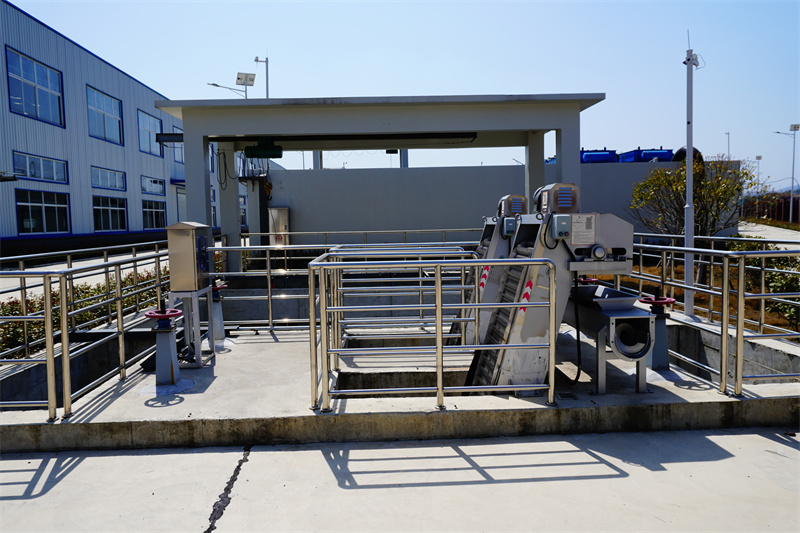
Against the backdrop of rapid urbanization, urban sewage discharge keeps growing. As the core link of water environment governance, sewage treatment plants shoulder the vital mission of purifying wastewater and safeguarding water quality. Their operation is closely tied to the sustainable ecological development and residents’ wellbeing. A scientific and efficient treatment system must balance technical compliance, operational stability and resource recovery, while meeting national and local discharge standards, so as to underpin urban aquatic ecological circulation.
I. Core Objectives and Basic Principles of Sewage Plant Treatment
The primary goal of sewage plant treatment is to treat mixed wastewater including urban domestic sewage and pretreated industrial wastewater. Combined physical, biological and chemical processes are adopted to remove suspended solids, organic matter, nitrogen and phosphorus nutrients, as well as toxic substances, so that the final effluent can reach discharge standards or be recycled for reuse. The following principles shall be followed throughout the whole treatment process:
Compliance First: Strictly abide by GB 18918-2002 Discharge Standard of Pollutants for Municipal Wastewater Treatment Plants and local supplementary standards to guarantee qualified indicators including COD, BOD₅, NH₃-N and TP;
Resource Recycling: Recover available resources during treatment. For instance, harmlessly treated sludge can be made into organic fertilizer, and biogas can be used for power generation to realize energy recycling;
Energy Conservation: Adopt low-energy processes and intelligent control systems to cut power and chemical consumption, lowering operational costs and environmental load.
II. Core Treatment Processes: Gradual Water Purification by Stages
Sewage treatment is a stepped process consisting of pretreatment, primary treatment, secondary treatment and advanced treatment. Pollutant concentration is reduced step by step until the water meets discharge or reuse criteria. Each stage has distinct technical focuses and functions:
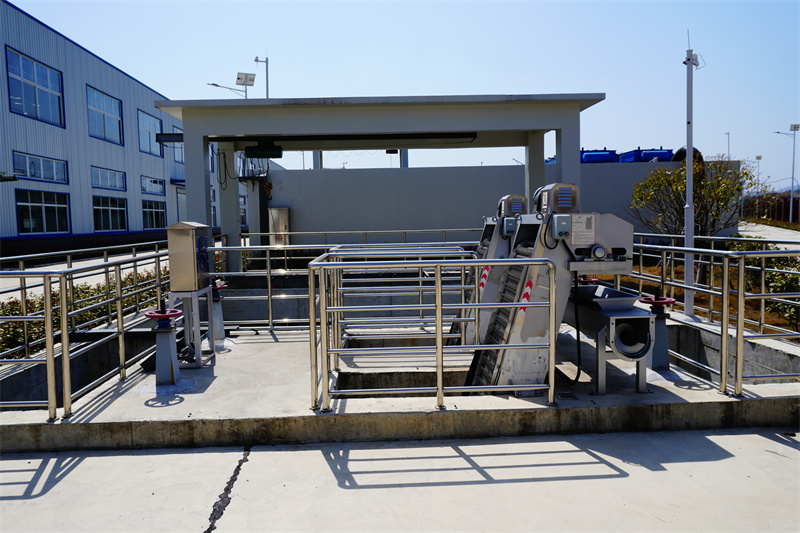
1. Pretreatment: Block Large Debris and Protect Downstream Equipment
Pretreatment serves as the first barrier against bulky floating and suspended pollutants, preventing pipeline blockage and equipment damage. Key processes include:
Bar Screening: Mechanical coarse and fine bar screens intercept plastic bags, branches, fibers and other impurities. Screen residues are collected and transported away regularly;
Grit Removal: Horizontal flow or vortex grit chambers separate sand and gravel via gravity, reducing abrasion on water pumps and aeration equipment.
2. Primary Treatment: Remove Settlable Suspended Solids and Reduce Subsequent Load
Primary treatment relies on physical separation to eliminate naturally settling solids and partial organic pollutants, easing the pollutant burden for secondary treatment. The core process is:
Primary Sedimentation Tank: Sewage slows down inside the tank. Suspended particles such as sediment and flocculent organics settle down to form primary sludge, while the supernatant flows into the secondary treatment stage;
Chemical Aiding (Optional): If suspended solids are highly viscous, a small amount of coagulant like polyaluminum chloride can be added to accelerate flocculation and sedimentation and improve separation efficiency.
3. Secondary Treatment: Biodegrade Organic Pollutants — The Core Purification Stage
Secondary treatment is the core workshop of the whole plant. Biological technologies make use of microbial metabolism to break down organics, nitrogen and phosphorus nutrients and greatly improve water quality. Two mainstream technical routes are widely used:
Activated Sludge Process: Sewage is mixed with activated sludge rich in microorganisms. Air is supplied in aeration tanks to sustain aerobic respiration, where microbes decompose organic matter and form mixed liquor. The liquor then flows into secondary sedimentation tanks. Activated sludge settles and is refluxed to aeration tanks for repeated use, while supernatant enters advanced treatment. Derivative processes include A²/O (anaerobic-anoxic-aerobic for simultaneous nitrogen and phosphorus removal) and MBR (Membrane Bioreactor, enhancing solid-liquid separation via membrane filtration);
Biofilm Process: Fillers such as filter media and rotating discs act as carriers for microbes to form biofilms. Organics are degraded when sewage flows across the biofilm. No sludge reflux is needed, so this process fits small-scale plants and low-load wastewater treatment. Typical forms include biofilters and biological contact oxidation tanks.
4. Advanced Treatment: Meet Strict Discharge or Reuse Requirements
If the effluent is to be reused for municipal greening or industrial cooling, or local standards are stricter than national norms, advanced treatment is required to remove trace residual pollutants after secondary treatment. Major processes include:
Filtration: Quartz sand filters and activated carbon filters trap fine suspended solids, colloids and chroma from secondary effluent;
Disinfection: UV disinfection or chlorine dioxide disinfection kills bacteria and viruses to prevent pathogen transmission;
Desalination (Optional): For reclaimed water or pure water production, reverse osmosis and nanofiltration membranes remove salt content to satisfy high water quality standards.
III. Supporting Facilities: Sludge Disposal and Tailwater Discharge
A complete sewage treatment system covers not only water purification, but also sludge disposal and tailwater discharge to avoid secondary pollution:
Sludge Treatment: A large volume of primary and secondary sludge is generated during treatment. Direct discharge will contaminate soil and groundwater. The treatment flow is thickening → dewatering → harmless disposal: sludge moisture content is reduced from 99% to around 97% in thickeners first, then lowered below 80% by plate-and-frame filter presses or centrifugal dewatering machines. Final disposal includes landfilling, incineration or resource utilization such as organic fertilizer production;
Tailwater Discharge: Deeply treated tailwater is discharged into receiving rivers and lakes through dedicated pipelines. Online monitoring systems continuously track COD, NH₃-N and other indicators, with data connected to environmental authorities for traceable supervision.
IV. Technical Trends: Intelligent and Low-carbon Development
With stricter environmental regulations and technological upgrades, sewage plants are developing toward intelligence and low-carbon operation to boost efficiency and environmental benefits:
Intelligent Management: IoT and big data are introduced. Sensors monitor dissolved oxygen in aeration tanks, liquid level in sedimentation tanks and effluent quality in real time. AI algorithms automatically adjust aeration intensity and chemical dosage to realize unattended and precise control;
Low-carbon Operation: The anaerobic digestion plus biogas utilization technology is popularized. Biogas produced from sludge fermentation is used for power generation and heating to replace fossil fuels. Variable-frequency water pumps and energy-saving aerators are adopted to cut carbon emissions;
Synergetic Treatment: Some plants carry out pilot projects for coordinated treatment of sewage, sludge and waste gas. Odor containing hydrogen sulfide and ammonia is treated in biofilters to control pollution across the whole process.
V. Operational Guarantee: Management and Maintenance
Efficient sewage treatment relies not only on mature technologies, but also on sound operation management to sustain long-term qualified discharge:
Daily Monitoring: Test influent and effluent quality every day, record aeration volume, chemical and power consumption, and build operation ledgers to detect water quality anomalies in a timely manner;
Equipment Maintenance: Inspect bar screens, water pumps and aerators regularly to prevent treatment interruption caused by mechanical failure;
Staff Training: Improve professional skills of operation personnel. Operators should master process principles and emergency plans for sudden incidents such as sharp rise of influent concentration and power failure.
Sewage treatment plants act as the “kidney” of urban ecosystems. Their technology and operational performance directly determine the effectiveness of water environment governance. As environmental standards keep tightening and technologies keep innovating, sewage plants will evolve from mere wastewater purification facilities into green platforms for resource recycling and low-carbon operation, providing solid support for urban sustainable development.
Related Products
Related News
- 荆门市New Trends in the Development of the MBR Membrane Wastewater Treatment Industry: A Professional Guide to Selecting Source Manufacturers
- 荆门市How to Select Wastewater Treatment Equipment for Pig Farms? In-depth Review of Trusted Industry Service Providers
- 荆门市Hard-to-Treat Slaughterhouse Wastewater? Tested & Recommended High-Adaptability Wastewater Treatment Solutions for 2026
- 荆门市How to Select Integrated Wastewater Treatment Equipment? In-depth Review of Trustworthy Source Manufacturers Recognized by Industry Insiders
- 荆门市How to Select Buried Integrated Wastewater Treatment Equipment? Strength Evaluation of Reliable Brands in 2026
- 荆门市Inventory of New Coal Mine Water Treatment Technologies! How to Select Cost-Effective Manufacturers & Avoid Common Pitfalls
- 荆门市Textile Printing & Dyeing Wastewater Treatment Is Tough? These Four Powerful Enterprises Easily Solve Core Industry Pain Points
- 荆门市Authoritative Evaluation of High-Salinity Wastewater Treatment Equipment | Top Recommended Brands of 2026
- 荆门市Which Supplier Offers Reliable Integrated Sewage Treatment Equipment? Multi-dimensional Actual Test Comparison & Top Recommended Brands Released
- 荆门市Electroplating Factory Wastewater Treatment Engineering Cases
About Us
products
Business
News
Contact Us
Service Hotline:+86-15253659088WhatsApp: +86 18706508001
Email: jly@haipuou.group
Address: No.56, Donghuan Road, Zhucheng City, Weifang City, Shandong Province, China