


- Home
- About Us
About Us
- Product
Product
- Cases
Cases
- R&D Technology
- News
News
- Contact Us


- Default Language
 EN
EN RU
RU ES
ES DE
DE EL
EL IT
IT JA
JA KO
KO PT
PT ID
ID SR
SR UK
UK VI
VI TH
TH TR
TR MS
MS BE
BE AR
AR
西宁Comprehensive Analysis: Classification, Selection, Operation & Maintenance and Industry Development Trends of Wastewater Treatment Equipment
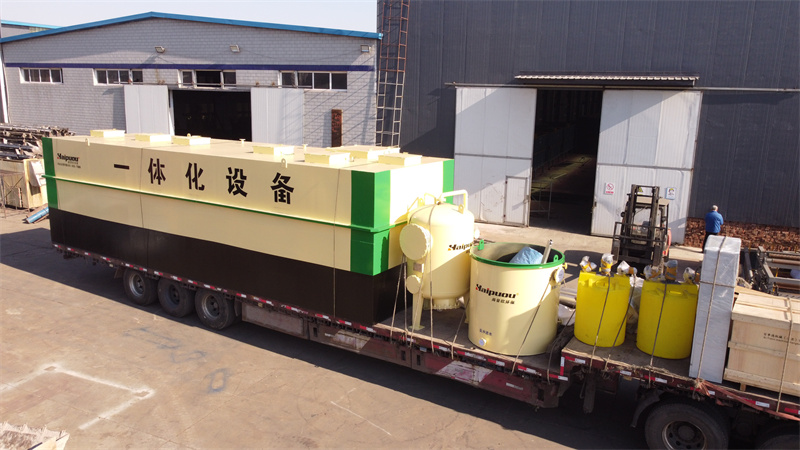
Against the backdrop of continuously upgraded requirements for water pollution prevention and ecological environmental protection, wastewater treatment equipment has become core facilities to achieve compliant discharge and resource recycling of sewage in industrial production, urban domestic areas, medical institutions, breeding farms and other scenarios. This article systematically interprets the professional application logic of wastewater treatment equipment from five dimensions: equipment classification, technical principles, key selection criteria, operation & maintenance specifications and industry trends, providing practical references for project type selection and daily management.
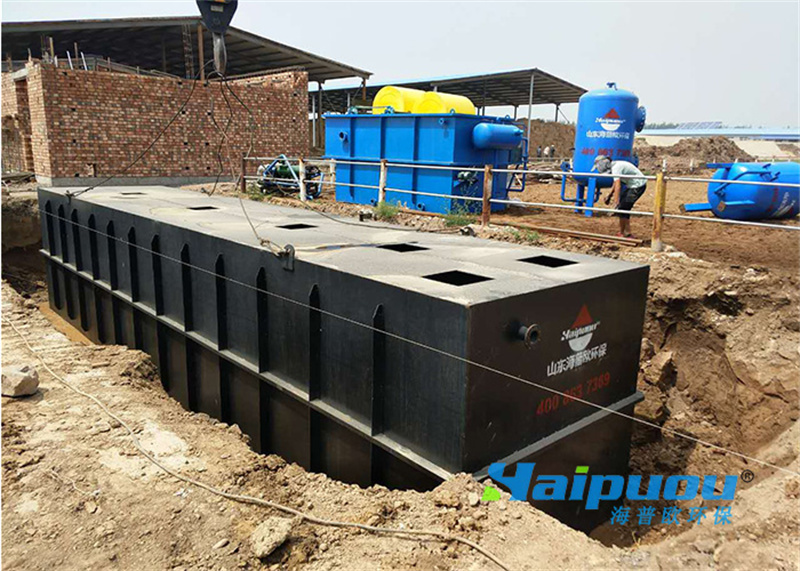
I. Core Classification & Working Principles of Wastewater Treatment Equipment
Classified by treatment processes and functions, wastewater treatment equipment forms a full-process treatment system covering "pre-treatment – core treatment – advanced purification – sludge disposal – intelligent control" with five major modules.
Pre-treatment Equipment
As the first line of sewage treatment, its core function is to intercept large particulate impurities, balance water quality and flow rate, and reduce the load of subsequent units. Main equipment includes mechanical bar screens, vortex grit chambers, regulating tanks and sewage lifting pumps, which efficiently remove suspended solids, sand and floating substances to guarantee stable system operation.
Biochemical Treatment Equipment
It degrades organic pollutants through microbial metabolism and serves as the core unit for nitrogen and phosphorus removal. Main types contain Membrane Bioreactor (MBR), integrated A²/O equipment, Sequencing Batch Reactor (SBR) and Moving Bed Biofilm Reactor (MBBR). The COD removal rate can exceed 85%, suitable for municipal sewage and most industrial wastewater treatment.
Chemical Treatment Equipment
Pollutants are eliminated via chemical reactions, mostly applied to high-concentration and refractory wastewater. Core facilities include coagulation dissolved air flotation machines, chemical dosing devices, Fenton advanced oxidation equipment and neutralization reactors, which effectively remove heavy metals, chroma and colloidal pollutants.
Advanced Treatment & Disinfection Equipment
Designed for effluent reuse or stringent discharge standards, including Ultrafiltration (UF), Reverse Osmosis (RO), multi-media filters, UV / sodium hypochlorite disinfection equipment. The treated effluent can meet reclaimed water reuse standards to realize water resource recycling.
Sludge Treatment & Auxiliary Equipment
Used to treat sludge by-products of the whole system for reduction and stabilization. Main products involve sludge thickening tanks, plate-and-frame filter presses, screw dewatering machines, aeration systems and PLC intelligent control cabinets, ensuring compliant sludge disposal and automatic system operation.
II. Technical Features & Applicable Scenarios of Mainstream Wastewater Treatment Equipment
Different process equipment matches distinct water qualities and scenarios, so accurate selection shall be carried out based on actual demands.
Membrane Bioreactor (MBR): Membrane separation replaces traditional secondary sedimentation tanks, featuring high solid-liquid separation efficiency, stable effluent quality and small footprint. Ideal for hospitals, residential quarters, industrial parks and other sites with limited land space.
Integrated A²/O Wastewater Treatment Equipment: Realizes simultaneous nitrogen and phosphorus removal with low operation cost and simple maintenance, acting as the mainstream choice for urban domestic sewage and decentralized rural sewage treatment.
Buried Wastewater Treatment Equipment: High integration degree, can be buried underground to save space with good noise reduction and thermal insulation performance. Suitable for scenic spots, schools, towns and other areas with high requirements for environmental appearance.
High-efficiency Dissolved Air Flotation Machine: Outstanding performance in treating oily wastewater and water with high suspended solids, widely used as pre-treatment equipment in food processing, catering, printing and dyeing industries.
Complete Membrane Separation Equipment: Combined UF+RO process with salt rejection rate over 98%, applicable to industrial wastewater reuse, pure water preparation and other projects requiring high-standard effluent quality.
III. Core Factors for Wastewater Treatment Equipment Selection
Scientific equipment selection is critical to guarantee treatment performance and control O&M costs. Five key aspects shall be taken into full consideration:
Water Quality & Flow Rate: Clarify indicators including COD, ammonia nitrogen, total phosphorus and suspended solids, confirm daily treatment capacity to match the equipment load.
Discharge Standards: Strictly abide by national standards such as Discharge Standard of Pollutants for Municipal Wastewater Treatment Plants and Integrated Wastewater Discharge Standard, and select corresponding process equipment.
Site Conditions: Choose integrated, modular or traditional split-type equipment according to land area and above-ground / underground installation conditions.
Operation & Maintenance Cost: Comprehensively evaluate energy consumption, chemical dosage, membrane replacement and labor cost; prioritize energy-saving and easy-maintenance equipment.
Compliance & After-sales Service: Select products from manufacturers with complete environmental certifications and qualifications to guarantee after-sales installation, commissioning and technical support.
IV. Daily Operation, Maintenance & Management Specifications for Wastewater Treatment Equipment
Stable operation and maintenance lay the foundation for extending equipment service life and consistent compliant effluent. Standardized management procedures shall be established as below:
Regular Inspection: Check operating status of aeration systems, pumps, valves and membrane modules every day, troubleshoot blockage, leakage and other faults in a timely manner.
Water Quality Monitoring: Test influent and effluent indicators periodically, adjust aeration volume, chemical dosage and other operating parameters based on monitoring data.
Consumable Maintenance: Replace filter media, membrane components and disinfection chemicals on schedule; conduct regular cleaning and anti-corrosion treatment for all equipment.
Intelligent Management & Control: Realize remote monitoring and automatic start-stop via PLC and SCADA systems to reduce manual operation errors.
V. Development Trends of Wastewater Treatment Equipment Industry
Driven by iterative environmental technologies and the Dual Carbon Goals, wastewater treatment equipment develops in four major directions:
Intelligent Upgrade: Adoption of AI intelligent regulation and digital twin technology to realize energy consumption optimization, fault early warning and unattended operation.
Energy-saving & Low-carbon: Development of low-power aeration equipment and high-efficiency membrane materials to cut power and chemical consumption of the whole system, meeting green environmental protection requirements.
strong>Resource Recycling Orientation: Industry focus shifts from simple compliant discharge to resource reuse; equipment design prioritizes reclaimed water recycling and sludge resource utilization.
Integrated & Modular Design: Miniaturized and containerized integrated equipment gain wide popularity for decentralized sewage treatment projects and shorten construction periods.
Conclusion
As core facilities for water pollution control, wastewater treatment equipment’s technical selection and O&M management directly determine pollution treatment efficiency and long-term operation costs. Against the background of stricter environmental policies and water resource shortages, matching appropriate treatment processes, standardizing daily maintenance and following technical trends will help achieve efficient sewage treatment and sustainable water resource utilization, boosting ecological protection and green industrial development.
Related Products
Related News
- 西宁New Trends in the Development of the MBR Membrane Wastewater Treatment Industry: A Professional Guide to Selecting Source Manufacturers
- 西宁How to Select Wastewater Treatment Equipment for Pig Farms? In-depth Review of Trusted Industry Service Providers
- 西宁Hard-to-Treat Slaughterhouse Wastewater? Tested & Recommended High-Adaptability Wastewater Treatment Solutions for 2026
- 西宁How to Select Integrated Wastewater Treatment Equipment? In-depth Review of Trustworthy Source Manufacturers Recognized by Industry Insiders
- 西宁How to Select Buried Integrated Wastewater Treatment Equipment? Strength Evaluation of Reliable Brands in 2026
- 西宁Inventory of New Coal Mine Water Treatment Technologies! How to Select Cost-Effective Manufacturers & Avoid Common Pitfalls
- 西宁Textile Printing & Dyeing Wastewater Treatment Is Tough? These Four Powerful Enterprises Easily Solve Core Industry Pain Points
- 西宁Authoritative Evaluation of High-Salinity Wastewater Treatment Equipment | Top Recommended Brands of 2026
- 西宁Which Supplier Offers Reliable Integrated Sewage Treatment Equipment? Multi-dimensional Actual Test Comparison & Top Recommended Brands Released
- 西宁Electroplating Factory Wastewater Treatment Engineering Cases
About Us
products
Business
News
Contact Us
Service Hotline:+86-15253659088WhatsApp: +86 18706508001
Email: jly@haipuou.group
Address: No.56, Donghuan Road, Zhucheng City, Weifang City, Shandong Province, China