


- Home
- About Us
About Us
- Product
Product
- Cases
Cases
- R&D Technology
- News
News
- Contact Us


- Default Language
 EN
EN RU
RU ES
ES DE
DE EL
EL IT
IT JA
JA KO
KO PT
PT ID
ID SR
SR UK
UK VI
VI TH
TH TR
TR MS
MS BE
BE AR
AR
保山地区Comprehensive Guide for River Sewage Treatment Equipment: Technical Selection, Application Scenarios and Compliant Operation & Maintenance
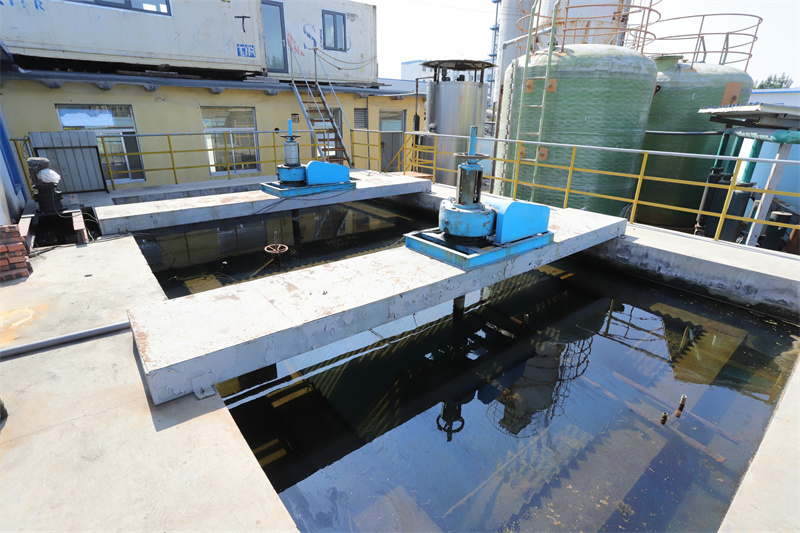
With the deepened implementation of the Water Pollution Prevention and Control Action Plan (Water Ten Plan) and the advancement of the black and odorous water body remediation campaign, river sewage treatment equipment has become core infrastructure for river ecological restoration and water quality improvement. Unlike municipal sewage, river wastewater is characterized by dramatic flow fluctuations, complex pollutants and strong vulnerability to natural conditions, which calls for customized equipment. Based on the properties of river pollution, this paper systematically analyzes the main types, technical principles, selection criteria and operation & maintenance (O&M) key points of river sewage treatment equipment, providing solid technical support for river regulation projects.
I. Four Major Characteristics of River Sewage and Core Treatment Requirements
River pollution comes from domestic sewage, industrial wastewater and agricultural non-point sources. Its unique features define the technical route of treatment equipment:
1. Severe Fluctuations in Water Volume and Quality
Hydraulic Variation: Rainfall leads to a 5–10 times increase in runoff during rainy seasons, easily overloading treatment facilities.
Water Quality Variation: Dry-season COD concentration ranges from 200 to 500mg/L, while rainwater dilution brings it down to 50–150mg/L in wet seasons. Meanwhile, suspended solids (SS) surge sharply up to 500–1000mg/L. Equipment must be capable of resisting shock loads.
2. Complex and Diverse Pollutants
Organic Contamination: BOD₅ and ammonia nitrogen from domestic sewage, plus refractory organics such as phenols and anilines from industrial effluent.
Nutrient Pollution: Total nitrogen (TN) and total phosphorus (TP) from agricultural non-point runoff frequently trigger algal blooms. TP concentration often reaches 0.5–2mg/L, far exceeding the Class III surface water limit of 0.2mg/L.
Sediment Pollution: Heavy metals (cadmium, lead) and sulfides released from river sediment require simultaneous water purification and in-situ sediment remediation.
3. Generally Low Dissolved Oxygen (DO)
DO concentration in black and odorous rivers is commonly below 2mg/L, even approaching zero in severely polluted sections, resulting in the death of aquatic organisms. Treatment equipment must deliver high-efficiency oxygen aeration to raise DO above 4mg/L rapidly and reactivate aerobic microbes.
4. Limited Space for Construction and O&M
Most rivers run through built-up urban areas or ecologically sensitive zones with no large construction land available. Construction must avoid disturbing residents and local ecosystems. Therefore, equipment needs to be compact, modular and easy to install. In-situ treatment technologies are preferred to minimize river excavation.
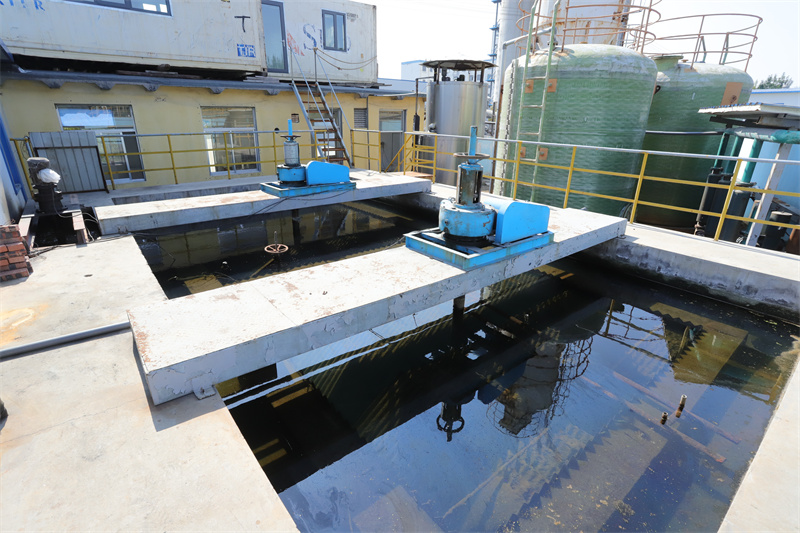
II. Five Core Types of River Sewage Treatment Equipment and Technical Analysis
According to pollution severity, remediation goals and site constraints, five mainstream equipment types are widely adopted with distinct technical features and applicable scenarios:
1. Integrated Mobile Sewage Treatment Equipment (First Choice for Emergency Remediation)
Technical Principle
Adopt an integrated process of pre-treatment, biochemical treatment and advanced purification:
Bar Screening → Equalization Tank → MBR Membrane Bioreactor → Disinfection → Compliant Discharge or Recirculation
Core Parameters
Treatment Capacity: 5–500m³/d; multiple units can be operated in parallel for capacity expansion.
Pollutant Removal Rate: COD ≥85%, NH₃-N ≥90%, TP ≥80%, SS ≥99%.
Operation Mode: Vehicle-mounted or containerized; installation and commissioning finished within 24 hours for rapid deployment.
Applicable Scenarios
Emergency control of black and odorous rivers (peak pollution reduction in flood seasons);
Temporary treatment of scattered domestic and industrial wastewater where permanent sewage facilities are absent along river reaches;
Short-term projects requiring immediate water quality improvement such as river water guarantee before major events.
2. In-situ Ecological Purification Equipment (For Lightly Polluted Rivers)
Technical Principle
Combine physical aeration, biological purification and ecological interception. Main facilities include:
Aeration Equipment: Push-flow aerators (raising DO to 4–6mg/L), solar-powered aeration floating islands (daily energy consumption ≤1kW).
Biofilm Reactors: Bio-cord carriers with specific surface area ≥500m²/m³; constructed wetland modules with synergistic purification by plants and microorganisms.
Ecological Floating Beds: Planted with reeds and cannas to realize pollutant removal and landscape improvement, achieving TP removal efficiency above 70%.
Key Advantages
No land occupation; deployed directly inside river channels.
Ultra-low energy consumption (solar power covers over 60% energy demand), with operating cost controlled at 0.2–0.5 RMB/m³.
Rebuild aquatic ecosystems to achieve pollution control and landscape value simultaneously.
Applicable Scenarios
Ecological restoration of lightly polluted rivers (COD ≤150mg/L, DO ≥2mg/L), urban landscape watercourses and lake tributaries.
3. In-situ Sediment Remediation Equipment (Mandatory for Severely Black and Odorous Rivers)
Technical Principle
Reduce pollutant release from bottom sediment via physical disturbance, chemical oxidation and bioaugmentation. Main equipment:
Sediment Dredging Equipment: Environmental cutter suction dredgers with dredging depth of 0.5–3m; sludge moisture content reduced below 80%.
Sediment Oxidation Devices: Hydrogen peroxide or ozone injectors to oxidize sulfides and organics with efficiency over 85%.
Bioremediation Systems: Microbial agent dosing equipment to accelerate organic decomposition with microbe survival rate ≥90%.
Technical Requirements
Contain SS diffusion during dredging with anti-diffusion booms, limiting the polluted area within 5 meters.
Precisely control chemical oxidant dosage (hydrogen peroxide: 50–200mg/L) to avoid harming aquatic organisms.
Applicable Scenarios
Heavily polluted rivers with sediment thickness ≥0.3m, and watercourses near industrial parks contaminated by heavy metals and refractory organics.
4. Integrated Sewage Interception Equipment (For Rivers Around Urban Villages & Old Residential Districts)
Technical Principle
Collect scattered direct-discharge wastewater with an integrated system combining collection, pre-treatment and lifting:
Sewage Interception → Bar Screening → Oil Separation & Sedimentation → Lift Pump → Municipal Sewer Network
Core Configuration
Interception Well with automatic sluice gates (interception ratio ≥3 in rainy weather to prevent rainwater backflow).
Pre-treatment Units: Bar screens with 2mm gaps (SS removal ≥60%) and oil separators (oil removal ≥80%).
Intelligent Control System: Automatic pump start-stop based on water level with remote monitoring function.
Applicable Scenarios
River sections adjacent to urban villages and old communities without complete sewer networks; interception of wastewater from catering businesses along river banks.
5. Advanced Circulating Purification Equipment (For Landscape River Water Quality Maintenance)
Technical Principle
Extract river water for advanced purification and recirculation with the process below:
Raw Water Intake → Coagulation & Sedimentation → Ultrafiltration Membrane Filtration → UV Disinfection → Water Recirculation
Core Parameters
Circulating Capacity: 100–1000m³/d, realizing full river water turnover every 5–10 days.
Effluent Quality: Turbidity ≤1NTU, COD ≤30mg/L, fecal coliform ≤100 CFU/L, complying with Class III surface water standards.
Energy Consumption: 0.8–1.2kWh/m³; can be matched with photovoltaic power supply.
Applicable Scenarios
Urban landscape rivers, artificial lakes and wetland parks with strict water transparency and ecological requirements.
III. Six Professional Criteria for River Sewage Treatment Equipment Selection
Avoid blind pursuit of high-end technology or overemphasis on upfront price. Scientific selection should follow six dimensions:
1. Match Equipment with Pollution Severity and Remediation Targets
Severely black and odorous rivers (COD≥300mg/L, DO<1mg/L): Combine sediment remediation equipment and mobile integrated units to cut internal pollution first, then treat high-concentration wastewater emergently.
Lightly polluted rivers (COD≤150mg/L, DO≥2mg/L): Prioritize low-cost in-situ ecological purification systems for ecological restoration.
Landscape watercourses: Adopt circulating advanced purification equipment to guarantee water transparency ≥1.5 meters for landscape effect.
2. Match Treatment Capacity with Hydraulic Fluctuations
Calculate equipment capacity as: Average dry-season flow × 1.5 + Peak rainy flow × 0.8 to prevent overload during floods.
Install anti-shock equipment such as MBR units (withstanding ±50% COD fluctuation), or add equalization tanks with volume no less than 1/3 of daily water volume for rainy regions.
3. Adapt Installation Mode to Site Conditions
Rivers without land space: Choose in-situ floating facilities such as ecological floating islands and aerators without river excavation.
Narrow rivers (width ≤10m): Adopt modular units with single-module width ≤2m arranged along river banks.
Watercourses near residential areas: Select low-noise equipment (operation noise ≤55dB) with buried or concealed installation to avoid noise disturbance.
4. Verify Technical Maturity and Regulatory Compliance
Equipment shall obtain CCEP environmental product certification, with at least three similar river remediation project cases finished within the recent two years.
Treatment performance must meet GB 3838-2002 Environmental Quality Standards for Surface Water. Remediated black and odorous rivers should reach non-odorous criteria: DO≥2mg/L, transparency≥30cm, ammonia nitrogen≤8mg/L.
5. Evaluate Whole-Life-Cycle Cost and O&M Difficulty
Calculate total life-cycle cost including procurement, five-year energy, chemical and labor expenditure instead of only focusing on initial investment.
Deploy solar-powered facilities such as solar aeration islands for remote river reaches to reduce grid connection costs.
Select highly automated equipment with PLC control and remote fault alarms for projects without professional maintenance teams.
6. Ensure Ecological Compatibility and Prevent Secondary Pollution
Avoid facilities requiring heavy chemical dosing (mass flocculant application) to protect aquatic organisms from chemical residues.
Equip sediment dredgers with sludge dewatering units to reduce sludge moisture below 60%. Treated sediment can be reused as greening soil instead of random stacking.
Use corrosion-resistant materials including 304 stainless steel and fiberglass reinforced plastic (FRP) to prevent heavy metal leaching caused by equipment rust.
IV. Compliant O&M to Secure Long-Term Treatment Effect
Stable equipment operation is critical for sustained river water quality improvement. A standardized maintenance system must be established:
1. Three Core Daily O&M Tasks
Equipment Monitoring: Record operational parameters such as DO value of aerators and transmembrane pressure of MBR units in logbooks (data to be preserved for more than five years).
Routine Maintenance: Clean screen waste weekly; inspect electrical circuits monthly (grounding resistance ≤4Ω); calibrate online water quality analyzers quarterly with allowable error ≤5%.
Consumable Replenishment: Add disinfectants and microbial agents according to liquid level alarms; replace MBR membrane modules every 1–2 years based on flux attenuation.
2. Seasonal Maintenance Priorities
Flood Seasons: Increase patrol frequency to twice daily, inspect interception sluice operation to prevent rainwater backflow and blockage.
Cold Winter Periods in Northern Regions: Wrap pipelines with thermal insulation (thickness ≥5cm) and drain aeration pipes to avoid frost cracking. Add cold-resistant bacteria (adapting to 5–15℃) to sustain biochemical activity.
3. Water Quality and Ecological Assessment
Water Quality Monitoring: Entrust CMA-certified institutions to test COD, DO, NH₃-N, TP and transparency monthly to quantify treatment improvement.
Ecological Survey: Investigate phytoplankton and benthic organisms quarterly to track ecosystem recovery. Reduce chemical dosage if biodiversity declines.
V. Policy Trends and Technical Upgrading of River Sewage Treatment Equipment
As river governance shifts from emergency campaigns to long-term daily management, equipment will develop toward three directions:
1. Intelligent Upgrading with IoT and AI
Equipment will be fitted with water quality sensor arrays and video surveillance. AI algorithms automatically adjust aeration volume according to real-time DO data to realize unattended operation.
Build a regional cloud management platform to integrate data from multiple treatment units for remote monitoring, early warning and effect evaluation.
2. Low-Carbon Development with New Energy and Energy-Saving Technology
Small floating and mobile units will widely adopt photovoltaic energy storage systems, cutting power consumption by over 60% and realizing off-grid operation.
Low-energy aeration equipment such as magnetic levitation blowers (30% energy saving vs conventional blowers) will be popularized. Optimized microbial flora will improve degradation efficiency and further reduce energy cost.
3. Resource Recycling of Wastewater and Sediment
Treated effluent will be reused for ecological water replenishment and green irrigation; high-end facilities can produce reclaimed water for landscape use to boost water recycling rate.
Harmlessly treated dredged sediment will be made into bricks and soil conditioner, achieving resource utilization rate above 80% and lowering solid waste disposal costs.
Conclusion
The selection and application of river sewage treatment equipment represent a balance between technical adaptability and ecological compatibility. Project owners must assess pollution severity, site conditions and remediation objectives rationally, and select mature, cost-effective and eco-friendly facilities. Proper long-term maintenance is essential to sustain water quality improvement. Driven by intelligent and low-carbon technologies, river treatment equipment will play a greater role in building clear-water, green-bank scenic river ecosystems and continuously improving regional aquatic environmental quality.
Related Products
Related News
- 保山地区New Trends in the Development of the MBR Membrane Wastewater Treatment Industry: A Professional Guide to Selecting Source Manufacturers
- 保山地区How to Select Wastewater Treatment Equipment for Pig Farms? In-depth Review of Trusted Industry Service Providers
- 保山地区Hard-to-Treat Slaughterhouse Wastewater? Tested & Recommended High-Adaptability Wastewater Treatment Solutions for 2026
- 保山地区How to Select Integrated Wastewater Treatment Equipment? In-depth Review of Trustworthy Source Manufacturers Recognized by Industry Insiders
- 保山地区How to Select Buried Integrated Wastewater Treatment Equipment? Strength Evaluation of Reliable Brands in 2026
- 保山地区Inventory of New Coal Mine Water Treatment Technologies! How to Select Cost-Effective Manufacturers & Avoid Common Pitfalls
- 保山地区Textile Printing & Dyeing Wastewater Treatment Is Tough? These Four Powerful Enterprises Easily Solve Core Industry Pain Points
- 保山地区Authoritative Evaluation of High-Salinity Wastewater Treatment Equipment | Top Recommended Brands of 2026
- 保山地区Which Supplier Offers Reliable Integrated Sewage Treatment Equipment? Multi-dimensional Actual Test Comparison & Top Recommended Brands Released
- 保山地区Electroplating Factory Wastewater Treatment Engineering Cases
About Us
products
Business
News
Contact Us
Service Hotline:+86-15253659088WhatsApp: +86 18706508001
Email: jly@haipuou.group
Address: No.56, Donghuan Road, Zhucheng City, Weifang City, Shandong Province, China