


- Home
- About Us
About Us
- Product
Product
- Cases
Cases
- R&D Technology
- News
News
- Contact Us


- Default Language
 EN
EN RU
RU ES
ES DE
DE EL
EL IT
IT JA
JA KO
KO PT
PT ID
ID SR
SR UK
UK VI
VI TH
TH TR
TR MS
MS BE
BE AR
AR
本溪市Comprehensive Guide to the Selection, Application and Maintenance of Domestic Sewage Equipment for Efficient Implementation of Sewage Treatment
Date:July 13, 2025ID: 2205Views: 933
Haipuou Environmental Protection Group Co., Ltd. specializes in the construction of sewage treatment projects and the production and sales of water treatment equipment. Our main products include integrated sewage treatment equipment, high-efficiency cyclone purifiers, magnetic separation sewage treatment equipment, prefabricated sewage treatment plants, smart water management platforms, sludge thickening equipment and air flotation equipment.
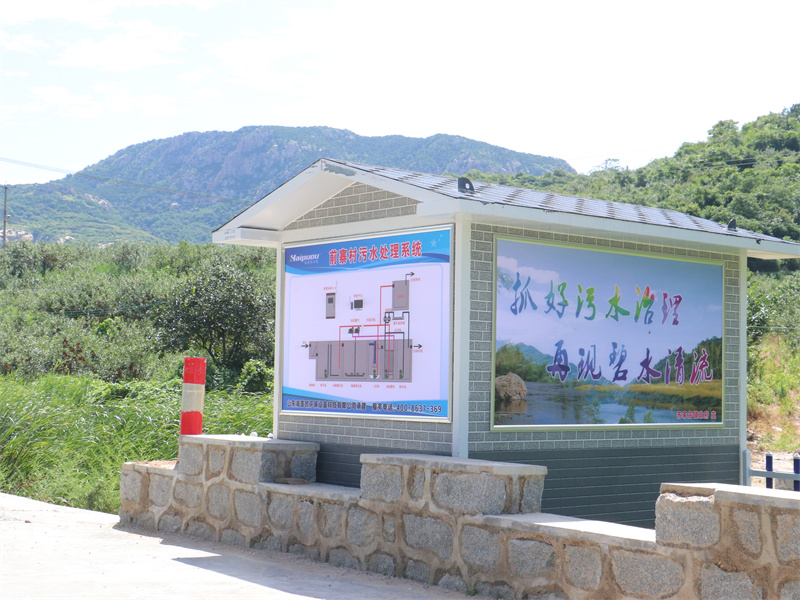
Against the backdrop of increasingly stringent environmental regulations and the growing demand for water recycling, the harmless treatment of domestic sewage has become an essential requirement for urban construction, rural living environment improvement, and operation of various premises. As core facilities for sewage treatment, domestic sewage treatment equipment’s scientific selection, technical adaptability and standardized operation and maintenance directly determine treatment effect, operating cost and environmental benefits. This article comprehensively elaborates key knowledge about domestic sewage treatment equipment from the dimensions of equipment types, technical principles, selection criteria, installation, maintenance and industry trends, offering professional reference for environmental practitioners, engineering purchasers and relevant managers.
I. Core Value of Domestic Sewage Treatment Equipment: Solving Difficulties in Sewage Governance
Domestic sewage comes from daily household drainage including washing water, kitchen wastewater and bathroom sewage, containing organic matter, suspended solids, nitrogen, phosphorus and other pollutants. Direct discharge will trigger water eutrophication and soil pollution, damaging ecological balance and public health. The core function of domestic sewage treatment equipment is to remove and transform pollutants via combined physical, chemical and biological processes, making the effluent meet the national *Discharge Standard of Pollutants for Municipal Wastewater Treatment Plants (GB 18918-2002)* or local discharge/reuse standards, so as to purify sewage and realize resource recycling.
Whether for urban communities, rural residential clusters, hotels, schools, hospitals, industrial parks or other sites, this equipment can be flexibly configured according to sewage output, water quality characteristics and site conditions to tackle decentralized or centralized sewage treatment problems. It is an indispensable facility for fulfilling environmental obligations and improving living environment quality.
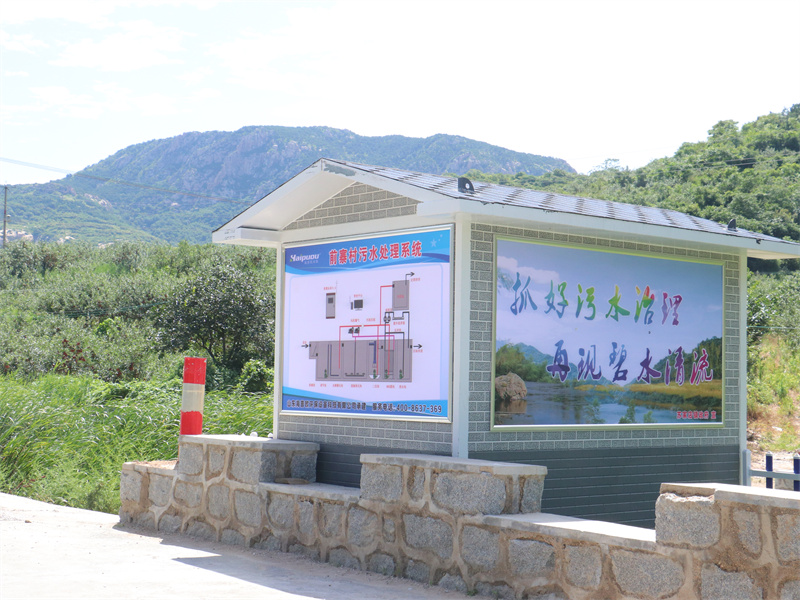
II. Main Types and Application Scenarios of Domestic Sewage Treatment Equipment
Differences in sewage volume, water quality complexity, site space and treatment requirements across scenarios have led to diverse types of equipment. The main categories and applicable cases are as follows:
1. Integrated Domestic Sewage Treatment Equipment
This is the most widely adopted type at present. It adopts modular design to integrate pretreatment, biological treatment, advanced treatment and disinfection into one single unit. Featuring compact size and easy installation, it can be buried underground or placed above ground to save land space. It is suitable for scenarios with daily sewage discharge of 5-500m³/d, such as rural residential areas, small urban communities, hotels, homestays and dormitories in industrial parks. It mainly relies on biological processes including A/O, A²/O and MBR. The COD removal rate exceeds 85%, nitrogen and phosphorus removal remains stable, and the treated water can be directly discharged or used for greening irrigation.
2. MBR Membrane Bioreactor
It combines biological treatment with membrane separation technology. Membrane modules replace traditional sedimentation tanks to achieve efficient solid-liquid separation. The effluent quality is excellent; the content of suspended solids and turbidity is close to tap water, which allows direct water reuse. It only occupies 1/3-1/2 of the land required by conventional processes. It is ideal for projects demanding high water quality, such as hospitals, high-end residential quarters, water reuse projects in water-scarce regions, and downtown areas with strict land limits.
3. Buried Domestic Sewage Treatment Equipment
The whole unit is installed underground. The ground area can be used for greening or parking lots without occupying surface space. Biological contact oxidation is the mainstream process, with strong anti-shock load capacity, stable operation, low noise and no peculiar smell, causing little impact on surrounding areas. It applies to suburban towns, rural regions and scenic spots with high landscape requirements, with adjustable treatment capacity ranging from 10m³/d to 1000m³/d.
4. Small Decentralized Domestic Sewage Processor
This compact equipment is designed for single households or 3-10 rural households. It is easy to install and requires no on-site operators. Constructed wetland, biofilter or mini bioreactor technologies are adopted. It fits scattered rural households and remote mountain areas, effectively eliminating random sewage discharge and supporting living environment improvement in rural revitalization projects.
III. Core Technical Principles of Domestic Sewage Treatment Equipment
Treatment efficiency mainly depends on process combinations. The mainstream route is "pretreatment + biological treatment + advanced treatment + disinfection". Functions of each phase are listed below:
1. Pretreatment Phase
Preliminary purification is realized through bar screens, grit chambers and regulating tanks. Bar screens intercept large floating debris such as plastic bags, vegetable residues and hair to prevent equipment clogging; grit chambers remove inorganic particulate matter including sand; regulating tanks balance water volume and water quality to avoid impact load on subsequent processes.
2. Biological Treatment Phase
This is the core stage for pollutant removal. Microbial metabolism decomposes organic pollutants, nitrogen and phosphorus in sewage. Aerobic biological processes such as biological contact oxidation and activated sludge process deliver high organic matter degradation efficiency; anaerobic/anoxic processes like the A/O process realize nitrification and denitrification for nitrogen removal, while the A²/O process removes nitrogen and phosphorus simultaneously to meet stricter emission standards.
3. Advanced Treatment and Disinfection Phase
Advanced treatment adopts quartz sand filtration and activated carbon filtration to remove residual suspended solids and trace organic pollutants. Disinfection adopts ultraviolet rays, chlorine dioxide or sodium hypochlorite to kill bacteria, viruses and other pathogenic microorganisms and guarantee qualified effluent.
IV. Key Criteria for Selecting Domestic Sewage Treatment Equipment
Improper selection will lead to substandard effluent, excessive operating cost or frequent breakdowns. Five key points should be noted:
1. Confirm Water Quality and Treatment Standards
First test indicators including COD, BOD5, suspended solids, nitrogen and phosphorus of domestic sewage. Define the required effluent standard (Grade A, Grade B or reuse standard) in accordance with local environmental policies, and match the process configuration accordingly.
2. Match the Treatment Capacity
Select equipment model based on daily sewage output (m³/d) to avoid overcapacity or insufficient capacity. It is recommended to reserve 10%-20% extra capacity to cope with water volume fluctuations in peak consumption periods.
3. Adapt to Site Conditions
Choose integrated equipment, MBR units or buried equipment for narrow sites; buried installation is preferred if the ground space is reserved for other usage. Small decentralized processors are suitable for scattered rural sites. Meanwhile, transport passages, power supply and drainage conditions need to be taken into account.
4. Calculate Operation and Maintenance Costs
Pay attention to power consumption, disinfectant dosage, sludge disposal expense and maintenance frequency. Prioritize low-energy, easy-to-maintain equipment with little sludge output for better long-term economic benefits.
5. Inspect Equipment Quality and Manufacturer Qualifications
Cooperate with manufacturers holding environmental engineering design qualifications and equipment production licenses. Inspect material quality (anti-corrosion carbon steel, stainless steel) and certification of core components including pumps, blowers and membrane modules. Also evaluate the supplier’s capacity in installation, commissioning and after-sales service.
V. Installation and Daily Maintenance of Domestic Sewage Treatment Equipment
Standard installation and regular maintenance guarantee long-term stable operation. Core requirements are as follows:
1. Installation Requirements
Construction must strictly follow the foundation drawing provided by the manufacturer to ensure flat ground and qualified bearing capacity. Buried equipment needs anti-corrosion and anti-seepage treatment to prevent underground water infiltration and metal corrosion. All pipelines must be tightly sealed against leakage. Electrical installation shall comply with safety specifications with reliable earthing. Water filling test and trial operation are required after installation to verify operating parameters.
2. Daily Maintenance Guidelines
Regularly clean sundries in bar screens and grit chambers to prevent pipeline and pump blockage;
Monitor dissolved oxygen, pH value and sludge concentration in biological tanks, and adjust aeration intensity and reflux ratio timely;
Clean or replace filter materials and MBR membrane modules periodically to sustain treatment efficiency;
Check operating conditions of pumps, blowers and other power equipment, fill lubricating oil on schedule and repair faulty components promptly;
Replenish chemicals and maintain disinfection equipment to ensure reliable sterilization effect;
Keep operation logs to record operating parameters, maintenance records and water quality test results for traceability and process optimization.
VI. Industry Development Trend of Domestic Sewage Treatment Equipment
Driven by upgraded environmental policies, technological innovation and the dual-carbon goals, the domestic sewage treatment equipment industry presents three major trends:
1. Intelligent Upgrading
Future equipment will be integrated with sensors, IoT and big data technologies to realize real-time monitoring of water quality and flow, automatic parameter adjustment and early fault warning, cutting labor cost while improving stability and efficiency.
2. Energy Conservation and Resource Recovery
More attention will be paid to energy saving by adopting energy-efficient blowers, water pumps and high-performance biological processes. Meanwhile, resource recovery will be strengthened. Biogas produced by anaerobic digestion and nitrogen-phosphorus fertilizer recycled from sewage will help achieve win-win results of pollution control and resource utilization.
3. Coordination Between Decentralized and Centralized Treatment
For urban-rural sewage governance, decentralized equipment will become smaller and more cost-effective to fit scattered rural sites, while centralized facilities will develop toward large scale and high efficiency, covering urban core areas together with pipe networks. A coordinated governance pattern combining decentralized and centralized treatment will take shape.
Conclusion
Domestic sewage treatment equipment is fundamental infrastructure for water pollution control. Proper selection, application and maintenance directly determine environmental compliance and resource recycling outcomes. For urban construction, rural renovation and facility operation, selecting matched equipment and standardizing operation can satisfy environmental requirements and reduce long-term expenditure, balancing ecological and economic benefits. With continuous technological progress, domestic sewage treatment equipment will become smarter, more efficient and energy-saving, providing solid support for sustainable water utilization and ecological civilization construction.
Related Products
Related News
- 本溪市New Trends in the Development of the MBR Membrane Wastewater Treatment Industry: A Professional Guide to Selecting Source Manufacturers
- 本溪市How to Select Wastewater Treatment Equipment for Pig Farms? In-depth Review of Trusted Industry Service Providers
- 本溪市Hard-to-Treat Slaughterhouse Wastewater? Tested & Recommended High-Adaptability Wastewater Treatment Solutions for 2026
- 本溪市How to Select Integrated Wastewater Treatment Equipment? In-depth Review of Trustworthy Source Manufacturers Recognized by Industry Insiders
- 本溪市How to Select Buried Integrated Wastewater Treatment Equipment? Strength Evaluation of Reliable Brands in 2026
- 本溪市Inventory of New Coal Mine Water Treatment Technologies! How to Select Cost-Effective Manufacturers & Avoid Common Pitfalls
- 本溪市Textile Printing & Dyeing Wastewater Treatment Is Tough? These Four Powerful Enterprises Easily Solve Core Industry Pain Points
- 本溪市Authoritative Evaluation of High-Salinity Wastewater Treatment Equipment | Top Recommended Brands of 2026
- 本溪市Which Supplier Offers Reliable Integrated Sewage Treatment Equipment? Multi-dimensional Actual Test Comparison & Top Recommended Brands Released
- 本溪市Electroplating Factory Wastewater Treatment Engineering Cases
About Us
products
Business
News
Contact Us
Service Hotline:+86-15253659088WhatsApp: +86 18706508001
Email: jly@haipuou.group
Address: No.56, Donghuan Road, Zhucheng City, Weifang City, Shandong Province, China