


- Home
- About Us
About Us
- Product
Product
- Cases
Cases
- R&D Technology
- News
News
- Contact Us


- Default Language
 EN
EN RU
RU ES
ES DE
DE EL
EL IT
IT JA
JA KO
KO PT
PT ID
ID SR
SR UK
UK VI
VI TH
TH TR
TR MS
MS BE
BE AR
AR
大同市Domestic Wastewater Treatment Equipment: Technical Principles, Selection Guidelines and Industry Development Trends
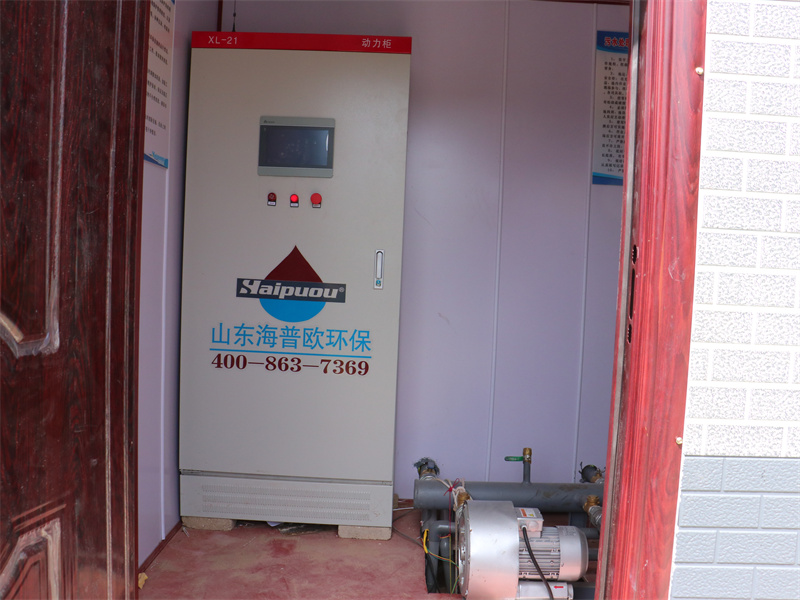
Driven by accelerated urbanization and rising living standards, domestic wastewater discharge keeps growing year by year. According to the China Environmental Status Bulletin, annual urban domestic wastewater discharge in China has exceeded 50 billion tons. The pollutants including organic matter, suspended solids, nitrogen and phosphorus will seriously contaminate surface water and groundwater, break ecological balance and even endanger human health if discharged without effective treatment. Against this backdrop, domestic wastewater treatment equipment serves as the core facility for pollution control. Its technical maturity, operational stability and energy efficiency have become key indicators measuring urban and rural ecological governance capacity.
I. Core Technical Principles of Domestic Wastewater Treatment Equipment
Domestic wastewater consists of kitchen sewage, laundry wastewater and toilet sewage, mainly polluted by COD, BOD, SS, nitrogen and phosphorus. Modern treatment equipment adopts a combined process of physical pre-treatment, biological treatment and advanced purification to remove pollutants efficiently. Different processes fit different scenarios with distinct treatment results:
1. Physical Pre-treatment: Lay the Foundation for Purification
As the first barrier of the whole system, physical pre-treatment intercepts large-sized suspended solids such as food scraps, hair and paper scraps to prevent blockage in subsequent units. Common equipment includes:
Bar Screen: Stainless steel bars trap solid impurities larger than 5mm, widely used in centralized wastewater treatment projects of residential communities and hotels;
Sedimentation Tank: Suspended solids heavier than water sink by gravity with a hydraulic retention time of 1 to 2 hours. The SS removal rate reaches 60%-80%;
Oil Separator: It separates oil and water based on density difference for high-oil kitchen sewage, removing over 90% of grease and lightening the load of biochemical treatment.
2. Core Biological Treatment: Decompose Organic Pollutants
Biological treatment is the core of wastewater treatment equipment. Microbes break down organic pollutants into harmless carbon dioxide and water through metabolism. It is divided into aerobic treatment and anaerobic treatment based on oxygen supply conditions:
Aerobic Treatment: Suitable for medium and low-concentration domestic wastewater (COD<1000mg/L). Typical equipment includes activated sludge systems, biological contact oxidation tanks and MBR membrane bioreactors. MBR retains microbes with membrane modules, raising sludge concentration to 3-5 times that of traditional activated sludge processes. Its COD removal rate exceeds 95%, and the treated water can be directly reused for greening and toilet flushing, so it is popular in water-short residential districts;
Anaerobic Treatment: Designed for high-concentration organic wastewater such as mixed breeding and domestic sewage in rural areas. The representative UASB reactor requires no aeration, consuming only 1/10 energy of aerobic processes. Biogas produced during the reaction can be recycled as energy. However, the treatment cycle lasts 8-12 hours, so it must be combined with aerobic units to meet discharge standards.
3. Advanced Purification: Meet Discharge Standards and Realize Water Reuse
Extra advanced treatment units are required for strict discharge limits above Class IV surface water or water reuse projects:
Disinfection: UV sterilizers and chlorine dioxide generators kill bacteria and viruses to guarantee hygienic safety of effluent;
Nitrogen and Phosphorus Removal: AO (Anoxic-Oxic) and A²O (Anaerobic-Anoxic-Oxic) processes utilize nitrifying bacteria, denitrifying bacteria and phosphorus accumulating organisms to convert nitrogen into nitrogen gas and phosphorus into sediment. The total nitrogen removal rate reaches 80% and total phosphorus removal rate exceeds 90%, satisfying Grade A discharge standard for municipal sewage plants;
Filtration: Quartz sand filters and activated carbon filters remove residual suspended solids and odor, improving water clarity and quality for reclaimed water reuse.
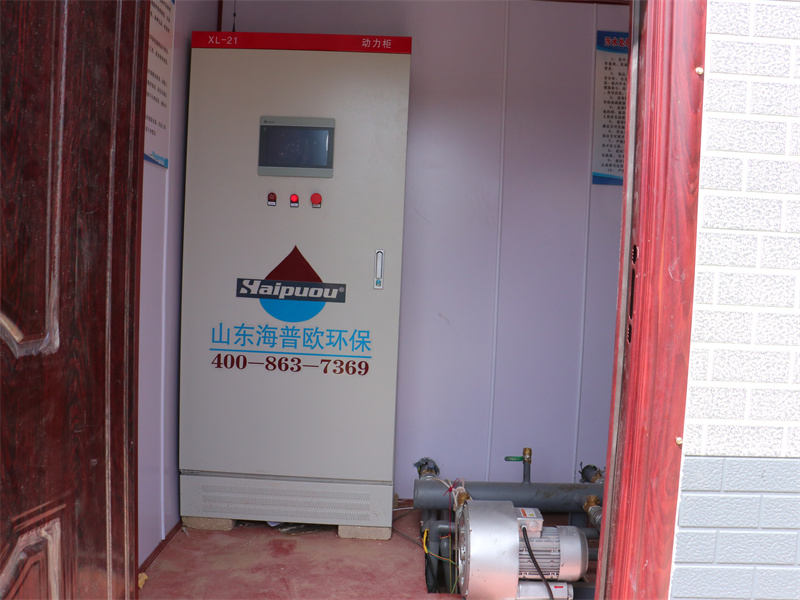
II. Scientific Equipment Selection Guide for Domestic Wastewater Treatment
Wastewater volume, water quality, installation conditions and emission limits vary greatly among different scenarios. Blind procurement will lead to low efficiency, high energy consumption and soaring maintenance costs. Enterprises, residential quarters and rural villages should focus on four core factors when selecting equipment:
1. Confirm Treatment Capacity and Water Quality Indicators
Treatment Scale: Select models according to daily water output. Small buried integrated units fit single rural households with 0.5-1 cubic meters of wastewater per day; medium modular equipment serves residential communities with 50-500 cubic meters daily; large complete sets are customized for ten-thousand-ton municipal sewage plants;
Water Quality: Test COD, BOD, SS, ammonia nitrogen and total phosphorus first. Strengthen oil separation for catering-intensive regions, and adopt integrated nitrogen-phosphorus removal equipment for rural sewage with excessive nutrients.
2. Adapt to Installation and Operating Conditions
Site Conditions: Buried sewage treatment equipment is the first choice for urban communities and commercial buildings with limited land. The underground layout only occupies 1/3 land of traditional facilities, and the ground space can be used for greening or parking lots. Above-ground units are more convenient for maintenance in rural areas;
Climate: Insulated equipment is necessary in cold northern regions to prevent pipeline cracking in winter; foundation drainage should be designed to avoid rainwater backflow in rainy southern areas.
3. Balance Operating Cost and Energy Consumption
Energy Cost: MBR consumes slightly more power (0.5-0.8kWh per ton of water) than biological contact oxidation equipment (0.3-0.5kWh per ton) due to membrane aeration, yet water reuse cuts tap water expenditure and brings better long-term economic benefits;
Maintenance Cost: Integrated equipment only needs simple cleaning of bar screens and filter media every 1-3 months, which is ideal for rural villages and small communities without professional maintenance teams. Large-scale systems require full-time staff for water quality monitoring and parameter adjustment, resulting in higher labor costs.
4. Comply with Emission Standards and Local Policies
Discharge Standards: Built-up urban areas must meet Grade A of GB18918-2002 Pollutant Discharge Standard for Urban Sewage Treatment Plants. Rural projects follow GB 51347-2019 Rural Domestic Sewage Discharge Standard, with different grades for river discharge and farmland irrigation;
Policy Incentives: Many regions offer financial subsidies for rural sewage treatment projects. Buyers can prioritize equipment on local government procurement catalogs to lower initial investment.
III. Industry Development Trends of Domestic Wastewater Treatment Equipment
Driven by dual-carbon goals and stricter environmental regulations, the industry is upgrading toward high efficiency, intelligence, low carbon and resource recycling. Three major trends stand out:
1. Technological Upgrade: Popularization of High-efficiency Processes and Materials
Membrane Material Innovation: Traditional PVDF MBR membranes are being replaced by anti-fouling PTFE membranes. The service life is extended from 3-5 years to 5-8 years, cutting operating cost by more than 20%;
Optimized Integrated Equipment: Miniature integrated units combining pre-treatment, biochemical treatment and advanced purification can be assembled quickly within 3-7 days with modular design and support remote control, perfectly matching decentralized rural sewage treatment.
2. Intelligent Operation & Maintenance: Digital Management
IoT Application: New equipment is equipped with pH sensors, online COD monitors and flow meters. Real-time operating data is uploaded to the cloud platform. Managers monitor equipment status via mobile APP and receive automatic alerts for aeration failure or membrane fouling, shortening response time from 24 hours to 1-2 hours;
AI Automatic Control: Artificial intelligence analyzes historical data to adjust aeration volume and reflux ratio automatically, keeping the equipment running optimally under variable water load and reducing energy consumption by 15%-25%.
3. Low-Carbon Transition and Resource Recycling: Turn Waste into Resources
Energy-saving Combined Processes: The UASB+MBR anaerobic-aerobic system generates biogas for power generation when treating high-concentration wastewater, covering 10%-20% of the equipment’s power demand;
Nutrient Recovery: Phosphorus recycling modules convert phosphate in sewage into calcium phosphate fertilizer. Deeply purified water is reused for industrial cooling and municipal greening, realizing full wastewater recycling in line with circular economy requirements.
IV. Conclusion
Domestic wastewater treatment is the last mile of ecological protection. As core treatment facilities, the proper selection and application of wastewater treatment equipment directly determine the efficiency and sustainability of pollution control. Users need to choose equipment scientifically based on project scale, water quality and site environment to balance treatment effect and cost. The whole industry should keep promoting technological innovation and intelligent upgrading, and deliver high-efficiency, low-carbon equipment to build lucid waters and lush mountains. With stronger policy support and continuous technical breakthroughs, wastewater treatment equipment will play an increasingly important role in urban and rural ecological governance, laying a solid foundation for full sewage treatment and comprehensive resource recovery.
Related Products
Related News
- 大同市New Trends in the Development of the MBR Membrane Wastewater Treatment Industry: A Professional Guide to Selecting Source Manufacturers
- 大同市How to Select Wastewater Treatment Equipment for Pig Farms? In-depth Review of Trusted Industry Service Providers
- 大同市Hard-to-Treat Slaughterhouse Wastewater? Tested & Recommended High-Adaptability Wastewater Treatment Solutions for 2026
- 大同市How to Select Integrated Wastewater Treatment Equipment? In-depth Review of Trustworthy Source Manufacturers Recognized by Industry Insiders
- 大同市How to Select Buried Integrated Wastewater Treatment Equipment? Strength Evaluation of Reliable Brands in 2026
- 大同市Inventory of New Coal Mine Water Treatment Technologies! How to Select Cost-Effective Manufacturers & Avoid Common Pitfalls
- 大同市Textile Printing & Dyeing Wastewater Treatment Is Tough? These Four Powerful Enterprises Easily Solve Core Industry Pain Points
- 大同市Authoritative Evaluation of High-Salinity Wastewater Treatment Equipment | Top Recommended Brands of 2026
- 大同市Which Supplier Offers Reliable Integrated Sewage Treatment Equipment? Multi-dimensional Actual Test Comparison & Top Recommended Brands Released
- 大同市Electroplating Factory Wastewater Treatment Engineering Cases
About Us
products
Business
News
Contact Us
Service Hotline:+86-15253659088WhatsApp: +86 18706508001
Email: jly@haipuou.group
Address: No.56, Donghuan Road, Zhucheng City, Weifang City, Shandong Province, China