


- Home
- About Us
About Us
- Product
Product
- Cases
Cases
- R&D Technology
- News
News
- Contact Us


- Default Language
 EN
EN RU
RU ES
ES DE
DE EL
EL IT
IT JA
JA KO
KO PT
PT ID
ID SR
SR UK
UK VI
VI TH
TH TR
TR MS
MS BE
BE AR
AR
西宁Exhaust Gas Treatment Equipment: Full Solution for Industrial Exhaust Purification Technology Selection & Regulatory-Compliant Governance
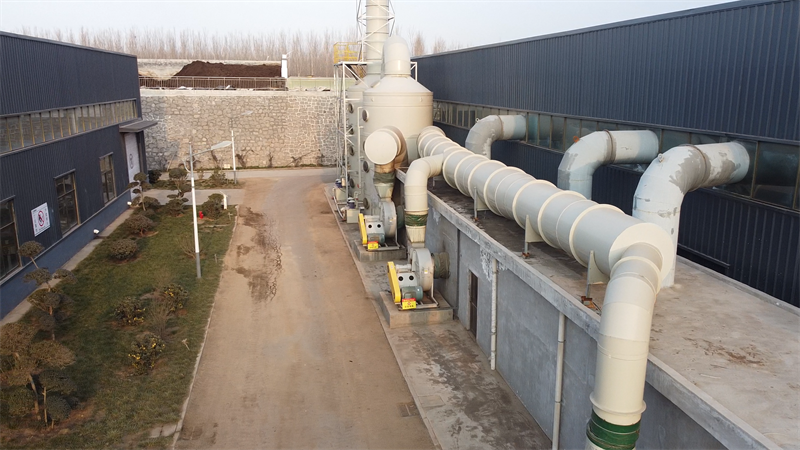
Against the dual backdrop of scaled industrial production and continuously tightened environmental policies, waste gas treatment equipment has become core facilities for enterprises to achieve compliant emissions, control VOCs and odor pollution, and fulfill the Dual Carbon Goals. This paper systematically sorts out the mainstream types, working principles, applicable scenarios and key selection criteria of waste gas treatment equipment, providing actionable waste gas abatement solutions for chemical, coating, printing, pharmaceutical, electronics and other industries, and supporting enterprises in compliant operation and green transformation.
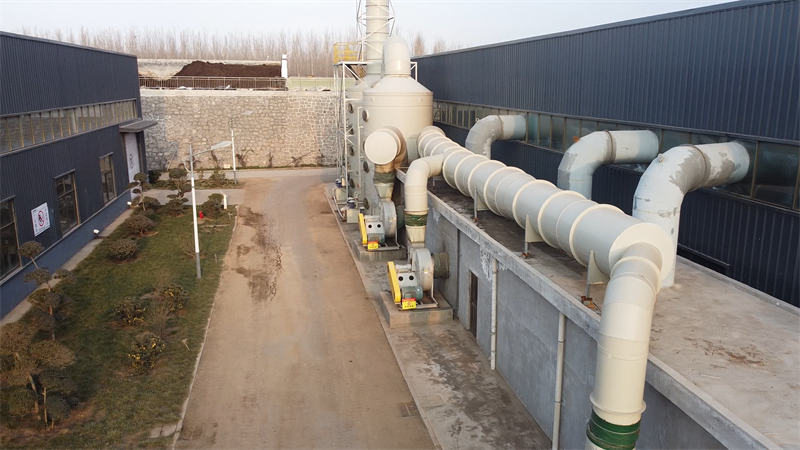
I. Core Classification & Technical Principles of Waste Gas Treatment Equipment
Industrial waste gas mainly contains particulate matter, VOCs organic waste gas, acid & alkali waste gas, malodorous gas and other pollutants, with exclusive treatment technologies corresponding to each pollutant. Current mainstream equipment falls into five major categories.
1. Adsorption-type Waste Gas Treatment Equipment
Represented by activated carbon adsorption devices and zeolite rotor concentration equipment, they capture pollutants via physical adsorption of porous materials.
Working Principle: Honeycomb activated carbon / molecular sieves efficiently adsorb VOCs such as benzene series, alcohols and esters. After saturation, they can be recycled through steam desorption and thermal regeneration.
Core Advantages: Simple equipment structure and moderate investment; suitable for treating large-air-volume, low-concentration organic waste gas with purification efficiency reaching 90%-95%.
Typical Applications: Pre-treatment and advanced purification of waste gas from printing & packaging, automobile coating, electronic component manufacturing and other industries.
2. Combustion-type Waste Gas Treatment Equipment
Including Regenerative Thermal Oxidizer (RTO) and Regenerative Catalytic Oxidation (RCO) equipment, they serve as the mainstream choice for high-concentration VOCs treatment.
RTO Principle: Waste gas is oxidized and decomposed into CO₂ and H₂O at a high temperature of 760-850°C. Ceramic regenerators recover heat with thermal efficiency exceeding 95%, enabling self-heating operation when the concentration reaches the standard threshold.
RCO Principle: Equipped with Pt/Pd catalysts, it reduces the reaction temperature to 280-400°C with lower energy consumption and purification efficiency ≥95%.
Applicable Scenarios: Treatment of medium-to-high concentration continuously discharged organic waste gas from chemical, pharmaceutical, coating and other industries.
3. Absorption & Scrubbing Waste Gas Treatment Equipment
Centered on spray towers, alkaline scrubbers and acid scrubbers, pollutants are neutralized and removed through gas-liquid contact.
Working Principle: Waste gas makes countercurrent contact with alkaline / acidic absorbent, and gaseous pollutants such as SO₂, HCl and ammonia nitrogen are eliminated via chemical reactions.
Equipment Features: Low construction cost and easy operation & maintenance; capable of removing particulate matter and gaseous pollutants simultaneously, widely used for pre-treatment of acid & alkali waste gas.
Typical Applications: Purification of acid mist and alkaline mist from electroplating, metallurgy and chemical production lines, as well as pre-treatment of malodorous gas.
4. Photocatalytic & Plasma Waste Gas Treatment Equipment
UV photocatalytic oxidation equipment and low-temperature plasma equipment are mainly applied to treat low-concentration odor and VOCs.
Photocatalysis Principle: Ultraviolet light excites TiO₂ catalysts to generate hydroxyl radicals, which oxidize and decompose malodorous molecules into harmless substances.
Plasma Principle: High-voltage discharge generates high-energy particles to break chemical bonds of pollutants for rapid degradation.
Applicable Scenarios: Treatment of low-concentration intermittent malodorous gas from sewage stations, food processing plants, garbage stations and other sites.
5. Dust Removal Waste Gas Treatment Equipment
Bag dust collectors, Wet Electrostatic Precipitators (WESP) and cyclone dust collectors specialize in the treatment of particulate matter and flue dust.
Bag Dust Collector: High filtration precision enables ultra-low particulate emissions, making it the mainstream industrial dust removal equipment.
Wet Electrostatic Precipitator: Captures dust, acid mist and liquid droplets simultaneously, suitable for advanced purification of wet flue gas.
Application Fields: Dust emission scenarios including thermal power, building materials, metal processing and wood processing.
II. Combined Processes of Waste Gas Treatment Equipment: Optimal Solution for Complex Waste Gas
A single technology cannot handle industrial waste gas with complex compositions and fluctuating concentrations, so combined processes have become the industry mainstream to achieve treatment effects of 1+1>2.
Zeolite Rotor Concentration + RCO/RTO: Low-concentration VOCs with large air volume are concentrated by the rotor before entering combustion equipment, greatly cutting energy consumption with purification efficiency over 99%.
Spray Scrubbing + Activated Carbon Adsorption: Acid and alkali pollutants are removed first, followed by organic waste gas adsorption, suitable for mixed composite waste gas treatment.
Condensation Recovery + Adsorption & Desorption: High-value solvents are recovered; for example, the xylene recovery rate in coating industries can reach 99.5%, delivering both environmental and economic benefits.
Biofilter + Photocatalysis: Low-concentration malodorous gas is degraded step by step with no secondary pollution and low operation & maintenance costs.
III. Core Selection Principles for Waste Gas Treatment Equipment
Enterprises shall comprehensively judge equipment selection based on waste gas composition, air volume & concentration, emission standards and site conditions, following four core principles.
Pollutant Matching Principle: Prioritize adsorption / combustion processes for VOCs; adopt scrubbing towers for acid & alkali waste gas; select dust removal equipment as the first choice for particulate matter.
Emission Compliance Priority Principle: Strictly comply with the Integrated Emission Standard of Air Pollutants and the Standard for Fugitive Emission Control of VOCs to guarantee compliance with emission limits.
Energy Saving & Carbon Reduction Principle: Give priority to equipment with high heat recovery efficiency and low energy consumption such as RTO and RCO, in response to the Dual Carbon Policies.
Easy O&M Principle: Choose equipment with high automation, easily replaceable consumables and low failure rates to reduce long-term operating costs.
IV. Installation & Operation-Maintenance Specifications for Waste Gas Treatment Equipment
Compliant governance relies not only on equipment performance, but also standardized installation and regular maintenance to maintain stable emission compliance.
Installation Requirements: Reasonably plan air duct layout to ensure waste gas collection efficiency ≥90%; complete equipment grounding, fire prevention and explosion protection measures in line with work safety specifications.
Key O&M Points: Regularly replace adsorbents, clean scrubber packing and inspect catalyst activity; establish operation & maintenance ledgers to cooperate with monitoring and inspection by environmental authorities.
Intelligent Upgrade: Equip with online monitoring systems to track concentration, temperature and pressure in real time, realizing abnormal alarm and automatic regulation to improve treatment stability.
V. Industry Trends: High Efficiency, Intelligence & Resource Recycling
With upgraded environmental standards and technological iteration, waste gas treatment equipment presents three major development directions.
High-efficiency Synergy: Single-function equipment is upgraded to collaborative multi-pollutant treatment facilities to realize integrated purification of VOCs, particulate matter and odor.
Intelligent Digitalization: Empowered by IoT and big data, remote monitoring, intelligent maintenance and energy consumption optimization are realized to cut labor costs.
Resource Circulation: Shift from end-of-pipe treatment to resource utilization; technologies such as solvent recovery and waste heat recovery are widely popularized to achieve a win-win situation for environmental protection and economic benefits.
Conclusion
Waste gas treatment equipment serves as the basic guarantee for the green development of industrial enterprises. Accurate equipment selection, reasonable process configuration and standardized operation & maintenance are the core of long-term compliant emissions. Combining their own waste gas characteristics, enterprises shall select matched equipment and combined processes to reduce energy consumption and recover resources while meeting environmental compliance requirements, supporting high-quality industrial development and continuous improvement of the ecological environment.
Related Products
Related News
- 西宁New Trends in the Development of the MBR Membrane Wastewater Treatment Industry: A Professional Guide to Selecting Source Manufacturers
- 西宁How to Select Wastewater Treatment Equipment for Pig Farms? In-depth Review of Trusted Industry Service Providers
- 西宁Hard-to-Treat Slaughterhouse Wastewater? Tested & Recommended High-Adaptability Wastewater Treatment Solutions for 2026
- 西宁How to Select Integrated Wastewater Treatment Equipment? In-depth Review of Trustworthy Source Manufacturers Recognized by Industry Insiders
- 西宁How to Select Buried Integrated Wastewater Treatment Equipment? Strength Evaluation of Reliable Brands in 2026
- 西宁Inventory of New Coal Mine Water Treatment Technologies! How to Select Cost-Effective Manufacturers & Avoid Common Pitfalls
- 西宁Textile Printing & Dyeing Wastewater Treatment Is Tough? These Four Powerful Enterprises Easily Solve Core Industry Pain Points
- 西宁Authoritative Evaluation of High-Salinity Wastewater Treatment Equipment | Top Recommended Brands of 2026
- 西宁Which Supplier Offers Reliable Integrated Sewage Treatment Equipment? Multi-dimensional Actual Test Comparison & Top Recommended Brands Released
- 西宁Electroplating Factory Wastewater Treatment Engineering Cases
About Us
products
Business
News
Contact Us
Service Hotline:+86-15253659088WhatsApp: +86 18706508001
Email: jly@haipuou.group
Address: No.56, Donghuan Road, Zhucheng City, Weifang City, Shandong Province, China