


- Home
- About Us
About Us
- Product
Product
- Cases
Cases
- R&D Technology
- News
News
- Contact Us


- Default Language
 EN
EN RU
RU ES
ES DE
DE EL
EL IT
IT JA
JA KO
KO PT
PT ID
ID SR
SR UK
UK VI
VI TH
TH TR
TR MS
MS BE
BE AR
AR
Full Analysis of Sludge Treatment Equipment Selection & Application: High-efficiency Solutions for Volume Reduction, Stabilization and Resource Recovery
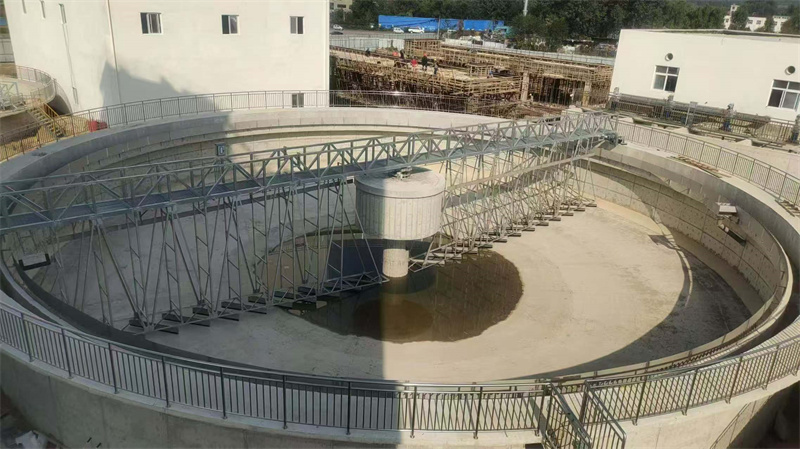
With the rapid development of China’s wastewater treatment industry, the output of municipal and industrial sludge keeps rising steadily. Sludge treatment equipment has become core facilities to achieve sludge volume reduction, stabilization, harmless treatment and resource recovery. This paper systematically analyzes the technical characteristics and practical value of sludge treatment equipment from the dimensions of equipment classification, working principles, key selection criteria, applicable scenarios and industrial trends, providing professional references for equipment selection and operation to environmental engineering firms, wastewater treatment plants and industrial manufacturers.

I. Core Definition & Industrial Value of Sludge Treatment Equipment
Sludge treatment equipment refers to special environmental protection facilities targeting sludge, the by-product of wastewater treatment. It adopts physical, chemical, biological or thermal processes to realize solid-liquid separation, water removal, organic matter degradation, energy recovery and resource regeneration. Its core function is to convert raw sludge with high moisture content (97%-99%) into low-moisture, transportable and disposable sludge cake or recycled products. It cuts sludge landfilling volume and secondary pollution from the source, complying with national Dual Carbon Goals and environmental inspection requirements.
High-performance sludge treatment equipment fulfills three core objectives:
Volume Reduction: Sludge volume is reduced by 70%-90%, greatly slashing transportation and disposal costs;
Stabilization: Organic matter is degraded and pathogenic bacteria eliminated to prevent sludge putrefaction and odor emission;
Resource Recovery: Biogas and waste heat are recovered, or sludge is processed into building materials and soil conditioners to turn waste into valuable resources.
II. Classification & Technical Features of Mainstream Sludge Treatment Equipment
Classified by treatment process and function, sludge treatment equipment falls into four major categories: dewatering equipment, drying equipment, incineration equipment and biological stabilization equipment, matching diverse sludge properties and disposal demands.
1. Sludge Dewatering Equipment (Core Front-End Facilities)
Dewatering equipment is the first procedure of sludge treatment. It realizes solid-liquid separation via mechanical force and lowers sludge moisture content to 60%-80%, making it the most widely adopted equipment type in the industry.
Plate-and-Frame / Chamber Filter Press: Intermittent high-pressure squeezing delivers sludge cake moisture content below 60%. Suitable for chemical, electroplating and other hard-to-dewater sludge with high solid content, it produces compact sludge cake yet requires manual cake discharge with moderate maintenance costs.
Belt Filter Press: Continuous three-stage operation including gravity dewatering, wedge pre-pressing and high-pressure roller pressing, featuring large throughput and stable performance. Ideal for large municipal wastewater treatment plants, it controls moisture content at 70%-78% with low energy consumption and easy operation.
Decanter Centrifuge Dewaterer: Separates solid and liquid by centrifugal force generated through high-speed rotation at 1500-4000 r/min. It covers a small footprint with high automation, perfect for space-limited projects, delivering sludge moisture of 75%-80% yet demanding stable inlet sludge concentration.
Multi-Disk Screw Dewatering Press: Adopts stacked fixed & moving discs with spiral extrusion technology. Anti-clogging, low-speed and energy-saving with no need for high-pressure flushing. Suitable for township sewage stations and small industrial wastewater plants, it achieves sludge moisture of 75%-80% with ultra-low maintenance costs.
2. Sludge Thermal Drying Equipment (Advanced Volume Reduction Facilities)
It further reduces sludge moisture after dewatering to meet high-standard disposal demands such as incineration and building material recycling, cutting moisture content to 10%-40%.
Paddle Dryer: Indirect heating with high thermal efficiency and low energy consumption, applicable to municipal and industrial sludge drying, and compatible with waste heat recovery systems.
Disc Dryer: Compact structure for continuous large-scale sludge drying projects with reliable stable operation.
Heat Pump Low-Temperature Dryer: Fully sealed low-temperature operation with nearly zero waste gas discharge, saving over 40% energy. Suitable for regions with strict moisture control and rigorous environmental supervision.
3. Sludge Incineration & Pyrolysis Equipment (Ultimate Disposal Facilities)
It achieves thorough sludge volume reduction and energy recovery with volume reduction rate exceeding 95%, and residual ash can be used as raw material for building materials.
Fluidized Bed Incinerator: Complete and uniform combustion for all types of sludge, equipped with supporting flue gas purification systems to guarantee compliant emissions.
Rotary Kiln Incinerator: Strong adaptability to high-impurity and hard-to-burn sludge with reliable operation, designed for large centralized sludge disposal centers.
Pyrolysis & Gasification Equipment: Oxygen-free low-temperature pyrolysis generates low dioxin emissions and high resource utilization efficiency, serving as an emerging advanced environmental disposal technology.
4. Biological Stabilization Equipment (Core Resource Recovery Facilities)
Microorganisms degrade organic matter to realize simultaneous stabilization and resource recovery without secondary pollution.
Anaerobic Digestion Equipment: Generates biogas in sealed reactors for power generation or heating, fit for large municipal sludge disposal with both environmental and economic benefits.
Aerobic Composting Equipment: High-temperature aerobic composting converts sludge into organic nutrient soil, widely used in landscape gardening and agriculture with low investment and easy popularization.
III. Core Factors for Sludge Treatment Equipment Selection
Equipment selection requires comprehensive evaluation of sludge characteristics, treatment capacity, environmental standards and operating costs to avoid malfunctions caused by mismatched equipment and actual demands.
Sludge Properties: Multi-disk screw presses and centrifuges for municipal sludge rich in organics; plate-and-frame filter presses for oily/sandy industrial sludge; centrifugal dewaterers as priority for high-viscosity sludge.
Treatment Scale: Belt filter presses and fluidized bed incinerators for large wastewater plants; multi-disk screw presses and compact dryers for medium & small treatment stations.
Moisture Requirement: Plate-and-frame filter presses if landfill moisture limit ≤60%; combined drying + incineration system if incineration moisture limit ≤40%; customized moisture targets for resource recycling.
Site Space & Energy Consumption: Centrifuges and compact dryers for narrow sites; heat pump dryers and anaerobic digestion facilities for energy-saving priorities.
Environmental Compliance: Low-temperature dryers and pyrolysis gasification equipment are preferred in key supervision zones to strictly control waste gas and sludge leachate discharge.
IV. Industrial Application Scenarios of Sludge Treatment Equipment
Sludge treatment equipment has been widely applied in municipal, industrial, agricultural and other sectors, solving sludge disposal pain points of different scenarios:
Municipal Wastewater Treatment: Large wastewater plants adopt matched belt filter presses + anaerobic digestion + drying & incineration systems to realize full-process harmless sludge disposal.
Industrial Wastewater Treatment: Chemical, papermaking, printing & dyeing and food industries deploy plate-and-frame filter presses and special centrifugal dewaterers to treat highly polluted industrial sludge.
Decentralized Township Sewage Stations: Multi-disk screw dewaterers plus aerobic composting systems realize on-site sludge volume reduction and resource recovery at low cost.
Centralized Sludge Disposal Centers: Integrated dewatering, drying, incineration and resource recovery equipment builds regional hubs for collaborative sludge treatment.
V. Development Trends of Sludge Treatment Equipment Industry
Intelligent Upgrading: Equipped with PLC automatic control and IoT monitoring systems to support remote operation & maintenance, fault early warning and energy consumption optimization for higher operational efficiency.
Low-Carbon Transformation: Heat pump drying, waste heat recovery, photovoltaic power supply and other energy-saving technologies are popularized to cut equipment energy use and carbon emissions.
Integrated Compact Design: All-in-one facilities integrating dewatering, drying and resource recovery reduce land occupation and simplify process flows.
Deepened Resource Utilization: Mature technologies for producing building materials, biochar and nutrient soil from sludge drive equipment iteration toward high-value recycling.
Stricter Compliance Standards: Equipment design fully complies with updated environmental regulations with enhanced tail gas and leachate treatment to meet tightened supervision requirements.
VI. Conclusion
As critical facilities of the environmental protection industry, sludge treatment equipment directly determines sludge disposal efficiency and emission compliance levels. When selecting equipment, enterprises and engineering contractors shall base decisions on sludge properties, treatment targets and operating costs, choosing mature and well-adapted machines. Meanwhile, practitioners shall follow the trends of intelligence, low carbon and resource recovery to achieve a win-win of environmental and economic benefits.
With continuous technological innovation in the industry, sludge treatment equipment will develop toward higher efficiency, lower energy consumption and greener performance, providing solid support for harmless disposal and resource recycling of sludge across China.
Related Products
Related News
- New Trends in the Development of the MBR Membrane Wastewater Treatment Industry: A Professional Guide to Selecting Source Manufacturers
- How to Select Wastewater Treatment Equipment for Pig Farms? In-depth Review of Trusted Industry Service Providers
- Hard-to-Treat Slaughterhouse Wastewater? Tested & Recommended High-Adaptability Wastewater Treatment Solutions for 2026
- How to Select Integrated Wastewater Treatment Equipment? In-depth Review of Trustworthy Source Manufacturers Recognized by Industry Insiders
- How to Select Buried Integrated Wastewater Treatment Equipment? Strength Evaluation of Reliable Brands in 2026
- Inventory of New Coal Mine Water Treatment Technologies! How to Select Cost-Effective Manufacturers & Avoid Common Pitfalls
- Textile Printing & Dyeing Wastewater Treatment Is Tough? These Four Powerful Enterprises Easily Solve Core Industry Pain Points
- Authoritative Evaluation of High-Salinity Wastewater Treatment Equipment | Top Recommended Brands of 2026
- Which Supplier Offers Reliable Integrated Sewage Treatment Equipment? Multi-dimensional Actual Test Comparison & Top Recommended Brands Released
- Electroplating Factory Wastewater Treatment Engineering Cases
About Us
products
Business
News
Contact Us
Service Hotline:+86-15253659088WhatsApp: +86 18706508001
Email: jly@haipuou.group
Address: No.56, Donghuan Road, Zhucheng City, Weifang City, Shandong Province, China