


- Home
- About Us
About Us
- Product
Product
- Cases
Cases
- R&D Technology
- News
News
- Contact Us


- Default Language
 EN
EN RU
RU ES
ES DE
DE EL
EL IT
IT JA
JA KO
KO PT
PT ID
ID SR
SR UK
UK VI
VI TH
TH TR
TR MS
MS BE
BE AR
AR
淮阴市Full Guide to Sewage Treatment Equipment: Model Selection, Application and Operation & Maintenance to Help Meet Discharge Standards
Date:July 13, 2025ID: 2223Views: 1236
Haipuou Environmental Protection Group Co., Ltd. specializes in sewage treatment project construction, as well as the production and sales of water treatment equipment. Our main products include integrated sewage treatment equipment, high-efficiency cyclone purifiers, magnetic separation treatment equipment, prefabricated sewage treatment plants, smart water management platforms, sludge thickening equipment and air flotation equipment.
Against the backdrop of increasingly stringent environmental regulations and growing water scarcity, wastewater treatment equipment has become indispensable core environmental protection facilities for industrial production, municipal construction and people’s livelihood projects. High-quality wastewater treatment equipment can effectively purify all types of sewage and mitigate the environmental harm caused by pollutant discharge. It also enables water resource recycling, helping enterprises cut water expenses and improve environmental compliance. This article comprehensively introduces key knowledge of wastewater treatment equipment, including product types, selection skills, application scenarios and operation & maintenance tips, providing professional references for industry practitioners and buyers.
I. Main Types and Applicable Scenarios of Wastewater Treatment Equipment
Wastewater treatment equipment is categorized by treatment processes, capacity and application scenarios. Different models differ greatly in functions and applicable ranges.
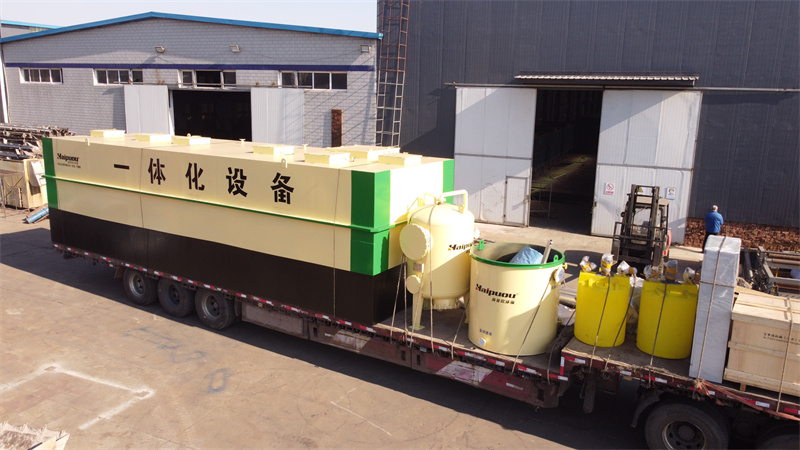
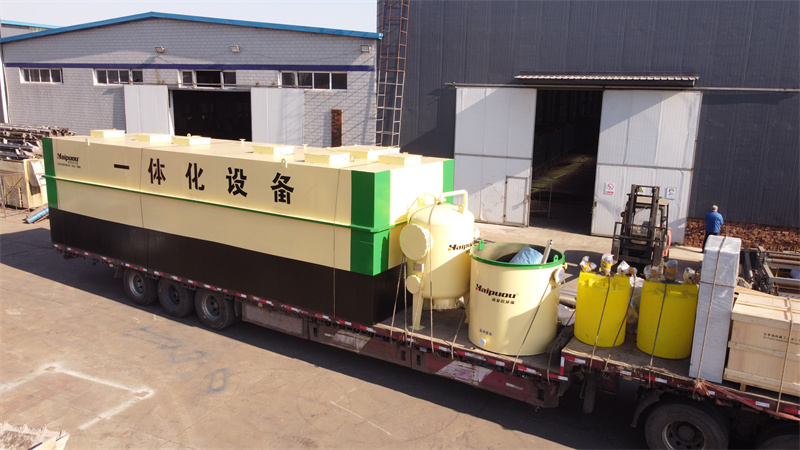
Integrated sewage treatment equipment: Adopting modular design, it integrates multiple processing units including bar screens, sedimentation tanks, biochemical tanks and disinfection tanks. It features small land occupation, easy installation and high automation. It fits small and medium-sized factories, township hospitals, rural communities and other sites with limited space and low sewage output, and can treat domestic sewage, catering wastewater and low-concentration industrial wastewater.
Special industrial wastewater treatment equipment: Designed to tackle industrial wastewater with complex composition, high pollutant concentration and strong toxicity, including anaerobic reactors, MBR membrane bioreactors, SBR sequencing batch reactors and advanced oxidation equipment. Enterprises in chemical, printing and dyeing, electroplating, papermaking and other industries can customize equipment according to water quality conditions such as heavy metal contamination, high COD and high ammonia nitrogen to guarantee qualified effluent discharge.
Municipal sewage treatment equipment: Mainly used for urban domestic sewage and centralized large-scale industrial wastewater treatment plants. Core machinery includes bar screen machines, sludge scrapers, aeration equipment and sludge dewatering machines. Such equipment boasts large processing capacity, high efficiency and stable performance, capable of primary, secondary and advanced sewage treatment to produce reclaimed water for reuse.
Small household & commercial sewage treatment equipment: Such as mini septic tanks, kitchen wastewater processors and balcony water purification devices. Suitable for families, restaurants and small office buildings, they carry out preliminary sewage treatment and reduce the pressure of centralized follow-up treatment.
II. Core Principles and Tips for Equipment Selection
Reasonable selection directly determines treatment effect, operating cost and service life, requiring comprehensive evaluation of various factors.
Select equipment based on water quality and discharge standards: First conduct water quality testing to confirm pollutant categories (suspended solids, organic matter, heavy metals, etc.), concentration and water flow fluctuation. Then choose equipment with corresponding processes in accordance with local emission limits, such as GB18918-2002 *Discharge Standard of Pollutants for Municipal Wastewater Treatment Plants* and industry-specific standards. For example, biochemical equipment is preferred for high-concentration organic wastewater, while chemical precipitation or membrane separation units are required for heavy metal-containing wastewater.
Match equipment capacity with site conditions: Small discharge units (daily flow below 500 tons) can choose integrated equipment to save land and installation costs. Large treatment projects (daily flow over 10,000 tons) need decentralized combined units to maintain high efficiency and stability. Meanwhile, take terrain, ground bearing capacity and surrounding environment into consideration to avoid adverse impacts caused by installation and operation.
Balance operating cost and maintenance convenience: Compare energy consumption, chemical dosage and sludge output during selection, and prioritize energy-saving equipment such as variable-frequency aerators and high-efficiency sedimentation devices. In addition, pay close attention to maintenance difficulty, ease of replacing spare parts and the supplier’s after-sales service to reduce long-term operational costs and breakdown risks.
Check material quality and environmental compliance: Materials must resist sewage corrosion. Stainless steel, FRP and other anti-corrosion materials are adopted for acid and alkaline wastewater to prevent premature aging. Only select products with national environmental certifications to avoid secondary pollution and smoothly pass official environmental inspections.
III. Core Technologies and Industry Development Trends
With continuous technological innovation, wastewater treatment equipment is developing toward higher efficiency, intelligence and low carbon.
Analysis of core technologies: Biological treatment remains the mainstream technology. The MBR membrane bioreactor combines membrane separation with biodegradation, delivering excellent effluent quality with a small footprint, widely used in advanced industrial and municipal deep treatment. Advanced oxidation processes (UV-Fenton, ozonation, etc.) rapidly degrade refractory organics for pretreatment or advanced treatment of high-concentration industrial wastewater. Membrane separation technologies including ultrafiltration, nanofiltration and reverse osmosis realize high-efficiency water recovery and support enterprises to build zero-liquid-discharge systems.
Intelligent development: Modern wastewater treatment equipment is gradually integrated with IoT, big data and AI technology. Sensors continuously monitor operating parameters (flow rate, pH value, dissolved oxygen) and effluent quality. Intelligent control systems automatically adjust running conditions to realize precise management, cut labor costs and improve stability. High-end models support remote monitoring and early fault warning for real-time equipment management.
Low-carbon and resource-oriented upgrading: Driven by the Dual Carbon goals, energy-saving wastewater treatment equipment has become a major research focus. Optimized process design and high-efficiency components reduce power consumption. Meanwhile, sludge, biogas and other by-products are fully recycled. Biogas produced from anaerobic sludge digestion can be used for power generation and heating; dewatered sludge can be made into building bricks or landscaping fertilizer, forming a circular model of sewage treatment, resource recovery and energy utilization.
IV. Key Points of Operation and Maintenance Management
Scientific operation and maintenance is essential for long-term stable operation and consistent treatment results, which requires a complete management system.
Daily inspection and maintenance: Regularly check the running status of pumps, blowers, valves and membrane modules, and clear blockages in bar screens and sedimentation tanks. Replace vulnerable parts such as seals and filter cartridges on schedule, and inspect equipment lubrication. Record operating data and water quality indexes every day to build maintenance files for tracking and analysis.
Periodic cleaning and disinfection: For easily contaminated components including membrane modules and filters, conduct regular physical and chemical cleaning to remove dirt and restore treatment efficiency. Check chemical stock and working status of disinfection equipment (UV sterilizers, chlorine dioxide generators) to ensure qualified disinfection and prevent germ spread.
Troubleshooting and emergency response: Formulate emergency plans. In case of abnormal flow, substandard effluent or component damage, shut down equipment promptly to locate faults, replace damaged parts or adjust operating parameters. Prepare spare parts and backup equipment to avoid suspended sewage treatment and subsequent environmental risks.
Professional personnel training: Operators need systematic training on equipment operation and maintenance. Regular technical training can improve their proficiency in equipment structure, treatment processes and fault disposal, reducing man-made errors that cause equipment damage and poor purification performance.
V. Conclusion
Wastewater treatment equipment forms the foundation of water pollution control. Rational selection, advanced technology and standardized maintenance directly determine treatment effects and environmental target achievement. With tighter environmental policies and technological progress, wastewater treatment equipment will become more efficient, intelligent and low-carbon, providing solid support for green development across all industries.
When selecting wastewater treatment equipment, enterprises and purchasers should evaluate equipment type, technical performance, operating cost and after-sales service according to practical conditions to choose suitable high-quality products. Meanwhile, strengthen daily operation management to maximize environmental benefits of the equipment, and promote sustainable water utilization and high-quality ecological development.
Related Products
Related News
- 淮阴市New Trends in the Development of the MBR Membrane Wastewater Treatment Industry: A Professional Guide to Selecting Source Manufacturers
- 淮阴市How to Select Wastewater Treatment Equipment for Pig Farms? In-depth Review of Trusted Industry Service Providers
- 淮阴市Hard-to-Treat Slaughterhouse Wastewater? Tested & Recommended High-Adaptability Wastewater Treatment Solutions for 2026
- 淮阴市How to Select Integrated Wastewater Treatment Equipment? In-depth Review of Trustworthy Source Manufacturers Recognized by Industry Insiders
- 淮阴市How to Select Buried Integrated Wastewater Treatment Equipment? Strength Evaluation of Reliable Brands in 2026
- 淮阴市Inventory of New Coal Mine Water Treatment Technologies! How to Select Cost-Effective Manufacturers & Avoid Common Pitfalls
- 淮阴市Textile Printing & Dyeing Wastewater Treatment Is Tough? These Four Powerful Enterprises Easily Solve Core Industry Pain Points
- 淮阴市Authoritative Evaluation of High-Salinity Wastewater Treatment Equipment | Top Recommended Brands of 2026
- 淮阴市Which Supplier Offers Reliable Integrated Sewage Treatment Equipment? Multi-dimensional Actual Test Comparison & Top Recommended Brands Released
- 淮阴市Electroplating Factory Wastewater Treatment Engineering Cases
About Us
products
Business
News
Contact Us
Service Hotline:+86-15253659088WhatsApp: +86 18706508001
Email: jly@haipuou.group
Address: No.56, Donghuan Road, Zhucheng City, Weifang City, Shandong Province, China