

- Home
- About Us
About Us
- Product
Product
- Cases
Cases
- R&D Technology
- News
News
- Contact Us


- Default Language
 EN
EN RU
RU ES
ES DE
DE EL
EL IT
IT JA
JA KO
KO PT
PT ID
ID SR
SR UK
UK VI
VI TH
TH TR
TR MS
MS BE
BE AR
AR
中卫市Full Solutions for Wastewater Treatment: Compliance, Intelligent Cost Reduction & Resource Recovery Under 2026 New Policies
Date:July 13, 2025ID: 2286Views: 964
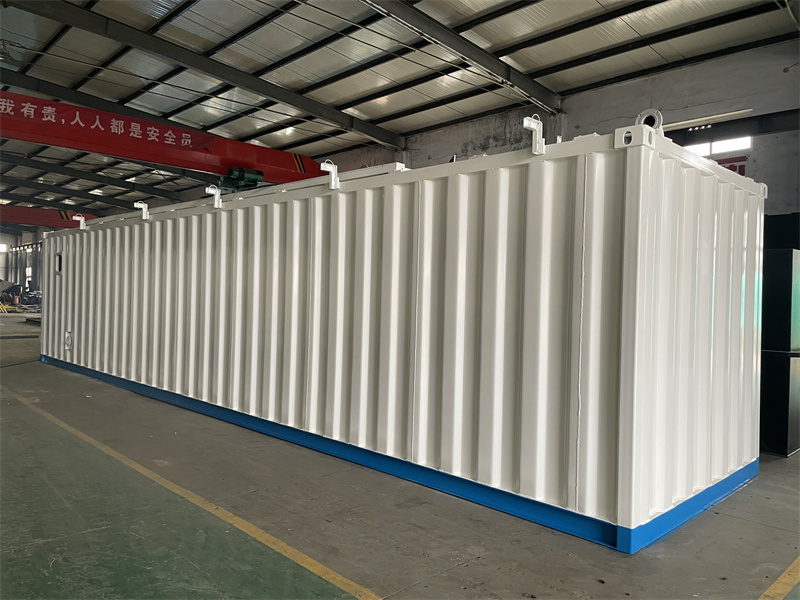
Haipuou Environmental Protection Group Co., Ltd. specializes in wastewater treatment project construction, as well as the manufacturing and sales of water treatment equipment. Our core products include integrated wastewater treatment equipment, high-efficiency cyclone purifiers, magnetic separation wastewater treatment systems, prefabricated wastewater treatment plants, smart water management platforms, sludge thickening equipment and dissolved air flotation (DAF) machines.
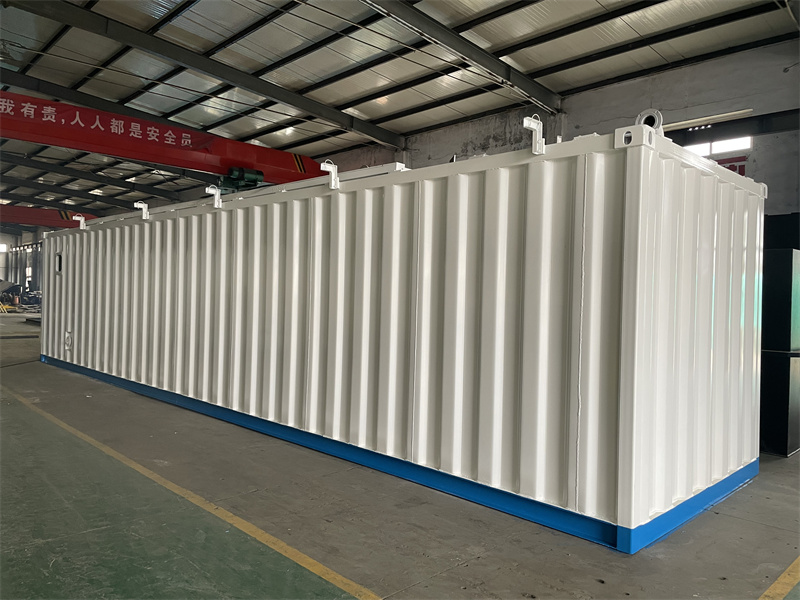
Abstract: With the amendment to GB 18918—2002 Discharge Standard of Pollutants for Municipal Wastewater Treatment Plant officially implemented, wastewater treatment has entered an era of dual control over daily average values and transient peak values. This paper systematically interprets wastewater treatment policy requirements in 2026, mainstream process selection, industry-specific solutions and low-carbon intelligent upgrading routes. It delivers implementable technical & operation guidelines for municipal, industrial and rural sewage treatment, helping enterprises achieve stable discharge compliance, cost reduction, efficiency improvement and green transformation.
I. Core Policy Requirements for Wastewater Treatment in 2026
Starting from 2026, wastewater supervision has been fully tightened, with core changes directly impacting process design and daily operation & maintenance:
Dual limit control: COD, ammonia nitrogen, total nitrogen and total phosphorus are restricted by both daily average and transient peak values. Any single over-limit reading triggers an early warning, rendering the traditional "average qualified discharge" mode invalid.
Full traceable monitoring: Discharge outlets must be equipped with automatic flow meters, proportional samplers and online monitoring devices for real-time data uploading, complying with six monitoring standards including HJ91.1 and HJ1405.
Updated industrial standards: Food, slaughter, brewing and other sectors follow new water pollutant emission standards with stricter control on characteristic pollutants and unit product water discharge volume.
Synergistic pollution reduction & carbon mitigation: Energy recovery, reclaimed water reuse and sludge resource utilization are encouraged, with carbon emission reduction included in long-term assessment.
Policies force wastewater treatment to shift from "passive compliance" to "active optimization". Stable operation, energy efficiency, intelligence and circular resource recovery become core industry competitiveness.
II. Full-Process Wastewater Treatment System (Applicable to Municipal & Industrial Sectors)
Wastewater treatment adopts a four-stage framework: Pretreatment → Biochemical Treatment → Advanced Treatment → Disinfection & Reuse, with combined configurations tailored to different scenarios:
1. Pretreatment: Stabilize Water Quality & Protect Downstream Units
Physical interception: Bar screens and grit chambers remove floating debris and sand particles to reduce equipment abrasion.
Water quality regulation: Equalization tanks balance water volume, pH and concentration to avoid shock load on biochemical systems.
Industry-specific enhancement: Chemical precipitation for heavy metals in electroplating/chemical wastewater; oil separation & DAF for grease removal in food/slaughter wastewater.
2. Biochemical Treatment: Degrade Organics & Remove Nitrogen/Phosphorus (Core Stage)
Modified A²/O: Dominant process for municipal wastewater plants, reliable nitrogen & phosphorus removal, low operating cost, ideal for capacity upgrading reconstruction.
MBR Membrane Bioreactor: Cuts footprint by 30%–50%, produces clear effluent directly ready for advanced treatment.
Anaerobic processes (UASB/IC): Treat high-concentration organic wastewater and recover biogas for energy.
Anammox: Low carbon source demand & low power consumption, suitable for landfill leachate and sludge digester liquor.
3. Advanced Treatment: Guarantee Compliance & Support Water Reuse
Filtration: Deep bed filters and fiber ball filters reduce suspended solids.
Membrane separation: NF/RO removes salts and refractory organics to meet reuse and zero liquid discharge requirements.
Advanced Oxidation Processes (AOPs): Ozone, Fenton and catalytic oxidation break down refractory COD in pharmaceutical, printing-dyeing and chemical wastewater.
4. Disinfection & Water Reuse
UV disinfection is prioritized for high efficiency with no disinfection byproducts; sodium hypochlorite is supplemented for reuse projects for enhanced safety.
Reclaimed water is reused for industrial cooling, green irrigation, road washing and ecological replenishment to form a closed water resource cycle.
III. Process Selection Guide for Different Scenarios
1. Municipal Wastewater Treatment (10,000–200,000 tons/day)
Standard discharge: Bar screen → Grit chamber → Modified A²/O → Deep bed filter → UV disinfection.
Reclaimed water reuse: MBR → NF/RO → Disinfection, effluent meets Class IV surface water standard or above.
Upgrading reconstruction: Step-feed + multi-stage AO + precise aeration, adapted to transient peak value supervision.
2. Industrial Wastewater Treatment (High-concentration, high-salinity, toxic)
Chemical/Pharmaceutical: Pretreatment → AOPs → Anaerobic digestion → MBR → Advanced treatment for stable refractory COD removal.
Electroplating/Surface treatment: Chemical precipitation → Membrane separation → Chelating resin, heavy metal removal efficiency ≥99%.
Food/Fermentation: UASB anaerobic + aerobic biochemistry + carbon source optimization, cutting costs while recovering biogas.
High-salinity wastewater: Membrane concentration + MVR evaporative crystallization, fresh water recovery rate ≥90% with industrial salt as by-product.
3. Rural/Decentralized Sewage (50–500 tons/day)
Modular equipment combined with constructed wetlands is recommended, featuring fast construction, simple operation and low cost.
Applicable processes: Integrated A/O units, rotating biological contactors, carbon-bacteria coupling, household three-compartment septic tanks + ecological ponds.
IV. 2026 Wastewater Treatment Upgrade: Intelligence + Low Carbon + Cost Reduction
1. Intelligent Management: Resolve Transient Overlimit & High Energy Consumption
AI aeration & chemical dosing: Real-time regulation of dissolved oxygen and reagent dosage, cutting power consumption by 15%–30% and chemical consumption by 15%–20%.
Digital twin & integrated plant-network system: Predict water quality fluctuations for advance scheduling, pushing compliance rate above 99%.
Remote O&M: Centralized monitoring of scattered small stations, slashing labor costs by 40%–60%.
2. Low-Carbon Energy Saving: Transform Energy-Consuming Plants into Energy-Producing Plants
PV + wastewater source heat pump: Rooftop photovoltaic power generation + waste heat recovery, benchmark plants achieve over 30% energy self-sufficiency.
Sludge anaerobic digestion: Biogas power generation delivers dual benefits of carbon reduction and economic revenue.
High-efficiency equipment: Variable frequency blowers, energy-saving pumps and low-power membrane modules reduce basic power consumption by over 20%.
3. Circular Resource Recovery: Turn Waste into Valuable Resources
Water reuse: Industrial circulating cooling, municipal miscellaneous use, ecological replenishment to conserve freshwater resources.
Nitrogen & phosphorus recovery: Struvite crystallization for phosphorus recycling, ammonium sulfate for nitrogen recovery to produce slow-release fertilizer.
Sludge disposal: Incineration power generation, building material production and land improvement to eliminate landfill bottlenecks.
V. Corporate Compliance & Implementation Suggestions
Source segregation: Separate pretreatment for high-concentration, high-salinity and toxic wastewater to lower load on the main treatment system.
Focus on core units: Stabilize biochemical tanks first before adding advanced treatment, avoid blind investment in high-end processes.
Complete online monitoring equipment: Real-time uploading of COD, ammonia nitrogen, total phosphorus, pH and flow data to meet transient peak value inspection requirements.
Reliable cooperation modes: EPC+O, entrusted operation and energy performance contracting to mitigate investment and O&M risks.
Reserve reconstruction space: Pre-design interfaces for stricter 2028 standards to avoid repeated investment.
VI. Conclusion
2026 marks a pivotal year for the wastewater treatment industry featuring compliance upgrading, intelligent low-carbon transformation and circular resource utilization. Enterprises must follow updated policies, select matching processes and adopt intelligent technologies to realize stable discharge compliance, cost-efficiency improvement and sustainable green development. Whether municipal upgrading, industrial zero liquid discharge or rural sewage treatment, scientific wastewater treatment solutions fulfill environmental responsibilities and build long-term market competitiveness.
In the future, wastewater treatment will keep evolving toward intelligence, modularization, low carbon and resource recycling, supporting efficient water resource utilization and high-quality ecological environment protection.
Related Products
Related News
- 中卫市New Trends in the Development of the MBR Membrane Wastewater Treatment Industry: A Professional Guide to Selecting Source Manufacturers
- 中卫市How to Select Wastewater Treatment Equipment for Pig Farms? In-depth Review of Trusted Industry Service Providers
- 中卫市Hard-to-Treat Slaughterhouse Wastewater? Tested & Recommended High-Adaptability Wastewater Treatment Solutions for 2026
- 中卫市How to Select Integrated Wastewater Treatment Equipment? In-depth Review of Trustworthy Source Manufacturers Recognized by Industry Insiders
- 中卫市How to Select Buried Integrated Wastewater Treatment Equipment? Strength Evaluation of Reliable Brands in 2026
- 中卫市Inventory of New Coal Mine Water Treatment Technologies! How to Select Cost-Effective Manufacturers & Avoid Common Pitfalls
- 中卫市Textile Printing & Dyeing Wastewater Treatment Is Tough? These Four Powerful Enterprises Easily Solve Core Industry Pain Points
- 中卫市Authoritative Evaluation of High-Salinity Wastewater Treatment Equipment | Top Recommended Brands of 2026
- 中卫市Which Supplier Offers Reliable Integrated Sewage Treatment Equipment? Multi-dimensional Actual Test Comparison & Top Recommended Brands Released
- 中卫市Electroplating Factory Wastewater Treatment Engineering Cases
About Us
products
Business
News
Contact Us
Service Hotline:+86-15253659088WhatsApp: +86 18706508001
Email: jly@haipuou.group
Address: No.56, Donghuan Road, Zhucheng City, Weifang City, Shandong Province, China