


- Home
- About Us
About Us
- Product
Product
- Cases
Cases
- R&D Technology
- News
News
- Contact Us


- Default Language
 EN
EN RU
RU ES
ES DE
DE EL
EL IT
IT JA
JA KO
KO PT
PT ID
ID SR
SR UK
UK VI
VI TH
TH TR
TR MS
MS BE
BE AR
AR
来宾市Full-life-cycle Risk Control & Low-carbon Innovation in Wastewater Treatment Design: Building Efficient and Compliant Water Treatment Systems
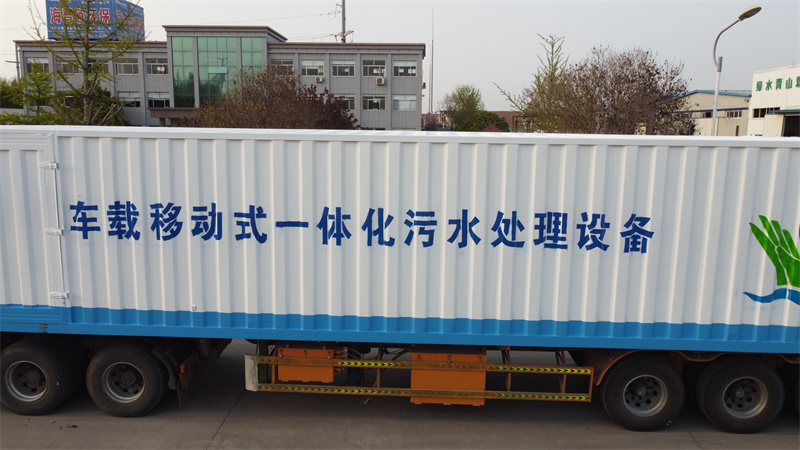
As the Three-Year Action Plan for Quality Improvement and Efficiency Enhancement of Urban Sewage Treatment (2025-2027) puts forward new requirements including "raising the operating load rate of sewage treatment plants to more than 85%" and "achieving a reclaimed water utilization rate of 35%", sewage treatment design has shifted from simple compliance to full-cycle high efficiency, low carbon and sustainability. In practical engineering, neglected risks during the design phase (such as insufficient prediction of water quality and poor process compatibility) may push up the later operation and maintenance costs by more than 30%. This paper provides forward-looking and operable design guidelines from four dimensions: full-cycle risk management, innovative application of low-carbon technologies, scenario-based cost optimization and dynamic policy adaptation, so as to help engineering contractors and enterprises achieve seamless integration covering design, construction and operation & maintenance.
I. Full-Cycle Risk Control of Sewage Treatment Design: From Early Prediction to Subsequent Operation & Maintenance
(I) Pre-design Phase: Three Major Risk Predictions and Avoidance Strategies
Water Quality Risk: Dynamically predict potential pollution factors
Risk: The design is only formulated according to existing water quality, without taking into account changes of pollutants caused by enterprise capacity expansion and raw material upgrading. For instance, new production lines built by chemical enterprises may introduce heavy metals and refractory organic matter;
Prediction Methods:
Industrial projects: Investigate wastewater composition of 3 to 5 enterprises in the same industry, analyze the correlation of "raw materials - products - pollutants". For example, pesticide production will produce organophosphorus and pyrethroid substances, and reserve expansion space for pre-treatment modules such as advanced oxidation and chelating resin adsorption;
Municipal projects: Combined with the planning of service areas (such as newly built industrial parks and large communities in the future), the design shall follow the standard of "current water quality plus 30% shock load", and reserve 20% extra volume for biochemical tanks;
Case: During the design of a sewage treatment plant for a chemical industrial park, designers anticipated the possible introduction of electroplating enterprises in the future, and reserved installation positions for two sets of magnetic separation equipment in the pre-treatment section. No large-scale reconstruction was required after electroplating wastewater was added three years later, saving a total cost of 1.2 million RMB.
Process Compatibility Risk: Avoid disconnection between modules
Risk: Mismatched parameters between pre-treatment and main treatment processes. For example, the B/C ratio after pre-treatment fails to reach the expected value, resulting in overload of the biochemical system;
Avoidance Strategies:
Pilot test verification: Lab-scale tests shall be carried out before the design of industrial wastewater treatment. For example, carry out advanced oxidation pre-treatment tests to detect COD removal rate and B/C ratio improvement under different current densities, ensuring that the water quality after pre-treatment meets the requirements of the main treatment process (the B/C ratio of biochemical process shall be higher than 0.35);
Linked parameter design: Install water quality linkage adjustment devices between pre-treatment units and main treatment units. When the COD of pre-treatment effluent exceeds the standard, the influent flow will be automatically reduced or the chemical dosage will be increased;
Data standard: The pilot test period shall not be less than 7 days, and the test deviation of key parameters (COD removal rate, B/C ratio) shall be controlled within 5% to guarantee data reliability.
Cost Risk: Conduct full-cycle cost calculation to avoid focusing on construction while ignoring operation
Common misunderstanding: Only calculate the cost of equipment and civil engineering, while ignoring energy consumption, chemical dosage and sludge disposal expenses within the 20-year operation cycle. Operation and maintenance costs usually account for 60%-70% of the total full-cycle cost;
Calculation Methods:
Construction cost: 1500-2000 RMB per ton per day for municipal sewage plants and 2000-3000 RMB per ton per day for industrial sewage stations, including equipment, civil engineering and installation;
Operation cost: Calculate item by item, including electricity (0.5-1.0 RMB per ton), chemical cost (0.3-0.8 RMB per ton), sludge disposal cost (0.2-0.5 RMB per ton) and labor cost (0.1-0.3 RMB per ton), and reserve cost space according to the annual inflation rate of 5%;
Optimization direction: Give priority to low-energy and resource-oriented processes such as anaerobic biogas generation and reclaimed water reuse. The benefits brought by resource recycling can offset 30%-50% of operation and maintenance costs.
(II) Post-design Phase: Four Key Design Points for Operation & Maintenance Connection
Reserve operation space to meet later maintenance demands
Equipment spacing: The spacing between equipment in blower room and pump room shall be no less than 1.2m, and the passage width shall be more than 1.5m to facilitate equipment disassembly and replacement;
Lifting facilities: Reserve crane beams above reactors and membrane components with the bearing capacity 1.5 times the weight of equipment, so as to avoid building temporary scaffolding during later maintenance;
Case: No space for hoisting membrane components was reserved in the design of a sewage plant. Partial tank cover had to be demolished to replace MBR membranes later, which caused an extra expense of 50,000 RMB and delayed the construction period by 15 days.
Design of chemical storage and conveying system to guarantee safety and efficiency
Storage capacity: The volume of chemical storage tanks shall be designed according to the maximum consumption for 7-15 days. For example, if the daily consumption of PAC is 5 tons, the tank volume shall be no less than 70m³ to avoid frequent procurement;
Safety protection: Acid and alkali chemical tanks shall be made of anti-corrosion materials such as FRP. A leakage prevention cofferdam with volume more than 1.2 times the tank volume shall be equipped, together with emergency neutralization devices;
Conveying optimization: Adopt automatic dosing and frequency conversion control system. The chemical dosage is linked with influent flow and COD concentration. For instance, the PAC dosage will be increased automatically when the influent COD rises, cutting chemical waste by 20%.
Water quality monitoring system: Realize full-process monitoring
Monitoring points: Besides conventional water inlet and outlet monitoring points, add monitoring points after pre-treatment and in the middle of biochemical tanks. Test COD and B/C ratio after pre-treatment, and detect DO and MLSS in biochemical tanks to find process anomalies timely;
Data application: Link monitoring data with PLC control system. When DO is lower than 1.5mg/L, the aeration intensity of blowers will be increased automatically to form a closed loop of monitoring, adjustment and feedback;
Standard: The data sampling frequency shall be at least once every 15 minutes, and data shall be stored for more than 3 years to meet the traceability requirements of environmental protection departments.
Emergency plan design: Deal with unexpected conditions
Response to sudden pollution: Build an emergency accident tank with volume no less than the maximum discharge capacity within 24 hours. When the influent water quality exceeds the standard severely (COD>3000mg/L), sewage will be diverted into the accident tank to avoid impacting the treatment system;
Response to equipment failure: Prepare 1 to 2 standby units for key equipment such as blowers and water pumps. Automatic switching can be realized when faults occur, and the downtime shall be controlled within 30 minutes;
Case: High-concentration wastewater flowed into the system due to pipeline rupture in an industrial park. The emergency accident tank collected the polluted water timely, preventing the collapse of the treatment system and reducing economic losses by 800,000 RMB.
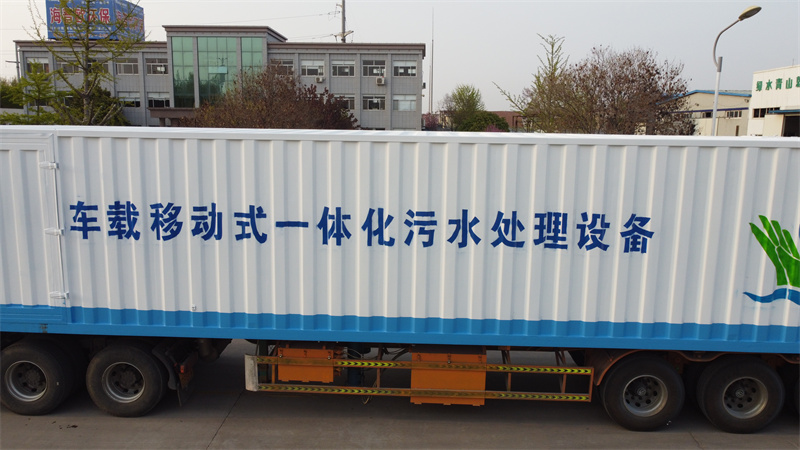
II. Innovative Low-Carbon Technology for Sewage Treatment Design: Help Achieve the Dual-Carbon Goal
(I) Energy Optimization Design: Shift from energy consumption to energy self-sufficiency
Resource Utilization of Anaerobic Biogas
Design Points:
Biogas collection: UASB/IC reactors adopt a combined collection system consisting of water seal and gas holder. The biogas collection rate is above 95%. Dry desulfurization equipment ensures the desulfurization efficiency higher than 98%, raising methane purity to more than 90%;
Energy conversion: Equip biogas generator sets with power generation efficiency of 35%-40%, and surplus electricity can be incorporated into the plant power grid. Or install biogas boilers to produce steam for heating anaerobic reactors, maintaining the temperature at 35-38℃ and improving anaerobic efficiency by 15%;
Data: The IC reactor of a brewery produces 2000m³ biogas every day and generates 3000kWh electricity, covering 30% of the plant power demand and saving 1.8 million RMB on electricity bills per year.
Integration of Solar Energy and Renewable Energy
Application Scenarios:
Photovoltaic power generation: Install solar panels on the roof of sewage plants and the cover of sedimentation tanks. The daily power generation is calculated as 2-4kWh per square meter, supplying power for plant lighting and water pumps;
Hydropower generation: Install small hydroelectric generators on water outlet pipelines (available when the water head difference is above 3m) to generate power by using residual water pressure and supplement part of the electricity;
Case: A municipal sewage plant installed 10,000 square meters of photovoltaic panels, generating 1.2 million kWh electricity per year and cutting carbon emissions by 960 tons, equivalent to planting 53,000 trees.
(II) Low-Carbon Process Design: Reduce Energy Consumption and Carbon Emissions
Selection of Low-Energy Processes
Municipal sewage: Adopt AAO-MBR + denitrifying deep bed filter process, cutting energy consumption by 25% compared with traditional processes. The energy consumption of traditional processes is 0.6kWh per ton of water, while this new process only consumes 0.45kWh per ton;
Industrial wastewater: For high-salinity wastewater, select DTRO membrane concentration + MVR evaporative crystallization process, which reduces energy consumption by 40% compared with traditional multi-effect evaporation. The energy consumption of MVR is 0.35kWh per kilogram of water, while multi-effect evaporation consumes 0.8kWh per kilogram;
Principle: MVR recovers the heat of secondary steam through compressors to reduce steam consumption. DTRO membrane adopts cross-flow filtration to reduce concentration polarization and lower operating pressure.
Energy-Saving Optimization of Aeration System
Equipment selection: Replace traditional Roots blowers with magnetic levitation centrifugal blowers, cutting energy consumption by 30%-40%. The specific power of Roots blowers is 8-10kW/(m³/min), while that of magnetic levitation blowers is 5-7kW/(m³/min);
Aeration mode: Use microporous aeration discs (oxygen utilization rate: 30%-35%) instead of perforated pipe aeration (oxygen utilization rate: 15%-20%), lowering the operating load of blowers by 50%;
Intelligent control: Adopt variable air volume aeration according to online DO monitoring data. Reduce the rotating speed of blowers when the influent load is low to avoid excessive aeration.
(III) Low-Carbon Material and Structural Design: Cut Full-Cycle Carbon Emissions
Selection of Structure Materials
Give priority to recycled concrete (mixing ratio ≥30%) and low-carbon steel (carbon content ≤0.2%), reducing carbon emissions during building material production by 20%-30%;
Tank structure: Adopt circular tanks instead of rectangular ones, cutting concrete consumption by 15% and realizing more uniform water flow to reduce short-circuit flow;
Standard: The performance of recycled concrete shall meet the requirements of Code for Design of Concrete Structures (GB 50010-2010), with compressive strength higher than C30.
Greening and Carbon Sink Design
Plant carbon sink plants such as arbors and shrubs around and on the roof of sewage plants. Each hectare of green land can fix 2-3 tons of carbon every year;
Case: The greening area of a sewage plant accounts for 30% of the total land area, realizing annual carbon sequestration of 50 tons. Meanwhile, the ecological environment of the plant is improved, and the satisfaction of surrounding residents is enhanced.
III. Cost Optimization for Sewage Treatment Design under Different Scenarios: Balance High Efficiency and Economy
(I) Medium and Small Municipal Sewage Treatment Stations (Daily Capacity: 10,000-50,000 Tons)
Process Selection: Replace traditional civil structures with integrated equipment
Advantages: The land occupation of integrated AAO-MBR equipment is only 1/3 of that of traditional processes. The equipment with daily capacity of 20,000 tons occupies 800 square meters, while traditional processes need 2500 square meters. The construction period is shortened by 60% (2-3 months VS 6-8 months);
Cost Comparison: The construction cost of integrated equipment is 2000 RMB per ton per day, while that of traditional processes is 2500 RMB per ton per day. A project with daily capacity of 20,000 tons saves 10 million RMB;
Operation optimization: Adopt remote operation combined with regular inspection. The number of operation staff is reduced from 5 to 2, saving 150,000 RMB on labor cost every year.
Cost Control for Reclaimed Water Reuse
Reuse purpose: Prioritize the reuse of reclaimed water for plant greening and road cleaning, which only requires low water quality, and the treatment cost is 0.8-1.2 RMB per ton;
Equipment selection: Adopt sand filtration + activated carbon filtration instead of RO membrane separation, cutting treatment cost by 60%. The cost of sand filtration is 0.5 RMB per ton, while RO process costs 1.5 RMB per ton, which can meet the demand for low-standard water reuse.
(II) Large Industrial Sewage Treatment Plants (Daily Capacity: More Than 100,000 Tons)
Separate Treatment for Different Water Quality to Reduce Overall Cost
High-concentration wastewater: Adopt anaerobic + advanced oxidation process separately, avoiding the increase of treatment capacity caused by diluting high-concentration wastewater. For example, a petrochemical plant treats wastewater with COD of 10000mg/L separately, saving 3 million RMB on chemical cost per year compared with mixed treatment;
Low-concentration wastewater: Directly send water into biochemical treatment units to simplify the process and cut energy consumption by 20%.
Sludge Resource Utilization: Turn Waste into Treasure
Treatment process: Adopt sludge drying + incineration power generation (the moisture content of dried sludge is less than 30%, and heat generated by incineration can be used for power generation), or aerobic composting (used as fertilizer for landscaping);
Benefit Calculation: A chemical sewage plant treats 50 tons of sludge every day. 800,000 kWh electricity is generated after drying and incineration, and 1.5 million RMB of sludge outward transportation disposal cost is reduced every year.
(III) Rural Decentralized Sewage Treatment (Daily Capacity: 50-500 Tons)
Process Selection: Low Cost & Easy Maintenance
Recommended process: Anaerobic filter + constructed wetland + ecological ditch. No aeration or chemical dosing is needed, and the operating cost is only 0.1-0.3 RMB per ton of water;
Design Points: Select local pollution-resistant plants such as reeds and calamus for constructed wetlands to reduce maintenance cost. Ecological ditches use cobblestones and soil for further water purification;
Case: A village adopted this process to treat 200 tons of sewage per day. The effluent COD ≤60mg/L, which meets the Discharge Standard of Water Pollutants for Rural Domestic Sewage Treatment Facilities (GB/T 37078-2018). The annual operation cost is only 50,000 RMB.
IV. Adaptation to the Latest Policies and Design Innovation: Design Direction after 2025
1. Upgraded Discharge Standard: Transition from Quasi-Class IV to Class III Surface Water Standard
Policy Trend: Key river basins such as Taihu Lake and Chaohu Lake have carried out pilot projects, requiring sewage plant effluent to meet Class III surface water standards (COD≤20mg/L, ammonia nitrogen≤1.0mg/L, total phosphorus≤0.2mg/L);
Design Adaptation:
Strengthen advanced treatment: Add ozone oxidation + activated carbon adsorption units to improve COD removal rate by another 15%-20% and guarantee effluent COD ≤20mg/L;
Biological enhancement: Add high-efficiency nitrogen removal bacteria (nitrifying bacteria and denitrifying bacteria) into biochemical tanks, raising the ammonia nitrogen removal rate to more than 98%.
2. Integration with Smart Water Affairs: Build Digital Twin System
Policy Requirement: The 14th Five-Year Plan for Smart Water Affairs Construction requires all large sewage treatment plants to build digital twin systems before the end of 2025 to realize integrated simulation, optimization and early warning;
Design Points:
3D modeling: Build a full-process 3D model of the sewage plant including structures, equipment and pipe networks with millimeter-level precision;
Data fusion: Integrate online monitoring data, equipment operation data and meteorological data. AI algorithms simulate treatment effects under different working conditions, such as the influence of influent load change on effluent quality;
Application Scenarios: Optimize aeration intensity and chemical dosage through digital twin system, cutting energy consumption by 10%-15% and improving operation efficiency by 40%.
3. Green Building Standard: Carbon-Neutral Design for Sewage Plants
Policy Guidance: Sewage plants shall comply with the Evaluation Standard for Green Buildings (GB/T 50378-2019) and gradually realize carbon neutrality;
Design Innovation:
Energy Self-sufficiency: Meet more than 80% of plant power demand by biogas power generation and photovoltaic power generation;
Carbon Sink Offset: The greening area accounts for no less than 40% of the total land area. Plant species with strong carbon sequestration capacity such as poplars and cypresses. Annual carbon fixation can offset 30% of carbon emissions;
Case: A carbon-neutral sewage plant reduced annual carbon emissions to less than 50 tons through energy optimization and carbon sink design, becoming a benchmark project in the industry.
V. Practical Cases: Innovative Sewage Treatment Design under Different Scenarios
Case 1: Large Municipal Sewage Plant (Daily Capacity: 200,000 Tons, Effluent Standard: Class III Surface Water)
Design Difficulties: Strict effluent standard and low-carbon operation;
Process Route: Bar Screen + Grit Chamber + Modified AAO (UCT Process) + Denitrifying Deep Bed Filter + Ozone Oxidation + Activated Carbon Adsorption + Photovoltaic Power Generation + Biogas Power Generation;
Innovative Design:
Digital twin system: Build a full-process 3D model to simulate changes of DO and MLSS in real time and optimize aeration parameters, cutting blower energy consumption by 18%;
Conclusion:
Sewage treatment design needs to balance current compliance and long-term value.
Related Products
Related News
- 来宾市New Trends in the Development of the MBR Membrane Wastewater Treatment Industry: A Professional Guide to Selecting Source Manufacturers
- 来宾市How to Select Wastewater Treatment Equipment for Pig Farms? In-depth Review of Trusted Industry Service Providers
- 来宾市Hard-to-Treat Slaughterhouse Wastewater? Tested & Recommended High-Adaptability Wastewater Treatment Solutions for 2026
- 来宾市How to Select Integrated Wastewater Treatment Equipment? In-depth Review of Trustworthy Source Manufacturers Recognized by Industry Insiders
- 来宾市How to Select Buried Integrated Wastewater Treatment Equipment? Strength Evaluation of Reliable Brands in 2026
- 来宾市Inventory of New Coal Mine Water Treatment Technologies! How to Select Cost-Effective Manufacturers & Avoid Common Pitfalls
- 来宾市Textile Printing & Dyeing Wastewater Treatment Is Tough? These Four Powerful Enterprises Easily Solve Core Industry Pain Points
- 来宾市Authoritative Evaluation of High-Salinity Wastewater Treatment Equipment | Top Recommended Brands of 2026
- 来宾市Which Supplier Offers Reliable Integrated Sewage Treatment Equipment? Multi-dimensional Actual Test Comparison & Top Recommended Brands Released
- 来宾市Electroplating Factory Wastewater Treatment Engineering Cases
About Us
products
Business
News
Contact Us
Service Hotline:+86-15253659088WhatsApp: +86 18706508001
Email: jly@haipuou.group
Address: No.56, Donghuan Road, Zhucheng City, Weifang City, Shandong Province, China