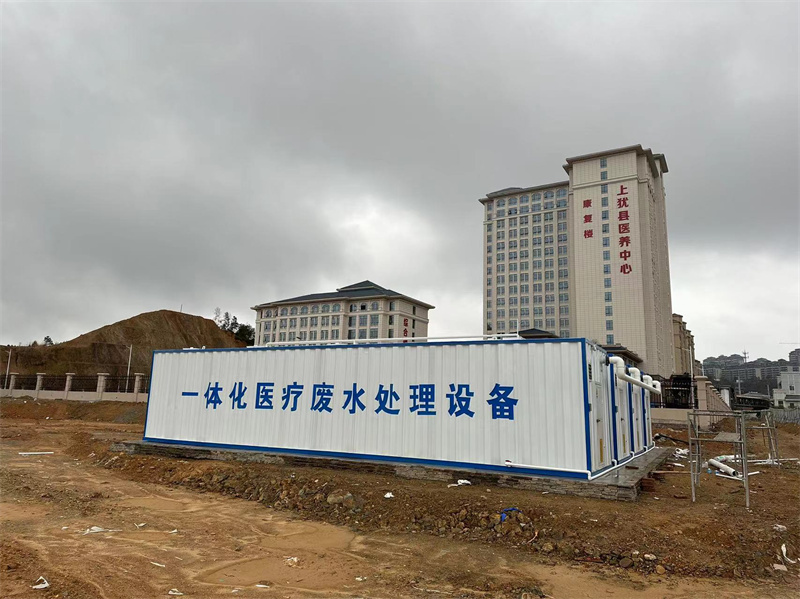
Medical wastewater contains pathogens, chemical agents, heavy metals and other pollutants. Improper discharge will seriously endanger the ecological environment and human health. As a core mandatory national standard in China, the Discharge Standard of Water Pollutants for Medical Institutions (GB 18466-2005) stipulates full-cycle requirements for medical wastewater discharge. The revision work launched in 2023 has brought medical wastewater treatment into a new stage of refined regulation. This article provides compliance guidelines for medical institutions from three aspects: core content of the standard, implementation requirements, and the latest updates.
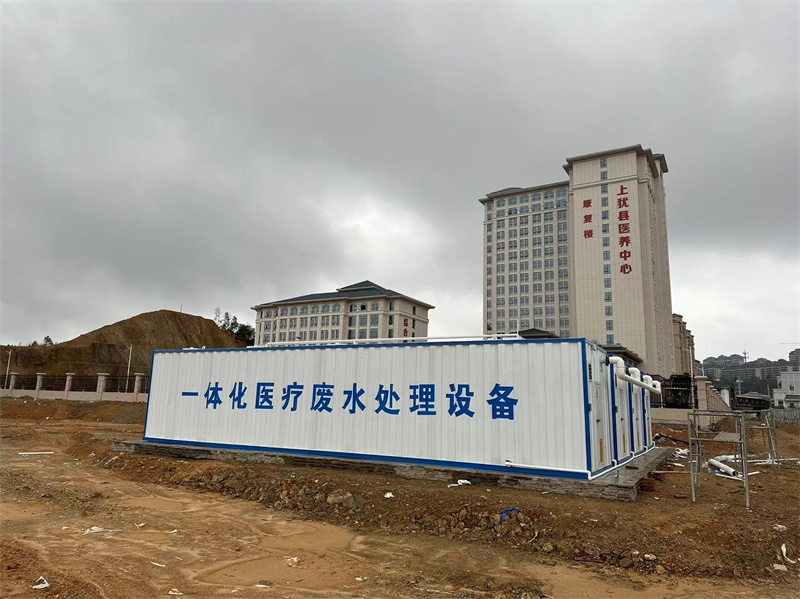
I. Core Framework and Scope of Application of the Medical Wastewater Discharge Standard
1. Standard Position and Legal Basis
Implemented on January 1, 2006, GB 18466-2005 replaces the medical wastewater clauses in the former Integrated Wastewater Discharge Standard. Formulated in accordance with the Environmental Protection Law, Water Pollution Prevention and Control Law, and Infectious Disease Prevention and Control Law, it serves as the legal basis for wastewater discharge, facility construction and environmental supervision of medical institutions. This is a mandatory national standard. Newly built, reconstructed and expanded medical institutions must comply with it immediately, while existing ones were required to complete renovation to meet standards by the end of 2007.
2. Full Coverage of Applicable Entities
This standard applies to all types of medical institutions, including hospitals, health centers, sanatoriums, outpatient departments, clinics, and first-aid stations, governing the discharge of medical wastewater, domestic sewage and fecal sewage. Supplementary provisions are specified as follows:
If domestic sewage from office and non-medical areas is mixed with ward wastewater, the mixed sewage shall comply with this standard;
Separately collected domestic sewage from non-medical areas shall follow GB 8978 Integrated Wastewater Discharge Standard.
The 2023 draft amendment extends the scope to cabin hospitals and centralized quarantine sites, filling the regulatory gap during major epidemic prevention and control.
II. Core Technical Requirements for Medical Wastewater Discharge
1. Pollutant Control Items and Limit Values
Discharge limits vary according to the type of medical institutions, covering three major categories of indicators:
Pathogen indicators: For infectious disease and tuberculosis hospitals, fecal coliforms shall not exceed 100 MPN/L, and enteropathogenic bacteria and mycobacterium tuberculosis shall not be detected. For general hospitals, the limit is 500 MPN/L for direct discharge and 5000 MPN/L for pre-treated sewage entering municipal pipelines.
Conventional pollutants: The direct discharge limit of COD is 60 mg/L, and the pre-treatment limit is 250 mg/L; BOD shall not exceed 20 mg/L for direct discharge and 100 mg/L for pre-treated discharge. Clear limits are also set for suspended solids, ammonia nitrogen and other items.
Characteristic pollutants: Heavy metals including total mercury, total cadmium and hexavalent chromium are controlled. The total α radioactivity ≤ 1 Bq/L and total β radioactivity ≤ 10 Bq/L. The draft amendment plans to add a comprehensive toxicity indicator, requiring the lowest no-effect dilution ratio of zebrafish egg acute toxicity to be no less than 6.
2. Treatment Process and Disinfection Specifications
Infectious disease hospitals must adopt the "secondary treatment + disinfection" process; ward wastewater needs pre-disinfection before entering the main treatment system;
Medical institutions with 20 or more beds must build dedicated wastewater treatment facilities. Facilities with fewer than 20 beds shall disinfect wastewater before discharge.
Available disinfectants include sodium hypochlorite, potassium peroxymonosulfate composite, ultraviolet rays and ozone. For chlorination disinfection, the contact time shall be no less than 1 hour. The dosage of potassium peroxymonosulfate is 5-10 mg/L with a contact period of 1.0~1.5 hours.
3. Requirements for Sludge and Waste Gas Discharge
Sludge must be disinfected and rendered harmless before removal and disposal. Waste gas from the sewage treatment station shall meet the Integrated Emission Standard of Air Pollutants to prevent the diffusion of harmful gas.
III. Standard Implementation and Supervision Rules
1. Monitoring Management Rules
Sampling shall be conducted at the main outlet. Radioactivity indicators are tested at the outlet of the decay tank, and heavy metal sampling is carried out at the discharge points of each laboratory.
Key polluters shall install automatic monitoring equipment connected to the ecological environment authorities. Fecal coliforms are tested at least once a month, conventional pollutants quarterly, and comprehensive toxicity indicators semi-annually for key enterprises.
Medical institutions shall establish monitoring systems, keep original records and disinfection logs, and publish discharge data in accordance with the pollutant discharge permit requirements.
2. Responsibility Allocation and Supervision Mechanism
Medical institutions bear the primary responsibility for pollution control. They can entrust third-party organizations to conduct equipment operation, maintenance and water quality monitoring.
Environmental protection and health authorities carry out joint law enforcement to form a full-chain supervision system.
The central government provides financial support for the construction of wastewater treatment facilities via water pollution control funds. A total of 25.7 billion RMB was allocated in 2023.
IV. Latest Standard Updates and Compliance Suggestions
1. Trend of Standard Revision
The Ministry of Ecology and Environment is compiling the amendment to GB 18466-2005. Major revisions include adding comprehensive toxicity indicators, clarifying discharge limits for designated epidemic hospitals and cabin hospitals, improving monitoring and disinfection technical specifications, and strengthening control over emerging pollutants.
2. Practical Compliance Advice for Medical Institutions
Check the deficiencies of existing facilities against the standard. Upgrade wastewater treatment equipment and repair leaking collection pipelines if the current capacity fails to meet requirements.
Optimize disinfection processes and select proper disinfectants according to water quality to ensure stable effluent without excessive disinfectant residue.
Build a regular self-inspection system, focusing on pathogen indicators and the newly added comprehensive toxicity monitoring to handle abnormal conditions timely.
Pay attention to stricter local standards. Regions such as Beijing and Shanghai have set higher emission limits, so institutions must comply with both national and local regulations.
Strict implementation of medical wastewater discharge standards is critical to safeguarding public health and ecological quality. Along with the control of emerging pollutants, the regulatory system will keep improving. Medical institutions need to actively adapt to new policies, strengthen facility construction and daily operation, and achieve the dual goals of compliant wastewater discharge and green development. Financial subsidies, technical research and digital supervision from environmental authorities will continuously help medical facilities improve pollution treatment capacity.






 EN
EN RU
RU ES
ES DE
DE EL
EL IT
IT JA
JA KO
KO PT
PT ID
ID SR
SR UK
UK VI
VI TH
TH TR
TR MS
MS BE
BE AR
AR