


- Home
- About Us
About Us
- Product
Product
- Cases
Cases
- R&D Technology
- News
News
- Contact Us


- Default Language
 EN
EN RU
RU ES
ES DE
DE EL
EL IT
IT JA
JA KO
KO PT
PT ID
ID SR
SR UK
UK VI
VI TH
TH TR
TR MS
MS BE
BE AR
AR
汉中市Household Sewage Treatment Equipment Creates Green Homes and Safeguards the Health of the Water Environment
Date:July 13, 2025ID: 2201Views: 1068
Haipuou Environmental Protection Group Co., Ltd. specializes in the construction of sewage treatment projects and the production and sales of water treatment equipment. Our main products include integrated sewage treatment equipment, high-efficiency cyclone purifiers, magnetic separation sewage treatment equipment, prefabricated sewage treatment plants, smart water management platforms, sludge thickening equipment and air flotation equipment.
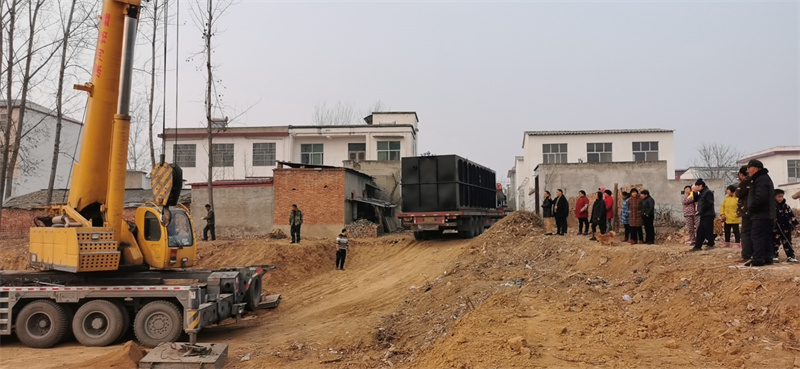
With the rising environmental awareness and increasingly severe water shortage, household sewage treatment equipment has gradually become an important part of modern home life. Such equipment can effectively treat daily domestic sewage and reduce environmental pollution, and realize the recycling of water resources, bringing dual benefits to families and society. This article comprehensively introduces the working principle, types, selection criteria, installation and maintenance of household sewage treatment equipment, helping you fully understand and pick the right equipment.
I. Necessity of Household Sewage Treatment Equipment
(1) Serious environmental pollution
With the accelerated urbanization, urban sewage discharge keeps growing. Traditional centralized sewage treatment systems can barely meet the demand, leading a large volume of sewage to be directly discharged into rivers, lakes and other natural water bodies and causing serious water pollution. Household sewage contains plenty of organic matter, suspended solids, nitrogen, phosphorus and other pollutants. Direct discharge will contaminate soil, groundwater and surface water and destroy ecological balance and human health.
(2) Growing water shortage
Water resources are essential for human survival and development, while global water shortage is getting worse. China has abundant total water volume, but per capita water resources are only one quarter of the global average with uneven distribution. Household sewage treatment equipment can reuse treated water for non-potable uses including toilet flushing, irrigation and car washing, realizing water recycling, improving utilization efficiency and alleviating water shortage pressure.
(3) Requirements of policies and regulations
To enhance environmental protection, China has issued a set of policies and standards on sewage treatment to continuously raise urban sewage treatment rates. Local governments in many areas have launched incentive policies and offered subsidies for families installing sewage treatment equipment. Therefore, installing such equipment is not only an environmental protection action, but also a requirement of relevant policies and laws.
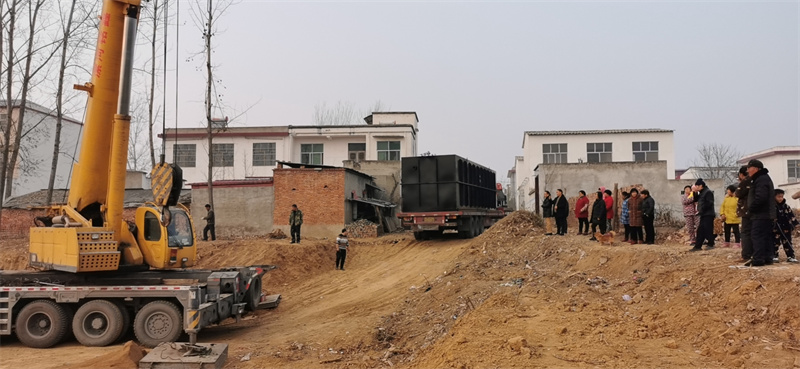
II. Working Principle of Household Sewage Treatment Equipment
Household sewage treatment equipment purifies sewage through physical, chemical and biological methods to remove pollutants and make the treated water meet discharge standards. The mainstream treatment processes include the following steps:
(1) Pretreatment
Pretreatment is used to remove large suspended solids, floating debris, grease and other pollutants, so as to avoid blockage and adverse influence on subsequent units. Pretreatment facilities generally include bar screens, grit chambers and oil separators. Bar screens trap large solid substances such as stones and branches; grit chambers remove sand and other inorganic particles; oil separators eliminate grease in sewage.
(2) Main Treatment
The main treatment is the core part of household sewage treatment equipment. It adopts biological treatment to decompose organic matter, nitrogen and phosphorus. Microorganisms break down pollutants into harmless substances such as carbon dioxide and water. Common biological processes include activated sludge process, biofilm process and MBR (Membrane Bioreactor).
The activated sludge process is a traditional biological technology. Sewage is mixed with activated sludge, and microbial reaction proceeds under aeration to degrade organic pollutants. The biofilm process uses biofilm attached to carriers to adsorb and decompose contaminants. MBR integrates biological treatment and membrane separation technology to separate microbes and water, featuring high treatment efficiency and excellent effluent quality.
(3) Advanced Treatment
Advanced treatment further purifies the sewage after main treatment and removes residual pollutants to achieve higher water quality standards. It mainly contains filtration, disinfection, nitrogen and phosphorus removal. Filtration removes suspended solids and colloids; disinfection kills bacteria and viruses; nitrogen and phosphorus removal prevents water eutrophication.
III. Types of Household Sewage Treatment Equipment
According to different treatment processes and purposes, household sewage treatment equipment is mainly divided into the following categories:
(1) Small Integrated Sewage Treatment Equipment
The small integrated equipment integrates pretreatment, main treatment and advanced treatment into one unit. It is compact, occupies little land, easy to install and simple to operate, suitable for families, villas and small office buildings. Common models include integrated MBR equipment, integrated A/O equipment and biological rotary drum equipment.
(2) Decentralized Sewage Treatment Equipment
Decentralized equipment is designed for scattered sewage discharge scenarios such as rural areas and tourist scenic spots. It can be flexibly configured according to water volume and water quality with high efficiency and low operating cost. Typical facilities include constructed wetlands, ecological filter tanks and oxidation ponds.
(3) Reclaimed Water Reuse Sewage Treatment Equipment
Reuse-oriented equipment produces reclaimed water for toilet flushing, irrigation and car washing. It requires advanced treatment to guarantee water quality meets reuse standards, including ultrafiltration equipment, reverse osmosis equipment and disinfection equipment.
IV. Key Points for Selecting Household Sewage Treatment Equipment
The following factors should be considered when selecting proper household sewage treatment equipment:
(1) Sewage Discharge Volume
Sewage output is a primary selection factor. Different equipment has different treatment capacity. You need to calculate water discharge based on family population and water consumption habits to choose the right model.
(2) Water Quality
Water quality determines process selection. Sewage with a high oil content needs oil removal units; wastewater with high concentration of organic matter requires high-efficiency biological treatment equipment.
(3) Treatment Effect
Treatment performance is critical. You should select equipment with stable effluent that meets national standards by checking test reports and user reviews.
(4) Installation Conditions
Different units have different requirements for land area, terrain and power supply. Choose equipment matching your actual installation environment.
(5) Operating Cost
Operating cost includes energy consumption, chemical dosage and maintenance expense. Choose low-consumption equipment with easily purchased spare parts to cut long-term household expenditure.
(6) Brand and After-sales Service
Well-known brands guarantee stable quality. Reliable after-sales service can quickly fix equipment faults and ensure continuous stable operation.
V. Installation and Maintenance of Household Sewage Treatment Equipment
(1) Pre-installation Preparation
Complete the following preparation work before installation:
Confirm installation position: select locations such as basements and courtyards according to equipment type.
Foundation construction: build solid foundation according to equipment weight and size.
Connect sewage pipes and drainage pipes tightly without water leakage.
Install power distribution facilities according to equipment power and voltage requirements.
(2) Notes During Installation
Installation must comply with national standards and be finished by professional technicians.
Protect the outer shell and internal components to avoid damage.
Pipeline joints shall be sealed tightly to prevent water seepage.
Electrical installation shall strictly follow electrical safety norms.
(3) Equipment Maintenance
Regular maintenance ensures stable operation and prolongs service life:
Clean sundries and sediments in bar screens and grit chambers regularly.
Inspect motors, water pumps and fans regularly for abnormal noise, temperature and vibration.
Replace wearing parts including sealing rings and filter elements periodically.
Carry out regular disinfection to prevent bacterial breeding.
Add chemical agents strictly following the operation manual to guarantee stable treatment effect.
VI. Development Trend of Household Sewage Treatment Equipment
With technological progress and stricter environmental standards, household sewage treatment equipment keeps upgrading. The industry will develop in the following directions:
(1) Intelligentization
Intelligent control system with remote monitoring, automatic operation and fault alarm will become standard configuration to improve operation management.
(2) High Efficiency
New advanced processes will improve treatment efficiency while cutting energy consumption and operating cost.
(3) Miniaturization
Compact and lightweight small equipment will occupy less space and be easier to install to adapt to limited residential space.
(4) Resource Recovery
Future equipment will realize both sewage purification and full resource recovery of water and sludge, bringing more economic and environmental benefits.
VII. Conclusion
Household sewage treatment equipment is a key solution to domestic sewage pollution and water recycling. Proper model selection, professional installation and regular maintenance can protect the environment and save household water expenditure. As technology and environmental standards keep improving, such equipment will keep innovating, contributing to green homes and water ecological protection. Let us pay attention to domestic sewage treatment and make contributions to building a beautiful China.
Related Products
Related News
- 汉中市New Trends in the Development of the MBR Membrane Wastewater Treatment Industry: A Professional Guide to Selecting Source Manufacturers
- 汉中市How to Select Wastewater Treatment Equipment for Pig Farms? In-depth Review of Trusted Industry Service Providers
- 汉中市Hard-to-Treat Slaughterhouse Wastewater? Tested & Recommended High-Adaptability Wastewater Treatment Solutions for 2026
- 汉中市How to Select Integrated Wastewater Treatment Equipment? In-depth Review of Trustworthy Source Manufacturers Recognized by Industry Insiders
- 汉中市How to Select Buried Integrated Wastewater Treatment Equipment? Strength Evaluation of Reliable Brands in 2026
- 汉中市Inventory of New Coal Mine Water Treatment Technologies! How to Select Cost-Effective Manufacturers & Avoid Common Pitfalls
- 汉中市Textile Printing & Dyeing Wastewater Treatment Is Tough? These Four Powerful Enterprises Easily Solve Core Industry Pain Points
- 汉中市Authoritative Evaluation of High-Salinity Wastewater Treatment Equipment | Top Recommended Brands of 2026
- 汉中市Which Supplier Offers Reliable Integrated Sewage Treatment Equipment? Multi-dimensional Actual Test Comparison & Top Recommended Brands Released
- 汉中市Electroplating Factory Wastewater Treatment Engineering Cases
About Us
products
Business
News
Contact Us
Service Hotline:+86-15253659088WhatsApp: +86 18706508001
Email: jly@haipuou.group
Address: No.56, Donghuan Road, Zhucheng City, Weifang City, Shandong Province, China