


- Home
- About Us
About Us
- Product
Product
- Cases
Cases
- R&D Technology
- News
News
- Contact Us


- Default Language
 EN
EN RU
RU ES
ES DE
DE EL
EL IT
IT JA
JA KO
KO PT
PT ID
ID SR
SR UK
UK VI
VI TH
TH TR
TR MS
MS BE
BE AR
AR
襄樊市How Is Sewage Treated? Complete Process Flow and Technical Analysis
Date:July 13, 2025ID: 2192Views: 1453
Haipuou Environmental Protection Group Co., Ltd. specializes in the construction of sewage treatment projects, as well as the manufacture and sales of water treatment equipment. Our main products include integrated sewage treatment equipment, high-efficiency cyclone purifiers, magnetic separation wastewater treatment equipment, prefabricated sewage treatment plants, smart water management platforms, sludge thickening equipment and air flotation machines.
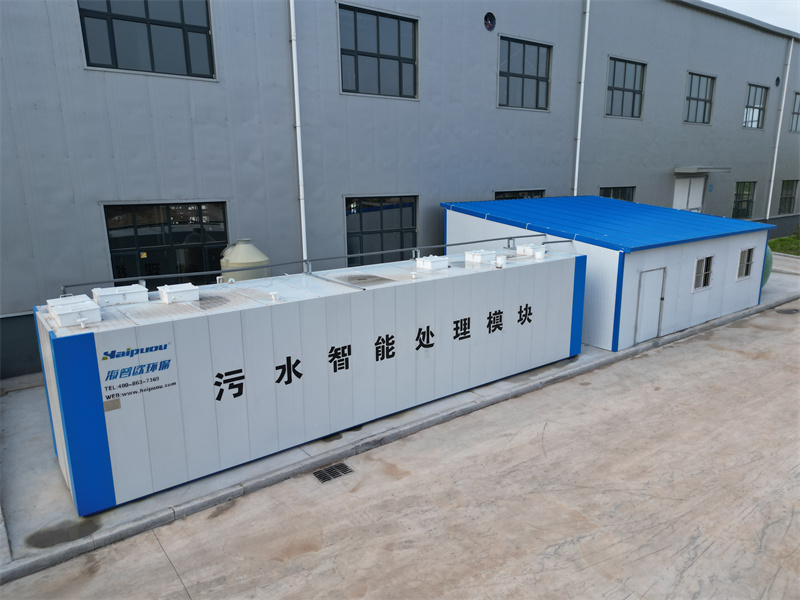
With the accelerated industrialization and urbanization, the discharge of domestic sewage and industrial wastewater keeps growing. Direct discharge without treatment will seriously pollute water bodies, break ecological balance and even threaten human health. Therefore, efficient sewage treatment has become a core subject in environmental protection. Many people wonder "how sewage is treated". In fact, sewage treatment is a systematic project. Pollutants are filtered and purified step by step through multi-stage processes to finally achieve standard-compliant discharge or resource recovery. This article elaborates on the complete process, core technologies and key links of sewage treatment to help readers fully understand this environmental protection process.
I. Core Goal of Sewage Treatment: Turning Polluted Water into Compliant Effluent
Before learning about treatment procedures, we need to clarify the core objective. According to water sources (domestic sewage, industrial wastewater, medical wastewater, etc.) and discharge requirements, physical, chemical and biological technologies are adopted to remove suspended solids, organic matter, heavy metals, pathogens and other pollutants. The effluent shall meet the national Discharge Standard of Pollutants for Municipal Wastewater Treatment Plants (GB 18918-2002) or industrial reuse standards such as reclaimed water and industrial circulating water criteria.
Different types of sewage have differentiated treatment targets:
Domestic sewage: Focus on removing COD, BOD, ammonia nitrogen, total phosphorus and suspended solids;
Industrial wastewater: For industries such as chemical printing and dyeing, and electroplating, extra treatment is required to eliminate specific contaminants including heavy metals, dyestuffs and toxic organics;
Medical wastewater: Prioritize the disinfection of pathogens (bacteria, viruses), followed by treatment of conventional pollutants.
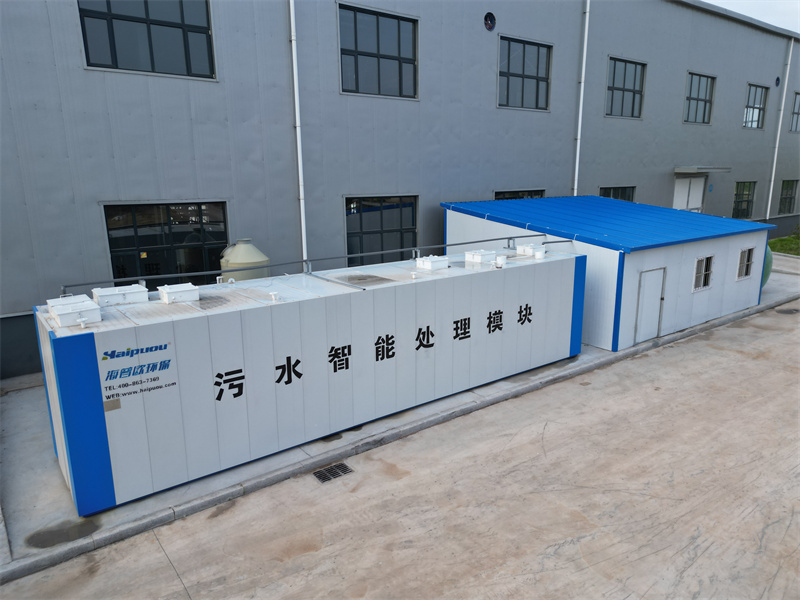
II. The Complete Four-stage Sewage Treatment Process
Sewage treatment cannot be finished in one single step. It consists of four core phases: Pretreatment → Primary Treatment → Secondary Treatment → Tertiary Treatment (Advanced Treatment). Pollutant concentration is gradually reduced to meet discharge standards. Each phase has unique technical priorities and goals, forming an integrated purification system.
1. Pretreatment: Block Large Impurities and Protect Subsequent Equipment
Pretreatment acts as the first line of defense. It removes bulky impurities that may block pumps and pipelines, preventing damage to subsequent facilities and lowering the treatment load.
Core processes and equipment:
Bar Screen Filtration: Mechanical coarse and fine screens intercept floating debris such as plastic bags, branches and fabric. The gap of coarse screens ranges from 10-50mm, while fine screens are 1-5mm. The intercepted waste is cleared by slag removers for landfilling or incineration;
Grit Chamber: Inorganic particles such as sand and gravel settle by gravity so as to avoid abrasion of pump impellers and sediment accumulation in tanks. Common types include horizontal flow and vortex grit chambers with a hydraulic retention time of 30 seconds to 2 minutes. The settled sand is separated by sand-water separators and transported out for disposal.
2. Primary Treatment: Remove Suspended Solids and Reduce Turbidity
Primary treatment is a physical process. Gravity sedimentation removes solid particles heavier than water such as sediment and organic residues together with partial floating matters. It can cut sewage turbidity and COD by roughly 20%-30%.
Core processes and equipment:
Primary Sedimentation Tank: After pretreatment, sewage flows into the tank at a low velocity of 0.005-0.01m/s with a retention time of 1 to 2 hours. Suspended solids sink to the bottom and form primary sludge, which is collected by sludge scrapers for thickening and dewatering;
Skimming Device: Some sedimentation tanks are equipped with skimming boards to eliminate oil foam and floating substances on the water surface for further purification.
After primary treatment, the concentration of suspended solids drops from 100-300mg/L to 50-100mg/L. However, plenty of soluble organic substances such as protein and carbohydrate still remain, so the sewage must go into secondary treatment before discharge.
3. Secondary Treatment: Decompose Organic Matter, the Core Purification Stage
Secondary treatment is the core biological stage. Microorganisms including bacteria, fungi and protozoa break down soluble and colloidal organic pollutants (BOD, COD) into harmless carbon dioxide and water, while removing partial nitrogen and phosphorus. The COD removal rate reaches 80%-90% and BOD removal rate exceeds 90%, achieving remarkable water quality improvement.
Mainstream biological processes:
Activated Sludge Process: The most widely adopted technology. Sewage is mixed with activated sludge rich in microorganisms. Air is supplied in the aeration tank, and microbes feed on organic pollutants and form zoogloea to adsorb and degrade contaminants. The mixed liquor then flows into the secondary sedimentation tank. Activated sludge settles and is partially refluxed to maintain microbial concentration, and the rest becomes excess sludge;
Biofilm Process: Suitable for small-scale plants and sewage with volatile water quality. Microbial films grow on filter media such as volcanic rock and plastic fillers. Organic pollutants are adsorbed and decomposed when sewage flows through the media. Typical equipment includes biofilters, biological rotators and contact oxidation tanks, featuring strong anti-shock capacity and low sludge output;
Oxidation Ditch: A modified activated sludge process with circular channels. Aeration brushes or impellers provide oxygen, and sewage circulates with a long hydraulic retention time of 10-30 hours. It performs well in nitrogen and phosphorus removal for domestic sewage treatment.
4. Tertiary Treatment (Advanced Treatment): Remove Residual Pollutants for Discharge or Reuse
A small amount of refractory organics, nitrogen, phosphorus, heavy metals and pathogens may still exist after secondary treatment. Tertiary treatment is required if the effluent is discharged to sensitive water bodies such as drinking water sources and lakes, or reused for greening, toilet flushing and industrial cooling.
Core processes and objectives:
Nitrogen and Phosphorus Removal: The A/O (Anoxic-Oxic) process or A²/O (Anaerobic-Anoxic-Oxic) process is applied. Nitrifying bacteria and denitrifying bacteria convert ammonia nitrogen into nitrogen gas, while polyphosphate bacteria absorb excess phosphorus and discharge it with sludge;
Filtration: Quartz sand filters, activated carbon filters and membrane filtration (microfiltration, ultrafiltration) trap residual suspended solids, colloids and organic matter, lowering turbidity below 5NTU;
Disinfection: Kill pathogens including bacteria, viruses and parasite eggs. Common disinfection methods include UV, chlorine dioxide and sodium hypochlorite to prevent water-borne diseases;
Advanced Oxidation: For refractory industrial wastewater from chemical and pharmaceutical industries, ozonation and Fenton reaction (H₂O₂+Fe²⁺) oxidize toxic organics and improve biodegradability.
After tertiary treatment, the effluent can meet Grade A Level 1 standard (COD≤50mg/L, BOD≤10mg/L, ammonia nitrogen≤5mg/L) specified in GB 18918-2002. Some indicators even satisfy reclaimed water reuse standards to realize resource recovery.
III. Auxiliary Systems: Sludge Treatment and Reclaimed Water Reuse
Apart from sewage purification, the whole system also produces sludge and treated effluent. Their disposal and recycling are indispensable parts that determine environmental benefits and resource circulation.
1. Sludge Treatment: Volume Reduction, Harmless Disposal and Resource Recycling
Sewage treatment generates primary sludge, excess sludge and chemical sludge. Sludge features high water content (95%-99%), large volume, and may contain heavy metals and pathogens. Random stacking will lead to secondary pollution. Therefore, sludge treatment follows the principle of volume reduction → harmless treatment → resource utilization:
Sludge Thickening: Gravity thickeners or centrifugal thickeners reduce moisture content to 90%-95% and cut volume by over 50%;
Sludge Dewatering: Plate-and-frame filter presses, belt filter presses and centrifugal dewatering machines with flocculants such as polyacrylamide reduce water content to 60%-80% and form solid sludge cakes;
Harmless Treatment: Anaerobic digestion produces biogas for power generation; aerobic compost turns sludge into organic fertilizer; incineration further reduces volume and ash can be used for brick making to eliminate hazardous substances;
Final Disposal: Qualified sludge cakes can be applied to land improvement such as landscaping, landfilling or building material production including cement and ceramsite.
2. Reclaimed Water Reuse: Turning Sewage into Resources to Alleviate Water Shortage
Tertiary-treated reclaimed water can replace tap water for non-potable uses if meeting relevant standards to achieve water recycling:
Municipal Reuse: Road sweeping, landscaping, landscape water replenishment and fire fighting;
Industrial Reuse: Cooling water and process water for textile, power and other industries;
Domestic Reuse: Toilet flushing and car washing in residential communities, complying with GB/T 18920 Municipal Wastewater Reclamation and Reuse - Urban Miscellaneous Water Quality Standard.
Reclaimed water reuse lowers freshwater consumption and total sewage discharge, which is of great significance for water-deficient regions.
IV. Industry Trend: Intelligent and Low-carbon Development
With stricter environmental regulations and technological progress, the sewage treatment industry develops toward intelligent operation and green production to raise efficiency and cut energy consumption:
Intelligent O&M: IoT sensors monitor water quality (COD, ammonia nitrogen, pH) and equipment operating status (aeration volume, pump speed) in real time. AI algorithms optimize process parameters to reduce manual work and operating costs;
Low-carbon Treatment: Technologies such as biogas recovery from anaerobic digestion, solar-powered aeration and sludge incineration power generation realize energy self-sufficiency and reduce carbon emissions;
Decentralized Treatment: Small integrated equipment such as MBR membrane bioreactors are adopted in rural and remote areas. Large sewage plants and expensive pipe networks are no longer required for scattered sewage treatment.
Conclusion
In short, sewage treatment is a systematic project covering pretreatment and advanced treatment. Physical, biological and chemical technologies work together to purify pollutants layer by layer. Matched with sludge disposal and water reuse systems, it achieves both environmental protection and resource recycling. With continuous technological upgrading, sewage treatment will become more efficient, intelligent and low-carbon, providing solid support for water environment protection and water shortage relief.
Enterprises and industrial parks shall select proper treatment processes according to sewage type, discharge volume and emission standards. If you need customized solutions for industrial wastewater or rural domestic sewage, we can design schemes based on actual working conditions.
Related Products
Related News
- 襄樊市New Trends in the Development of the MBR Membrane Wastewater Treatment Industry: A Professional Guide to Selecting Source Manufacturers
- 襄樊市How to Select Wastewater Treatment Equipment for Pig Farms? In-depth Review of Trusted Industry Service Providers
- 襄樊市Hard-to-Treat Slaughterhouse Wastewater? Tested & Recommended High-Adaptability Wastewater Treatment Solutions for 2026
- 襄樊市How to Select Integrated Wastewater Treatment Equipment? In-depth Review of Trustworthy Source Manufacturers Recognized by Industry Insiders
- 襄樊市How to Select Buried Integrated Wastewater Treatment Equipment? Strength Evaluation of Reliable Brands in 2026
- 襄樊市Inventory of New Coal Mine Water Treatment Technologies! How to Select Cost-Effective Manufacturers & Avoid Common Pitfalls
- 襄樊市Textile Printing & Dyeing Wastewater Treatment Is Tough? These Four Powerful Enterprises Easily Solve Core Industry Pain Points
- 襄樊市Authoritative Evaluation of High-Salinity Wastewater Treatment Equipment | Top Recommended Brands of 2026
- 襄樊市Which Supplier Offers Reliable Integrated Sewage Treatment Equipment? Multi-dimensional Actual Test Comparison & Top Recommended Brands Released
- 襄樊市Electroplating Factory Wastewater Treatment Engineering Cases
About Us
products
Business
News
Contact Us
Service Hotline:+86-15253659088WhatsApp: +86 18706508001
Email: jly@haipuou.group
Address: No.56, Donghuan Road, Zhucheng City, Weifang City, Shandong Province, China