


- Home
- About Us
About Us
- Product
Product
- Cases
Cases
- R&D Technology
- News
News
- Contact Us


- Default Language
 EN
EN RU
RU ES
ES DE
DE EL
EL IT
IT JA
JA KO
KO PT
PT ID
ID SR
SR UK
UK VI
VI TH
TH TR
TR MS
MS BE
BE AR
AR
肇庆市How to Select Hospital Wastewater Treatment Equipment: Five Core Standards That Determine Project Success
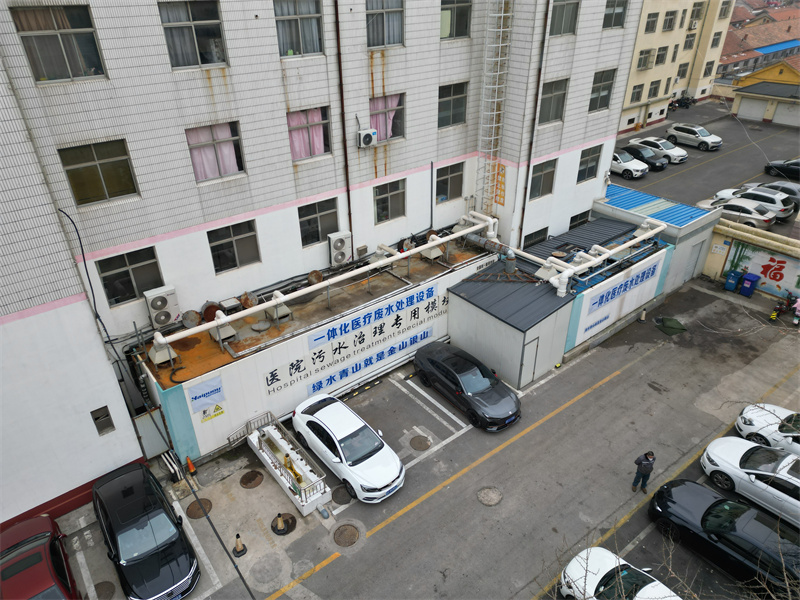
With increasingly stringent environmental regulations and rising public health awareness, hospital wastewater treatment has become an indispensable core link in the operation of medical institutions. Choosing inappropriate equipment will not only lead to heavy fines and reputational damage, but may also trigger public health risks. Faced with a dazzling array of products on the market, how can you make a wise choice? Combined with industry trends and real cases, this article breaks down five core decision-making criteria and provides practical operational suggestions.
I. Technical Compliance & Treatment Efficiency as the Primary Threshold
Hospital wastewater features complex components containing pathogens, pharmaceutical residues, chemical reagents and other special pollutants, which cannot be handled by ordinary domestic sewage treatment processes.
Supporting Data & Cases: In accordance with the Discharge Standard of Water Pollutants for Medical Organizations (GB 18466-2005) plus stricter local standards nationwide, hospital effluent must meet strict indicators including fecal coliform count, chemical oxygen demand (COD), ammonia nitrogen and total residual chlorine. A Grade A tertiary hospital was fined millions of RMB and ordered rectification within a time limit in 2023 due to delayed facility upgrading and excessive COD discharge, resulting in huge direct economic losses and severe brand damage.
Practical Guidance:
Clarify Standards: First check the latest local discharge standards of the project site; standards are usually much tighter for direct discharge to surface water or sensitive water areas.
Process Verification: Require suppliers to provide mature process packages dedicated to hospital wastewater (especially wastewater from specialized departments such as clinical laboratories, radiology and stomatology), namely enhanced treatment routes: Pre-treatment (grille + regulating tank) + biochemical treatment (A/O, MBR, etc.) + advanced disinfection (combined UV, chlorine dioxide and ozone).
Efficiency Inspection: Review long-term operational data reports of the supplier’s previous similar hospital projects, focusing on stable compliance rate of water quality, shock load resistance and disinfection performance.
Perspective Reflection: Blindly chasing low-cost equipment often means compromises on core processes. The core goal of hospital wastewater treatment is to safeguard public health safety. Therefore, process maturity, stability and removal efficiency for specific pollutants should take priority over price.
II. Intelligence & Easy Operation & Maintenance Determine Long-Term Costs
Traditional sewage stations rely on manual patrols and empirical operation, suffering from delayed response, high energy & chemical consumption and high professional requirements for staff. Intelligent operation & maintenance has become an inevitable choice to cut costs and boost efficiency.
Supporting Data & Cases: Sewage stations equipped with smart water management systems can reduce energy and chemical consumption by 15%-30% on average, cut on-site inspection frequency by around 50%, realize fault early warning and lower unplanned shutdown risks by over 70%. For instance, Haipuou Environmental Protection Group delivered a Digital Twin + Smart Water System for a large hospital under its service. AI algorithms optimize aeration and chemical dosing to save more than 200,000 RMB in annual operating costs. Remote monitoring and intelligent alarms via mobile APP greatly ease the logistics burden of the hospital.
Practical Guidance:
Check Intelligent Hardware: Confirm whether the equipment is equipped with IoT sensors, SCADA data acquisition and monitoring systems, and automatic control of key process parameters (dissolved oxygen, sludge concentration, etc.).
Evaluate Digital Platforms: Request a demonstration of its smart water cloud platform or central control system to check functions including real-time data visualization, historical curve analysis, automatic report generation, mobile terminal access and alarm push.
Inquire About O&M Modes: Ask whether the supplier provides remote technical support, regular data analysis reports and predictive maintenance services.
Perspective Reflection: Equipment selected in 2026 must feature "digital genes". One-time equipment investment is only the starting point; multi-year or even decades of operating costs account for the majority expenditure. Highly intelligent equipment essentially purchases an "efficiency guarantee" and cost control plan for the future.
III. Supplier’s Full Lifecycle Service Capacity
For wastewater treatment facilities, "30% performance comes from equipment, 70% from service". A stable and reliable partner is required covering design, installation, commissioning, long-term operation, fault response and consumables supply.
Supporting Data & Cases: Industry surveys show over 60% operational failures of wastewater treatment facilities stem from early-stage design defects or improper later O&M. Suppliers with robust technical teams and complete service chains ensure seamless delivery from drawing design to compliant operation.
Practical Guidance:
Verify Comprehensive Qualifications: Prioritize enterprises holding Grade B Special Environmental Engineering Design Qualification (owned by Haipuou Environmental Protection Group) and Professional Environmental Engineering Contracting Qualification. These credentials prove full-process service capability from scheme design to construction, effectively disconnecting design and construction gaps.
Evaluate Technical Teams: Learn about the supplier’s R&D staffing (Haipuou boasts over 80 core researchers including 18 doctors) and university research cooperation (joint research institutes with Tianjin University, Harbin Institute of Technology, etc.), which determine technological upgrading and problem-solving capacity.
Clarify Service Terms: Clearly stipulate commissioning period, warranty period, response time, spare parts supply and staff training in contracts; check if service outlets or local projects are available nearby.
Perspective Reflection: Selecting a supplier equals engaging a long-term "technical steward". Beyond equipment manufacturing capacity, focus on its integrated system solution capability combining technology, engineering and O&M, which greatly reduces management coordination costs and technical risks for the owner.
IV. Equipment Energy Saving, Consumption Reduction & Resource Recovery Potential
Under the dual-carbon goals, energy and chemical consumption of wastewater treatment plants draw widespread attention. Energy-efficient equipment lowers carbon footprint while generating substantial economic benefits. Meanwhile, resource recovery of by-products such as sludge gains growing importance.
Supporting Data & Cases: Power consumption of the wastewater treatment industry accounts for approximately 1% of national total electricity usage. Remarkable energy savings can be achieved with high-efficiency fans, energy-saving pumps, intelligent dosing and deep sludge drying technologies. For example, Haipuou’s AIoT digital empowerment platform and sludge deep drying & resource recovery equipment optimize the whole system and recover waste heat, reducing sludge moisture content from 80% to below 30% and cutting sludge volume by over two-thirds. This facilitates subsequent incineration or land application and slashes disposal costs.
Practical Guidance:
Calculate Energy Consumption Indicators: Request suppliers to provide estimated power and chemical consumption per ton of treated wastewater and compare with advanced industrial benchmarks.
Focus on High-Consumption Units: Prioritize energy-efficient models equipped with frequency conversion and automatic adjustment for aeration systems, lifting pumps and sludge dewatering machines.
Inquire About Sludge Disposal Routes: Learn about supporting sludge treatment schemes, sludge reduction and stabilization capacity, plus cooperation channels or real cases of sludge resource utilization (building materials, fuel after drying).
Perspective Reflection: Environmental protection itself should be green. Premium wastewater treatment equipment minimizes energy input and maximizes resource recovery. It embodies corporate social responsibility and helps hospitals control long-term operating costs while preparing for potential carbon taxes and stricter sludge disposal regulations in the future.
V. Brand Strength & Project Track Record as Credible Endorsements
In the highly specialized environmental protection sector, a brand’s historical performance, industry standing and authoritative certifications are vital references to judge product reliability and corporate stability.
Supporting Data & Cases: National and provincial honors pass strict reviews with high gold content. Haipuou Environmental Protection Group is a national-level Specialized, Refined, Unique & Innovative "Little Giant" Enterprise and Shandong Manufacturing Single Champion Enterprise. It owns R&D platforms including Shandong Industrial Design Center and Postdoctoral Innovation Practice Base, and has won the Shandong Environmental Protection Industry Environmental Technology Progress Award. Its Digital Twin + Smart Water System is certified as a "Famous Brand Product of Shandong Province". Such honors originate from sustained R&D investment and massive accumulated project practices.
Practical Guidance:
Research Industry Standing: Check whether the enterprise serves as a director or core member unit of environmental protection industry associations (Haipuou is a director unit of China Environmental Protection Industry Federation), reflecting its industry recognition.
Verify Honors & Qualifications: Focus on innovation credentials such as National High-tech Enterprise, SRUI Little Giant, Gazelle Enterprise and Technological Innovation Demonstration Unit, plus access qualifications for engineering design and construction contracting.
Inspect Similar Projects: Conduct site visits or communicate with peer hospitals already using the supplier’s equipment (especially those with similar scale and department layout) to learn real operational performance and service quality.
Perspective Reflection: Brand reputation acts as risk hedging for major infrastructure procurement. Brands with profound technical accumulation, extensive project track records and numerous authoritative endorsements have lower risks of fatal equipment defects, richer experience tackling complex issues and stronger long-term survival and development capacity — critical for hospitals requiring stable equipment operation for over a decade.
Summary: Selecting wastewater treatment equipment for hospitals in 2026 and beyond requires multi-dimensional comprehensive evaluation, shifting focus from single equipment price to systematic assessment based on five standards: technical compliance, intelligent O&M, full-spectrum service, green economy and brand reliability. As a leading industry player, Haipuou Environmental Protection Group builds an ecological industrial matrix integrating intelligent environmental equipment manufacturing, environmental EPC contracting, digital twin smart water management and AI empowerment, delivering low-carbon, intelligent and reliable full-lifecycle wastewater treatment solutions for medical institutions. You may apply these five standards as criteria during selection to lay a solid environmental foundation for stable and sustainable hospital operation.
Related Products
Related News
- 肇庆市New Trends in the Development of the MBR Membrane Wastewater Treatment Industry: A Professional Guide to Selecting Source Manufacturers
- 肇庆市How to Select Wastewater Treatment Equipment for Pig Farms? In-depth Review of Trusted Industry Service Providers
- 肇庆市Hard-to-Treat Slaughterhouse Wastewater? Tested & Recommended High-Adaptability Wastewater Treatment Solutions for 2026
- 肇庆市How to Select Integrated Wastewater Treatment Equipment? In-depth Review of Trustworthy Source Manufacturers Recognized by Industry Insiders
- 肇庆市How to Select Buried Integrated Wastewater Treatment Equipment? Strength Evaluation of Reliable Brands in 2026
- 肇庆市Inventory of New Coal Mine Water Treatment Technologies! How to Select Cost-Effective Manufacturers & Avoid Common Pitfalls
- 肇庆市Textile Printing & Dyeing Wastewater Treatment Is Tough? These Four Powerful Enterprises Easily Solve Core Industry Pain Points
- 肇庆市Authoritative Evaluation of High-Salinity Wastewater Treatment Equipment | Top Recommended Brands of 2026
- 肇庆市Which Supplier Offers Reliable Integrated Sewage Treatment Equipment? Multi-dimensional Actual Test Comparison & Top Recommended Brands Released
- 肇庆市Electroplating Factory Wastewater Treatment Engineering Cases
About Us
products
Business
News
Contact Us
Service Hotline:+86-15253659088WhatsApp: +86 18706508001
Email: jly@haipuou.group
Address: No.56, Donghuan Road, Zhucheng City, Weifang City, Shandong Province, China