


- Home
- About Us
About Us
- Product
Product
- Cases
Cases
- R&D Technology
- News
News
- Contact Us


- Default Language
 EN
EN RU
RU ES
ES DE
DE EL
EL IT
IT JA
JA KO
KO PT
PT ID
ID SR
SR UK
UK VI
VI TH
TH TR
TR MS
MS BE
BE AR
AR
阿里地区How to Treat Wastewater? A Detailed Analysis of Full-Process Technologies, Classified Solutions & Compliance Standards
Date:July 13, 2025ID: 2310Views: 638
Haipuou Environmental Protection Group Co., Ltd. specializes in the construction of wastewater treatment projects, as well as the manufacturing and sales of water treatment equipment. Our core products include integrated wastewater treatment equipment, high-efficiency cyclone purifiers, magnetic separation wastewater treatment equipment, prefabricated wastewater treatment plants, smart water management platforms, sludge thickening equipment, dissolved air flotation (DAF) machines and other environmental protection equipment.
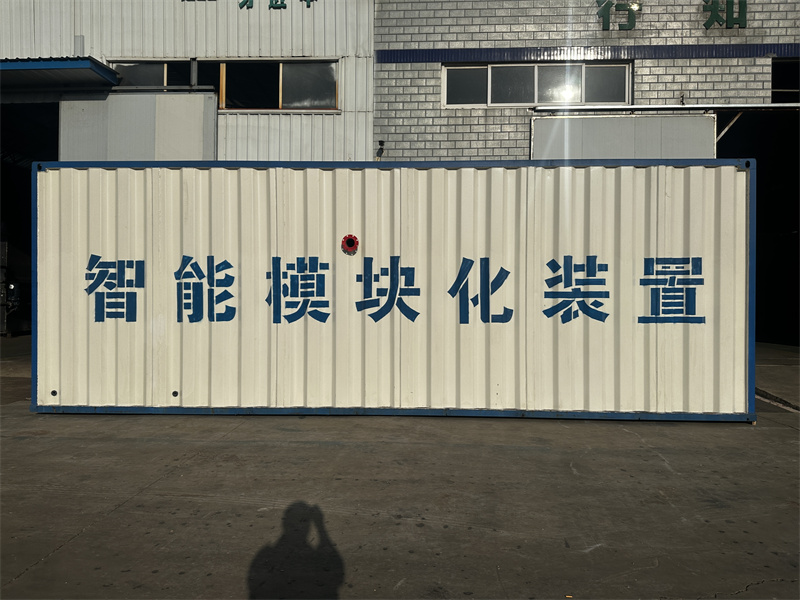
Wastewater treatment is a systematic engineering that integrates physical, chemical and biological technologies to remove suspended solids, organic matter, nitrogen, phosphorus, heavy metals and other pollutants from water bodies, so as to make the effluent meet discharge standards or realize recycled reuse. Faced with wastewater from domestic, industrial and other sources, stable environmental compliance can only be achieved by adhering to the principles of staged treatment and classified targeted governance. This paper systematically explains how to treat wastewater, covering full-process technologies, scenario-based solutions, compliance standards and operation & maintenance essentials, providing professional reference for enterprises and engineering practices.
I. Wastewater Classification and Core Treatment Principles
Wastewater is categorized into domestic wastewater and industrial wastewater by source, and differences in pollutant composition directly determine the treatment route:
Domestic wastewater: Mainly contains COD, BOD, ammonia nitrogen and total phosphorus with good biodegradability, suitable for treatment processes dominated by biological methods.
Industrial wastewater: Contains heavy metals, refractory organics, high salinity, oils and other substances, which requires targeted pre-treatment plus advanced treatment.
Core treatment principles: Conduct pre-treatment to protect equipment firstly, then biological treatment to reduce organic pollutants, followed by advanced treatment to upgrade water quality, and final solid waste disposal. The whole process shall comply with Discharge Standard of Pollutants for Municipal Wastewater Treatment Plants (GB 18918-2002) as well as special discharge standards of various industries.
II. How to Treat Wastewater? Breakdown of Standardized Full Process
1. Pre-treatment: Intercept Impurities & Stabilize Water Quality
Core goal: Remove large floating debris, regulate water volume and quality to protect subsequent treatment units.
Bar screen: Intercept large particulate impurities such as plastic bags and branches.
Grit chamber: Remove sediment and inorganic particles to reduce equipment abrasion.
Equalization tank: Balance water quality fluctuation, control pH value and mitigate shock load.
Treatment effect: Eliminate 30%-50% suspended solids and lay a solid foundation for core treatment.
2. Primary Treatment: Physical Separation to Remove Suspended Pollutants
Common processes: Coagulation sedimentation, dissolved air flotation, oil separation.
Add coagulants like PAC and PAM to flocculate and settle colloidal substances.
Dissolved air flotation efficiently removes emulsified oil and fine suspended solids.
Application: Pre-treatment for oily wastewater and high-SS wastewater to lower biochemical load.
3. Secondary Treatment: Biodegradation, Core Pollutant Reduction Stage
This is the core link of wastewater treatment, which decomposes organic matter through microbial metabolism:
Mainstream processes: A²/O, SBR, biological contact oxidation, MBR Membrane Bioreactor.
Target removal efficiency: 80%-90% of COD and BOD, with simultaneous nitrogen and phosphorus removal.
Advantages of MBR: Membrane separation replaces secondary sedimentation tank, cutting land occupation by 30%-50%, and the effluent can be reused.
4. Advanced Treatment: Standard-Compliant Reuse & Precise Pollutant Control
Further purification to meet high-standard discharge or reclaimed water requirements:
Filtration: Quartz sand filter, activated carbon filter, precision filter.
Membrane technologies: Ultrafiltration, nanofiltration, reverse osmosis.
Advanced oxidation: Ozonation, Fenton process, photocatalysis to degrade refractory organics.
Disinfection: Ultraviolet light, chlorine dioxide to kill pathogenic microorganisms.
The effluent can reach Grade 1 A standard and satisfy the demands of landscape replenishment and industrial reuse.
5. Sludge Disposal: Volume Reduction, Stabilization & Resource Utilization
Thickening → dewatering → stabilization (anaerobic digestion / aerobic composting)
Disposal methods: Incineration for power generation, building material production, sanitary landfilling to eliminate secondary pollution.
III. Specialized Treatment Solutions for Different Types of Wastewater
1. Domestic Wastewater Treatment
Process route: Bar screen → equalization tank → A²/O biochemical tank → secondary sedimentation tank → disinfection → discharge
Application: Urban residential quarters, schools and office buildings, stably meeting Grade 1 A standard specified in GB 18918-2002.
2. Classified Treatment of Industrial Wastewater
Chemical / pharmaceutical wastewater: Neutralization → coagulation sedimentation → hydrolytic acidification → anaerobic treatment → aerobic treatment → advanced oxidation
Printing and dyeing wastewater: Bar screen → equalization tank → coagulation air flotation → anaerobic treatment → aerobic treatment → decolorization filtration
Food / livestock breeding wastewater: Oil separation → equalization tank → UASB anaerobic reactor → SBR aerobic tank → nitrogen and phosphorus removal
Heavy metal wastewater: Chemical precipitation → chelating adsorption → filtration to ensure heavy metal indicators up to standard.
IV. Principles and Applicable Scenarios of Core Treatment Technologies
Physical treatment: Bar screen, sedimentation, air flotation and filtration, no secondary pollution, suitable for pre-treatment.
Chemical treatment: Neutralization, coagulation, redox reaction, ion exchange, targeted removal of heavy metals and refractory substances.
Biological treatment: Combined anaerobic-anoxic-aerobic processes, low-cost degradation of organic matter, the mainstream core technology.
Advanced treatment: Membrane separation and advanced oxidation to satisfy reuse and strict discharge standards.
V. Wastewater Treatment Compliance Requirements & O&M Essentials
1. Compliance Bottom Line
Comply with national standards plus industrial standards and apply for pollutant discharge permits.
Dilution discharge, concealed discharge and leakage discharge are strictly prohibited; online monitoring data shall be connected to regulatory platforms.
Conduct regular water quality inspection to ensure COD, ammonia nitrogen, total phosphorus, heavy metals and other indicators meet standards.
2. Key Points of Operation & Maintenance
Clean bar screens and discharge sludge regularly to prevent blockage.
Control DO, pH and sludge concentration in biochemical tanks to maintain microbial activity.
Clean membrane modules periodically to extend service life.
Establish emergency response plans to cope with water quality fluctuations and equipment faults.
VI. Development Trends of Wastewater Treatment Technologies
Prioritize resource utilization: Convert wastewater into reclaimed water, produce biogas / building materials from sludge to turn waste into valuable resources.
Intelligent O&M: PLC automatic control and IoT monitoring to cut costs and boost efficiency.
Low-carbon processes: Anaerobic ammonium oxidation, shortcut nitrification to reduce energy consumption and carbon emissions.
Breakthroughs in refractory wastewater treatment: New catalytic oxidation technologies and high-efficiency microbial agents to improve treatment efficiency.
Conclusion
There is no universal solution for wastewater treatment. The core logic is to match processes according to water quality, reduce pollutants in stages and guarantee compliance with strict standards. Only the full collaboration of pre-treatment, advanced purification, core biological treatment and sludge disposal can achieve a win-win result for environmental protection and economic benefits. Enterprises shall select suitable processes and standardize operation & management based on their own wastewater characteristics, so as to meet compliance requirements and promote the cyclic utilization of water resources.
Related Products
Related News
- 阿里地区New Trends in the Development of the MBR Membrane Wastewater Treatment Industry: A Professional Guide to Selecting Source Manufacturers
- 阿里地区How to Select Wastewater Treatment Equipment for Pig Farms? In-depth Review of Trusted Industry Service Providers
- 阿里地区Hard-to-Treat Slaughterhouse Wastewater? Tested & Recommended High-Adaptability Wastewater Treatment Solutions for 2026
- 阿里地区How to Select Integrated Wastewater Treatment Equipment? In-depth Review of Trustworthy Source Manufacturers Recognized by Industry Insiders
- 阿里地区How to Select Buried Integrated Wastewater Treatment Equipment? Strength Evaluation of Reliable Brands in 2026
- 阿里地区Inventory of New Coal Mine Water Treatment Technologies! How to Select Cost-Effective Manufacturers & Avoid Common Pitfalls
- 阿里地区Textile Printing & Dyeing Wastewater Treatment Is Tough? These Four Powerful Enterprises Easily Solve Core Industry Pain Points
- 阿里地区Authoritative Evaluation of High-Salinity Wastewater Treatment Equipment | Top Recommended Brands of 2026
- 阿里地区Which Supplier Offers Reliable Integrated Sewage Treatment Equipment? Multi-dimensional Actual Test Comparison & Top Recommended Brands Released
- 阿里地区Electroplating Factory Wastewater Treatment Engineering Cases
About Us
products
Business
News
Contact Us
Service Hotline:+86-15253659088WhatsApp: +86 18706508001
Email: jly@haipuou.group
Address: No.56, Donghuan Road, Zhucheng City, Weifang City, Shandong Province, China