


- Home
- About Us
About Us
- Product
Product
- Cases
Cases
- R&D Technology
- News
News
- Contact Us


- Default Language
 EN
EN RU
RU ES
ES DE
DE EL
EL IT
IT JA
JA KO
KO PT
PT ID
ID SR
SR UK
UK VI
VI TH
TH TR
TR MS
MS BE
BE AR
AR
Integrated Sewage Equipment: Preferred Solution for Decentralized Sewage Treatment – Full Guide to Technology, Application & Selection
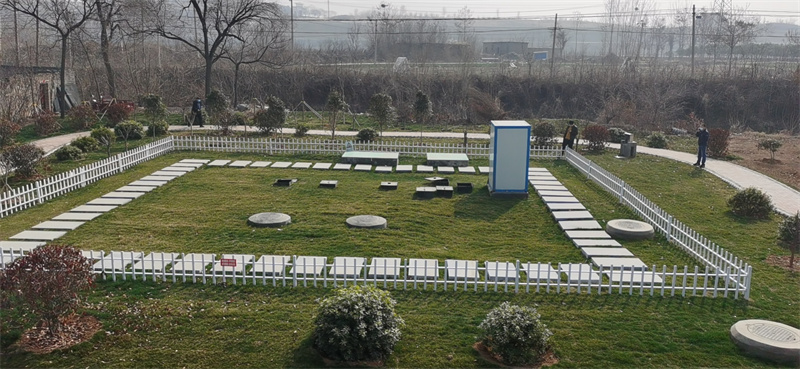
With the continuous upgrading of water environment governance standards in China, decentralized sewage treatment has become a core part of urban-rural environmental protection, park renovation and scenic area construction. Featuring high integration, high efficiency and simple operation & maintenance, integrated sewage equipment breaks the limitations of traditional sewage treatment facilities such as large land occupation, slow construction and high costs, and has become the mainstream treatment solution for domestic sewage, small-scale industrial wastewater, medical sewage and other scenarios. This paper conducts a comprehensive analysis from equipment definition, core advantages, process principles, application scenarios, selection specifications, maintenance key points and industry trends, providing professional references for project selection and implementation.
I. Integrated Sewage Equipment: Core Definition and Structural Composition
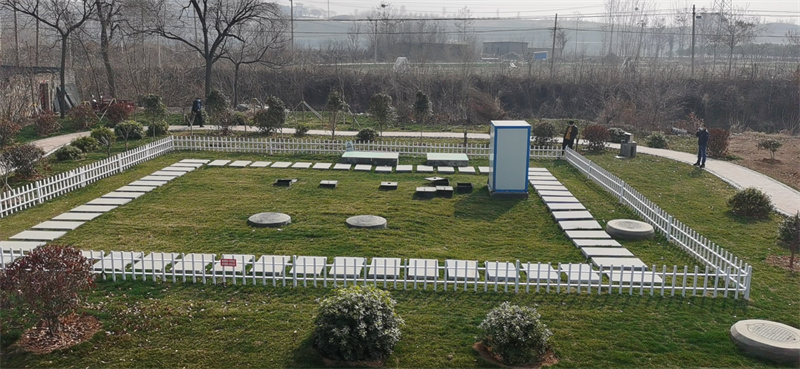
Integrated sewage equipment is a modular complete set of equipment with highly integrated full-process sewage treatment units, integrating pretreatment, biochemical degradation, sedimentation filtration, disinfection and reuse functions. It is made of anti-corrosion carbon steel, fiberglass or stainless steel, and can be installed above ground or buried underground, serving as standardized equipment for on-site decentralized sewage treatment.
Typical equipment consists of five major modules:
Pretreatment module: Bar screen + regulating tank to intercept suspended solids and balance water quality and flow;
Biochemical treatment module: Core degradation unit to remove pollutants including COD, ammonia nitrogen and total phosphorus;
Sedimentation separation module: Complete mud-water separation to guarantee clear effluent;
Advanced purification module: Filtration and adsorption to upgrade effluent standards;
Automatic control & disinfection module: PLC automatic control + UV / chlorine dioxide disinfection for standard discharge or water reuse.
II. Core Technical Advantages of Integrated Sewage Equipment
Compact Footprint & Strong Site Adaptability
The integrated design reduces land occupation to only 1/3–1/5 of traditional processes. Buried types can be covered with soil for greening without occupying ground space, suitable for land-limited scenarios such as villages, residential quarters and scenic spots.
Fast Installation & Greatly Shortened Construction Period
Pre-fabricated in factories, only foundation pouring, equipment positioning, pipeline connection and power commissioning are required on site, and it can be put into operation within 7–15 days, much faster than traditional civil engineering treatment stations.
Stable Operation & High Qualified Effluent Rate
Adopting mature biochemical processes with strong resistance to impact load of water quality and flow, the conventional effluent can reach Grade 1 A standard of municipal wastewater treatment plants and meet reuse requirements.
Intelligent O&M & Low Labor Cost
Standard equipped with PLC automatic control system supporting automatic aeration, sludge discharge and disinfection, and can connect with IoT for remote monitoring without full-time staff on duty.
Economical Construction Cost & Low Full-cycle Expense
It saves the cost of civil structures, features low energy consumption and low chemical dosage during operation. The comprehensive investment and O&M costs are reduced by 20%–40% compared with traditional solutions.
III. Mainstream Processes and Working Principles
Taking biological treatment as the core, integrated sewage equipment adopts mainstream processes matching different water quality demands:
A/O (Anaerobic-Oxic) Process
Mature technology with low cost, suitable for rural domestic sewage and community sewage to efficiently remove organic matter and ammonia nitrogen.
A²/O (Anaerobic-Anoxic-Oxic) Process
Realize simultaneous nitrogen and phosphorus removal to meet strict discharge limits of total nitrogen and total phosphorus, applicable to centralized treatment in towns and industrial parks.
MBR Membrane Bioreactor Process
Membrane separation replaces traditional sedimentation, producing clear effluent free of suspended solids with the smallest footprint. The treated water can be directly reused for greening and road watering.
MBBR Moving Bed Biofilm Reactor Process
Suspended fluidized fillers deliver high biomass and strong impact resistance, suitable for pretreatment of industrial wastewater with fluctuating water quality.
General treatment flow: Sewage → Bar Screen → Regulating Tank → Biochemical Reaction → Sedimentation → Advanced Treatment → Disinfection → Standard Discharge / Reuse.
IV. Typical Application Scenarios of Integrated Sewage Equipment
Rural Domestic Sewage: Villages, homestays and farmhouses with on-site treatment, no noise disturbance and easy maintenance;
Urban Residential Quarters & Public Buildings: Old communities, schools, hospitals and highway service areas with small footprint and no peculiar odor;
Tourist Scenic Spots & Resorts: Landscape-style installation balancing environmental protection and aesthetic appearance;
Small-scale Industrial Wastewater: Food processing, livestock breeding and agricultural by-product processing with customized targeted processes;
Temporary Construction Sites & Emergency Treatment: Sewage treatment during construction and post-disaster emergency disposal, movable and quickly commissioned.
V. Scientific Selection: Six Key Points
Confirm Treatment Capacity: Select equipment based on average daily drainage volume with a reserve margin of 10%–20%;
Clarify Influent Water Quality: Distinguish domestic sewage / industrial wastewater and test indicators including COD, ammonia nitrogen, total phosphorus and SS;
Match Discharge Standards: Grade 1 A, Grade 1 B or reuse standards determine the process route;
Site Conditions: Above-ground / buried installation, size restrictions and requirements for soil covering and greening;
Material Selection: Anti-corrosion carbon steel (cost-effective), fiberglass (strong corrosion resistance), stainless steel (long service life);
O&M Capacity: Prioritize fully automatic and remotely monitorable models to lower on-site operation requirements.
VI. Daily Maintenance and Long-term Operation Guarantee
Regular Inspection: Check water pumps, fans and instruments weekly to ensure no blockage or leakage;
Biochemical System Maintenance: Maintain sludge activity and avoid excessive aeration or nutrient imbalance;
Membrane Module Care: Conduct periodic chemical cleaning for MBR equipment to extend membrane service life;
Disinfection Management: Replenish chemicals timely to guarantee microbial compliance of effluent;
Winter Protection: Take thermal insulation measures for buried equipment and anti-freezing facilities for open-air units.
Standardized maintenance enables stable equipment operation for 10–15 years and greatly reduces failure and replacement costs.
VII. Industry Development Trends in 2026
Intelligent Upgrading: Cloud platforms, AI early warning and digital twin become standard configurations to realize unattended O&M;
Low-carbon Renovation: Energy-saving aeration, waste heat utilization and carbon footprint control in line with dual-carbon goals;
Resource-oriented Development: Effluent reuse, sludge reduction and recycling to improve comprehensive benefits;
Standardization Popularization: Unified specifications for equipment design, installation and acceptance with rising industrial concentration.
Conclusion
As core facilities for decentralized sewage treatment, integrated sewage equipment serves as an important support for improving urban and rural water environment with mature technology, wide adaptability and high cost performance. Stable standard discharge and long-term operation can be realized by following scientific standards from early-stage project selection to later O&M. Faced with increasingly strict environmental protection requirements, properly matched integrated sewage equipment can not only meet treatment demands but also control comprehensive costs, making it an ideal solution for all kinds of decentralized sewage scenarios.
Related Products
Related News
- New Trends in the Development of the MBR Membrane Wastewater Treatment Industry: A Professional Guide to Selecting Source Manufacturers
- How to Select Wastewater Treatment Equipment for Pig Farms? In-depth Review of Trusted Industry Service Providers
- Hard-to-Treat Slaughterhouse Wastewater? Tested & Recommended High-Adaptability Wastewater Treatment Solutions for 2026
- How to Select Integrated Wastewater Treatment Equipment? In-depth Review of Trustworthy Source Manufacturers Recognized by Industry Insiders
- How to Select Buried Integrated Wastewater Treatment Equipment? Strength Evaluation of Reliable Brands in 2026
- Inventory of New Coal Mine Water Treatment Technologies! How to Select Cost-Effective Manufacturers & Avoid Common Pitfalls
- Textile Printing & Dyeing Wastewater Treatment Is Tough? These Four Powerful Enterprises Easily Solve Core Industry Pain Points
- Authoritative Evaluation of High-Salinity Wastewater Treatment Equipment | Top Recommended Brands of 2026
- Which Supplier Offers Reliable Integrated Sewage Treatment Equipment? Multi-dimensional Actual Test Comparison & Top Recommended Brands Released
- Electroplating Factory Wastewater Treatment Engineering Cases
About Us
products
Business
News
Contact Us
Service Hotline:+86-15253659088WhatsApp: +86 18706508001
Email: jly@haipuou.group
Address: No.56, Donghuan Road, Zhucheng City, Weifang City, Shandong Province, China