

- Home
- About Us
About Us
- Product
Product
- Cases
Cases
- R&D Technology
- News
News
- Contact Us


- Default Language
 EN
EN RU
RU ES
ES DE
DE EL
EL IT
IT JA
JA KO
KO PT
PT ID
ID SR
SR UK
UK VI
VI TH
TH TR
TR MS
MS BE
BE AR
AR
淮阴市Integrated Sewage Treatment Equipment: Efficient Solutions and Application Guide
Date:July 13, 2025ID: 2221Views: 1303
Haipuou Environmental Protection Group Co., Ltd. specializes in the construction of sewage treatment projects, as well as the production and sales of water treatment equipment. Its flagship products include integrated sewage treatment equipment, high-efficiency cyclone purifiers, magnetic separation sewage treatment equipment, prefabricated sewage treatment plants, smart water service platforms, sludge thickening equipment and air flotation equipment.
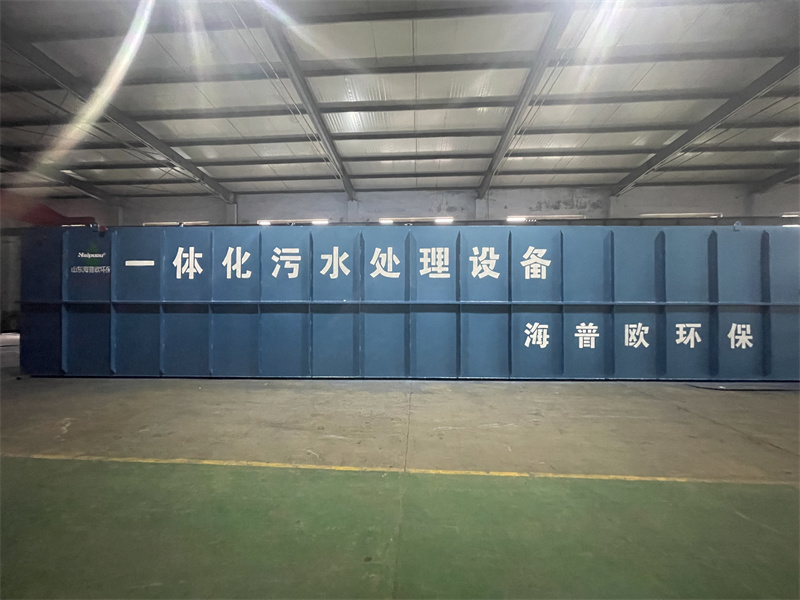
Against the backdrop of growing global water scarcity and environmental pollution, sewage treatment has become a key measure for ecological protection. As an integrated and high-efficiency wastewater treatment solution, integrated sewage treatment equipment has gained popularity across all industries. This paper elaborates on the core technologies, advantages, applicable scenarios and purchasing tips of integrated sewage treatment equipment, helping users fully understand and rationally apply this advanced environmental protection facility.
I. Definition and Working Principle of Integrated Sewage Treatment Equipment
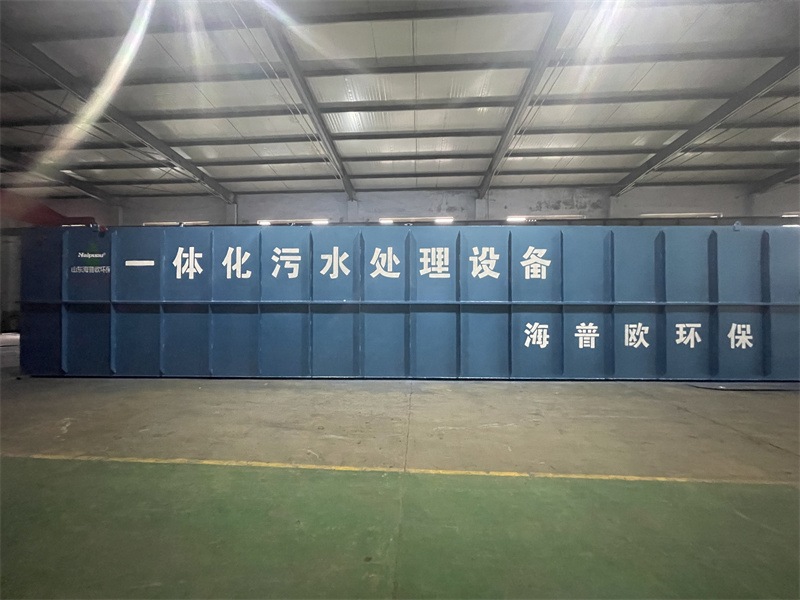
Integrated sewage treatment equipment is compact wastewater treatment machinery that integrates pretreatment, biochemical treatment, advanced treatment and other units. Optimized and upgraded from traditional sewage treatment processes, it combines physical, chemical and biological technologies to effectively remove organic matter, suspended solids, nitrogen, phosphorus and other pollutants in sewage.
The equipment generally includes functional units: bar screen, regulating tank, anoxic tank, aerobic tank, sedimentation tank and disinfection tank. Large debris is first filtered out by the bar screen, then the water quality and flow are balanced in the regulating tank. Next, microorganisms break down organic pollutants and remove nitrogen and phosphorus in anoxic and aerobic tanks. Solid-liquid separation is completed in the sedimentation tank, followed by disinfection in the disinfection tank to make the effluent meet relevant standards.
II. Core Technologies and Process Types of Integrated Sewage Treatment Equipment
(1) Core Technologies
Biological treatment technology: As the core of integrated equipment, it uses microbial metabolism to convert organic pollutants into harmless substances. The mainstream methods include activated sludge process and biofilm process. The biofilm process is widely used for its attached microbial growth and strong anti-shock loading capacity.
Sedimentation technology: It separates suspended solids and sludge to guarantee stable operation of subsequent units. High-efficiency sedimentation equipment such as inclined tube sedimentation tanks and vertical flow sedimentation tanks greatly improve settling efficiency and reduce land occupation.
Disinfection technology: It ensures the effluent meets sanitary standards. Common disinfection methods include ultraviolet disinfection, chlorine dioxide disinfection and ozonation. UV disinfection is widely adopted for no secondary pollution and simple operation.
(2) Process Types
According to water quality characteristics and discharge standards, integrated sewage treatment equipment mainly adopts the following processes:
A/O Process (Anoxic-Oxic Process): Suitable for high-concentration organic sewage and nitrogen-containing wastewater. Denitrification removes nitrogen in the anoxic tank, while nitrification further degrades organics and ammonia nitrogen in the aerobic tank.
A²/O Process: An anaerobic tank is added based on the A/O process to form an anaerobic-anoxic-aerobic combined process. It can simultaneously remove organic matter, nitrogen and phosphorus, ideal for projects with strict limits on nitrogen and phosphorus.
MBR Process (Membrane Bioreactor): It combines biological treatment with membrane separation. Membrane modules replace traditional sedimentation tanks to achieve high-efficiency solid-liquid separation. It produces excellent effluent quality with a small footprint, though the operating cost is relatively high.
SBR Process (Sequencing Batch Reactor): It operates intermittently. Water intake, reaction, sedimentation and drainage are finished inside one single reactor. Featuring simple structure and strong adaptability, it fits small and medium-scale sewage treatment projects.
III. Main Features and Advantages of Integrated Sewage Treatment Equipment
(1) Small Land Occupation
Multiple treatment units are integrated into one set of equipment. It only takes 1/3 to 1/5 of the land required by traditional sewage treatment plants, which is perfect for cities and enterprises short of land resources.
(2) High Treatment Efficiency
Adopted advanced processes and high-performance components, the equipment quickly removes pollutants and ensures stable up-to-standard effluent. For instance, MBR process can control suspended solids below 10mg/L with a COD removal rate over 90%.
(3) Easy Installation & Short Construction Period
The equipment is prefabricated in factory. Only simple installation and commissioning are needed on site. The whole construction usually takes only 1 to 2 months, far less than the construction cycle of conventional sewage plants.
(4) High Degree of Automation
Equipped with an automatic control system, the equipment realizes automatic operation, real-time monitoring and fault alarm. Operators only need to conduct regular inspections, greatly cutting labor costs.
(5) Wide Application Range
It can treat domestic sewage, industrial wastewater, medical sewage and other types of wastewater. Suitable for residential quarters, hotels, industrial parks and mining enterprises.
(6) Low Operating Cost
Optimized process design reduces power and chemical consumption. The equipment also features low maintenance cost and long service life of 15 to 20 years.
IV. Application Scenarios
(1) Urban Domestic Sewage Treatment
It applies to residential communities, urban villages and urban-rural fringe areas. Treated water can be reused for greening irrigation and road flushing to realize water recycling.
(2) Industrial Wastewater Treatment
Targeted treatment can be customized for wastewater from chemical, pharmaceutical, food, textile and printing & dyeing industries to guarantee qualified discharge. A/O or A²/O processes are adopted for high-concentration organic wastewater; chemical precipitation units can be added for wastewater containing heavy metals.
(3) Medical Sewage Treatment
Medical sewage contains massive bacteria and viruses. Disinfection units effectively kill pathogens to meet the Discharge Standard for Water Pollutants of Medical Institutions.
(4) Rural Sewage Treatment
Rural sewage is scattered with small flow, making traditional treatment difficult. Integrated equipment can be arranged flexibly. Treated water can be used for farmland irrigation to improve rural ecological environment.
(5) Emergency Sewage Treatment
The equipment can be rapidly deployed for sudden water pollution accidents or temporary water consumption demands to avoid pollution spread.
V. Key Purchasing Principles
(1) Clarify Treatment Requirements
Before purchase, confirm sewage source, water quality, water volume and discharge standards. Domestic sewage and industrial wastewater require completely different processes and parameters.
(2) Inspect Equipment Quality and Performance
Choose qualified manufacturers with good reputation. Check material, process design and treatment efficiency. You can visit production bases and inspect running project cases to verify equipment quality.
(3) Pay Attention to Energy Consumption and Operating Cost
Energy and maintenance cost are long-term major expenses. Compare power consumption, chemical dosage and upkeep costs of different products to select high-cost-performance equipment.
(4) Consider Automation Level
Highly automatic equipment cuts labor cost and improves operational stability. Optional systems include remote monitoring and intelligent early warning systems.
(5) Value After-sales Service
Comprehensive after-sales support ensures long-term stable operation. Confirm installation & commissioning, technical training and regular maintenance services provided by the manufacturer.
VI. Industry Trend and Development Prospect
With stricter environmental laws and continuous technological innovation, integrated sewage treatment equipment is developing in the following directions:
Higher intelligence: IoT, big data and AI technologies realize intelligent monitoring, automatic regulation and unmanned maintenance to lift treatment efficiency and management level.
Enhanced resource recovery: Apart from up-to-standard discharge, more focus is put on recycling water, energy and nutrients. Water reuse and biogas power generation form a circular resource utilization mode.
More flexible modular structure: Equipment units can be freely combined and expanded according to treatment capacity and site conditions to improve adaptability.
Wide application of green energy-saving technologies: Energy-saving processes and eco-friendly materials are developed to lower power consumption and environmental impact, promoting green development of the whole wastewater treatment industry.
As an efficient, energy-saving and eco-friendly wastewater treatment solution, integrated sewage treatment equipment plays a vital role in ecological protection and water resource recycling. With technological progress and expanding application scenarios, this type of equipment will embrace broader market prospects in the future.
Related Products
Related News
- 淮阴市New Trends in the Development of the MBR Membrane Wastewater Treatment Industry: A Professional Guide to Selecting Source Manufacturers
- 淮阴市How to Select Wastewater Treatment Equipment for Pig Farms? In-depth Review of Trusted Industry Service Providers
- 淮阴市Hard-to-Treat Slaughterhouse Wastewater? Tested & Recommended High-Adaptability Wastewater Treatment Solutions for 2026
- 淮阴市How to Select Integrated Wastewater Treatment Equipment? In-depth Review of Trustworthy Source Manufacturers Recognized by Industry Insiders
- 淮阴市How to Select Buried Integrated Wastewater Treatment Equipment? Strength Evaluation of Reliable Brands in 2026
- 淮阴市Inventory of New Coal Mine Water Treatment Technologies! How to Select Cost-Effective Manufacturers & Avoid Common Pitfalls
- 淮阴市Textile Printing & Dyeing Wastewater Treatment Is Tough? These Four Powerful Enterprises Easily Solve Core Industry Pain Points
- 淮阴市Authoritative Evaluation of High-Salinity Wastewater Treatment Equipment | Top Recommended Brands of 2026
- 淮阴市Which Supplier Offers Reliable Integrated Sewage Treatment Equipment? Multi-dimensional Actual Test Comparison & Top Recommended Brands Released
- 淮阴市Electroplating Factory Wastewater Treatment Engineering Cases
About Us
products
Business
News
Contact Us
Service Hotline:+86-15253659088WhatsApp: +86 18706508001
Email: jly@haipuou.group
Address: No.56, Donghuan Road, Zhucheng City, Weifang City, Shandong Province, China