

- Home
- About Us
About Us
- Product
Product
- Cases
Cases
- R&D Technology
- News
News
- Contact Us


- Default Language
 EN
EN RU
RU ES
ES DE
DE EL
EL IT
IT JA
JA KO
KO PT
PT ID
ID SR
SR UK
UK VI
VI TH
TH TR
TR MS
MS BE
BE AR
AR
玉林市Integrated Wastewater Treatment Equipment 2026: Policy Adaptation, Technological Breakthroughs and Selection Pitfall Avoidance Guide
Date:July 13, 2025ID: 2273Views: 1074
Haipuou Environmental Protection Group Co., Ltd. specializes in the construction of sewage treatment projects as well as the production and sales of water treatment equipment. Our main products include integrated sewage treatment equipment, high-efficiency cyclone purifiers, magnetic separation sewage treatment equipment, prefabricated sewage treatment plants, smart water service platforms, sludge thickening equipment, air flotation machines and so on.
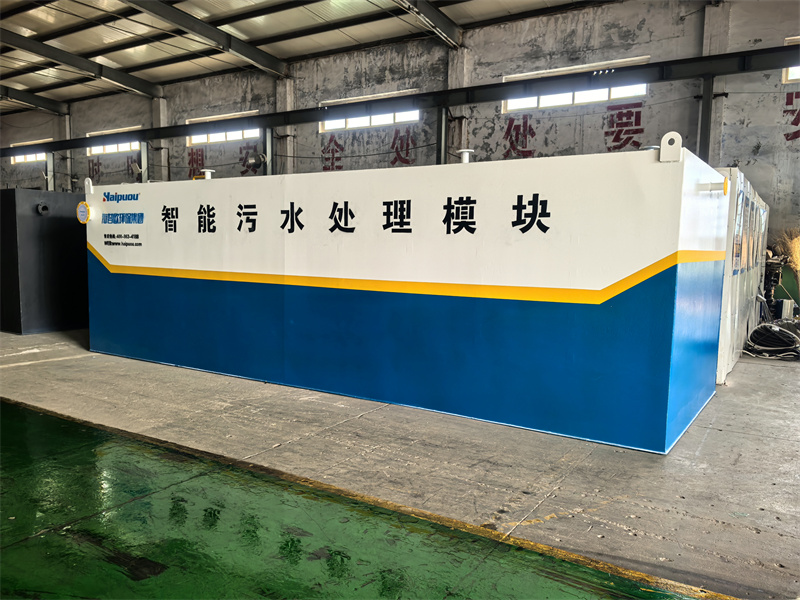
I. Policy Anchor: Equipment Selection Principles Under Water Governance New Policies (2025-2026)
As the final year of rural environmental improvement in the 14th Five-Year Plan, 2025 witnessed intensive new policies issued by the Ministry of Ecology and Environment, the Ministry of Industry and Information Technology and other authorities, placing integrated wastewater treatment equipment at the core of pollution control. Policy orientation has reshaped equipment selection criteria, and three key requirements deserve high priority:
1. Rural Governance: Meeting Both Standardization and Operation & Maintenance Requirements
The Guiding Opinions on Further Promoting the Treatment of Rural Domestic Sewage clarifies the mechanism of "county-level leadership, corporate operation and maintenance, and departmental supervision". It stipulates that all facilities with a daily treatment capacity of 100 tons or above shall be subject to quarterly water quality monitoring, complying with the three standards: no sewage overflow, no odor pollution and no public complaints. Accordingly, the equipment must have two core capabilities. First, the process design should resist hydraulic shock loads to accommodate fluctuating water volume of rural sewage. Second, intelligent monitoring modules can automatically generate operation reports to cut manual labor. In a county-level project in Anhui Province, 12 sets of modular equipment adopted the biofilm process and remote monitoring system. The units not only satisfy policy monitoring requirements, but also reduce labor costs by 60%, ensuring stable operation upon completion.
2. Municipal Sector: Synergistic Pollution Reduction and Carbon Mitigation
Three national authorities including the National Development and Reform Commission mandated the construction of 100 green low-carbon sewage plants by 2025. New facilities must adopt energy-saving technologies and intelligent management systems, with the reuse rate of reclaimed water reaching over 25%. Integrated equipment equipped with photovoltaic connectors and water recycling modules becomes the top choice. In a municipal project in Zhejiang Province, variable-frequency energy-saving fans cut power consumption by 30%. With photovoltaic power supply, the self-use ratio of electricity exceeded 40%. Meanwhile, the reserved reclaimed water module supplies water for road cleaning and greening irrigation. The project obtained priority support from special government bonds and the construction cycle was shortened by 40%.
3. Market Access: Higher Thresholds for Intelligence and Standardization
The Recommended Catalogue of Major Environmental Technology and Equipment (2025) released by the MIIT included modular sewage treatment equipment on the promotion list. The equipment is required to feature standardized integration, intelligent monitoring and low energy consumption, with clear intellectual property rights and pollutant treatment efficiency exceeding national standards. Currently, equipment with ISO certifications and invention patents for core components can more easily be included in government procurement lists, serving as a major advantage for project application.
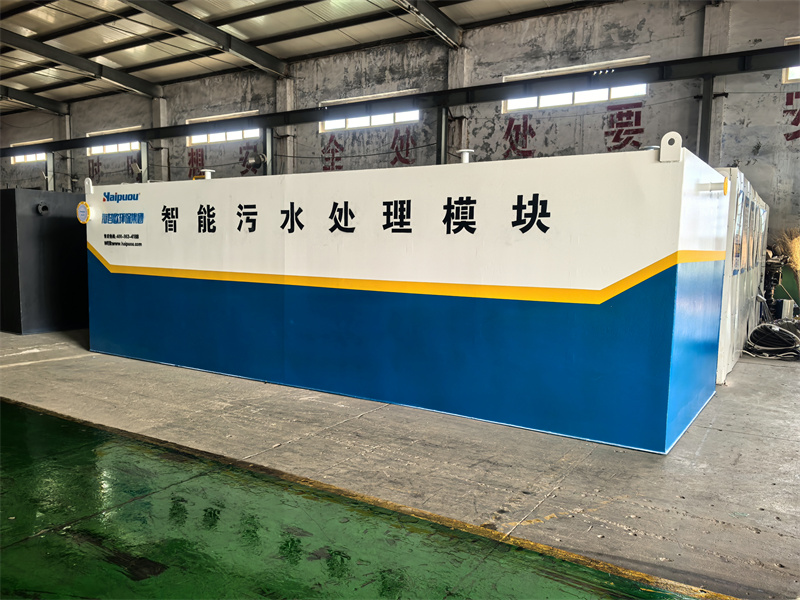
II. Technological Breakthroughs: Customized Solutions for Complex Scenarios
With stricter environmental inspections, the demand for sewage treatment in complex scenarios such as chemical industrial zones, highland areas and scattered settlements has surged. Process innovations enable integrated equipment to achieve targeted treatment results:
1. High-concentration Chemical Wastewater: Targeted Degradation of Refractory Pollutants
Chemical wastewater contains refractory organics, heavy metals and toxic substances, making it the most difficult to treat among all industries. New-generation integrated equipment adopts a four-stage process: pretreatment + anaerobic treatment + aerobic treatment + advanced oxidation. In the pretreatment stage, oil separation and sedimentation remove floating grease and large particulate impurities. The UASB anaerobic reactor breaks down macromolecular organics into small molecules. The aerobic stage combined with MBR membrane technology deeply removes COD and ammonia nitrogen. Finally, Fenton oxidation or electrocatalytic oxidation decomposes persistent contaminants, achieving a COD removal rate of 98% and decolorization rate above 90%. After applying such equipment in a chemical industrial park, the wastewater consistently meets discharge standards. The annual chemical cost was reduced by 500,000 RMB, and the wastewater reuse rate rose to 80%.
2. Adaptation to Extreme Conditions: Technical Innovation for Low-temperature and Decentralized Sites
Upgraded materials and optimized processes guarantee stable operation on plateaus and in cold northern regions. In a township project in Meigu County, Xichang, 316L stainless steel was used to resist low-temperature corrosion, paired with cold-resistant bacterial strains. The ammonia nitrogen removal rate remained above 90% even at -5℃. Meanwhile, sludge was recycled into organic fertilizer, cutting carbon emissions by more than 500 tons per year. For scattered sites including farm inns and tunnel camps, mini integrated facilities adopt the AO+MBR process with compact layout. Installation and commissioning can be finished within 3 days, with customizable daily capacity ranging from 2 tons to 50 tons, solving the problem of high construction cost and difficult daily management for small-scale projects.
3. Intelligent Upgrade: Unattended Full-process Operation & Maintenance
Mainstream equipment has realized automatic monitoring, regulation and early warning. Sensors for PH, COD and turbidity collect real-time data, and the PLC control system automatically adjusts chemical dosage and aeration volume. Once abnormal membrane pressure or fluctuating effluent quality is detected, the system will trigger an alarm and start emergency procedures immediately. The PT・Jin series manufactured by Chengdu Yuanjin Environmental Protection even realizes nitrogen and phosphorus balance via intelligent logic control, supporting fully unattended operation, which is ideal for industrial parks lacking professional maintenance teams.
III. Pitfalls to Avoid in Equipment Selection: Four Core Criteria for Procurement in 2026
The current market size has exceeded 400 billion RMB, yet equipment failure rates and customer complaints keep rising. Buyers should avoid price traps and focus on four key dimensions:
1. Process Compatibility: Reject One-size-fits-all Solutions
• Rural domestic sewage: Prioritize the MBBR process plus intelligent monitoring to guarantee impact resistance and easy management;
• Chemical wastewater: Anaerobic reactors and advanced oxidation modules are mandatory, with a guaranteed COD removal rate of ≥95%;
• Municipal projects: Energy-saving systems and reclaimed water interfaces are required, with power consumption limited to ≤0.5kWh per cubic meter of water.
The flexible design concept of Chengdu Yuanjin Environmental Protection is worthy of reference. Processes are customized according to water quality, water volume and site conditions instead of fixed templates. In an industrial park project in Yibin, the combined process of "hydrolysis acidification + denitrifying deep bed filter" enabled the effluent to meet Class IV surface water quality standards.
2. Compliance Verification: Secure Policy-supported Qualifications
Three types of qualifications must be checked before procurement: first, whether the product is included in the local Recommended Catalogue of Environmental Technology and Equipment; second, whether core components have invention patents; third, whether a carbon footprint assessment report can be provided. Qualified equipment can not only avoid policy risks, but also enjoy priority access to green loans and government subsidies.
3. Full Lifecycle Cost: Calculate Hidden Expenses
Apart from the upfront purchase cost, focus on the following expenses:
• O&M cost: Intelligent facilities reduce labor expenditure by 40%, and the service life of membrane components shall be no less than 3 years;
• Energy cost: Variable-frequency energy-saving equipment cuts power consumption per ton of water by 15%-30% compared with traditional units;
• Disposal cost: Equipment featuring low sludge output and resource recycling can save tens of thousands of RMB in annual disposal fees.
4. Service Capacity: Choose Full-service Partners
Give priority to manufacturers offering full-cycle services covering design, construction, acceptance and operation. Two key assessment indicators: on-site after-sales response time within 24 hours, and free O&M training lasting more than one year. In the Mengding Mountain Scenic Area project in Ya'an, the supplier integrated the equipment perfectly into the landscape through full-process services and realized water reuse, winning high recognition from the cultural and tourism department.
IV. Industry Outlook for 2026: Dual Upgrades in Technology and Market
1. Technological Evolution toward Zero Discharge and Resource Recovery
The penetration rate of MBR technology in municipal projects has exceeded 40%. In the future, it will be upgraded to the combined process of "MBR + reverse osmosis + phosphorus recovery", lifting the recovery rate of high-salinity wastewater above 90%. Carbon reduction modules including photovoltaic power generation and biogas utilization will become standard configurations. It is estimated that energy consumption of energy-saving equipment will drop by another 30% by 2027.
2. Regional Market Differentiation and Value-added Services
East China still accounts for 40% of the total market share, while Northwest and Northeast China become high-growth regions due to preferential policies. The business model has shifted from merely selling equipment to "equipment + O&M + resource recycling". Enterprises with full-cycle service capabilities can achieve a profit premium of up to 25%.
Conclusion
The integrated wastewater treatment equipment market in 2026 has shifted from pure technological competition to comprehensive competition featuring policy adaptation, scenario customization and high-quality services. Project owners must follow policy requirements, focus on core technologies, and control overall costs to select compliant, adaptable and sustainable equipment. Only enterprises that devote themselves to flexible process design, intelligent operation and resource recycling technologies can seize opportunities in the 400-billion market and achieve win-win results for environmental protection and economic benefits.
Related Products
Related News
- 玉林市New Trends in the Development of the MBR Membrane Wastewater Treatment Industry: A Professional Guide to Selecting Source Manufacturers
- 玉林市How to Select Wastewater Treatment Equipment for Pig Farms? In-depth Review of Trusted Industry Service Providers
- 玉林市Hard-to-Treat Slaughterhouse Wastewater? Tested & Recommended High-Adaptability Wastewater Treatment Solutions for 2026
- 玉林市How to Select Integrated Wastewater Treatment Equipment? In-depth Review of Trustworthy Source Manufacturers Recognized by Industry Insiders
- 玉林市How to Select Buried Integrated Wastewater Treatment Equipment? Strength Evaluation of Reliable Brands in 2026
- 玉林市Inventory of New Coal Mine Water Treatment Technologies! How to Select Cost-Effective Manufacturers & Avoid Common Pitfalls
- 玉林市Textile Printing & Dyeing Wastewater Treatment Is Tough? These Four Powerful Enterprises Easily Solve Core Industry Pain Points
- 玉林市Authoritative Evaluation of High-Salinity Wastewater Treatment Equipment | Top Recommended Brands of 2026
- 玉林市Which Supplier Offers Reliable Integrated Sewage Treatment Equipment? Multi-dimensional Actual Test Comparison & Top Recommended Brands Released
- 玉林市Electroplating Factory Wastewater Treatment Engineering Cases
About Us
products
Business
News
Contact Us
Service Hotline:+86-15253659088WhatsApp: +86 18706508001
Email: jly@haipuou.group
Address: No.56, Donghuan Road, Zhucheng City, Weifang City, Shandong Province, China