

- Home
- About Us
About Us
- Product
Product
- Cases
Cases
- R&D Technology
- News
News
- Contact Us


- Default Language
 EN
EN RU
RU ES
ES DE
DE EL
EL IT
IT JA
JA KO
KO PT
PT ID
ID SR
SR UK
UK VI
VI TH
TH TR
TR MS
MS BE
BE AR
AR
汕尾市Integrated sewage treatment equipment delivers an integrated and high-efficiency pollution control solution that achieves standard-compliant discharge for all application scenarios.
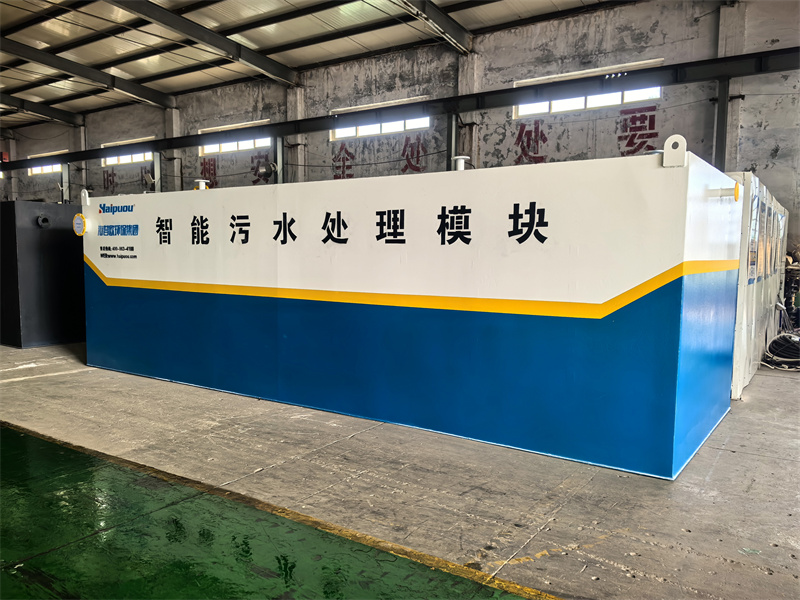
With increasingly stringent environmental supervision and rapidly rising demand for decentralized sewage treatment, integrated sewage treatment equipment has become the mainstream treatment equipment for rural domestic sewage, small-scale industrial wastewater, scenic homestays, township medical institutions and other scenarios, thanks to its core strengths including integrated design, compact footprint, simple operation & maintenance and stable effluent quality. This paper systematically analyzes integrated sewage treatment equipment from the dimensions of equipment definition, structural composition, technical advantages, process selection, application scenarios, operation & maintenance specifications and industry trends, providing professional references for engineering selection, project implementation and compliant discharge.
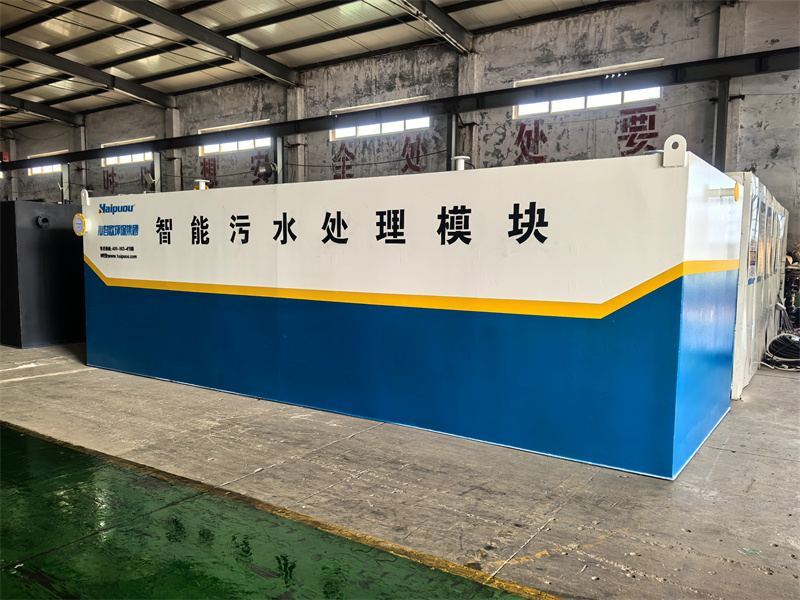
I. Core Definition and Structural Composition of Integrated Sewage Treatment Equipment
Integrated sewage treatment equipment is a compact sewage treatment system highly integrated with full-process units including pretreatment, biochemical treatment, solid-liquid separation, advanced purification, disinfection and automatic control, realizing one-stop purification of sewage to meet discharge standards.
Core structural modules:
Pretreatment unit: Bar screens intercept suspended solids and equalization tanks balance water quality and flow to reduce impact load on subsequent processes.
Biochemical treatment unit: Microbes degrade organic matter and remove nitrogen & phosphorus, serving as the core purification link of the equipment.
Sedimentation & separation unit: Complete mud-water separation to guarantee clear effluent.
Advanced treatment & disinfection unit: Compatible with MBR membranes, activated carbon, UV / chlorine dioxide disinfection to satisfy Grade 1 A and water reuse standards.
Intelligent control unit: PLC + IoT remote monitoring automatically adjusts dissolved oxygen, flow and chemical dosing to realize low-manpower operation.
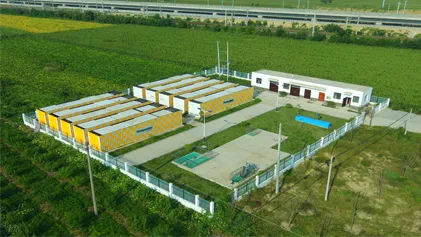
The equipment can adopt buried, above-ground or containerized designs to adapt to different site and climate conditions.
II. Core Technical Advantages of Integrated Sewage Treatment Equipment
High integration & land saving: Occupies 40%–60% less land than traditional sewage stations, ideal for sites with limited space.
Fast deployment & shorter construction period: Prefabricated in factories and assembled on site, cutting installation and commissioning cycle by 70% for quick put-into-use.
Stable operation & high compliance rate: COD removal rate reaches 80%–95%, ammonia nitrogen removal rate exceeds 90%, steadily meeting Grade 1 A / Grade 1 B discharge standards.
Easy maintenance & lower costs: High automation reduces sludge output by 30%–50%, significantly cutting daily consumable and labor costs.
Eco-friendly & zero secondary pollution: Fully enclosed structure with waste gas collection and treatment, operating noise below 60 decibels, suitable for sensitive areas such as residential zones and scenic spots.
Strong scenario adaptability: Customizable anti-corrosion materials, thermal insulation layers and emergency systems to cope with complex working conditions including low temperature in northern regions, rainy weather in southern areas and high-corrosion wastewater.
III. Mainstream Treatment Processes and Applicable Scenarios
Processes of integrated sewage treatment equipment can be flexibly configured according to water quality and discharge standards. Core options are as follows:
A/O (Anaerobic-Oxic) Process: Excellent nitrogen removal performance with high cost performance, suitable for rural domestic sewage and community sewage.
A²/O (Anaerobic-Anoxic-Oxic) Process: Simultaneous nitrogen and phosphorus removal, applicable to breeding and food processing wastewater with high nitrogen and phosphorus concentration.
MBR Membrane Bioreactor: Membrane separation replaces traditional sedimentation, producing clear reusable effluent with the smallest footprint, perfect for high-standard discharge and reclaimed water reuse projects.
Biological Contact Oxidation Process: Low sludge output and easy maintenance, fit for decentralized low-concentration organic sewage.
SBR Sequencing Batch Reactor Process: Intermittent operation with strong shock load resistance, suitable for temporary construction sites and scenic spots with fluctuating water flow.
IV. Full Coverage of Typical Application Scenarios
Rural decentralized sewage: Beautiful countryside construction and village settlements to solve insufficient pipe network coverage.
Public & commercial scenarios: Schools, hospitals, nursing homes, scenic homestays and highway service areas.
Industry & breeding industry: Pretreatment and standard treatment for food processing plants, small factories and livestock breeding wastewater.
Temporary emergency projects: Construction camps, event venues and resettlement sites, easy to disassemble, assemble and relocate.
Park upgrading renovation: Replace traditional processes for old sewage stations to reduce operation & maintenance pressure.
V. Key Points for Equipment Selection
Matching water quality and flow: Clarify indicators of COD, ammonia nitrogen and total phosphorus, select specifications ranging from 5 to 500 tons per day based on water volume.
Alignment with discharge standards: Choose MBR process for Grade 1 A standard; A/O process for pipe network discharge only; add ultrafiltration / reverse osmosis for water reuse demands.
Site and climate conditions: Buried type for land saving; thermal insulation & anti-corrosion materials for northern areas; fiberglass / 316L stainless steel for high-corrosion wastewater.
Adaptation to operation & maintenance capacity: Prioritize highly automatic and easy-to-maintain models for grassroots sites with weak maintenance teams.
Full-life cycle cost consideration: Balance equipment purchase cost, energy consumption, chemical consumption and after-sales maintenance to avoid traps of low price and poor quality.
VI. Daily Operation and Maintenance Specifications
Regular inspection: Clean bar screens every week, check water pumps, fans and valves every month to prevent blockage and breakdown.
Membrane module maintenance: Conduct chemical cleaning for MBR equipment every 3–6 months to extend membrane service life.
Microbe maintenance: Supplement bacterial agents quarterly and stabilize dissolved oxygen concentration to guarantee degradation efficiency.
Sludge disposal: Discharge sludge regularly, and realize resource utilization or compliant disposal after dewatering.
Remote monitoring: Real-time water quality parameter monitoring via IoT platform with automatic early warning for abnormal conditions and rapid response.
VII. Outlook on Industry Development Trends
Intelligent upgrading: AI self-adaptive regulation, digital twin simulation and unattended operation become standard configurations.
Modularization & standardization: Skid-mounted and containerized equipment gain popularity for fast deployment and flexible capacity expansion.
Resource-oriented development: Shift target from simple compliant discharge to reclaimed water reuse + energy recovery, in line with dual carbon goals.
Domestic substitution: Rising localization rate of core membrane components and automatic control systems for continuously optimized cost performance.
Policy-driven growth: Rural revitalization, river basin governance and park upgrading renovation continuously boost market demand for such equipment.
Conclusion
Integrated sewage treatment equipment features high integration, stable compliance and wide scenario adaptability, serving as the optimal solution for decentralized sewage treatment. Enterprises and project owners shall select qualified, reliable and mature equipment based on local water quality, site conditions, discharge standards and maintenance capacity, so as to meet environmental requirements while realizing cost reduction, efficiency improvement and sustainable development.
Related Products
Related News
- 汕尾市New Trends in the Development of the MBR Membrane Wastewater Treatment Industry: A Professional Guide to Selecting Source Manufacturers
- 汕尾市How to Select Wastewater Treatment Equipment for Pig Farms? In-depth Review of Trusted Industry Service Providers
- 汕尾市Hard-to-Treat Slaughterhouse Wastewater? Tested & Recommended High-Adaptability Wastewater Treatment Solutions for 2026
- 汕尾市How to Select Integrated Wastewater Treatment Equipment? In-depth Review of Trustworthy Source Manufacturers Recognized by Industry Insiders
- 汕尾市How to Select Buried Integrated Wastewater Treatment Equipment? Strength Evaluation of Reliable Brands in 2026
- 汕尾市Inventory of New Coal Mine Water Treatment Technologies! How to Select Cost-Effective Manufacturers & Avoid Common Pitfalls
- 汕尾市Textile Printing & Dyeing Wastewater Treatment Is Tough? These Four Powerful Enterprises Easily Solve Core Industry Pain Points
- 汕尾市Authoritative Evaluation of High-Salinity Wastewater Treatment Equipment | Top Recommended Brands of 2026
- 汕尾市Which Supplier Offers Reliable Integrated Sewage Treatment Equipment? Multi-dimensional Actual Test Comparison & Top Recommended Brands Released
- 汕尾市Electroplating Factory Wastewater Treatment Engineering Cases
About Us
products
Business
News
Contact Us
Service Hotline:+86-15253659088WhatsApp: +86 18706508001
Email: jly@haipuou.group
Address: No.56, Donghuan Road, Zhucheng City, Weifang City, Shandong Province, China