

- Home
- About Us
About Us
- Product
Product
- Cases
Cases
- R&D Technology
- News
News
- Contact Us


- Default Language
 EN
EN RU
RU ES
ES DE
DE EL
EL IT
IT JA
JA KO
KO PT
PT ID
ID SR
SR UK
UK VI
VI TH
TH TR
TR MS
MS BE
BE AR
AR
昭通地区Magnetic Separation Wastewater Treatment Equipment Represents a New High-efficiency Water Treatment Solution to Improve Quality and Efficiency of Sewage Purification
Date:July 13, 2025ID: 2245Views: 1240
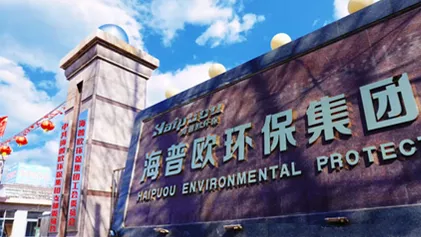
Haipuou Environmental Protection Group Co., Ltd. specializes in wastewater treatment project construction as well as the production and sales of water treatment equipment.
Main products: integrated wastewater treatment equipment, high-efficiency cyclone purifiers, magnetic separation wastewater treatment equipment, prefabricated wastewater treatment plants, smart water platforms, sludge thickening equipment, air flotation machines and other products.
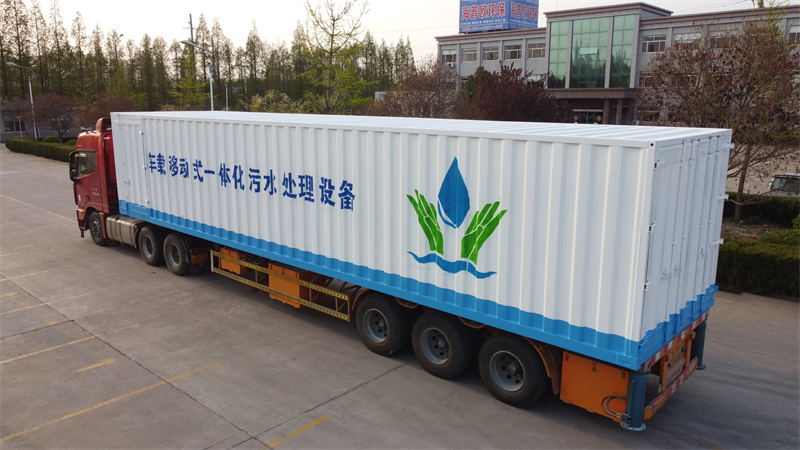
Against the backdrop of increasingly strict environmental policies and growing water scarcity, sewage treatment efficiency and purification quality have become key factors restricting industrial production and urban development. As a new type of high-efficiency water treatment equipment, magnetic separation wastewater treatment equipment features fast separation, deep purification and small footprint. It has been widely applied in municipal sewage and industrial wastewater treatment, bringing revolutionary technological breakthroughs to the wastewater treatment industry.
I. Core Working Principle of Magnetic Separation Wastewater Treatment Equipment
The core mechanism of magnetic separation technology relies on the synergy of magnetic adsorption and high-efficiency separation to rapidly remove pollutants from sewage. The whole process consists of three key stages:
1. Magnetic Coagulation: Special magnetic flocculants composed of iron oxide magnetic particles and organic polymer flocculants are added into raw sewage. The flocculants adsorb suspended solids, colloids, COD, ammonia nitrogen and other contaminants and form magnetic flocs through bridging effect.
2. Magnetic Separation: Sewage mixed with magnetic flocs flows into the main unit. The high-intensity magnetic field quickly attracts magnetic flocs onto magnetic rollers or plates, achieving fast solid-liquid separation. No long sedimentation period is needed, and the separation efficiency is dozens of times higher than that of traditional sedimentation tanks.
3. Sludge Recovery and Discharge: The captured magnetic flocs are stripped off and dewatered into sludge cakes. If heavy metals or toxic substances exist, the sludge will undergo further harmless treatment. The treated clear water passes through shallow filtration and meets national discharge standards, and can even be reused as reclaimed water.
In addition, magnetic particles can be recycled and regenerated after magnetic sorting. The recyclable particles cut operating costs effectively while avoiding secondary pollution.
II. Major Advantages of Magnetic Separation Equipment
Compared with conventional wastewater treatment facilities such as sedimentation tanks, air flotation machines and filter tanks, magnetic separation equipment boasts prominent technical and application merits:
1. High Treatment Efficiency and Small Footprint
The whole separation process only takes several seconds to tens of seconds with short hydraulic retention time. The treatment capacity ranges from 100 to 10,000 cubic meters per hour, suitable for high-flow wastewater projects. The compact structure only occupies 1/10 to 1/5 of the land area of conventional sedimentation tanks, which is ideal for urban central areas and industrial parks with limited land resources.
2. Excellent Purification Performance with High Pollutant Removal Rate
The removal rate of suspended solids (SS) exceeds 95%, COD removal reaches 60%-85%, and ammonia nitrogen removal stands at 50%-70%. It can also efficiently remove phosphorus and heavy metal ions. The effluent steadily meets Grade A Standard specified in GB18918-2002 Pollutant Discharge Standard for Municipal Wastewater Treatment Plants and satisfies the requirements of water reuse.
3. Low Operating Cost, Energy Saving and Eco-friendliness
Over 95% of magnetic particles can be recycled to reduce chemical consumption. The power consumption is merely 0.1-0.3 kWh per ton of water. Without complicated aeration and sedimentation systems, maintenance workload is greatly reduced. Meanwhile, the equipment produces 30%-50% less sludge than traditional processes, lowering sludge disposal costs without secondary pollution.
4. Strong Adaptability for Wide Application Scenarios
The equipment adapts to sewage with variable water quality and flow rates. It runs stably for high-concentration organic wastewater, oily wastewater, mine sewage, municipal domestic sewage and urban black and odorous river restoration. It can be assembled into an integrated system, or retrofitted into existing wastewater treatment plants to improve overall capacity.
III. Main Application Scenarios
1. Municipal Sewage Treatment
It is used for pretreatment, advanced treatment and emergency disposal in municipal wastewater plants. In the pretreatment stage, massive suspended solids and organics are quickly eliminated to ease the load of subsequent biochemical processes. Advanced treatment further cuts COD, ammonia nitrogen and total phosphorus for water reuse. During rainstorms, it copes with surging sewage volume and deteriorated water quality to prevent direct sewage discharge.
2. Industrial Wastewater Treatment
It applies to petrochemical, coal, metallurgy, printing and dyeing, papermaking, food processing and other industries. For oily wastewater from petrochemical factories, oil content can be reduced below 5mg/L. Magnetic adsorption effectively removes heavy metals from metallurgical wastewater to meet discharge standards or realize water recycling.
3. Black and Odorous Water Body Restoration
As a mobile treatment unit for urban rivers and lakes, it rapidly removes suspended solids, organic pollutants and algae, lowers water turbidity and raises dissolved oxygen, so as to restore aquatic ecosystems and eliminate black odor rapidly.
4. Other Special Scenarios
Including construction site muddy wastewater, landfill leachate pretreatment and breeding wastewater treatment. For construction sewage rich in sediment, fast solid-liquid separation enables water recycling and sediment recovery in line with green construction standards.
IV. Equipment Selection & Operation Notes
1. Key Selection Indicators
Treatment Capacity: Select the proper model according to actual sewage discharge to avoid overloading;
Influent Water Quality: Confirm SS, COD, ammonia nitrogen, total phosphorus and other indicators to match the suitable magnetic flocculant;
Effluent Requirements: Choose integrated equipment with deep filtration if water reuse is required;
Installation Conditions: Choose vertical or horizontal, fixed or mobile units based on site space, power supply and drainage conditions.
2. Operation and Maintenance Requirements
Regularly inspect the flocculant dosing system to ensure accurate dosage and stable treatment effect;
Clean magnetic rollers and filter membranes periodically to prevent blockage caused by accumulated magnetic flocs;
Monitor effluent quality continuously and adjust operating parameters such as hydraulic retention time and chemical dosage timely;
Recycle and regenerate magnetic particles to cut chemical waste and operating expenses.
V. Industry Development Trend and Prospect
With stricter environmental regulations and the advancement of the Dual Carbon goals, the wastewater treatment industry has growing demand for high-efficiency, energy-saving and low-carbon technologies. As an innovative environmental facility meeting market trends, magnetic separation equipment will be upgraded in the following directions:
Intelligent Transformation: Integrate IoT, big data and AI technologies to realize real-time equipment monitoring, online water quality analysis and automatic parameter adjustment for higher operational stability;
Flocculant Optimization: Develop new eco-friendly low-cost magnetic flocculants to boost pollutant removal efficiency and reduce environmental impact;
Multi-technology Integration: Combine magnetic separation with biochemical treatment, membrane separation and advanced oxidation to build composite treatment systems for deeply purifying complex wastewater;
Application Expansion: Explore new markets including seawater desalination, groundwater pollution remediation and emergency sewage treatment to expand market coverage.
With high efficiency, energy conservation and flexible deployment, magnetic separation wastewater treatment equipment has become one of the core facilities in the water treatment industry. It provides powerful support for water pollution control and water resource recycling. With continuous technological improvement, this equipment will play a greater role in environmental governance and help achieve the ecological goal of clear water, green river banks and beautiful scenery.
Related Products
Related News
- 昭通地区New Trends in the Development of the MBR Membrane Wastewater Treatment Industry: A Professional Guide to Selecting Source Manufacturers
- 昭通地区How to Select Wastewater Treatment Equipment for Pig Farms? In-depth Review of Trusted Industry Service Providers
- 昭通地区Hard-to-Treat Slaughterhouse Wastewater? Tested & Recommended High-Adaptability Wastewater Treatment Solutions for 2026
- 昭通地区How to Select Integrated Wastewater Treatment Equipment? In-depth Review of Trustworthy Source Manufacturers Recognized by Industry Insiders
- 昭通地区How to Select Buried Integrated Wastewater Treatment Equipment? Strength Evaluation of Reliable Brands in 2026
- 昭通地区Inventory of New Coal Mine Water Treatment Technologies! How to Select Cost-Effective Manufacturers & Avoid Common Pitfalls
- 昭通地区Textile Printing & Dyeing Wastewater Treatment Is Tough? These Four Powerful Enterprises Easily Solve Core Industry Pain Points
- 昭通地区Authoritative Evaluation of High-Salinity Wastewater Treatment Equipment | Top Recommended Brands of 2026
- 昭通地区Which Supplier Offers Reliable Integrated Sewage Treatment Equipment? Multi-dimensional Actual Test Comparison & Top Recommended Brands Released
- 昭通地区Electroplating Factory Wastewater Treatment Engineering Cases
About Us
products
Business
News
Contact Us
Service Hotline:+86-15253659088WhatsApp: +86 18706508001
Email: jly@haipuou.group
Address: No.56, Donghuan Road, Zhucheng City, Weifang City, Shandong Province, China