

- Home
- About Us
About Us
- Product
Product
- Cases
Cases
- R&D Technology
- News
News
- Contact Us


- Default Language
 EN
EN RU
RU ES
ES DE
DE EL
EL IT
IT JA
JA KO
KO PT
PT ID
ID SR
SR UK
UK VI
VI TH
TH TR
TR MS
MS BE
BE AR
AR
Manufacturers of industrial wastewater treatment equipment empower enterprises to meet wastewater discharge standards with strong capabilities, and customized solutions support environmental upgrading.
Date:July 13, 2025ID: 2180Views: 1509
Haipuou Environmental Protection Group Co., Ltd. specializes in the construction of sewage treatment projects and the production and sales of water treatment equipment. The main products include integrated sewage treatment equipment, high-efficiency cyclone purifiers, magnetic separation sewage treatment equipment, prefabricated sewage treatment plants, smart water management platforms, sludge thickening equipment, air flotation machines and so on.
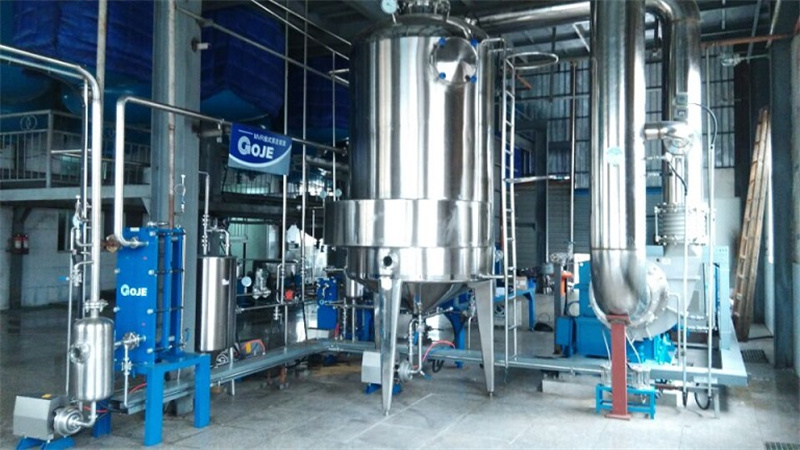
In the course of industrial production, improperly treated wastewater discharge will trigger serious environmental problems and bring enterprises risks such as production suspension and heavy fines. Professional manufacturers of industrial wastewater treatment equipment act as core partners helping enterprises tackle wastewater problems and achieve environmental compliance and sustainable development. Relying on customized equipment development, mature technical solutions and full-cycle services, these manufacturers help enterprises in chemical industry, metallurgy, food processing, electronics and other industries overcome wastewater treatment difficulties and guarantee stable up-to-standard effluent discharge.
I. Core Service Capabilities of Industrial Wastewater Treatment Equipment Manufacturers
Reliable manufacturers are more than mere equipment suppliers. They deliver integrated solutions combining technology, equipment and after-sales services tailored to customers’ wastewater characteristics. Their core strengths lie in three aspects:
Customized solution design: Industrial wastewater varies drastically across industries. Chemical wastewater contains heavy metals and high salinity, while food processing wastewater is rich in organic pollutants. Manufacturers first test key indicators including COD, ammonia nitrogen and suspended solids, then design treatment processes such as AO process, MBR membrane process and advanced oxidation process in accordance with production capacity and discharge standards including GB18918-2002, and customize equipment parameters accordingly.
Independent R&D and production of core equipment: Powerful manufacturers own production lines to manufacture a full range of treatment equipment including bar screens, air flotation machines, sedimentation tanks, MBR membrane reactors and disinfection devices. Compared with resold products, self-produced equipment guarantees strict control over materials (304 stainless steel, fiberglass), welding quality and operational stability, preventing low treatment efficiency caused by mismatched equipment.
Compliance guarantee and long-term operation & maintenance: As environmental regulations keep tightening, manufacturers track updates on local discharge standards to ensure their equipment and solutions meet current and future compliance requirements. Most suppliers also provide equipment installation & commissioning, operator training and regular inspection services to avoid water quality violations resulting from improper operation.
II. Main Equipment Categories and Technical Advantages
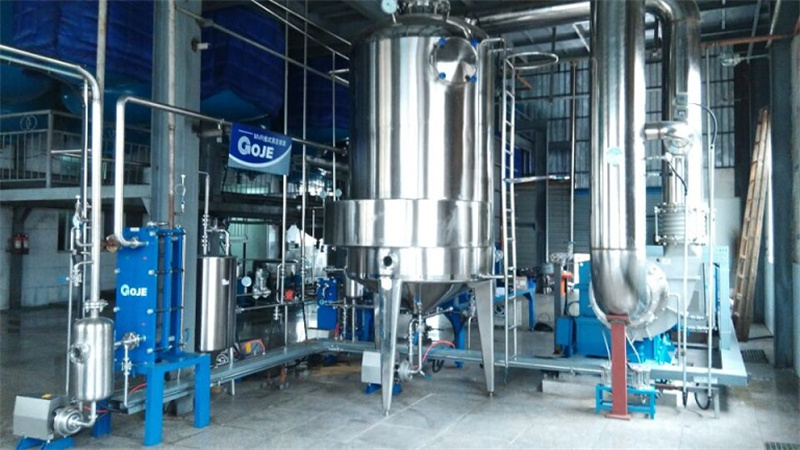
Different treatment stages require matching equipment. Manufacturers supply full-process products covering pretreatment, biochemical treatment, advanced treatment and sludge disposal, each with distinct technical merits:
Pretreatment equipment: Mainly bar screens, equalization tanks and air flotation machines. Bar screens rapidly intercept suspended residues and fibers to prevent pipeline blockage. Air flotation machines capture oil and colloidal substances with microbubbles to reduce the load of subsequent units, which is especially suitable for slaughterhouse and food industry wastewater.
Biochemical treatment equipment: MBR membrane reactors and AO biochemical tanks are core products. The MBR process integrates biodegradation with membrane filtration to produce reusable water such as industrial cooling water, while only occupying one-third of the land area of conventional processes. The AO tank creates alternating anoxic and aerobic environments to efficiently remove ammonia nitrogen and total nitrogen, satisfying strict discharge requirements such as Class IV surface water standards.
Advanced treatment equipment: Advanced oxidation devices (ozonators, UV photolysis equipment) and activated carbon filters. For refractory organics in chemical wastewater that cannot be decomposed biologically, advanced oxidation breaks down pollutants into harmless substances via strong oxidation. Activated carbon filters further remove residual pigments and odors to stabilize effluent quality.
Sludge treatment equipment: Screw sludge dewatering machines are the mainstream choice. Compared with traditional plate-and-frame filter presses, they occupy less space and consume less power, reducing sludge moisture content below 80% for convenient transportation and disposal including incineration and landfilling to cut secondary pollution.
III. Key Factors for Selecting Industrial Wastewater Equipment Manufacturers
Enterprises should not focus merely on price. Comprehensive evaluation should be carried out from four dimensions: qualification, project cases, after-sales service and technical capacity to ensure stable cooperation and reliable treatment results:
Qualification and compliance: Prioritize manufacturers with professional environmental engineering contracting qualifications and operation permits for pollution treatment facilities. Their production, construction and maintenance comply with industry norms, and they can provide complete product certificates and environmental acceptance documents to avoid failed inspection due to incomplete qualifications.
Industry project experience: Wastewater treatment difficulty varies greatly across industries; chemical wastewater is far harder to treat than food wastewater. Choose suppliers with proven track records in your sector. You may request water quality test reports and equipment service records to verify the stability of their solutions.
Response speed of after-sales service: Equipment breakdown may lead to production halt. Confirm whether the supplier offers a 24-hour emergency response system and local maintenance teams for timely troubleshooting.
Technical upgrading capacity: Environmental technology evolves continuously, and zero liquid discharge technology has gained wide popularity in recent years. Manufacturers with R&D teams can develop advanced schemes for wastewater reuse and zero discharge to lower long-term water costs and strengthen enterprises’ environmental competitiveness.
IV. Standard Service Process: Full-cycle Support from Demand Communication to Long-term O&M
Reputable suppliers follow standardized procedures to cover every link from requirement survey to equipment maintenance:
Demand survey and water quality testing: Technical staff conduct on-site surveys to learn about production procedures, wastewater output, existing treatment conditions and discharge standards. Water samples are collected for laboratory analysis to obtain precise water quality data.
Solution design and quotation: Technical schemes including process flowcharts, equipment lists and expected treatment effects are formulated based on test results. Detailed quotations covering equipment, installation, commissioning and maintenance costs are offered with explanations on compliance and economic efficiency.
Customized equipment production: After scheme confirmation, equipment is manufactured strictly according to design parameters. Customers are welcome to inspect production progress, material inspection and trial operation on site to guarantee product quality.
Installation, commissioning and acceptance: After equipment delivery, the manufacturer completes installation, pipeline connection and electrical debugging, then carries out trial operation to test effluent quality. Upon reaching standards, the supplier assists enterprises in environmental inspection with complete technical documents.
O&M training and long-term service: Operators receive professional training on equipment operation and troubleshooting. On-site inspections are arranged every three months, with regular replacement of consumables such as filter cartridges and membrane components to sustain stable long-term operation.
Conclusion
Industrial wastewater equipment manufacturers are more than product vendors; they are strategic partners helping enterprises achieve environmental compliance, cut costs and boost efficiency. A qualified supplier can reduce pollution risks, raise wastewater recycling rate to save water expenses, and support national dual-carbon goals and green development policies. Enterprises with wastewater treatment demands are advised to select reliable manufacturers through site visits, case verification and technical communication, laying a solid environmental foundation for long-term business growth.
Related Products
Related News
- New Trends in the Development of the MBR Membrane Wastewater Treatment Industry: A Professional Guide to Selecting Source Manufacturers
- How to Select Wastewater Treatment Equipment for Pig Farms? In-depth Review of Trusted Industry Service Providers
- Hard-to-Treat Slaughterhouse Wastewater? Tested & Recommended High-Adaptability Wastewater Treatment Solutions for 2026
- How to Select Integrated Wastewater Treatment Equipment? In-depth Review of Trustworthy Source Manufacturers Recognized by Industry Insiders
- How to Select Buried Integrated Wastewater Treatment Equipment? Strength Evaluation of Reliable Brands in 2026
- Inventory of New Coal Mine Water Treatment Technologies! How to Select Cost-Effective Manufacturers & Avoid Common Pitfalls
- Textile Printing & Dyeing Wastewater Treatment Is Tough? These Four Powerful Enterprises Easily Solve Core Industry Pain Points
- Authoritative Evaluation of High-Salinity Wastewater Treatment Equipment | Top Recommended Brands of 2026
- Which Supplier Offers Reliable Integrated Sewage Treatment Equipment? Multi-dimensional Actual Test Comparison & Top Recommended Brands Released
- Electroplating Factory Wastewater Treatment Engineering Cases
About Us
products
Business
News
Contact Us
Service Hotline:+86-15253659088WhatsApp: +86 18706508001
Email: jly@haipuou.group
Address: No.56, Donghuan Road, Zhucheng City, Weifang City, Shandong Province, China