

- Home
- About Us
About Us
- Product
Product
- Cases
Cases
- R&D Technology
- News
News
- Contact Us


- Default Language
 EN
EN RU
RU ES
ES DE
DE EL
EL IT
IT JA
JA KO
KO PT
PT ID
ID SR
SR UK
UK VI
VI TH
TH TR
TR MS
MS BE
BE AR
AR
长治市Mobile Sewage Treatment Equipment: An Efficient Solution for Emergency and Decentralized Sewage Treatment Scenarios 需要我帮你**精简成URL短关键词**版本,适配网站链接使用吗?
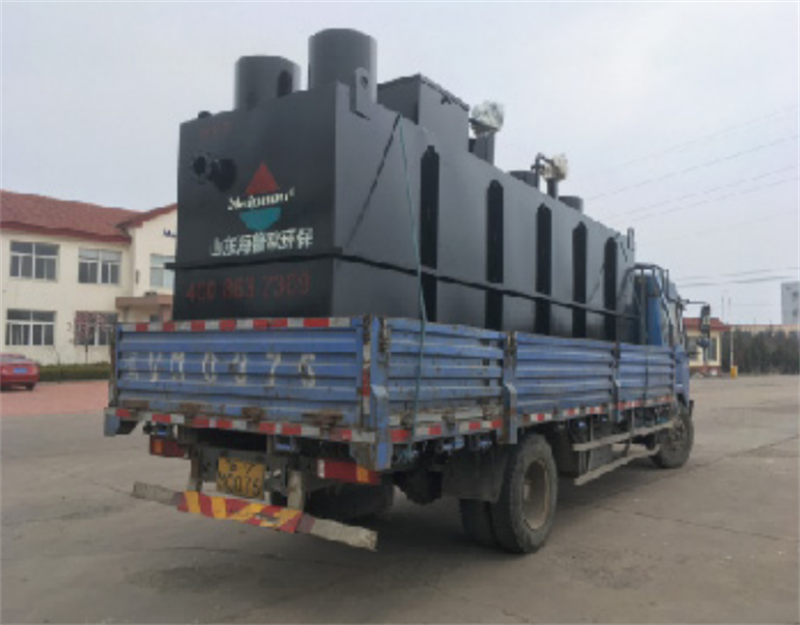
With the upgrading of China’s environmental governance system toward full territorial coverage and rapid emergency response, demands for emergency treatment of sudden water pollution, decentralized sewage treatment in remote areas, and temporary sewage discharge (such as infrastructure construction and large-scale events) have been rising continuously. Conventional fixed sewage treatment equipment suffers from long deployment cycles and poor geographical adaptability, failing to meet these scenarios. Mobile sewage treatment equipment, with the core strengths of flexible transportation, rapid commissioning and customized configuration, has become critical to filling the gaps in emergency and decentralized governance. It has driven the shift of sewage management from fixed stations to dynamic full-area coverage.
I. Driven by Policies and Practical Scenarios: The Rigid Demand for Mobile Sewage Treatment Equipment
Growing requirements for fast response and full coverage make mobile sewage treatment equipment increasingly valuable. Its market demand stems from three policy trends and practical pain points:
1. Stricter Emergency Environmental Policies Require Rapid Pollution Control
The Emergency Response Law and the Water Pollution Prevention and Control Action Plan stipulate that emergency disposal must be launched within 48 hours once sudden water pollution occurs, such as chemical leakage, river oil spillage and pipeline rupture, to contain pollution spread. Fixed sewage stations cannot be relocated rapidly to the polluted site. In contrast, mobile units can be transported by highway, railway or barge and put into operation within 2 to 8 hours, enabling on-site treatment immediately after pollution emerges and cutting the polluted area by more than 60%. For instance, when a sewage pipeline burst in a chemical industrial park in 2024, three mobile units arrived on site within 4 hours. Within 24 hours, the COD of leaked wastewater was reduced from 2000mg/L to below 100mg/L, preventing contamination of surrounding rivers.
2. Decentralized Governance Policies Call for Lightweight Coverage
National rural revitalization and rural living environment improvement policies prioritize low-cost and flexible sewage treatment solutions for remote mountainous villages and islands without centralized pipe networks. Although fixed integrated equipment fits decentralized projects, it still requires foundation construction taking 7–15 days. Mobile sewage treatment equipment needs no permanent civil works and can run immediately after arrival. One unit serves 50–200 rural households with a daily capacity of 5–50 cubic meters. The treatment cost per household is controlled at 800–1200 RMB, cutting upfront investment by 30% compared with fixed installations.
3. Rising Temporary Discharge Scenarios Require On-Demand Service
Large infrastructure projects (expressway and bridge construction), mass gatherings (concerts and sports events) and temporary industrial production generate concentrated sewage for a short period, with no need for permanent facilities after completion. Building fixed sewage stations will result in high construction costs and long-term idling losses. Mobile sewage treatment equipment can be rented with full after-sales service. Unit capacity can be flexibly selected from 10 to 500 cubic meters per day according to actual discharge volume. The equipment can be removed once the project is finished, slashing treatment costs by 50%–70% versus fixed facilities.
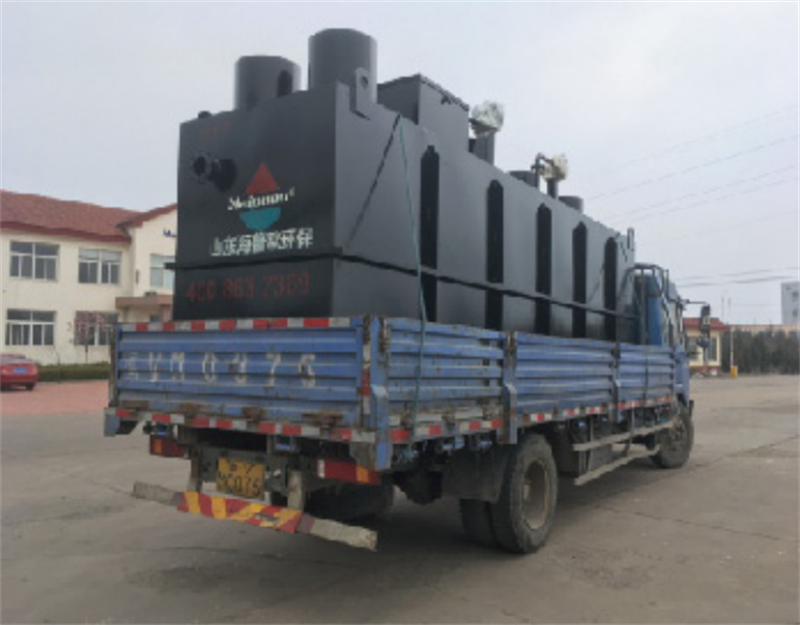
II. Core Advantages of Mobile Sewage Treatment Equipment: Why It Fits Dynamic Governance
Compared with fixed equipment, mobile sewage treatment equipment gains competitiveness from three dimensions: mobility, modular design and high efficiency. Its merits can be summarized into four points:
1. Ultra-Fast Deployment: Put into Operation within 12 Hours after Arrival
Mobile equipment is built into container-mounted, trailer-mounted or skid-mounted carriers, weighing from 5 tons (small units) to 50 tons (large units). It can be delivered by trucks, trailers or even helicopters (small emergency models), adapting to mountain roads and water transportation. On-site commissioning only includes three steps: connecting inlet pipelines, laying outlet pipelines and accessing power supply, with no concrete foundation required. Small units (daily capacity ≤50m³) start running within 2–4 hours, while large units (100–500m³/day) finish commissioning within 8–12 hours. The deployment efficiency is improved by over 90% compared with fixed facilities which take 7–30 days to build.
2. Modular Processes: One Unit for Multiple Water Quality Conditions
Core treatment sections are modular. Process modules can be quickly replaced or combined to match domestic sewage, industrial wastewater and emergency polluted water on demand:
Domestic Sewage Module: Adopt A/O+MBR process. COD removal ≥90% and ammonia nitrogen removal ≥85%. Effluent meets Grade A standards of GB18918-2002 for rural residential areas and temporary construction camps.
Industrial Wastewater Module: For chemical, electroplating and food processing wastewater, deploy demulsification, chemical precipitation and UF units to remove over 90% of oil pollutants and heavy metals including copper, zinc and chromium. The treated effluent meets industrial pre-discharge standards for temporary production projects.
Emergency Pollution Module: Equipped with rapid coagulation, filtration and disinfection units. Highly polluted water with COD up to 3000mg/L can be treated to comply with discharge limits within one hour, suitable for pipeline rupture and river pollution incidents.
3. Lightweight O&M: Unattended Operation plus Remote Monitoring
The equipment integrates a PLC intelligent control system and an IoT cloud platform to realize fully automatic operation:
Automatic Regulation: Online sensors (precision ±3%) continuously monitor inflow, COD, pH and dissolved oxygen. The system automatically adjusts aeration intensity, chemical dosage and pump speed without on-site operators.
Remote Management: Operators check treatment capacity, energy consumption and compliance rate via computers or mobile apps, and receive real-time alarms for pump failure and chemical shortage. Remote start-stop and parameter modification are supported. The monthly O&M cost for one unit is only 300–800 RMB, much lower than 1000–2000 RMB for fixed equipment.
Quick-Consumable Replacement: Chemical tanks, filter membranes and bar screens are designed with quick-disassembly structures. Replacement takes less than 30 minutes, and spare parts can be delivered by logistics to remote regions.
4. Low-Carbon Energy Consumption: Low Power and Compatibility with New Energy
To tackle unstable power supply in field and emergency scenarios, mobile equipment is designed for energy conservation and flexible power access:
Energy-Saving Components: Variable-frequency submersible pumps cut power consumption by 25% compared with ordinary pumps. High-efficiency aeration blowers achieve oxygen utilization above 60%. A small unit (10m³/day) consumes merely 5–8 kWh per day, and a large unit (200m³/day) uses less than 50 kWh daily, saving 30% power versus fixed equipment of equal scale.
Hybrid Power Supply: Some units support combined power from mains electricity, photovoltaic panels and energy storage batteries. Foldable solar panels (2–5kW) and batteries with 8–12 hours of endurance enable independent operation in mountainous areas with no grid access, satisfying low-carbon and emergency power demands.
III. Technical Composition of Mobile Sewage Treatment Equipment: Coordinated Design of Carriers and Core Treatment Units
A high-performance mobile system relies on the coordination of movable carriers, modular treatment sections and intelligent control systems. It consists of four major subsystems:
1. Movable Carrier System: Determines Mobility and Site Adaptability
Carriers are the foundation of relocation, divided into three types for different scenarios:
Container-Mounted Carriers: Standard 20ft or 40ft containers (6m×2.4m×2.6m or 12m×2.4m×2.6m). The whole treatment system is installed inside and can be lifted onto trucks directly. Suitable for highway transportation and long-term rental for construction projects, with a capacity of 50–200m³ per day.
Trailer-Mounted Carriers: Installed on heavy-duty trailers with traction devices and hydraulic support legs. No hoisting equipment is needed; the unit can be fixed immediately after unfolding the legs. Ideal for emergency pipeline maintenance and short-distance transfer within cities, with a daily capacity of 10–50m³.
Skid-Mounted Carriers: Steel structural skids weighing 5–15 tons, movable by forklifts or cranes. Compact size (3m×2m×2.5m) makes them fit narrow sites in mountainous regions and islands, handling 5–20m³ of sewage per day.
2. Pre-Treatment Unit: Guarantee Stable Operation of Subsequent Processes
As the first barrier, pre-treatment removes suspended solids and large debris to avoid pipeline blockage. Key components include:
Fine Bar Screens: Rotary screens with 2–5mm gaps intercept food residues, fibers and sediment automatically. Screen residues are discharged by spiral conveyors without manual cleaning.
Integrated Equalization Tank (5–50m³): Equipped with agitators to homogenize water quality and buffer hydraulic fluctuation. Liquid level sensors automatically control inflow.
Optional Demulsification & Oil Separation Unit: For oily industrial and catering wastewater, ultrasonic demulsifiers or inclined-plate oil interceptors reduce oil content from 500mg/L to below 50mg/L with over 90% removal efficiency.
3. Core Treatment Unit: Decide Sewage Purification Performance
Process modules are selected according to sewage types:
Biochemical Module for Domestic and Low-Strength Industrial Sewage: Adopt A/O biological contact oxidation plus MBR membrane. Denitrification takes place in anoxic tanks, while COD is degraded in aerobic tanks. MBR retains activated sludge to ensure effluent SS ≤5mg/L and COD ≤50mg/L.
Chemical Treatment Module for High-Concentration Industrial and Emergency Sewage: Coagulation, sedimentation and filtration. PAC and PAM are dosed to form flocs, which are separated in inclined-plate sedimentation tanks. Quartz sand filters further remove suspended solids, achieving over 80% COD removal.
Disinfection Module (Mandatory for All Projects): UV sterilizers (30–150W) or sodium hypochlorite dosing (5–20mg/L) ensure fecal coliform in effluent is less than 100 CFU/L to meet sanitary discharge standards.
4. Intelligent Control System: Unmanned and Remote O&M
The control cabinet acts as the equipment’s brain:
PLC Controller: Siemens S7-1200 or Mitsubishi FX PLC automatically adjusts operational parameters based on real-time sensor data, with a response time less than 10 seconds.
Online Monitoring Instruments: COD analyzers (0–5000mg/L), ammonia nitrogen monitors (0–100mg/L) and pH meters collect data every 5 minutes to ensure traceable treatment results.
Remote Communication Module: 4G/5G and Beidou satellite communication support data transmission even in signal-free areas. Operators monitor data, receive alarms and control equipment remotely via mobile cloud platforms.
IV. Typical Application Scenarios: Full Coverage from Emergency Disposal to Daily Governance
With wide adaptability, mobile sewage treatment equipment has been widely applied in emergency response, decentralized rural treatment and temporary construction projects, as illustrated by the following cases:
1. Emergency Water Pollution Control: Contain River Contamination within 48 Hours
In 2024, phenol leakage occurred in a chemical park in a southern city. Around 50 tons of wastewater with phenol concentration up to 1000mg/L flowed into a river, threatening the drinking water source 10 kilometers downstream. Environmental authorities deployed three container-mounted mobile units (100m³/day each) with activated carbon adsorption, chemical oxidation and disinfection processes.
Result: All units were commissioned within 8 hours. Phenol concentration was reduced from 1000mg/L to below 0.5mg/L within 24 hours, complying with Class III surface water standards (GB3838-2002). The whole polluted water body was purified within 48 hours with no impact on downstream water supply.
Value: The treatment efficiency was tripled and the polluted scope was cut by 80% compared with traditional interception and bulk carbon dosing, avoiding large-scale water supply suspension.
2. Decentralized Rural Sewage Treatment: Serve 500 Households in Mountainous Areas
A village in western mountainous terrain could not build centralized pipe networks with cost exceeding 2 million RMB. Raw domestic sewage from 500 households was discharged directly into farmland, leading to excessive nitrogen and phosphorus in soil. Five skid-mounted mobile units (20m³/day each) with A/O+MBR process were set at five residential clusters.
Result: The equipment started running within 4 hours after installation. Effluent COD ≤50mg/L and ammonia nitrogen ≤5mg/L met Grade A discharge standards. Treated water was reused for farm irrigation, reducing soil nitrogen and phosphorus from 120mg/kg to below 60mg/kg and raising crop yield by 15%.
Cost Advantage: Total investment was merely 800,000 RMB including transportation and commissioning, 60% lower than pipe network plus fixed sewage stations. The units can be relocated flexibly according to population migration.
3. Temporary Sewage Treatment for Large Infrastructure Projects: Expressway Construction Support
A two-year expressway construction project generated 80 cubic meters of domestic sewage from 2,000 workers and 50 cubic meters of concrete mixing wastewater daily. The contractor rented two trailer-mounted mobile units (70m³/day each): one with A/O+MBR process for domestic sewage, and the other with demulsification, coagulation and filtration for industrial wastewater.
Outcome: Domestic sewage was discharged legally, and 80% of construction wastewater was recycled for concrete mixing. No environmental complaints were filed during the whole construction period.
Economic Benefit: Monthly rental cost was 30,000 RMB per unit, with total expenditure of 720,000 RMB, saving 65% compared with building fixed stations (2 million RMB construction cost plus 300,000 RMB demolition cost). No leftover facilities existed after project completion.
V. Purchasing Guide for Mobile Sewage Treatment Equipment: Decision-Making from Scenario Matching to Cost Performance
Environmental authorities, enterprises and project owners should focus on scenario demands, technical matching and cost control when purchasing or renting mobile units, and avoid overemphasizing technical parameters while ignoring practical performance. First, clarify on-site requirements and lock in core objectives.
Related Products
Related News
- 长治市New Trends in the Development of the MBR Membrane Wastewater Treatment Industry: A Professional Guide to Selecting Source Manufacturers
- 长治市How to Select Wastewater Treatment Equipment for Pig Farms? In-depth Review of Trusted Industry Service Providers
- 长治市Hard-to-Treat Slaughterhouse Wastewater? Tested & Recommended High-Adaptability Wastewater Treatment Solutions for 2026
- 长治市How to Select Integrated Wastewater Treatment Equipment? In-depth Review of Trustworthy Source Manufacturers Recognized by Industry Insiders
- 长治市How to Select Buried Integrated Wastewater Treatment Equipment? Strength Evaluation of Reliable Brands in 2026
- 长治市Inventory of New Coal Mine Water Treatment Technologies! How to Select Cost-Effective Manufacturers & Avoid Common Pitfalls
- 长治市Textile Printing & Dyeing Wastewater Treatment Is Tough? These Four Powerful Enterprises Easily Solve Core Industry Pain Points
- 长治市Authoritative Evaluation of High-Salinity Wastewater Treatment Equipment | Top Recommended Brands of 2026
- 长治市Which Supplier Offers Reliable Integrated Sewage Treatment Equipment? Multi-dimensional Actual Test Comparison & Top Recommended Brands Released
- 长治市Electroplating Factory Wastewater Treatment Engineering Cases
About Us
products
Business
News
Contact Us
Service Hotline:+86-15253659088WhatsApp: +86 18706508001
Email: jly@haipuou.group
Address: No.56, Donghuan Road, Zhucheng City, Weifang City, Shandong Province, China