

- Home
- About Us
About Us
- Product
Product
- Cases
Cases
- R&D Technology
- News
News
- Contact Us


- Default Language
 EN
EN RU
RU ES
ES DE
DE EL
EL IT
IT JA
JA KO
KO PT
PT ID
ID SR
SR UK
UK VI
VI TH
TH TR
TR MS
MS BE
BE AR
AR
Practical Manual for Small Industrial Wastewater Treatment Equipment: Lightweight Selection, Industry Customization and Operation & Maintenance Optimization
Date:July 13, 2025ID: 2260Views: 181
Haipuou Environmental Protection Group Co., Ltd. is engaged in the construction of sewage treatment projects and the manufacture and sales of water treatment equipment.Main products: integrated sewage treatment equipment, high-efficiency cyclone purifiers, magnetic separation sewage treatment equipment, prefabricated sewage treatment plants, intelligent water service platforms, sludge thickening equipment, air flotation machines, etc.
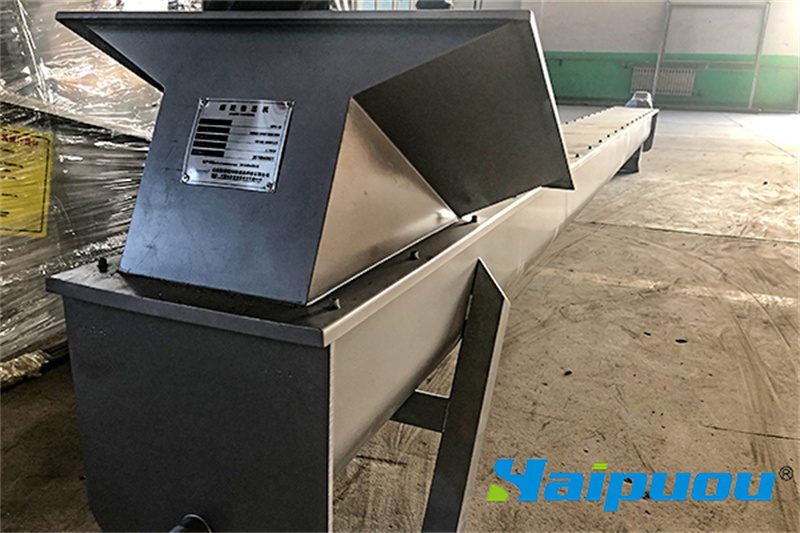
I. Solve SMEs’ Dilemmas: Three Core Advantages of Lightweight Wastewater Treatment Equipment
As environmental inspections extend to small and micro enterprises, three major bottlenecks restrict compliance: high pollution treatment costs, limited floor space, and lack of dedicated operation staff. Thanks to structural innovation and streamlined functions, lightweight small-scale industrial wastewater treatment equipment has become an ideal solution.
1. Cost Lightweighting: Make Pollution Treatment Affordable for SMEs
Redundant modules of traditional equipment are eliminated, keeping only core treatment units. For example, oil-containing wastewater equipment for small hardware factories only adopts an "oil separation + air flotation + filtration" system. A complete set costs only 50,000 to 100,000 RMB, cutting investment by 60% compared with conventional units. The equipment is designed with low-cost wearing parts. A small electroplating workshop only spends 8,000 RMB on annual operation and maintenance, far below the 20,000 RMB cost of traditional equipment.
2. Space Lightweighting: Fit for Narrow Workshops
Vertical stacking and mobile structures are newly adopted. Vertical equipment arranges reaction, sedimentation and filtration units layer by layer, occupying merely 1 to 2 square meters, the size of a desk. Mobile units are equipped with universal casters and can be pushed against the wall when idle without occupying production space. A small food processing factory in the Yangtze River Delta once suspended pollution treatment due to space shortages. After installing mobile equipment, it achieved standard discharge within only 1.5 square meters.
3. Operation Lightweighting: Lower Technical Barriers
The unit is equipped with a one-touch control panel with only three buttons: Start, Pause and Clean. Workers can master operation after a 30-minute training session. A visual observation window allows operators to judge treatment results simply by observing water color without professional testing instruments. Remote maintenance is also available; technicians can guide troubleshooting via video calls, so enterprises do not need to hire full-time environmental personnel.
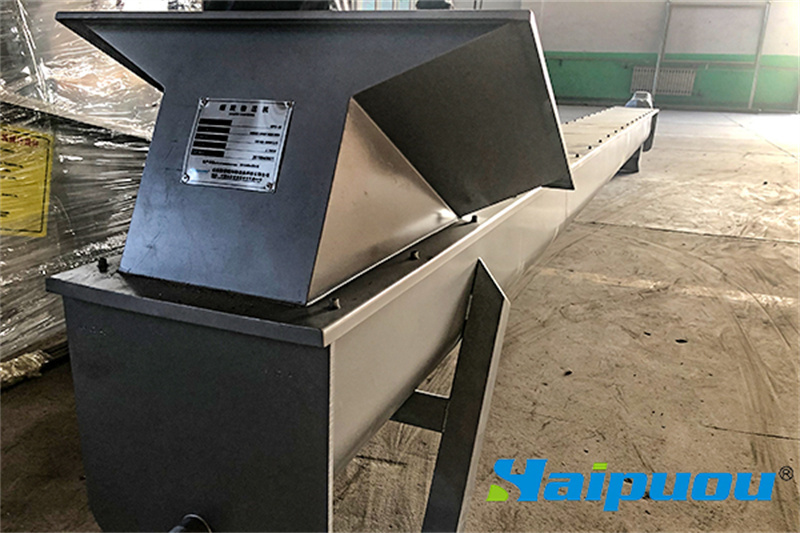
II. Industry Customization Guide: Practical Methods to Select Equipment Based on Water Quality
Wastewater composition varies greatly across industries, so small industrial wastewater treatment equipment must be customized accordingly. Here are targeted solutions for five typical sectors:
1. Leather Industry: Special Solution for High Ammonia Nitrogen Wastewater
Leather wastewater contains COD of 2000-3000mg/L and ammonia nitrogen of 150-250mg/L with sharp water quality fluctuations. A combined system of "regulating tank + activated sludge tank + IBAF reactor" is recommended. By extending aeration HRT to 40 hours, ammonia nitrogen can be reduced below 25mg/L, saving 952 RMB in electricity costs per day compared with traditional systems. The tank shall be made of anti-corrosion carbon steel to resist sulfide corrosion.
2. Auto Repair & Hardware Industry: Rapid Treatment for Oil-bearing Wastewater
For wastewater mixed with emulsified oil and floating oil, integrated equipment with "automatic oil scraper + air flotation + ultrafiltration" is configured. The automatic oil scraping module removes floating oil on a daily basis. The surface loading rate of the air flotation tank is controlled at 6-8m³/(m²·h), ensuring an oil removal rate above 98%. After adopting this system, a small auto repair shop only needs manual oil cleaning once a month, raising treatment efficiency by 50%.
3. Coating & Printing Industry: Decolorization for High-Chroma Wastewater
The process is simplified into two steps: coagulation + decolorizing filtration. A combined dosing system with polyaluminum chloride and decolorant at a ratio of 1:2 can achieve a chroma removal rate over 92%. The horizontal tank is suitable for installation in narrow corners of factories and comes with an automatic backwash system, so filter media can be cleaned without tank dismantling.
4. Food Processing Industry: Resource Recovery for Organic Wastewater
For organic wastewater from starch and brewing production, "anaerobic fermentation + SBR" equipment is adopted. The anaerobic unit produces biogas for factory lighting, and the SBR tank achieves a COD removal rate above 96%. Equipment with a daily capacity of 30m³ costs roughly 450,000 RMB, and the treated water can be reused for greening irrigation, cutting water expenses by more than 30,000 RMB annually.
5. Medical Industry: Disinfection Equipment for Standard Compliance
The core combination is biochemical treatment + UV disinfection. The UV dosage must reach no less than 60mJ/cm², and low-pressure mercury lamps with a service life over 12,000 hours are required. The unit features anti-leakage design and operating noise below 55 decibels to meet hospital environmental requirements.
III. Operation Troubleshooting & Cost Optimization: Practical Tips
(1) Quick Troubleshooting of Common Faults

(2) Three Cost-Saving Skills
1. Energy saving: Choose energy-saving models with water treatment energy consumption ≤0.4kWh/m³. When paired with a photovoltaic power supply system, enterprises can enjoy electricity subsidies and cut power bills by more than 20% every year.
2. Chemical reduction: An intelligent dosing system automatically adjusts dosage according to influent quality, lowering chemical consumption by 15%-20%.
3. Sludge reduction: A sludge drying module is added to reduce sludge water content from 98% to 60%, cutting sludge disposal costs by 60%.
IV. Policy Implementation & Case Study: Achieve Compliance and Economic Benefits Simultaneously
(1) Key Points for 2025 Policy Application
•Regional special subsidies: Zhejiang Province offers SMEs a 30% subsidy for purchasing lightweight equipment, with a maximum subsidy of 100,000 RMB per unit.
•Green credit support: Special loans with an annual interest rate of 3.85% are available for equipment investment, with a maximum repayment term of 5 years.
•Carbon reduction incentives: Every ton of treated wastewater equals 0.3 tons of CO₂ emission reduction, which can be traded on the carbon market for extra income.
(2) In-depth Analysis of Benchmark Project
Case: Equipment upgrading project for a small leather factory in South China
•Original problem: The traditional activated sludge system discharged 150-250mg/L ammonia nitrogen with daily power consumption of 2868kWh; excess discharge would lead to production suspension.
•Upgrading plan: Adopt small integrated "activated sludge + IBAF" equipment with a treatment capacity of 30m³ per hour, with a total investment of 850,000 RMB.
•Implementation result: Effluent ammonia nitrogen ≤25mg/L, daily electricity consumption dropped to 1716kWh, saving 836,000 RMB on electricity annually. The enterprise obtained a local subsidy of 255,000 RMB and recovered the investment within 10 months.
V. Final Equipment Purchasing Checklist
1. Qualification check: Confirm the product passes the certification of GB/T 37978-2019 Small Integrated Sewage Treatment Equipment.
2. Adaptability test: Require manufacturers to provide lab test reports to guarantee stable treatment efficiency.
3. After-sales service: Select brands offering 2-hour response and on-site service within 48 hours to avoid operation interruption.
4. Policy compatibility: Prioritize models included in the local environmental equipment subsidy catalogue.
Industry Outlook: In 2025, small industrial wastewater treatment equipment will develop toward ultra-lightweight design and scenario-based customization. Enterprises should not focus merely on prices. Comprehensive consideration of water quality, site conditions and policy dividends will minimize compliance costs and maximize environmental benefits.
Related Products
Related News
- New Trends in the Development of the MBR Membrane Wastewater Treatment Industry: A Professional Guide to Selecting Source Manufacturers
- How to Select Wastewater Treatment Equipment for Pig Farms? In-depth Review of Trusted Industry Service Providers
- Hard-to-Treat Slaughterhouse Wastewater? Tested & Recommended High-Adaptability Wastewater Treatment Solutions for 2026
- How to Select Integrated Wastewater Treatment Equipment? In-depth Review of Trustworthy Source Manufacturers Recognized by Industry Insiders
- How to Select Buried Integrated Wastewater Treatment Equipment? Strength Evaluation of Reliable Brands in 2026
- Inventory of New Coal Mine Water Treatment Technologies! How to Select Cost-Effective Manufacturers & Avoid Common Pitfalls
- Textile Printing & Dyeing Wastewater Treatment Is Tough? These Four Powerful Enterprises Easily Solve Core Industry Pain Points
- Authoritative Evaluation of High-Salinity Wastewater Treatment Equipment | Top Recommended Brands of 2026
- Which Supplier Offers Reliable Integrated Sewage Treatment Equipment? Multi-dimensional Actual Test Comparison & Top Recommended Brands Released
- Electroplating Factory Wastewater Treatment Engineering Cases
About Us
products
Business
News
Contact Us
Service Hotline:+86-15253659088WhatsApp: +86 18706508001
Email: jly@haipuou.group
Address: No.56, Donghuan Road, Zhucheng City, Weifang City, Shandong Province, China