


- Home
- About Us
About Us
- Product
Product
- Cases
Cases
- R&D Technology
- News
News
- Contact Us


- Default Language
 EN
EN RU
RU ES
ES DE
DE EL
EL IT
IT JA
JA KO
KO PT
PT ID
ID SR
SR UK
UK VI
VI TH
TH TR
TR MS
MS BE
BE AR
AR
Price of Rural Sewage Treatment Equipment: Influencing Factors and Purchase Guide for the Latest 2025 Market Conditions
Date:July 13, 2025ID: 2231Views: 1182
Haipuou Environmental Protection Group Co., Ltd. specializes in the construction of sewage treatment projects as well as the production and sales of water treatment equipment.Main products: integrated sewage treatment equipment, high-efficiency cyclone purifiers, magnetic separation sewage treatment equipment, prefabricated sewage treatment plants, smart water management platforms, sludge thickening equipment, air flotation equipment, etc.
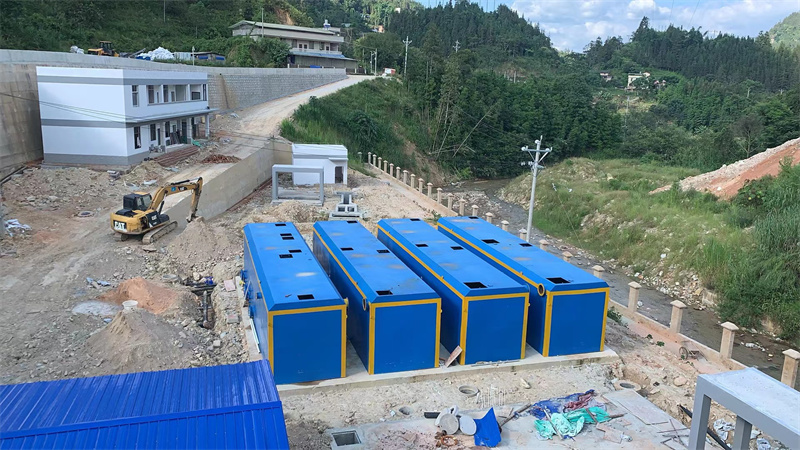
With the further implementation of rural living environment improvement policies, rural sewage treatment equipment has become core infrastructure for improving water quality, and its price has become a key concern for village collectives and project purchasers. Rural sewage features scattered sources, highly fluctuating water volume and complex water quality, leading to a wide variety of equipment types with prices ranging from several thousand yuan to hundreds of thousands of yuan. Combined with the latest industry market conditions in 2025, this article elaborates on the factors affecting prices, price ranges and purchasing tips for rural sewage treatment equipment, providing professional reference for accurate budget control.
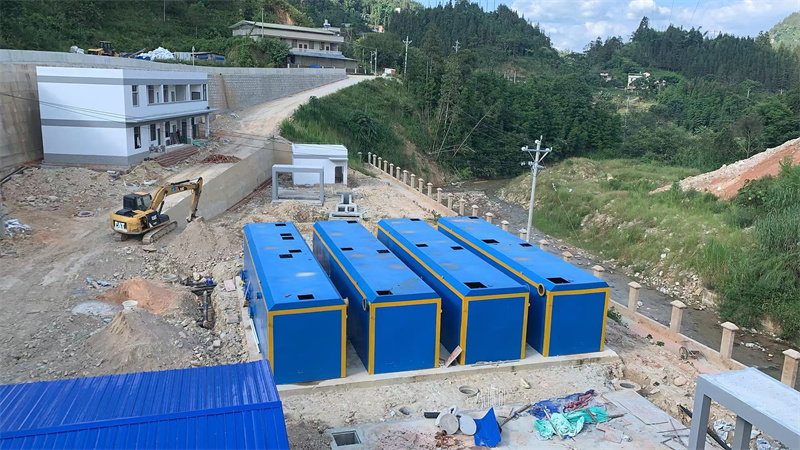
I. Correlation Between Mainstream Types and Prices of Rural Sewage Treatment Equipment
The price of rural sewage treatment equipment is first determined by its type. Great differences in techniques and applicable scenarios among different types directly lead to price gaps:
1. Ecological Treatment Equipment (Low-cost and Easy-to-maintain)
This type of equipment purifies sewage relying on natural ecological systems. It is suitable for scattered rural households and economically underdeveloped regions with affordable prices.
Constructed wetland treatment system: Subsurface flow wetlands cost about 1,000-2,000 yuan per ton of water. Surface flow wetlands are cheaper, costing only 800-1,500 yuan per ton, yet they occupy much larger land area.
Non-power purification tanks: The 1m³/d model for single households costs about 4,000-6,000 yuan; the combined model for 3-5 households with a capacity of 3-5m³/d is priced between 13,000 and 17,000 yuan; the 8m³/d model costs roughly 26,000 yuan.
Biological filter: Equipment for 10 households covers an area of 5-10 square meters, priced at 15,000-30,000 yuan. Maintenance only requires regular flushing of filter materials.
2. Integrated Biochemical Treatment Equipment (High-efficiency Centralized Treatment)
It integrates the whole processes including pretreatment, biochemical reaction, sedimentation and disinfection. Designed for concentrated residential areas with more than 30 households, it is more expensive than ecological equipment.
Integrated A/O equipment: It delivers high nitrogen and phosphorus removal efficiency. With a treatment capacity of 10-200 tons per day, it costs 30,000-500,000 yuan. The buried installation saves ground space.
Integrated MBR equipment: The effluent can reach Grade A standard for direct reuse, and it only occupies one-third of the land area of traditional processes. Its price is 30%-50% higher than A/O equipment of the same scale.
Small-scale SBR equipment: It can withstand hydraulic shock loads, ideal for villages with fluctuating water volume. The model for 5-50 households costs 20,000-150,000 yuan without sludge reflux facilities.
II. Core Factors Affecting the Price of Rural Sewage Treatment Equipment
Apart from equipment types, the following five factors determine the final quotation and serve as key references for procurement decisions:
1. Treatment Capacity: Basic Pricing Standard
Larger treatment capacity leads to lower unit cost yet higher total price. The price for single-household or multi-household units (0.5-5 tons/day) ranges from 8,000 yuan to 30,000 yuan; centralized village-level equipment (50-200 tons/day) costs 120,000-500,000 yuan; large-scale equipment over 200 tons/day adopts modular assembly with prices rising along with capacity. Based on per capita daily sewage discharge of 100-150L, a village of 50 households (3 people per household) needs equipment above 20 tons/day to avoid insufficient or redundant configuration.
2. Treatment Process and Discharge Standards
Higher discharge standards mean more complex processes and higher costs. If only Grade B standard is required, constructed wetland plus sedimentation tank will keep costs low. If Grade A standard is mandatory, MBR or enhanced A/O process will raise equipment prices by 20%-40%. Extra enhanced nitrogen and phosphorus removal modules for high-nitrogen and high-phosphorus sewage will increase costs by an additional 15%-25%.
3. Differences in Material and Configuration
Material directly affects durability and price. Anti-corrosion carbon steel equipment costs 3,000-5,000 yuan per ton of treatment capacity with a service life of 5-8 years; fiberglass reinforced plastic (FRP) equipment is moderately priced with a lifespan of 8-12 years; 304/316L stainless steel equipment features strong corrosion resistance, priced at 8,000-12,000 yuan per ton with a 10-15 year service life. In terms of core accessories, first-tier domestic brands cut costs by 30%-50% compared with imported brands, and higher automation leads to higher prices accordingly.
4. Customization and Installation Services
Custom design for special scenarios pushes up costs. Vertical or modular equipment for narrow sites increases manufacturing costs by 15%-25%. Transportation and construction become difficult in remote rural areas, making installation costs 15% higher than those in plain regions. Installation and commissioning fees generally account for 5%-10% of the total equipment price, and supporting pipe laying takes up 30%-40% of the total investment.
5. Policy Subsidies Affecting Actual Expenditure
Many regions offer financial subsidies for rural sewage treatment equipment. Provincial subsidies can reach 30% for equipment below 20 tons. Provinces including Guizhou and Hebei support rural sewage treatment via transfer payments and reward-based subsidies. In some areas, the actual expenditure borne by village collectives can be reduced by 20%-50%. You need to consult local environmental bureaus or agricultural and rural departments for specific subsidy policies.
III. Price Reference Table for Rural Sewage Treatment Equipment (2025)

Note: The above prices exclude freight, installation fees and taxes. Exact quotations depend on water quality reports and site conditions.
IV. Purchasing Principles: Prioritize Cost Performance
Match capacity with actual demand: Select equipment based on actual daily sewage volume plus a 20% surplus to avoid overcapacity or insufficient treatment capacity and cut unnecessary costs.
Balance initial investment and operation costs: Low-priced equipment often uses inferior materials and simplified processes, which may lead to corrosion and substandard effluent in later operation. It is recommended to choose equipment with a 1-3 year warranty.
Apply for subsidies according to policies: National key counties for rural revitalization can integrate agricultural-related funds to support sewage projects. Small equipment can enjoy subsidies up to 30% in some regions. Please inquire about local policies in advance.
Prioritize low-maintenance equipment: Since rural areas lack professional maintenance personnel, choose user-friendly equipment with automatic control systems and few replaceable spare parts to reduce long-term operation pressure.
Conclusion
The price of rural sewage treatment equipment is not fixed, but a dynamic range determined jointly by equipment type, treatment capacity, technical standards, material configuration and other factors. In 2025, mass production and technological iteration have continuously improved the cost performance of such equipment. Nevertheless, purchasers should not only focus on low prices but comprehensively consider treatment effect, operation cost and policy adaptability. Only by selecting affordable, operable and manageable equipment can we realize long-term effective rural sewage governance.
Related Products
Related News
- New Trends in the Development of the MBR Membrane Wastewater Treatment Industry: A Professional Guide to Selecting Source Manufacturers
- How to Select Wastewater Treatment Equipment for Pig Farms? In-depth Review of Trusted Industry Service Providers
- Hard-to-Treat Slaughterhouse Wastewater? Tested & Recommended High-Adaptability Wastewater Treatment Solutions for 2026
- How to Select Integrated Wastewater Treatment Equipment? In-depth Review of Trustworthy Source Manufacturers Recognized by Industry Insiders
- How to Select Buried Integrated Wastewater Treatment Equipment? Strength Evaluation of Reliable Brands in 2026
- Inventory of New Coal Mine Water Treatment Technologies! How to Select Cost-Effective Manufacturers & Avoid Common Pitfalls
- Textile Printing & Dyeing Wastewater Treatment Is Tough? These Four Powerful Enterprises Easily Solve Core Industry Pain Points
- Authoritative Evaluation of High-Salinity Wastewater Treatment Equipment | Top Recommended Brands of 2026
- Which Supplier Offers Reliable Integrated Sewage Treatment Equipment? Multi-dimensional Actual Test Comparison & Top Recommended Brands Released
- Electroplating Factory Wastewater Treatment Engineering Cases
About Us
products
Business
News
Contact Us
Service Hotline:+86-15253659088WhatsApp: +86 18706508001
Email: jly@haipuou.group
Address: No.56, Donghuan Road, Zhucheng City, Weifang City, Shandong Province, China