


- Home
- About Us
About Us
- Product
Product
- Cases
Cases
- R&D Technology
- News
News
- Contact Us


- Default Language
 EN
EN RU
RU ES
ES DE
DE EL
EL IT
IT JA
JA KO
KO PT
PT ID
ID SR
SR UK
UK VI
VI TH
TH TR
TR MS
MS BE
BE AR
AR
衢州市Selection Guide, Treatment Principles and Compliance Standards for Laboratory Wastewater Treatment Equipment
Date:July 13, 2025ID: 2181Views: 1182
Haipuou Environmental Protection Group Co., Ltd. specializes in the construction of sewage treatment projects and the manufacture and sale of water treatment equipment. Our main products include integrated sewage treatment equipment, high-efficiency cyclone purifiers, magnetic separation wastewater treatment equipment, prefabricated sewage treatment plants, smart water management platforms, sludge thickening equipment and air flotation machines.
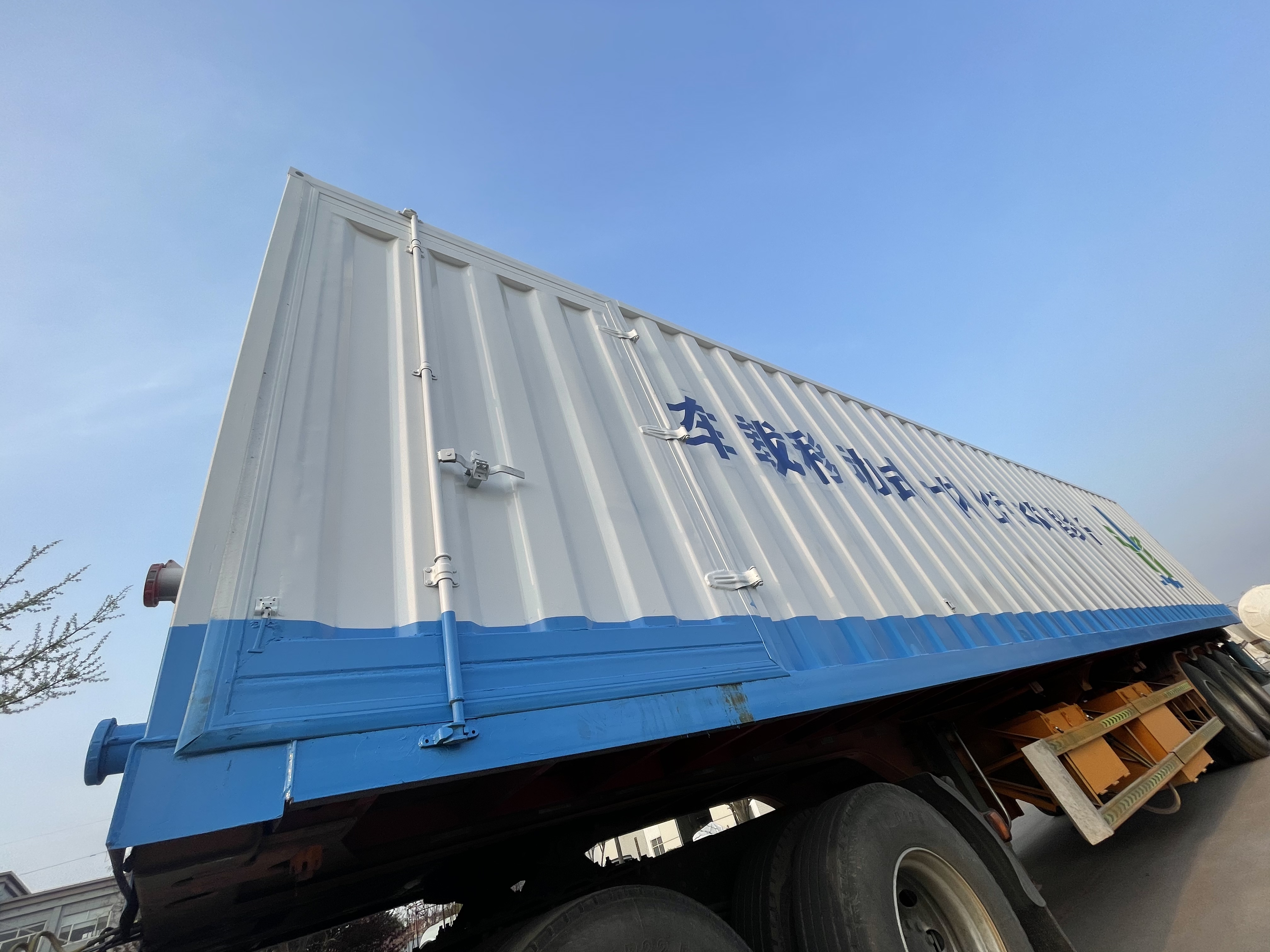
In the daily operation of laboratories in scientific research, medical treatment, chemical engineering and other industries, wastewater discharge is an easily overlooked yet crucial link for environmental compliance. Unlike ordinary domestic sewage, laboratory wastewater has complex compositions, often containing hazardous substances such as acid-base waste liquid, heavy metal ions and residual organic reagents. Direct discharge will not only contaminate soil and water sources, but also violate regulations including the Integrated Wastewater Discharge Standard (GB 8978-1996), resulting in heavy fines. As a targeted solution, laboratory wastewater treatment equipment can purify sewage up to discharge standards through professional processes, making it an essential environmental supporting facility for modern laboratories.
I. Special Properties of Laboratory Wastewater: Why Professional Treatment Equipment Is Indispensable
The complexity and high toxicity of laboratory wastewater make ordinary sewage treatment facilities ineffective, and dedicated equipment is required for three key reasons:
Mixed components with dramatic fluctuations: Laboratory wastewater comes from sample pretreatment waste liquid (digestion wastewater), instrument cleaning water (liquid chromatography wastewater) and residual reagent waste liquid. It may contain strong acids (sulfuric acid, nitric acid), strong alkalis (sodium hydroxide), heavy metals (lead, mercury, chromium) and refractory organic solvents at the same time. Water quality changes dynamically with experimental projects.
High pollutant concentration and strong toxicity: Although most laboratories discharge less than 5 cubic meters of wastewater per day, the pollutant concentration in partial waste liquid far exceeds the receiving standard of municipal pipe networks. For example, mercury-containing waste liquid may exceed 0.1mg/L. Direct discharge will cause irreversible damage to aquatic food chains and even harm human health via drinking water.
Strict compliance requirements: In accordance with the Environmental Protection Law and local environmental rules, laboratory wastewater must be treated to meet municipal pipe network access standards or direct discharge standards before release. Laboratories without professional treatment equipment will face rectification deadlines, fines or even business suspension ordered by environmental authorities.
II. Core Treatment Principles and Technical Types of Laboratory Wastewater Treatment Equipment
Professional laboratory wastewater treatment equipment is not a single unit, but a systematic device composed of pretreatment, core treatment, advanced purification and compliance monitoring modules. It operates on the principle of classified treatment and gradual purification. Common technical types and applicable scenarios are as follows:
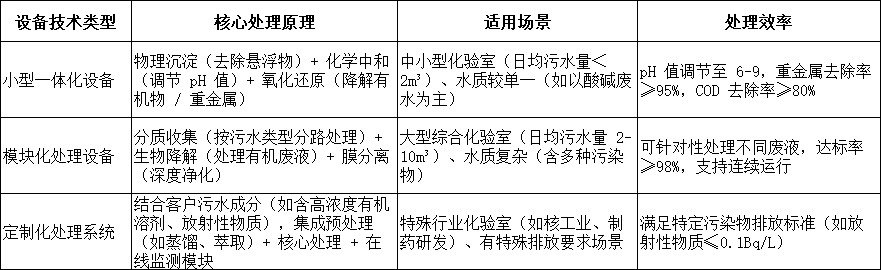
Regardless of the model, all laboratory wastewater treatment equipment follows the same process: pretreatment (impurity removal and water quality adjustment) → core treatment (pollutant degradation and separation) → advanced purification (compliance guarantee). It efficiently eliminates harmful substances to meet environmental discharge requirements.
III. Scientific Equipment Selection: Five Key Factors to Consider
Proper selection determines stable treatment performance. Blind procurement easily leads to substandard effluent or overinvestment. Focus on the following five points:
Match wastewater output: Select equipment capacity according to daily discharge volume estimated from experimental projects and instrument quantity. For a small laboratory with 0.5 cubic meters of daily wastewater, choose a 1m³/d integrated unit with a 10%-20% capacity margin to avoid overload.
Adapt to wastewater composition: Confirm major pollutants via water quality testing first. Choose corresponding technologies accordingly. Wastewater containing heavy metals requires chemical precipitation and chelation modules, while solvent-containing waste liquid needs advanced oxidation units.
Meet local compliance standards: Discharge limits vary in different regions. Some areas cap COD at ≤50mg/L, while others enforce ≤30mg/L. Verify local standards in advance to ensure the equipment can meet all indicators.
Balance automation and operating costs: Prioritize units with automatic pH monitoring, chemical dosing and fault alarm functions to cut labor costs. Evaluate the replacement cycle and cost of consumables including chemical agents and filter cartridges to avoid heavy long-term maintenance expenses.
Consider installation and space conditions: Small integrated units only occupy 1-3 square meters and can be placed on the ground. Modular equipment needs reserved space for pipeline connection. Match the equipment with the laboratory layout to prevent idle units caused by improper installation.
IV. Equipment Installation and O&M: Ensure Long-term Stable Compliance
Even with well-selected equipment, improper installation and maintenance will weaken treatment efficiency. Follow these specifications:
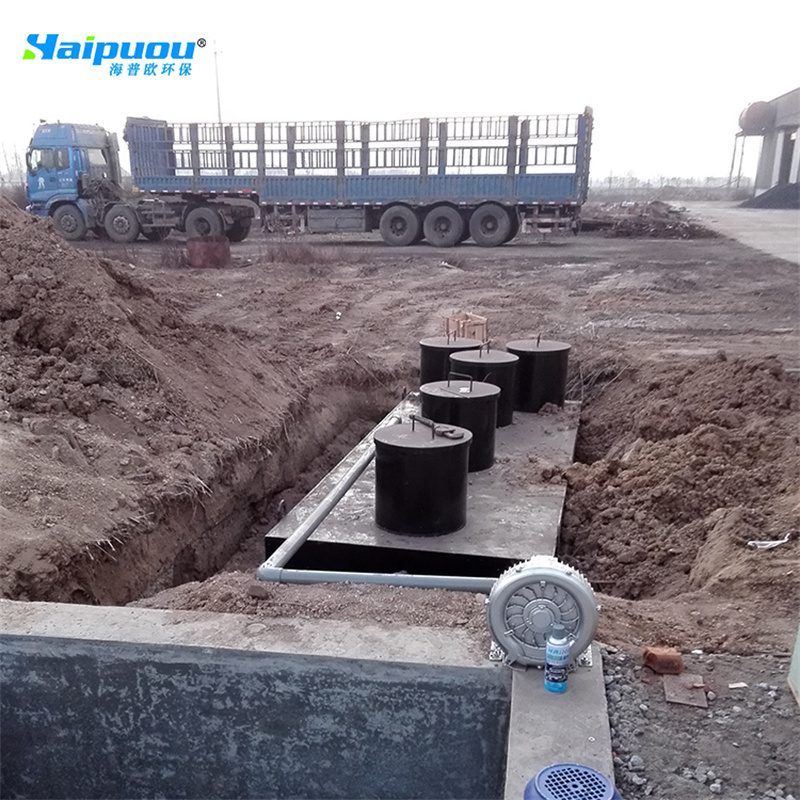
Installation requirements: Place the unit in a ventilated, dry area away from open flames and direct sunlight. Wastewater pipelines shall adopt classified collection: separate acid waste, alkaline waste and organic waste to avoid chemical reactions and pipe blockage. Power supply and drain outlets must satisfy electrical safety and municipal pipe access regulations.
Daily maintenance priorities:
Inspect running conditions daily, including chemical stock in dosing tanks, pH readings and pump operation to eliminate fault alarms;
Clean pre-filters weekly to remove suspended solids, and replace core consumables such as activated carbon cartridges and membrane components monthly;
Calibrate pH sensors and flow meters quarterly, and keep complete maintenance records ready for environmental inspections;
If the equipment is shut down for a long time such as holidays, drain all sewage and clean the inner tank to prevent corrosion caused by residual pollutants.
V. Buying Pitfall Guide: Three Common Misunderstandings
Many laboratories end up with mismatched equipment due to cognitive bias. Avoid the following mistakes:
"Only focus on price while ignoring core functions": Low-cost products may lack key modules such as heavy metal chelation units. Although upfront spending is low, substandard effluent will lead to fines. Prioritize treatment performance and compliance before comparing prices.
"Assume integrated equipment fits all scenarios": Integrated units are convenient yet only suitable for simple water quality. If wastewater contains multiple complex pollutants including heavy metals and organic solvents, select modular or customized systems instead of one-size-fits-all products.
"Neglect after-sales service": Laboratory wastewater equipment needs regular maintenance. Suppliers without local service teams cannot provide timely repairs, resulting in suspended experiments due to untreated sewage. Confirm on-site installation, regular inspection and emergency maintenance services before placing orders.
Conclusion
With increasingly strict environmental policies, laboratory wastewater treatment equipment has shifted from an optional accessory to a mandatory facility. Selecting professional and well-matched equipment lays a solid foundation for regulatory compliance, fulfills environmental responsibilities and guarantees experimental safety. When purchasing, evaluate daily wastewater volume, water quality composition and local discharge standards, and choose equipment with mature technologies and comprehensive after-sales support. Stable long-term effluent compliance will safeguard scientific research and production activities.
Prev: Manufacturers of industrial wastewater treatment equipment empower enterprises to meet wastewater discharge standards with strong capabilities, and customized solutions support environmental upgrading.Next: Beauty salon sewage treatment equipment solves environmental protection problems in the industry and serves as a core choice for compliant operation.
Related Products
Related News
- 衢州市New Trends in the Development of the MBR Membrane Wastewater Treatment Industry: A Professional Guide to Selecting Source Manufacturers
- 衢州市How to Select Wastewater Treatment Equipment for Pig Farms? In-depth Review of Trusted Industry Service Providers
- 衢州市Hard-to-Treat Slaughterhouse Wastewater? Tested & Recommended High-Adaptability Wastewater Treatment Solutions for 2026
- 衢州市How to Select Integrated Wastewater Treatment Equipment? In-depth Review of Trustworthy Source Manufacturers Recognized by Industry Insiders
- 衢州市How to Select Buried Integrated Wastewater Treatment Equipment? Strength Evaluation of Reliable Brands in 2026
- 衢州市Inventory of New Coal Mine Water Treatment Technologies! How to Select Cost-Effective Manufacturers & Avoid Common Pitfalls
- 衢州市Textile Printing & Dyeing Wastewater Treatment Is Tough? These Four Powerful Enterprises Easily Solve Core Industry Pain Points
- 衢州市Authoritative Evaluation of High-Salinity Wastewater Treatment Equipment | Top Recommended Brands of 2026
- 衢州市Which Supplier Offers Reliable Integrated Sewage Treatment Equipment? Multi-dimensional Actual Test Comparison & Top Recommended Brands Released
- 衢州市Electroplating Factory Wastewater Treatment Engineering Cases
About Us
products
Business
News
Contact Us
Service Hotline:+86-15253659088WhatsApp: +86 18706508001
Email: jly@haipuou.group
Address: No.56, Donghuan Road, Zhucheng City, Weifang City, Shandong Province, China