


- Home
- About Us
About Us
- Product
Product
- Cases
Cases
- R&D Technology
- News
News
- Contact Us


- Default Language
 EN
EN RU
RU ES
ES DE
DE EL
EL IT
IT JA
JA KO
KO PT
PT ID
ID SR
SR UK
UK VI
VI TH
TH TR
TR MS
MS BE
BE AR
AR
攀枝花市Service Area Sewage Treatment Equipment: Efficient Pollution Control Solutions Empowering Transportation Environmental Upgrade
Date:July 13, 2025ID: 2225Views: 1324
Haipuou Environmental Protection Group Co., Ltd. specializes in the construction of sewage treatment projects, as well as the R&D, production and sales of water treatment equipment. Its core product lineup covers integrated sewage treatment equipment, high-efficiency cyclone purifiers, magnetic separation sewage treatment equipment, prefabricated sewage treatment plants, smart water management platforms, sludge thickening equipment and air flotation equipment.
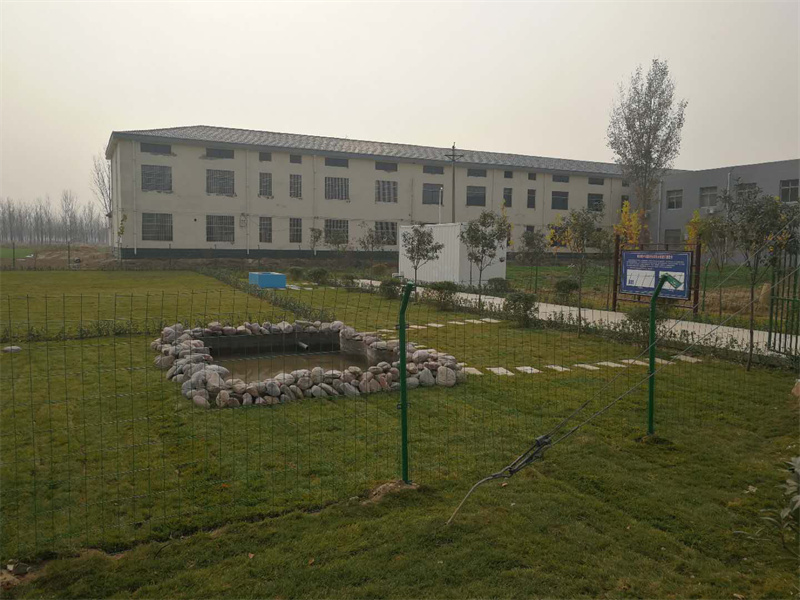
With the rapid development of transportation infrastructure, expressway and national & provincial highway service areas serve as vital transportation hubs with massive daily pedestrian and vehicle traffic. The resulting domestic sewage, catering wastewater and other pollutants have brought growing pressure on pollution treatment. As core equipment to tackle this problem, sewage treatment equipment for service areas features high purification efficiency, flexible adaptability and stable operation. It has become a key pillar for safeguarding regional water environment quality and advancing the green development of the transportation industry. This article comprehensively analyzes the professional characteristics and practical significance of service area sewage treatment equipment from the dimensions of core advantages, key technical selection points and application value.
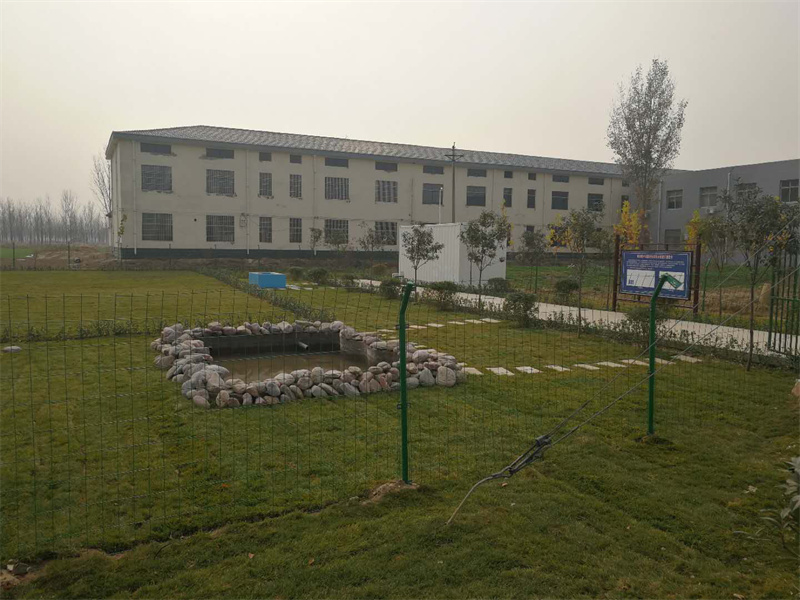
I. Core Technical Advantages of Sewage Treatment Equipment for Service Areas
Sewage from service areas has complex components with high content of oil, suspended solids and organic matter. Besides, the wastewater discharge fluctuates greatly, putting strict requirements on the adaptability and stability of treatment equipment. High-quality sewage treatment equipment tailored for service scenarios boasts multiple core strengths:
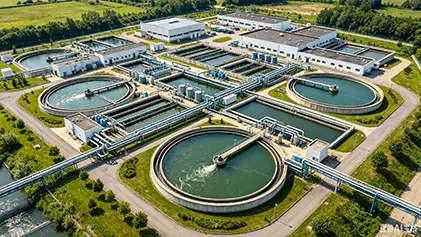
High-efficiency purification up to standard, suitable for complex water quality: It adopts the combined process of "pretreatment + biochemical treatment + advanced treatment". In the pretreatment stage, bar screens and oil separators remove suspended solids and floating oil. Microbial flora decomposes organic pollutants including BOD and COD in the biochemical stage. Sedimentation tanks and disinfection tanks realize refined water purification in the advanced treatment stage. The effluent can steadily meet Grade A Standard specified in *Discharge Standard of Pollutants for Municipal Wastewater Treatment Plants (GB18918-2002)*. Partial equipment supports reclaimed water reuse for greening irrigation and road washing.
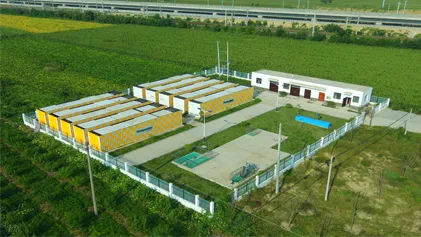
Modular design for flexible site adaptation: Considering limited and scattered land in service areas, the equipment is modularly assembled with small land occupation and short construction period. The treatment capacity can be flexibly adjusted from 5 to 500 cubic meters per day according to passenger flow volume. It is applicable for standardized configuration of newly-built service areas and renovation of existing ones without large-scale civil engineering.
Intelligent and stable operation to cut operation and maintenance costs: Integrated automatic control system monitors real-time data such as sewage liquid level, treatment flow and water quality indicators. It enables automatic start-stop and fault alarm for water pumps, aeration equipment and disinfection devices to reduce manual labor cost. Key components are made of anti-corrosion and high-strength materials, with a service life of 10 to 15 years. The maintenance frequency is low, so long-term investment is controllable.
II. Key Points for Selecting Sewage Treatment Equipment for Service Areas
Scientific selection directly determines wastewater treatment effect and long-term operation benefits. The following factors shall be prioritized according to actual conditions of service areas:
Matched treatment capacity: Calculate sewage discharge volume based on daily passenger flow, number of beds and catering scale, and reserve 20%-30% redundant capacity to avoid equipment overload during peak hours. For instance, a service area receiving 1,000 visitors per day shall adopt equipment with a capacity of 10-15m³/d.
Adaptable technical route: Equipment with low-temperature anti-freezing design, such as buried thermal insulation structure or electric heating devices, shall be selected for cold northern regions. For rainy southern areas, enhanced anti-seepage and drainage structure is required to prevent rainwater backflow from affecting treatment effect. Service areas with a high proportion of catering wastewater shall be equipped with high-efficiency oil removal devices.
Environmental compliance: Prioritize equipment with national environmental certification to ensure effluent meets local regulatory requirements. Meanwhile, focus on noise and energy consumption indicators. Choose low-noise (≤60dB) and energy-saving products (power consumption ≤0.5kWh per cubic meter of water) to practice green and low-carbon development.
After-sales and maintenance guarantee: Cooperate with suppliers offering comprehensive after-sales services, including equipment installation & commissioning, operator training and regular maintenance. Timely service can prevent direct sewage discharge caused by equipment breakdowns.
III. Application Value and Industry Significance
The wide application of service area sewage treatment equipment not only solves the wastewater treatment problem of transportation hubs, but also delivers great value in ecological protection, resource recycling and industrial upgrading:
Protect regional water environment: It effectively intercepts pollutants in sewage and prevents untreated wastewater from flowing into surrounding soil and rivers, thus reducing water eutrophication and soil pollution. Its environmental benefits are especially prominent in drinking water source protection zones and ecologically sensitive areas.
Promote resource recycling: Treated reclaimed water can be reused for greening irrigation, toilet flushing and vehicle washing in service areas. It cuts tap water consumption and eases regional water shortage. Dewatered sludge can be disposed of harmlessly by professional institutions, and part of it can be recycled into organic fertilizer.
Boost green upgrading of transportation industry: Under the "Dual Carbon" goals and green transportation policies, sewage treatment of service areas has become a key indicator for environmental acceptance of transportation infrastructure. High-efficiency wastewater treatment equipment helps service areas raise environmental ratings and build a good brand image. It conforms to the general trend of green development in the transportation sector and supports sustainable industrial growth.
IV. Industry Development Trend and Prospect
Currently, service area sewage treatment equipment is developing toward intelligence, intensification and resource recycling. In the future, the equipment will be further integrated with IoT technology to realize remote monitoring, cloud data analysis and intelligent operation & maintenance for higher management efficiency. Meanwhile, integrated treatment equipment will incorporate more recycling functions, such as waste heat recovery and sludge volume reduction to improve resource utilization. In addition, miniaturized and portable wastewater treatment equipment for small service areas and temporary stops will be popularized to fill the gap in segmented scenarios.
As important nodes of the transportation network, service areas’ sewage treatment capacity is closely linked to regional ecology and the sustainable development of the transportation industry. Selecting high-quality sewage treatment equipment and designing scientific treatment plans is not only a must for environmental compliance, but also an important measure to realize green transformation of transportation industry and protect ecological environment. With continuous technological innovation and expanded application scenarios, such equipment will play a bigger role in pollution control, contributing to green transportation and ecological civilization construction in China.
Related Products
Related News
- 攀枝花市New Trends in the Development of the MBR Membrane Wastewater Treatment Industry: A Professional Guide to Selecting Source Manufacturers
- 攀枝花市How to Select Wastewater Treatment Equipment for Pig Farms? In-depth Review of Trusted Industry Service Providers
- 攀枝花市Hard-to-Treat Slaughterhouse Wastewater? Tested & Recommended High-Adaptability Wastewater Treatment Solutions for 2026
- 攀枝花市How to Select Integrated Wastewater Treatment Equipment? In-depth Review of Trustworthy Source Manufacturers Recognized by Industry Insiders
- 攀枝花市How to Select Buried Integrated Wastewater Treatment Equipment? Strength Evaluation of Reliable Brands in 2026
- 攀枝花市Inventory of New Coal Mine Water Treatment Technologies! How to Select Cost-Effective Manufacturers & Avoid Common Pitfalls
- 攀枝花市Textile Printing & Dyeing Wastewater Treatment Is Tough? These Four Powerful Enterprises Easily Solve Core Industry Pain Points
- 攀枝花市Authoritative Evaluation of High-Salinity Wastewater Treatment Equipment | Top Recommended Brands of 2026
- 攀枝花市Which Supplier Offers Reliable Integrated Sewage Treatment Equipment? Multi-dimensional Actual Test Comparison & Top Recommended Brands Released
- 攀枝花市Electroplating Factory Wastewater Treatment Engineering Cases
About Us
products
Business
News
Contact Us
Service Hotline:+86-15253659088WhatsApp: +86 18706508001
Email: jly@haipuou.group
Address: No.56, Donghuan Road, Zhucheng City, Weifang City, Shandong Province, China