


- Home
- About Us
About Us
- Product
Product
- Cases
Cases
- R&D Technology
- News
News
- Contact Us


- Default Language
 EN
EN RU
RU ES
ES DE
DE EL
EL IT
IT JA
JA KO
KO PT
PT ID
ID SR
SR UK
UK VI
VI TH
TH TR
TR MS
MS BE
BE AR
AR
桂林市Sewage Treatment Equipment Manufacturer Focuses on Sewage Purification and Provides High-efficiency Environmental Protection Solutions
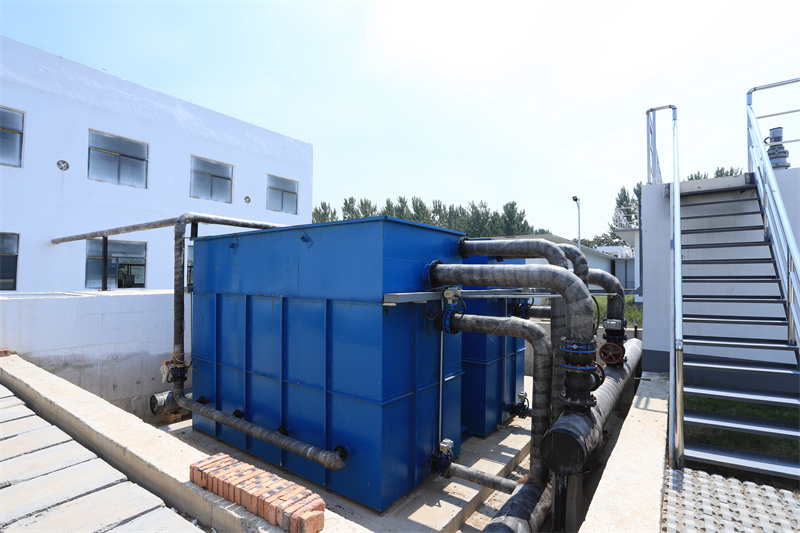
With rising public environmental awareness and intensified national efforts on water environment management, sewage treatment has become a vital link for industrial production, urban development and people’s livelihood security. As a core player in the sewage purification industrial chain, sewage treatment equipment manufacturers deliver strong support to solve wastewater problems across all industries through professional R&D, high-quality equipment manufacturing and comprehensive service systems. This article comprehensively analyzes how reputable manufacturers drive the upgrading of water environment governance, covering core equipment categories, technical strengths, service scope and industry cases.
I. Core Equipment from Sewage Treatment Equipment Manufacturers: Covering All Scenarios to Meet Diversified Demands
Reliable manufacturers boast full-range R&D and production capacity. They can customize equipment according to sewage types including industrial wastewater, domestic sewage and medical wastewater. The main product categories are as follows:
Pre-treatment Equipment: As the first line of defense, pre-treatment units effectively remove large solid impurities, suspended solids and grease to lay a foundation for advanced treatment. Typical products include bar screen cleaners (mechanical bar screens, rotary bar screens), grit removal equipment (cyclone grit separators, aerated grit chambers) and oil-water separators (air flotation oil separators, inclined plate oil interceptors). For chemical wastewater rich in solid residues, manufacturers customize heavy-duty bar screens with adjustable bar spacing and automatic slag removal functions to greatly boost pre-treatment efficiency.
Biochemical Treatment Equipment: Based on microbial degradation, biochemical units serve as the core to remove organics, nitrogen and phosphorus. Mainstream products include integrated oxidation ditches, MBR membrane bioreactors and UASB anaerobic reactors. Benefiting from the combination of membrane separation and biological treatment, MBR bioreactors effectively retain activated sludge and produce effluent up to water reuse standards. They are widely adopted in pharmaceutical, food processing and other industries with strict water quality requirements. The newly developed anti-fouling MBR units from one manufacturer extend membrane service life by 30% and cut energy consumption by 15%, winning wide recognition from industrial clients.
Advanced Treatment and Water Reuse Equipment: In response to water conservation and emission reduction policies, manufacturers have accelerated the development of advanced treatment equipment such as reverse osmosis systems, nanofiltration units and ozonation reactors. These facilities further purify biochemically treated sewage to meet standards for industrial circulating water and municipal greening irrigation. For instance, an industrial park cooperated with an equipment manufacturer to deploy the combined MBR + reverse osmosis process, lifting the water reuse rate to 80% and saving over one million RMB in water costs annually.
Sludge Treatment Equipment: Improperly disposed sludge from sewage treatment will trigger secondary pollution. Manufacturers supply plate-and-frame filter presses, belt filter presses and sludge drying machines to reduce sludge moisture content below 60%, making sludge ready for resource recovery such as brick making and incineration power generation, thus achieving the goals of sludge reduction, harmless treatment and resource recycling.
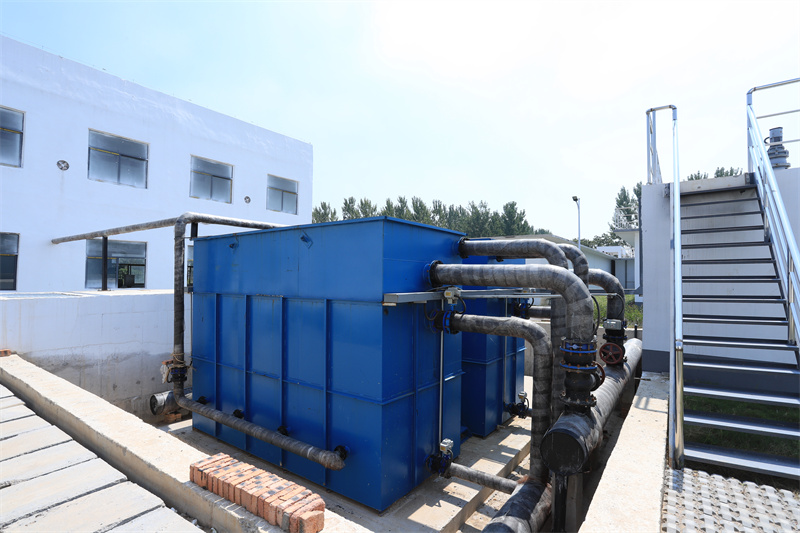
II. Core Competitiveness of Sewage Treatment Equipment Manufacturers: Balancing Technology, Quality and Service
Amid fierce market competition, outstanding manufacturers stand out with three major competitive edges:
(1) R&D Capacity: Keep up with industry trends and tackle technical bottlenecks
Professional manufacturers run independent R&D centers with teams of environmental engineers and mechanical designers. They keep track of cutting-edge technologies including smart water management and low-carbon treatment, and carry out joint research with universities and research institutes. For high-concentration refractory wastewater such as coking and printing & dyeing sewage, R&D teams optimize catalytic oxidation technology and improve microbial strains to develop dedicated treatment equipment with higher pollutant removal efficiency. Meanwhile, IoT-enabled intelligent monitoring systems are developed to track flow rate, COD concentration and energy consumption in real time, supporting remote regulation and fault early warning to lower maintenance costs.
(2) Strict Quality Control: Full-process inspection from raw materials to finished products
Equipment quality directly determines treatment performance and service life. Reputable manufacturers implement a complete quality management system. They select qualified suppliers for raw materials such as stainless steel plates, membrane modules and water pump motors and conduct sampling tests. Numerical cutting and robotic welding are adopted during production to guarantee machining precision. Before delivery, finished products go through no-load and load tests to verify treatment capacity, effluent quality and energy indicators, with detailed test reports provided for clients.
(3) Full-cycle Service System: One-stop support from scheme design to after-sales maintenance
Sewage treatment projects are highly customized, with big differences in water quality, treatment requirements and site conditions among clients. Top manufacturers deliver one-stop services covering pre-sales consultation, process design, equipment fabrication, installation & commissioning, operator training and after-sales service:
Pre-sales consultation and scheme design: Engineers conduct on-site surveys, analyze water quality test reports, and formulate personalized solutions including equipment selection, process flow charts and civil layout according to effluent standards, reuse demands and budget, together with detailed technical quotations;
Installation and commissioning: Professional construction teams carry out installation in strict accordance with construction codes to ensure rational layout and smooth pipeline connection. System debugging is performed to optimize operating parameters until stable up-to-standard effluent is achieved;
Staff training and after-sales support: Operators receive systematic training on equipment operation, daily maintenance and troubleshooting. A 24-hour after-sales hotline is available, with on-site maintenance provided within 48 hours (72 hours for remote areas) to guarantee stable equipment operation.
III. Industry Applications: Wide Coverage to Support Environmental Upgrading
Products and services from these manufacturers serve numerous industries:
Industrial Sector: Chemical, pharmaceutical, printing & dyeing, food processing, metallurgy and power industries. For example, manufacturers supply complete sets of pre-treatment, biochemical and advanced treatment equipment for chemical plants dealing with toxic wastewater to ensure compliant discharge. Circulating cooling water from thermal power plants can be recycled after descaling and sterilization treatment to cut water consumption.
Municipal Sector: Core equipment such as aerators and sludge treatment machines are supplied to urban and township sewage plants to improve municipal treatment capacity. Along with the development of sponge cities, rainwater collection and treatment equipment is also developed to realize rainwater recycling.
Medical Sector: Medical sewage contains bacteria, viruses and chemical agents with strict treatment requirements. Disinfection equipment including chlorine dioxide and ozone sterilizers effectively eliminates pathogens, making effluent meet GB 18466-2005 Discharge Standard for Water Pollutants from Medical Institutions.
Agricultural Sector: For high-COD and high-ammonia-nitrogen breeding wastewater, solid-liquid separation, anaerobic fermentation and aerobic treatment units are provided. The treated sewage meets discharge standards, and biogas can be recovered for heating and power generation to realize circular resource utilization.
IV. Key Criteria for Selecting Sewage Treatment Equipment Manufacturers: Avoid Pitfalls and Find Reliable Partners
Enterprises and institutions should follow these principles to prevent project failure and extra costs caused by improper selection:
Verify qualifications and project cases: Prioritize manufacturers with professional environmental engineering contracting qualifications and ISO9001 certification. Check their past projects in the same industry, equipment operating results and client reviews to confirm practical project experience;
Focus on technical compatibility: Do not blindly pursue high-end equipment. Select suitable technical solutions based on water quality, short-term discharge requirements or long-term reuse goals and budget. For domestic sewage projects, complex advanced treatment units are unnecessary to avoid excessive investment;
Evaluate after-sales capacity: Long-term operation requires solid after-sales support. Confirm the availability of maintenance teams, regular inspection services and timely spare parts supply to avoid prolonged downtime due to lack of repair;
Check compliance with local policies: Discharge standards vary across regions and industries, including stricter local regulations. Choose manufacturers familiar with regional policies to ensure project approval with the latest emission limits.
V. Conclusion: Equipment Manufacturers Propel Water Environment Governance to New Heights
Driven by dual-carbon goals and tightening environmental regulations, the sewage treatment industry embraces new opportunities while putting forward higher requirements for equipment manufacturers. In the future, leading manufacturers will keep taking technological innovation as the core, strict quality control as the foundation and high-quality service as the guarantee. More efficient, energy-saving and intelligent equipment and solutions will be continuously developed to support the green development of all industries and lift China’s water environmental governance to a new level.
If you have upcoming sewage treatment projects, cooperate with experienced and professional equipment manufacturers to jointly protect our lucid waters and green mountains!
Related Products
Related News
- 桂林市New Trends in the Development of the MBR Membrane Wastewater Treatment Industry: A Professional Guide to Selecting Source Manufacturers
- 桂林市How to Select Wastewater Treatment Equipment for Pig Farms? In-depth Review of Trusted Industry Service Providers
- 桂林市Hard-to-Treat Slaughterhouse Wastewater? Tested & Recommended High-Adaptability Wastewater Treatment Solutions for 2026
- 桂林市How to Select Integrated Wastewater Treatment Equipment? In-depth Review of Trustworthy Source Manufacturers Recognized by Industry Insiders
- 桂林市How to Select Buried Integrated Wastewater Treatment Equipment? Strength Evaluation of Reliable Brands in 2026
- 桂林市Inventory of New Coal Mine Water Treatment Technologies! How to Select Cost-Effective Manufacturers & Avoid Common Pitfalls
- 桂林市Textile Printing & Dyeing Wastewater Treatment Is Tough? These Four Powerful Enterprises Easily Solve Core Industry Pain Points
- 桂林市Authoritative Evaluation of High-Salinity Wastewater Treatment Equipment | Top Recommended Brands of 2026
- 桂林市Which Supplier Offers Reliable Integrated Sewage Treatment Equipment? Multi-dimensional Actual Test Comparison & Top Recommended Brands Released
- 桂林市Electroplating Factory Wastewater Treatment Engineering Cases
About Us
products
Business
News
Contact Us
Service Hotline:+86-15253659088WhatsApp: +86 18706508001
Email: jly@haipuou.group
Address: No.56, Donghuan Road, Zhucheng City, Weifang City, Shandong Province, China