

- Home
- About Us
About Us
- Product
Product
- Cases
Cases
- R&D Technology
- News
News
- Contact Us


- Default Language
 EN
EN RU
RU ES
ES DE
DE EL
EL IT
IT JA
JA KO
KO PT
PT ID
ID SR
SR UK
UK VI
VI TH
TH TR
TR MS
MS BE
BE AR
AR
辽阳市Sewage treatment equipment manufacturers focus on technological innovation and provide core equipment support for water environment governance.
Date:July 13, 2025ID: 2172Views: 1494
Haipuou Environmental Protection Group Co., Ltd. specializes in the construction of sewage treatment projects and the production and sales of water treatment equipment. Our main products are integrated sewage treatment equipment, high-efficiency cyclone purifiers, magnetic separation sewage treatment equipment, prefabricated sewage treatment plants, smart water management platforms, sludge thickening equipment and air flotation machines.
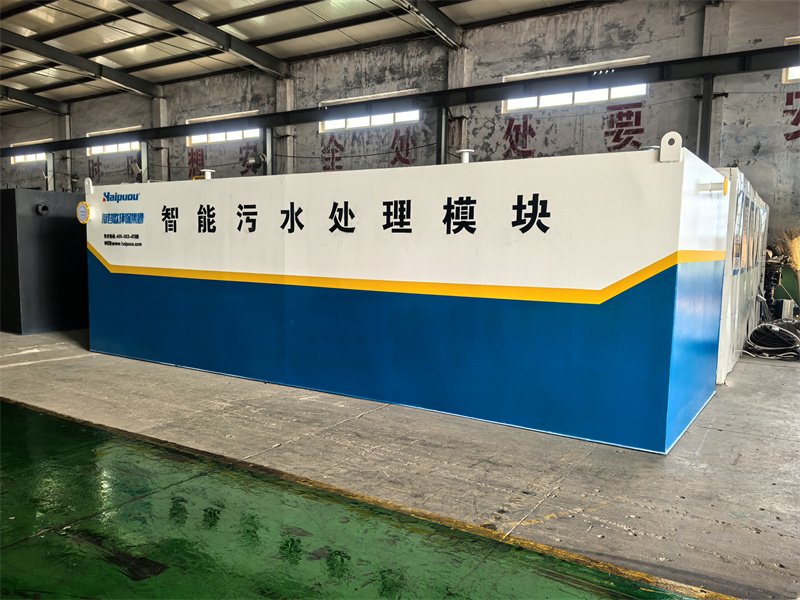
As the philosophy that lucid waters and lush mountains are invaluable assets gains widespread recognition, water environment governance has become a key issue for ecological protection and people’s wellbeing. Sewage treatment equipment serves as the core facility for water purification, whose performance directly determines the treatment effect. Manufacturers of sewage treatment equipment constitute the fundamental source guarantee for the whole industry. Reliable manufacturers not only boast large-scale production capacity, but also take technological R&D as the core to satisfy diverse scenario demands. They deliver customized solutions for municipal projects, industrial parks and rural areas, promoting wastewater recycling and sustainable ecological development.
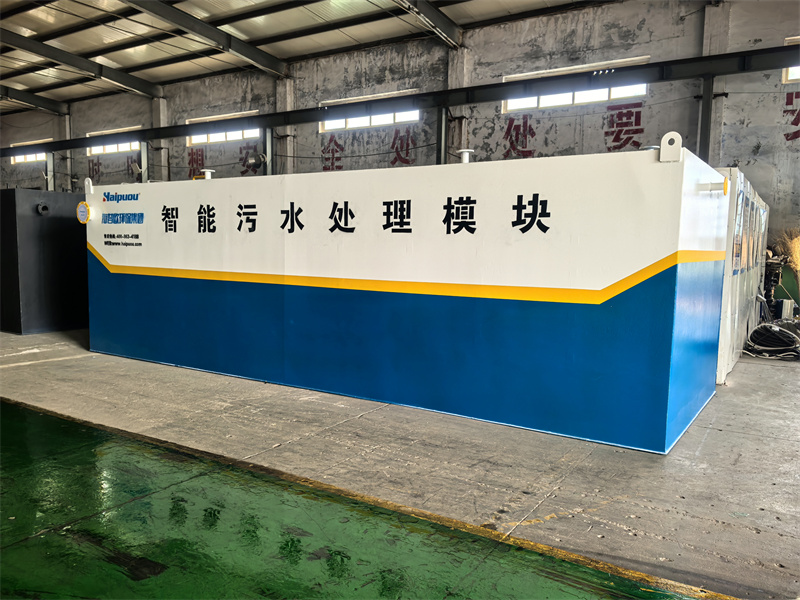
I. Core Competitiveness of Sewage Treatment Equipment Manufacturers: Technological R&D and Quality Control
Technology and product quality form the foundation for manufacturers to survive market competition. Full-process management covering R&D design, raw material procurement and factory testing is required to ensure stable and efficient equipment operation.
Technological R&D: Process innovation tailored to application scenarios
Professional manufacturers set up dedicated R&D teams to optimize equipment technologies for different types of wastewater, such as industrial sewage containing heavy metals and high salinity, and domestic sewage rich in organic matter. For example, integrated MBR membrane bioreactors are developed to raise pollutant removal efficiency for high-concentration organic wastewater. Buried small-scale equipment with low maintenance requirements is designed for scattered rural sewage to cut construction and operation costs. Meanwhile, following the intelligent trend, IoT sensors are installed to realize real-time monitoring and remote control of water flow, water quality and energy consumption for higher management efficiency.
Quality Control: Standardized full-process management to eliminate hidden defects
Corrosion-resistant steel, high-performance membrane components, energy-saving motors and other key parts are strictly selected from the raw material stage to avoid shortened service life caused by inferior materials. Automated production lines including numerical cutting and robotic welding guarantee structural precision. Before delivery, finished products must undergo 72-hour no-load trial operation and simulated water load testing to examine treatment efficiency, noise level and energy consumption. Only fully qualified products can be delivered to the market to prevent defective units.
II. Complete Product Portfolio Covering Multiple Pollution Control Fields
Equipment scale, processes and maintenance requirements vary sharply across scenarios. Established manufacturers develop diversified product lines to provide customized products for municipal, industrial and rural projects.
Municipal sewage treatment equipment: Complete sets including bar screens, sedimentation tanks, aeration tanks and sludge dewatering machines for large wastewater treatment plants. The daily treatment capacity ranges from ten thousand tons to one hundred thousand tons, meeting centralized urban sewage treatment demands and ensuring effluent complies with Grade A Standard I of GB18918-2002.
Industrial wastewater treatment equipment: Customized units for different industries. The pretreatment plus advanced oxidation system breaks down refractory organics for chemical factories; air flotation machines paired with biofilters treat oily high-COD sewage from food processing plants; ion exchange and reverse osmosis equipment enables wastewater reuse for electronic manufacturers to lower water costs.
Decentralized rural sewage treatment equipment: Mainly compact integrated buried devices and supporting facilities for constructed wetlands. They occupy small land areas and require no full-time operators, fitting the scattered discharge characteristics of rural sewage. Treated water can be reused for farmland irrigation and landscape water to support beautiful countryside construction.
III. Three Key Criteria for Selecting Qualified Sewage Equipment Manufacturers
For buyers including environmental engineering companies, local governments and industrial enterprises, selecting a reliable manufacturer is critical to project success. Three evaluation dimensions are as follows:
Qualifications and Project Cases to Verify Corporate Strength
Give priority to manufacturers with professional environmental engineering contracting qualifications and ISO9001 quality management certification. Review past projects such as large municipal and chemical wastewater treatment programs, and check actual operating data including effluent quality and failure rate. Avoid small uncertified workshops with no proven project experience.
Customization Capacity to Match Scenario Requirements
High-quality manufacturers arrange technical staff for on-site surveys on sewage sources, water volume and water quality. Tailored solutions are designed according to client budgets and treatment goals. For instance, for high-salinity wastewater in industrial parks, manufacturers will upgrade anti-corrosion structures and evaporation systems instead of providing generic equipment, balancing treatment performance and economic efficiency.
After-sales Service to Guarantee Long-term Stable Operation
Sewage treatment equipment has a long service life of 8 to 10 years, making after-sales service indispensable. Professional suppliers offer full-lifecycle support including installation & commissioning, operator training, regular inspection and spare part replacement. They promise a 24-hour response and on-site maintenance within 48 hours once faults occur, preventing raw sewage discharge and environmental risks caused by equipment shutdown.
IV. Development Trend: Green Manufacturing and Intelligent Upgrading
Amid stricter environmental policies and rapid technological iteration, manufacturers must transform from traditional manufacturing to intelligent production plus comprehensive services to maintain competitive advantages.
Green Production: Practicing low-carbon environmental concepts
Manufacturers should comply with environmental regulations in their own workshops. Low-energy production equipment is adopted, and welding fume and production wastewater are fully collected and treated, achieving eco-friendly manufacturing of environmental products. Meanwhile, energy-saving designs such as variable-frequency motors and optimized aeration systems reduce power consumption during equipment operation, helping clients achieve carbon reduction targets.
Intelligent Upgrade: Boost added value of services
A remote monitoring platform collects real-time operational data to deliver predictive maintenance services. The system automatically alerts clients to replace worn components before sudden breakdowns when abnormal operational parameters are detected. Massive operational data is further used to optimize technical processes and support new product R&D, forming a closed loop of R&D, production, service and iterative upgrading.
As equipment suppliers for water pollution control, sewage treatment equipment manufacturers directly determine the outcome of governance projects. In the future, only enterprises that keep focusing on technological innovation, strict quality control and service optimization can stand out amid the upgrading of the environmental protection industry, providing solid equipment support for water quality improvement and carbon peaking and carbon neutrality goals across China.
Prev: Wastewater treatment solutions address water pollution challenges and facilitate the coordinated development of ecological protection and industrial progress.Next: Comprehensive Analysis of the Core Links of Urban Water Environment Governance: From Sewage Treatment Plant Processes to Standard Discharge
Related Products
Related News
- 辽阳市New Trends in the Development of the MBR Membrane Wastewater Treatment Industry: A Professional Guide to Selecting Source Manufacturers
- 辽阳市How to Select Wastewater Treatment Equipment for Pig Farms? In-depth Review of Trusted Industry Service Providers
- 辽阳市Hard-to-Treat Slaughterhouse Wastewater? Tested & Recommended High-Adaptability Wastewater Treatment Solutions for 2026
- 辽阳市How to Select Integrated Wastewater Treatment Equipment? In-depth Review of Trustworthy Source Manufacturers Recognized by Industry Insiders
- 辽阳市How to Select Buried Integrated Wastewater Treatment Equipment? Strength Evaluation of Reliable Brands in 2026
- 辽阳市Inventory of New Coal Mine Water Treatment Technologies! How to Select Cost-Effective Manufacturers & Avoid Common Pitfalls
- 辽阳市Textile Printing & Dyeing Wastewater Treatment Is Tough? These Four Powerful Enterprises Easily Solve Core Industry Pain Points
- 辽阳市Authoritative Evaluation of High-Salinity Wastewater Treatment Equipment | Top Recommended Brands of 2026
- 辽阳市Which Supplier Offers Reliable Integrated Sewage Treatment Equipment? Multi-dimensional Actual Test Comparison & Top Recommended Brands Released
- 辽阳市Electroplating Factory Wastewater Treatment Engineering Cases
About Us
products
Business
News
Contact Us
Service Hotline:+86-15253659088WhatsApp: +86 18706508001
Email: jly@haipuou.group
Address: No.56, Donghuan Road, Zhucheng City, Weifang City, Shandong Province, China