


- Home
- About Us
About Us
- Product
Product
- Cases
Cases
- R&D Technology
- News
News
- Contact Us


- Default Language
 EN
EN RU
RU ES
ES DE
DE EL
EL IT
IT JA
JA KO
KO PT
PT ID
ID SR
SR UK
UK VI
VI TH
TH TR
TR MS
MS BE
BE AR
AR
芜湖市Sludge Treatment Equipment Selection & Practical Application: Efficient Solutions to Resolve Full-Process Difficulties of Municipal Sludge Disposal
Date:July 13, 2025ID: 2292Views: 989
Haipuou Environmental Protection Group Co., Ltd. specializes in the construction of sewage treatment projects, as well as the manufacturing and sales of water treatment equipment. Our core products include integrated sewage treatment equipment, high-efficiency cyclone purifiers, magnetic separation wastewater treatment equipment, prefabricated sewage treatment plants, smart water management platforms, sludge thickening equipment, dissolved air flotation (DAF) machines and other environmental protection equipment.
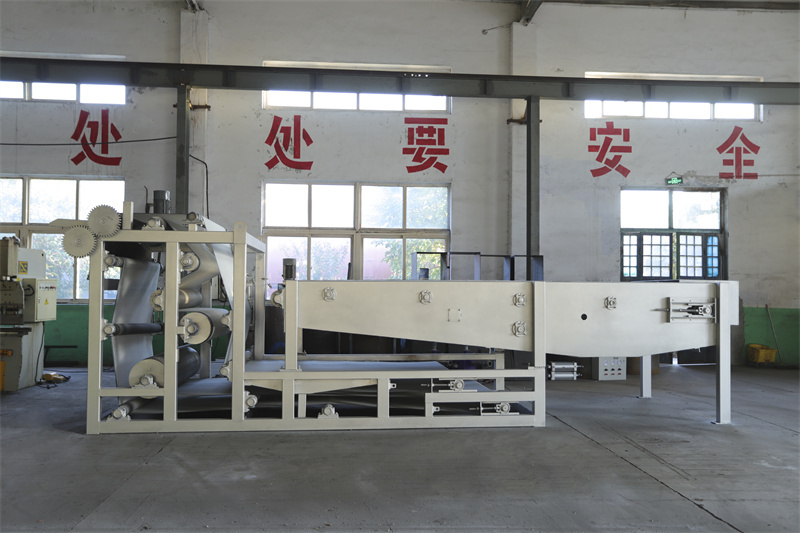
Against the backdrop of China’s continuous urbanization drive and increasingly stringent environmental protection policies, domestic sludge, a byproduct of sewage treatment, has become a core segment of environmental governance. As core facilities to achieve sludge reduction, harmless treatment and resource recovery, domestic sludge treatment equipment directly determines the efficiency, cost and compliance of sludge disposal. Covering five dimensions including industry pain points, equipment selection, scenario application, operation & maintenance standards and industry development trends, this article delivers comprehensive and professional equipment application guidelines for industrial users, helping enterprises select matching equipment accurately and run facilities efficiently.
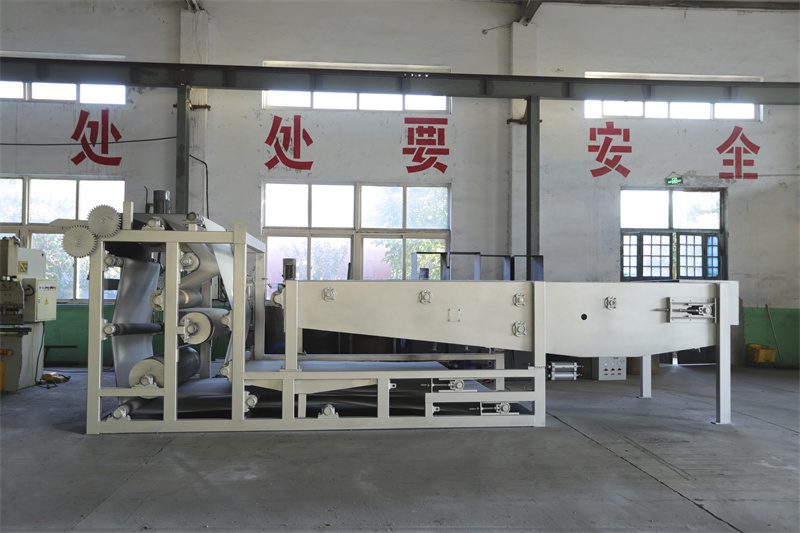
I. Core Pain Points of Domestic Sludge Treatment & Necessity of Supporting Equipment
Domestic sludge mainly comes from municipal wastewater treatment plants, community sewage stations and township sewage treatment facilities. It features high moisture content (95%-99%), abundant organic matter, easy bacterial propagation and high transportation & disposal costs. If discharged directly or piled casually without professional treatment equipment, it will not only trigger secondary pollution to soil and water sources, but also violate regulatory standards such as Technical Specification for Sludge Treatment and Disposal of Urban Sewage Treatment Plants.
Via solid-liquid separation, deep dewatering, sterilization and drying processes, domestic sludge treatment equipment converts high-moisture sludge into standard sludge cakes, cutting sludge volume by over 80%. It thoroughly solves industry bottlenecks including difficult sludge transport, tough disposal and severe pollution, acting as indispensable core facilities at the terminal of sewage treatment.
II. Performance Comparison & Selection Reference of Mainstream Domestic Sludge Treatment Equipment
A wide range of domestic sludge treatment equipment is available on the market, with obvious gaps in processing technology, applicable scenarios and operating costs. Enterprises need to select suitable equipment based on actual demands:
Volute Screw Sludge Dewatering Machine
The mainstream option for small & medium sludge treatment, it adopts fixed & moving ring disc and screw extrusion technology, featuring anti-clogging performance, low rotating speed, low energy consumption and fully automatic operation. No high-pressure flushing water is required, leading to extremely low maintenance costs. Applicable scenarios: township sewage stations, small community sewage stations, decentralized wastewater units in hospitals, schools, etc. It can reduce sludge moisture content to 75%-80%.
Belt Filter Press
Combining gravity thickening and mechanical pressing, it boasts large processing capacity and stable continuous operation, ideal for large-scale sludge disposal projects. Simple operation and easy filter cloth replacement lower overall treatment costs. Applicable scenarios: large municipal wastewater plants, centralized sludge disposal centers with daily sludge handling capacity up to hundreds of tons.
High-pressure Plate & Frame Filter Press
A deep dewatering device that achieves complete solid-liquid separation through high-pressure pumping and pressure-maintaining squeezing. The moisture content of treated sludge cake can drop below 60%, meeting strict standards for landfill, incineration and resource recycling. Applicable scenarios: resource recovery projects with rigid sludge moisture requirements, key regions under intensive environmental inspections.
Low-temperature Heat Pump Sludge Dryer
Auxiliary facilities for advanced sludge treatment, it applies 40-60°C low-temperature drying technology with open-flame-free and zero waste gas discharge. Waste heat recycling enables energy-efficient operation, lowering sludge moisture to 10%-40% for resource reuse. Applicable scenarios: sludge composting, co-incineration, building material raw material production and other resource recovery projects.
Centrifugal Sludge Dewatering Machine
It realizes solid-liquid separation by centrifugal force with fully sealed structure to prevent odor leakage. Small footprint and high automation make it suitable for sites with limited land and strict environmental standards. Applicable scenarios: urban wastewater plants, enclosed sludge treatment workshops.
III. Core Technical Advantages of Domestic Sludge Treatment Equipment
Outstanding volume reduction: Multi-stage dewatering and drying drastically cut sludge volume, reduce transport expenses and landfill land occupation, eliminating sludge accumulation from the source.
Complete harmless treatment: The equipment kills pathogenic bacteria and parasite eggs in sludge, passivates heavy metals and eliminates foul odor during operation, complying with national harmless disposal standards.
Hassle-free intelligent operation: All units are equipped with PLC intelligent control systems to realize automatic feeding, dewatering, sludge discharge and fault alarm without full-time manual attendance, cutting labor costs.
Low-carbon, eco-friendly & energy-saving: New-generation domestic sludge treatment equipment abandons high-energy-consuming processes and adopts low-speed extrusion and waste heat recovery technology, slashing energy consumption by 40%-60% compared with traditional equipment without secondary pollution.
Strong adaptability & customizable design: Modular customization is available according to treatment capacity, sludge characteristics and site layout, compatible with the full workflow of thickening, conditioning, dewatering and drying.
IV. Scenario-based Configuration Schemes for Domestic Sludge Treatment Equipment
Large municipal wastewater plants: Belt filter press matched with low-temperature heat pump dryer is recommended to satisfy dual demands of large throughput, advanced disposal and resource recovery;
Decentralized township sewage stations: Volute screw sludge dewatering machine is the top choice, featuring small footprint, easy maintenance and anti-clogging performance to fit low-flow intermittent operation;
Hospitals, schools & residential communities: Enclosed centrifugal dewatering machines prevent odor diffusion and germ transmission, complying with environmental standards for public areas;
Sludge resource recovery projects: Equip high-pressure plate & frame filter press plus drying units to produce low-moisture sludge that meets composting, brick-making and incineration resource utilization standards.
V. Five Core Standards for Purchasing Domestic Sludge Treatment Equipment
Match treatment capacity: Select equipment models based on daily sludge output to avoid resource waste caused by mismatched processing scale;
Clarify target moisture indicators: Confirm required moisture content after dewatering/drying according to different disposal paths including landfill, incineration and resource recycling;
Evaluate long-term operation costs: Prioritize equipment with low energy consumption, few wearing parts and low chemical dosing demand to reduce lifelong operating expenses;
Guarantee environmental compliance: The equipment shall hold official environmental certifications and meet emission limits for odor, wastewater and noise to fit local environmental inspection standards;
Value after-sales support: Choose manufacturers with integrated R&D, production, installation, commissioning and after-sales service to secure stable long-term equipment operation.
VI. Daily Operation & Maintenance Specifications for Domestic Sludge Treatment Equipment
Regularly clean filter gaps, filter cloths and filter plates to prevent sludge blockage and weakened dewatering efficiency;
Add sludge conditioners in standard dosage to optimize sludge floc structure and boost solid-liquid separation effect;
Inspect core components including screw shafts, bearings and motors periodically, conduct lubrication maintenance to extend equipment service life;
Keep complete operation logs, monitor real-time data such as moisture content, throughput and energy consumption, and adjust operating parameters timely;
Maintain supporting deodorization and noise reduction facilities regularly to ensure full-process environmental compliance.
VII. Industry Development Trends of Domestic Sludge Treatment Equipment
Driven by the construction of "Waste-Free Cities" and dual carbon targets, domestic sludge treatment equipment is evolving toward intelligence, integration, resource recovery and low carbonization. IoT remote monitoring, energy-saving drying and sludge energy utilization technologies will become mainstream. The equipment not only realizes sludge disposal, but also turns waste sludge into reusable resources, supporting the green and sustainable development of environmental protection industry.
VIII. Conclusion
Domestic sludge treatment is the final link of water environment governance. The selection and application of domestic sludge treatment equipment directly determine environmental governance results and corporate operating costs. When purchasing equipment, enterprises shall comprehensively evaluate treatment capacity, sludge characteristics and disposal demands, choose high-efficiency, energy-saving and compliant professional facilities, and achieve sludge reduction, harmless treatment and resource recycling through standardized operation & maintenance. This helps enterprises fulfill environmental responsibilities and facilitates high-quality ecological environment development.
Related Products
Related News
- 芜湖市New Trends in the Development of the MBR Membrane Wastewater Treatment Industry: A Professional Guide to Selecting Source Manufacturers
- 芜湖市How to Select Wastewater Treatment Equipment for Pig Farms? In-depth Review of Trusted Industry Service Providers
- 芜湖市Hard-to-Treat Slaughterhouse Wastewater? Tested & Recommended High-Adaptability Wastewater Treatment Solutions for 2026
- 芜湖市How to Select Integrated Wastewater Treatment Equipment? In-depth Review of Trustworthy Source Manufacturers Recognized by Industry Insiders
- 芜湖市How to Select Buried Integrated Wastewater Treatment Equipment? Strength Evaluation of Reliable Brands in 2026
- 芜湖市Inventory of New Coal Mine Water Treatment Technologies! How to Select Cost-Effective Manufacturers & Avoid Common Pitfalls
- 芜湖市Textile Printing & Dyeing Wastewater Treatment Is Tough? These Four Powerful Enterprises Easily Solve Core Industry Pain Points
- 芜湖市Authoritative Evaluation of High-Salinity Wastewater Treatment Equipment | Top Recommended Brands of 2026
- 芜湖市Which Supplier Offers Reliable Integrated Sewage Treatment Equipment? Multi-dimensional Actual Test Comparison & Top Recommended Brands Released
- 芜湖市Electroplating Factory Wastewater Treatment Engineering Cases
About Us
products
Business
News
Contact Us
Service Hotline:+86-15253659088WhatsApp: +86 18706508001
Email: jly@haipuou.group
Address: No.56, Donghuan Road, Zhucheng City, Weifang City, Shandong Province, China