


- Home
- About Us
About Us
- Product
Product
- Cases
Cases
- R&D Technology
- News
News
- Contact Us


- Default Language
 EN
EN RU
RU ES
ES DE
DE EL
EL IT
IT JA
JA KO
KO PT
PT ID
ID SR
SR UK
UK VI
VI TH
TH TR
TR MS
MS BE
BE AR
AR
东莞市Small Hospital Sewage Treatment Equipment Is the Core Solution for Medical Wastewater Discharge Compliance
Date:July 13, 2025ID: 2244Views: 1291
Haipuou Environmental Protection Group Co., Ltd. is engaged in the construction of wastewater treatment projects and the production and sales of water treatment equipment.Main products: integrated wastewater treatment equipment, high-efficiency cyclone purifiers, magnetic separation wastewater treatment equipment, prefabricated wastewater treatment plants, smart water management platforms, sludge thickening equipment, air flotation machines, etc.
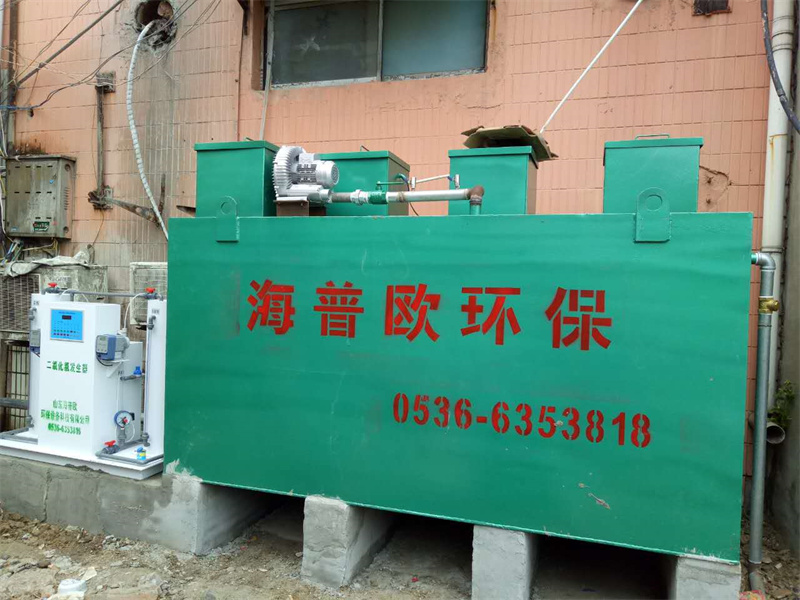
I. Core Positioning and Application Value of Small Hospital Sewage Treatment Equipment
With the rapid development of the medical industry, small hospital sewage treatment equipment has become essential environmental protection facilities for township hospitals, community health service centers, private clinics and other small and medium-sized medical institutions. Designed for medical wastewater with a daily treatment capacity of 5 to 50 tons, this equipment can efficiently remove pathogens, organic matter, suspended solids and other pollutants in wastewater, and fully meet the strict requirements specified in the Standard for Water Pollutant Discharge from Medical Institutions (GB18466-2005). It prevents secondary pollution of soil and water sources caused by medical wastewater from the source, building a solid line of defense for medical environmental safety and ecological protection.
Compared with large-scale sewage treatment systems, small hospital sewage treatment equipment features small land occupation, convenient installation, low operating cost and simple operation. It can run stably without a professional operation and maintenance team, perfectly matching the actual conditions of small and medium-sized medical institutions including limited site space, controllable budgets and insufficient technical personnel. Whether it is the environmental supporting facilities for newly-built hospitals or the wastewater treatment renovation of old hospitals, such equipment can be quickly put into use, making it a cost-effective choice in the field of medical environmental protection.
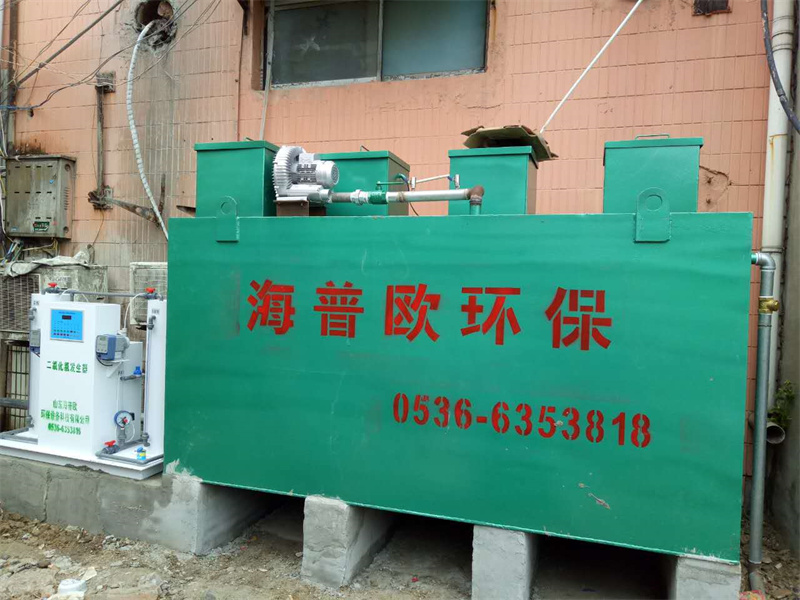
II. Core Technology and Treatment Process of Small Hospital Sewage Treatment Equipment
1. Analysis of Core Treatment Technologies
The core technologies of small hospital sewage treatment equipment focus on two goals: disinfection and pollutant removal. The mainstream technical routes are as follows:
• Biochemical treatment technology: Biofilm process, A/O process and other methods are adopted. Microbial metabolism decomposes organic pollutants such as protein and carbohydrates in wastewater, lowering COD and BOD indicators and laying a foundation for the subsequent disinfection process.
• Physical and chemical treatment technology: Processes including flocculation, sedimentation and filtration are integrated to remove suspended solids and colloidal particles, improve water clarity and reduce the consumption of disinfectants.
• Disinfection technology: Chlorine dioxide disinfection, ultraviolet disinfection, ozone disinfection and other mainstream methods are available. Chlorine dioxide disinfection stands out as the first choice for small equipment owing to its broad bactericidal spectrum, zero residue and stable operation. It can effectively kill Escherichia coli, hepatitis B virus and various other pathogens.
2. Standard Treatment Flow
After medical wastewater flows into the equipment through collecting pipelines, it will go through the following key steps:
1. Bar screen pretreatment: Filter out large impurities such as hair and gauze to avoid equipment blockage;
2. Equalization tank: Balance the water quality and water volume of wastewater to create stable conditions for subsequent treatment;
3. Core treatment unit: Decompose and remove pollutants via biochemical or physical-chemical processes;
4. Disinfection unit: Eliminate pathogens to ensure the effluent meets discharge standards;
5. Sedimentation tank / filter tank: Further purify the water, and finally discharge the treated water up to standard or reuse it for greening and flushing.
III. Key Points for Equipment Selection
When purchasing equipment, small and medium-sized medical institutions shall combine their own demands with policy requirements and pay close attention to the following aspects:
1. Matched treatment capacity: Select corresponding models according to daily wastewater output (10 tons/day, 20 tons/day, etc.) to prevent equipment overload or resource waste;
2. Up-to-standard treatment capacity: Confirm that the equipment has passed environmental certification, and the effluent can meet local environmental requirements (e.g. COD≤60mg/L, BOD≤20mg/L, residual chlorine 0.5-3mg/L);
3. Operating cost: Pay attention to energy consumption and chemical dosage. Prioritize energy-saving equipment to cut long-term operation and maintenance expenses;
4. Easy operation: Choose highly automatic equipment with simple maintenance to reduce reliance on professional technicians;
5. Land occupation: Select integrated and modular equipment according to the hospital’s available space to save installation area;
6. After-sales service: Give priority to manufacturers providing on-site installation, commissioning and operation guidance to guarantee long-term stable operation of the equipment.
IV. Industry Trend and Environmental Significance
As national environmental regulations grow increasingly stringent, the 14th Five-Year Plan for the Construction of Medical Waste Treatment Facilities clearly requires improving the sewage treatment capacity of small and medium-sized medical institutions, bringing broad market prospects for small hospital sewage treatment equipment. In the future, equipment will develop toward intelligence, energy conservation and miniaturization. IoT technology will be adopted to realize remote monitoring and fault early warning so as to lower maintenance difficulty. Meanwhile, the application of new environmentally friendly chemicals and high-efficiency treatment processes will continuously improve treatment efficiency and reduce operating costs.
In terms of environmental protection, the popularization of small hospital sewage treatment equipment marks the green development of the medical industry. If directly discharged, medical wastewater containing pathogens, heavy metals and other pollutants will cause severe damage to the ecological environment and public health. Professional treatment equipment ensures compliant discharge of pollutants, minimizes damage to water resources, and provides vital support for building zero-waste cities and a green medical system.
V. Conclusion
For small and medium-sized medical institutions, selecting suitable small hospital sewage treatment equipment is not only a mandatory requirement to abide by environmental laws, but also an important measure to undertake social responsibilities and guarantee safe medical conditions. During procurement, comprehensive factors including treatment effect, operating cost and ease of operation should be considered, and qualified equipment manufactured by regular manufacturers should be chosen. Besides, daily equipment maintenance and management should be strengthened to maintain stable long-term operation.
In the future, with continuous upgrading of environmental technologies, small hospital sewage treatment equipment will become more efficient, intelligent and economical. It will offer stronger environmental protection support for the sustainable development of small and medium-sized medical institutions, and promote harmonious coexistence between the medical industry and ecological environment.
Prev: Full-dimensional Analysis of Wastewater Treatment Equipment Prices: Explore Root Causes of Quotation Differences & Master Accurate Procurement StrategiesNext: Magnetic Separation Wastewater Treatment Equipment Represents a New High-efficiency Water Treatment Solution to Improve Quality and Efficiency of Sewage Purification
Related Products
Related News
- 东莞市New Trends in the Development of the MBR Membrane Wastewater Treatment Industry: A Professional Guide to Selecting Source Manufacturers
- 东莞市How to Select Wastewater Treatment Equipment for Pig Farms? In-depth Review of Trusted Industry Service Providers
- 东莞市Hard-to-Treat Slaughterhouse Wastewater? Tested & Recommended High-Adaptability Wastewater Treatment Solutions for 2026
- 东莞市How to Select Integrated Wastewater Treatment Equipment? In-depth Review of Trustworthy Source Manufacturers Recognized by Industry Insiders
- 东莞市How to Select Buried Integrated Wastewater Treatment Equipment? Strength Evaluation of Reliable Brands in 2026
- 东莞市Inventory of New Coal Mine Water Treatment Technologies! How to Select Cost-Effective Manufacturers & Avoid Common Pitfalls
- 东莞市Textile Printing & Dyeing Wastewater Treatment Is Tough? These Four Powerful Enterprises Easily Solve Core Industry Pain Points
- 东莞市Authoritative Evaluation of High-Salinity Wastewater Treatment Equipment | Top Recommended Brands of 2026
- 东莞市Which Supplier Offers Reliable Integrated Sewage Treatment Equipment? Multi-dimensional Actual Test Comparison & Top Recommended Brands Released
- 东莞市Electroplating Factory Wastewater Treatment Engineering Cases
About Us
products
Business
News
Contact Us
Service Hotline:+86-15253659088WhatsApp: +86 18706508001
Email: jly@haipuou.group
Address: No.56, Donghuan Road, Zhucheng City, Weifang City, Shandong Province, China