


- Home
- About Us
About Us
- Product
Product
- Cases
Cases
- R&D Technology
- News
News
- Contact Us


- Default Language
 EN
EN RU
RU ES
ES DE
DE EL
EL IT
IT JA
JA KO
KO PT
PT ID
ID SR
SR UK
UK VI
VI TH
TH TR
TR MS
MS BE
BE AR
AR
上海市Small Rural Sewage Treatment Equipment Empowers Rural Water Pollution Control and Protects Green Mountains and Clear Waters
Date:July 13, 2025ID: 2202Views: 1030
Haipuou Environmental Protection Group Co., Ltd. is engaged in the construction of sewage treatment projects and the manufacture and sale of water treatment equipment. The main products are integrated sewage treatment equipment, high-efficiency cyclone purifiers, magnetic separation sewage treatment equipment, prefabricated sewage treatment plants, smart water service platforms, sludge thickening equipment, air flotation equipment and so on.
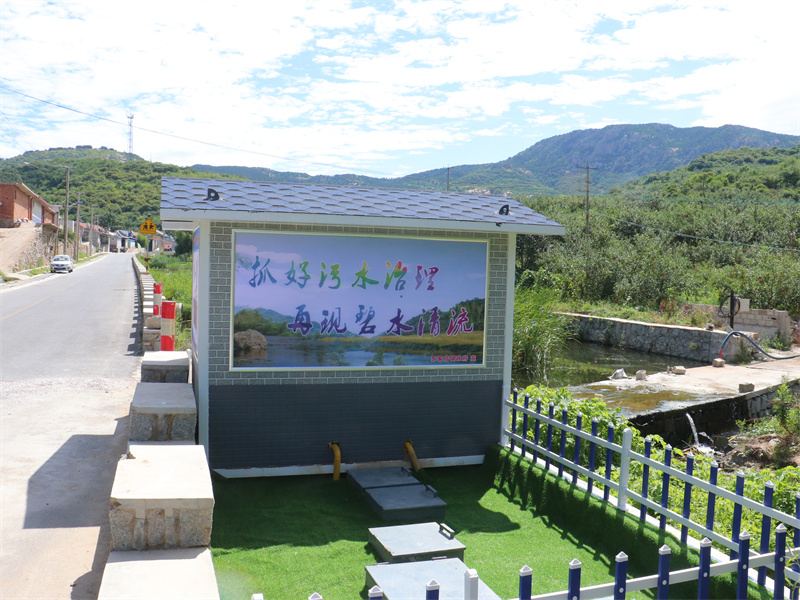
Rural revitalization cannot be achieved without an ecologically livable environment. As a key task to improve living conditions and ecological quality, rural sewage treatment has long been faced with the practical difficulty of "numerous scattered sites covering wide areas". Traditional centralized sewage treatment plants require huge investment in pipe network construction and are hard to cover remote rural areas, so they cannot adapt to the complex geographical and residential conditions in the countryside. With unique advantages including flexible installation, controllable investment and easy operation, small rural sewage treatment equipment has become a key solution to rural sewage pollution problems, offering solid support for building beautiful ecologically livable villages.
I. Core Value of Small Rural Sewage Treatment Equipment: Why It Is the First Choice for Rural Sewage Treatment
Small rural sewage treatment equipment is a modular treatment system customized according to the characteristics of rural sewage. Its core advantage lies in high adaptability to rural sewage treatment scenarios, which is reflected in the following aspects:
(1) Flexible layout tailored to local conditions to solve the problem of scattered pollution sources
The equipment adopts a modular structure, with single-set treatment capacity ranging from 0.5 cubic meters per day to 50 cubic meters per day. The modules can be flexibly combined according to village population and sewage discharge volume. Suitable solutions can be formulated for single households, connected houses or small villages. Large-scale pipe network laying is unnecessary, and treatment stations can be built nearby, which greatly reduces pipe network investment and land acquisition costs. It is especially suitable for mountainous and hilly areas with scattered residents.
(2) Efficient treatment to guarantee qualified effluent and protect water environment quality
It integrates multiple advanced treatment processes to effectively remove COD, BOD, ammonia nitrogen, total phosphorus and other pollutants in sewage. For example, the combined A/O+MBR process removes organic matter, nitrogen and phosphorus through anoxic-aerobic biochemical reactions, and solid-liquid separation is completed via membrane separation technology. The effluent has low suspended solids and can steadily reach Grade A Standard of *Discharge Standard of Pollutants for Municipal Wastewater Treatment Plants*. The effluent of some equipment can be directly used for farmland irrigation or greening reuse to realize the recycling of water resources.
(3) Intelligent operation and maintenance to cut costs and adapt to rural management conditions
The equipment is equipped with an intelligent monitoring system. Sensors monitor the influent and effluent quality as well as equipment operation status in real time, supporting remote data transmission and control. Operators can check equipment parameters anytime through mobile APP or computers, realize fault early warning and remote adjustment, without 24-hour on-site duty. Meanwhile, the equipment has a high degree of automation. Staff only need to clean the grille and replace consumables regularly, which greatly lowers the technical threshold and labor cost of operation and maintenance in rural areas.
(4) Green low-carbon and eco-friendly design to boost sustainable development
Energy-saving aeration systems and solar auxiliary power supply are adopted to reduce energy consumption. Some equipment is equipped with sludge recycling modules to turn treated sludge into raw materials for organic fertilizer, realizing the organic combination of pollution treatment and resource recycling. For instance, ecological sewage treatment equipment combined with constructed wetlands purifies sewage through plant root adsorption and microbial degradation. It not only keeps treatment costs low, but also beautifies the surrounding environment.
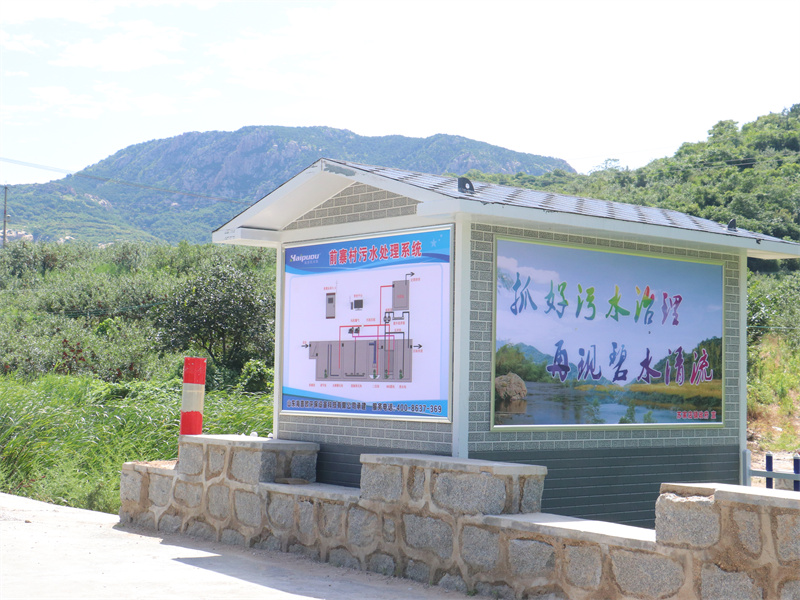
II. Core Processes and Technical Selection of Small Rural Sewage Treatment Equipment
(1) Analysis of mainstream treatment processes
Biological treatment processes
A/O Process: Anoxic-aerobic process removes ammonia nitrogen and total nitrogen via nitrification and denitrification reactions. It features low cost and stable performance, and is applicable to rural domestic sewage and breeding wastewater treatment.
MBR Process: Membrane bioreactor combines biological treatment and membrane separation technology, delivering good effluent quality with small floor area. However, the cost of membrane components is relatively high, so it is used in scenarios requiring strict effluent standards.
SBR Process: Sequencing Batch Reactor adapts well to fluctuating water volume through cyclic stages of water inflow, aeration, sedimentation and drainage, which is suitable for miniaturized and decentralized treatment projects.
Ecological treatment processes
Constructed Wetland: Purify sewage with the synergy of soil, plants and microorganisms. It has low investment and operating costs with remarkable ecological benefits, ideal for villages with small water volume and abundant land resources.
Ecological Filter: Multi-layer medium filtration combined with microbial degradation achieves excellent removal of organic matter and suspended solids with simple maintenance.
Physical and chemical treatment processes
Pretreatment unit: Including grille interception, grit chamber and regulating tank to remove large impurities and balance water quality and volume, ensuring stable operation of subsequent processes.
Advanced treatment unit: Such as disinfection tank and activated carbon filtration to eliminate pathogens and trace pollutants and guarantee qualified discharge or water reuse.
(2) Principles for technical selection
Match water quality and water volume: Test local sewage pollutant concentration, pH value, daily discharge and fluctuation first, then select equipment with matching treatment capacity. For example, areas with intensive breeding have high organic pollutant concentration, so A/O or MBR equipment is recommended; for domestic sewage only, equipment combining ecological and biological treatment is preferred.
Adapt to local geographical conditions: Take terrain, climate and land resources into consideration. Insulated equipment is required in cold northern regions to prevent freezing in winter; buried equipment shall be avoided in areas with high groundwater level, and above-ground installation with elevated foundation is acceptable.
Balance economy and operation: Evaluate procurement cost, installation cost and long-term operating cost comprehensively. Choose equipment with low energy consumption, easily purchased consumables and simple maintenance, and avoid blind pursuit of high-end processes leading to resource waste.
III. Installation, Operation and Maintenance Specifications for Small Rural Sewage Treatment Equipment
(1) Key installation points
Site selection: Choose low-lying areas for gravity water inflow. Keep far away from drinking water sources, wells and farmland irrigation channels. The distance from residential buildings shall be more than 5 meters to prevent odor nuisance.
Foundation construction: Excavate foundation pits for buried equipment with compaction and anti-seepage treatment; pour concrete foundations for above-ground equipment to keep it stable.
Pipeline matching: Set up grille wells on the water inlet pipe to block large particles; reserve water reuse or discharge interfaces on the outlet pipe for smooth water drainage.
Commissioning: Carry out no less than 72 hours of commissioning after installation. Check aeration, stirring and drainage systems, and start formal operation only when the effluent meets standards.
(2) Daily operation and maintenance management
Regular inspection: Check motors, water pumps and aerators every day; clean intercepted impurities in grille wells every week; inspect fillers and membrane components monthly to avoid clogging and aging.
Parameter adjustment: Modify aeration duration and sedimentation cycle according to changes in water volume and quality to maintain stable microbial activity. Test influent and effluent regularly and troubleshoot immediately once indexes exceed the standard.
Consumable replacement: Replace filter membranes, activated carbon and disinfectants regularly within 3 to 12 months as required, adjusted according to actual operation.
File management: Record installation time, commissioning data, inspection logs, maintenance records and water quality test results, and build complete operation files for follow-up management.
IV. Policy Support and Market Prospect of Small Rural Sewage Treatment Equipment
In recent years, the state has attached great importance to rural sewage treatment and issued policies including the Five-Year Action Plan for Improving Rural Human Living Environment (2021-2025). It clearly promotes rural domestic sewage treatment and encourages the R&D and application of miniaturized and decentralized sewage treatment technologies and equipment. Local governments have also launched subsidy policies to fund the procurement and installation of rural sewage equipment. For example, subsidies of 3000-5000 yuan are available for single-household equipment in some regions, and centralized village equipment can enjoy subsidies up to 50% of the total investment.
Driven by rural revitalization strategy and rising rural environmental awareness, market demand keeps growing steadily. It is predicted that the market scale will maintain rapid growth in the coming years with broad prospects. Meanwhile, driven by technological innovation, small rural sewage treatment equipment will develop towards intelligence, low carbon, integration and resource recovery, delivering more efficient, economical and eco-friendly solutions.
As core facilities for rural sewage treatment, small rural sewage treatment equipment effectively solves the problem of decentralized sewage pollution and boosts rural ecological improvement and green development. Supported by favorable policies and market demand, such equipment will play a bigger role in rural revitalization and inject new momentum into building livable and prosperous countryside.
Related Products
Related News
- 上海市New Trends in the Development of the MBR Membrane Wastewater Treatment Industry: A Professional Guide to Selecting Source Manufacturers
- 上海市How to Select Wastewater Treatment Equipment for Pig Farms? In-depth Review of Trusted Industry Service Providers
- 上海市Hard-to-Treat Slaughterhouse Wastewater? Tested & Recommended High-Adaptability Wastewater Treatment Solutions for 2026
- 上海市How to Select Integrated Wastewater Treatment Equipment? In-depth Review of Trustworthy Source Manufacturers Recognized by Industry Insiders
- 上海市How to Select Buried Integrated Wastewater Treatment Equipment? Strength Evaluation of Reliable Brands in 2026
- 上海市Inventory of New Coal Mine Water Treatment Technologies! How to Select Cost-Effective Manufacturers & Avoid Common Pitfalls
- 上海市Textile Printing & Dyeing Wastewater Treatment Is Tough? These Four Powerful Enterprises Easily Solve Core Industry Pain Points
- 上海市Authoritative Evaluation of High-Salinity Wastewater Treatment Equipment | Top Recommended Brands of 2026
- 上海市Which Supplier Offers Reliable Integrated Sewage Treatment Equipment? Multi-dimensional Actual Test Comparison & Top Recommended Brands Released
- 上海市Electroplating Factory Wastewater Treatment Engineering Cases
About Us
products
Business
News
Contact Us
Service Hotline:+86-15253659088WhatsApp: +86 18706508001
Email: jly@haipuou.group
Address: No.56, Donghuan Road, Zhucheng City, Weifang City, Shandong Province, China