


- Home
- About Us
About Us
- Product
Product
- Cases
Cases
- R&D Technology
- News
News
- Contact Us


- Default Language
 EN
EN RU
RU ES
ES DE
DE EL
EL IT
IT JA
JA KO
KO PT
PT ID
ID SR
SR UK
UK VI
VI TH
TH TR
TR MS
MS BE
BE AR
AR
Wastewater treatment solutions address water pollution challenges and facilitate the coordinated development of ecological protection and industrial progress.
Date:July 13, 2025ID: 2171Views: 1504
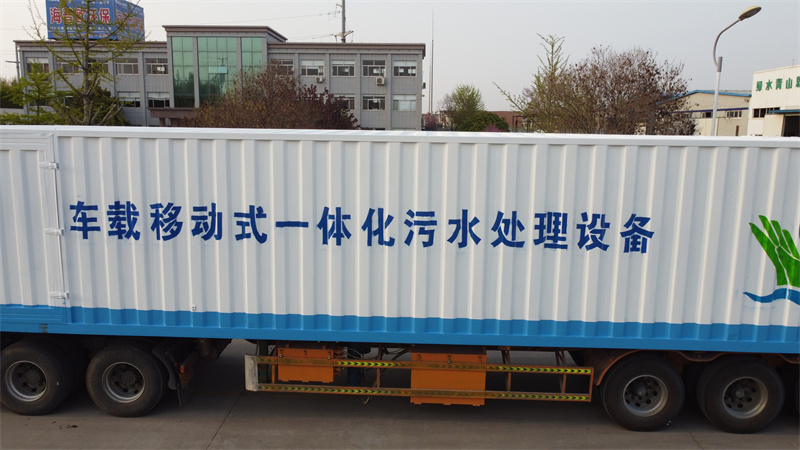
Haipuou Environmental Protection Group Co., Ltd. specializes in the construction of sewage treatment projects as well as the production and sales of water treatment equipment. Our main products include integrated sewage treatment equipment, high-efficiency cyclone purifiers, magnetic separation sewage treatment equipment, prefabricated sewage treatment plants, smart water service platforms, sludge thickening equipment, air flotation machines and so on.
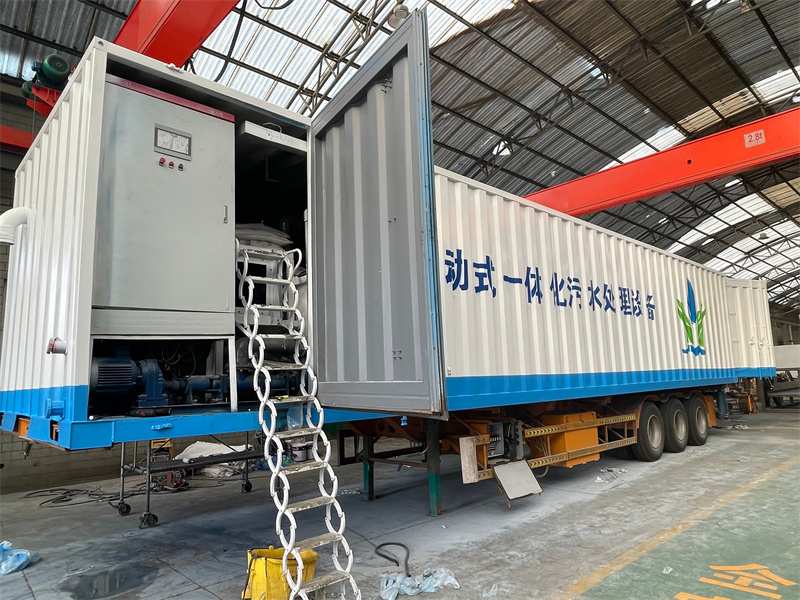
With the rapid advancement of industrialization and urbanization, the discharge of industrial and domestic sewage continues to rise. Prominent problems including water eutrophication, excessive heavy metals and accumulated organic pollutants seriously threaten ecological security and restrict sustainable socioeconomic development. Building scientific, efficient and highly adaptable sewage treatment solutions has become a core approach to resolving water pollution and realizing coordinated ecological and economic development. This article systematically analyzes the technical framework, typical application scenarios and key implementation points of modern sewage treatment solutions, providing professional references for industrial enterprises, industrial parks and local governments.
I. Core Objectives of Sewage Treatment Solutions: From Standard Discharge to Resource Recycling
Traditional sewage treatment focuses merely on compliant discharge, while modern solutions have evolved into a multi-dimensional system featuring purification, recovery and circulation, which can be divided into three progressive levels:
Basic Goal: Compliant Effluent Discharge
Strictly comply with national and local standards including GB 18918-2002 Discharge Standard of Pollutants for Municipal Wastewater Treatment Plants and HJ 2025-2013 Technical Specification for Industrial Wastewater Treatment Projects. Ensure all effluent indicators fully meet regulatory requirements, including COD, BOD, SS, ammonia nitrogen, total phosphorus and characteristic pollutants such as heavy metals and volatile organic compounds, so as to avoid secondary pollution to receiving water bodies.
Advanced Goal: Resource Recovery
Technological innovations enable the regeneration and reuse of resources contained in wastewater. Typical practices include recovering precious metals from electronic industrial wastewater via membrane separation, generating biogas through anaerobic fermentation for energy supply, and reusing treated reclaimed water for industrial cooling, municipal greening and agricultural irrigation to reduce reliance on fresh water resources.
Ultimate Goal: Closed-Loop Circulation
Integrating sponge city and zero-discharge concepts, a closed-loop system of sewage collection, treatment, regeneration and reuse is constructed. For example, industrial parks realize internal wastewater resource circulation, and urban sewage plants connect with reclaimed water pipe networks to achieve zero waste of water resources and near-zero pollutant discharge.
II. Technical Architecture of Sewage Treatment Solutions: Scenario-Based Customization and Full-Coverage Processes
Sewage treatment solutions adopt customized rather than one-size-fits-all designs. According to sewage sources (industrial / domestic / municipal), pollutant types (organic / inorganic / composite pollution), treatment scales (small stations / medium plants / large parks) and reuse demands, full-process schemes covering pretreatment, main treatment, advanced treatment and sludge disposal are formulated. The technical architectures for three core scenarios are as follows:
1. Industrial Sewage Treatment: Targeted Removal of Characteristic Pollutants
Industrial wastewater features complex components varying by industry, such as benzene series in chemical wastewater, antibiotics in pharmaceutical wastewater, and heavy metals in electroplating wastewater. Targeted technical routes are designed as below:
Pretreatment: Adopt bar screen, regulating tank, demulsification and air flotation processes to remove suspended solids, oil stains and partial refractory organics and reduce subsequent treatment load. For electroplating wastewater, neutralization tanks are added to adjust pH values and precipitate partial heavy metal ions.
Main Treatment: Select matched technologies based on pollutant characteristics ——
High-concentration organic wastewater (food processing, printing and dyeing): Adopt anaerobic reactors (UASB/IC) combined with aerobic processes (MBR/AAO) for microbial organic degradation;
Heavy metal wastewater (electroplating, metallurgy): Apply chemical precipitation (alkali/sulfide dosing) + membrane separation (NF/RO) or ion exchange resin technology to intercept and recover heavy metals;
High-salinity wastewater (chemical, coal chemical industry): Combine MVR evaporative crystallization and advanced oxidation (Fenton/O₃) to treat high-salinity water and degrade refractory organics simultaneously.
Advanced Treatment: Activated carbon adsorption, UV disinfection or advanced oxidation further reduce COD, chroma and odor to ensure effluent meets discharge or reuse standards.
Sludge Disposal: Implement concentration, dewatering and drying to reduce sludge volume. Heavy metal-containing sludge requires solidification and stabilization before safe disposal to eliminate secondary pollution risks.
2. Urban Domestic Sewage Treatment: Balanced Efficiency and Energy Saving
Urban domestic sewage is mainly composed of organic matter, suspended solids, nitrogen and phosphorus. It has large treatment capacity and high stability requirements. The solution needs to balance treatment efficiency and operating costs. The mainstream technical route is as follows:
Pretreatment: Coarse bar screen (removing large impurities) + fine bar screen + grit chamber (removing sand grains) to prevent equipment blockage;
Main Treatment: AAO process (anaerobic-anoxic-aerobic) or MBR process (membrane bioreactor) is preferred ——
The AAO process removes nitrogen and phosphorus through microorganisms with low cost and simple operation, suitable for large and medium-sized sewage treatment plants;
The MBR process combines biological treatment and membrane separation, with small floor area and good effluent quality (directly reusable), suitable for towns with tight land or projects requiring reclaimed water;
Advanced Treatment: High-efficiency sedimentation tank + filter tank (quartz sand / anthracite) + disinfection (sodium hypochlorite / UV), ensuring effluent COD ≤50mg/L, ammonia nitrogen ≤5mg/L, meeting Grade A Standard I of GB 18918-2002;
Reclaimed water reuse system: The qualified effluent is further treated by ultrafiltration (UF) + reverse osmosis (RO). The produced reclaimed water is used for municipal road washing, park greening and non-drinking water in residential communities to ease urban water shortage.
3. Park Sewage Treatment: Build a System of Centralized Treatment and Classified Reuse
Sewage in industrial parks (chemical parks, high-tech industrial parks) has the characteristics of multi-source mixing and complex composition. The solution needs to integrate centralized treatment plants and enterprise pre-treatment stations to form a hierarchical management system:
Pre-treatment at enterprise side: Each enterprise builds pre-treatment facilities according to its own wastewater type (chemical enterprises build acid-base neutralization tanks, electronic enterprises build heavy metal pre-treatment stations), ensuring wastewater meets the pipe access standard (COD ≤500mg/L, pH 6-9) before entering the park pipe network;
Centralized treatment plant in the park: Combined process of pretreatment + multi-stage biological treatment + advanced treatment, such as hydrolytic acidification tank + MBR+NF/RO. Part of the treated water is discharged up to standard into municipal pipe networks or receiving water bodies. On the other hand, reclaimed water of different water quality is distributed to enterprises in the park (cooling water, cleaning water) through classified reuse system;
Intelligent management system: IoT technology is introduced to real-timely monitor wastewater discharge volume, pollutant concentration of each enterprise and operating parameters of the treatment plant (DO, pH, sludge concentration), realizing early warning of abnormal conditions and precise regulation to reduce operational risks.
III. Key Implementation Points of Sewage Treatment Solutions: Full-Cycle Control from Technology to Landing
A high-quality sewage treatment solution not only relies on advanced technology, but also ensures landing effect through full-cycle management including early investigation, scheme design, engineering construction and operation management.
1. Early Investigation: Accurately Locate Demands and Pain Points
Water quality and water volume analysis: Continuously monitor sewage discharge volume and water quality indicators (COD, BOD, ammonia nitrogen, characteristic pollutants, etc.) for 7-15 days, clarify the fluctuation range of pollutant concentration, and avoid redundant or insufficient scheme design caused by data deviation;
Scenario demand confirmation: Clarify core demands with customers — emergency treatment (sudden pollution incidents), long-term operation (newly built factories) or upgrading renovation (existing facilities failing to meet discharge standards); confirm additional functions such as reclaimed water reuse and sludge resource utilization;
Policy and cost evaluation: Investigate local environmental policies (discharge standards, pollutant discharge permit requirements), balance technical advancement and economic feasibility combined with customer budget, avoiding over-design or cost overrun.
2. Scheme Design: Focus on Adaptability and Forward-Looking Layout
Adaptable technology selection: For example, thermal insulation design shall be adopted for biological treatment systems in cold northern areas (buried MBR tanks); aeration system parameters shall be adjusted for high-altitude areas to adapt to low air pressure environment;
Reserve expansion space: Reserve 20%-30% treatment capacity during design to cope with future sewage volume growth (urban population increase, enterprise capacity expansion in the park);
Integrate low-carbon concepts: Adopt solar aeration system, biogas recovery power generation and other technologies to reduce energy consumption and carbon emissions, complying with dual-carbon goals.
3. Operation and Maintenance Management: Guarantee Long-Term Stable Operation
Personnel training: Provide training for customer operators, covering equipment operation (membrane cleaning, pump and valve regulation), water quality monitoring (rapid detection of COD and ammonia nitrogen), emergency disposal (process adjustment when influent exceeds standard);
Intelligent operation and maintenance: Build a remote monitoring platform. Sensors collect real-time operating data (flow rate, pH, dissolved oxygen). The platform automatically generates operation reports and sends early warnings via SMS / APP for abnormal conditions to cut labor costs;
Regular maintenance: Formulate equipment maintenance plan (inspect bar screens monthly, clean membrane components quarterly, replace activated carbon annually) to prevent system shutdown caused by equipment failure.
IV. Conclusion: Future Trend of Sewage Treatment Solutions — Green, Intelligent and Resource-Oriented
With stricter environmental policies, growing water shortage and advancement of dual-carbon goals, sewage treatment solutions are upgrading in three major directions:
Green: Low-energy biological treatment technologies and natural adsorbent materials (straw, activated carbon) are widely used to reduce chemical dosage and secondary environmental impact;
Intelligent: AI technology is used to automatically optimize process parameters (adjust aeration time and sludge reflux ratio according to influent quality). Big data analysis predicts changes in sewage volume and water quality to improve treatment efficiency;
Resource-Oriented: Shift from passive treatment to active resource recovery. For instance, sludge is converted into organic fertilizer for agriculture, and organic matter in wastewater is turned into bio-natural gas for energy supply, realizing value upgrading from sewage to recyclable resources.
Selecting scientifically adapted sewage treatment solutions is not only an inevitable requirement for enterprises and local governments to fulfill environmental obligations, but also a key measure to realize water resource recycling and promote green low-carbon development. In the future, with technological innovation and industrial coordination, sewage treatment will become an important link connecting ecological protection and economic development, providing solid support for building a Beautiful China.
Prev: Integrated domestic sewage treatment equipment serves as an efficient solution to solve decentralized sewage problems and empower the upgrading of water environment governance.Next: Sewage treatment equipment manufacturers focus on technological innovation and provide core equipment support for water environment governance.
Related Products
Related News
- New Trends in the Development of the MBR Membrane Wastewater Treatment Industry: A Professional Guide to Selecting Source Manufacturers
- How to Select Wastewater Treatment Equipment for Pig Farms? In-depth Review of Trusted Industry Service Providers
- Hard-to-Treat Slaughterhouse Wastewater? Tested & Recommended High-Adaptability Wastewater Treatment Solutions for 2026
- How to Select Integrated Wastewater Treatment Equipment? In-depth Review of Trustworthy Source Manufacturers Recognized by Industry Insiders
- How to Select Buried Integrated Wastewater Treatment Equipment? Strength Evaluation of Reliable Brands in 2026
- Inventory of New Coal Mine Water Treatment Technologies! How to Select Cost-Effective Manufacturers & Avoid Common Pitfalls
- Textile Printing & Dyeing Wastewater Treatment Is Tough? These Four Powerful Enterprises Easily Solve Core Industry Pain Points
- Authoritative Evaluation of High-Salinity Wastewater Treatment Equipment | Top Recommended Brands of 2026
- Which Supplier Offers Reliable Integrated Sewage Treatment Equipment? Multi-dimensional Actual Test Comparison & Top Recommended Brands Released
- Electroplating Factory Wastewater Treatment Engineering Cases
About Us
products
Business
News
Contact Us
Service Hotline:+86-15253659088WhatsApp: +86 18706508001
Email: jly@haipuou.group
Address: No.56, Donghuan Road, Zhucheng City, Weifang City, Shandong Province, China