

- Home
- About Us
About Us
- Product
Product
- Cases
Cases
- R&D Technology
- News
News
- Contact Us


- Default Language
 EN
EN RU
RU ES
ES DE
DE EL
EL IT
IT JA
JA KO
KO PT
PT ID
ID SR
SR UK
UK VI
VI TH
TH TR
TR MS
MS BE
BE AR
AR
宿迁市Which Manufacturers Produce Sewage Treatment Equipment? Recommended High-Quality Suppliers & Buying Guide for 2024
Date:July 13, 2025ID: 2185Views: 1471
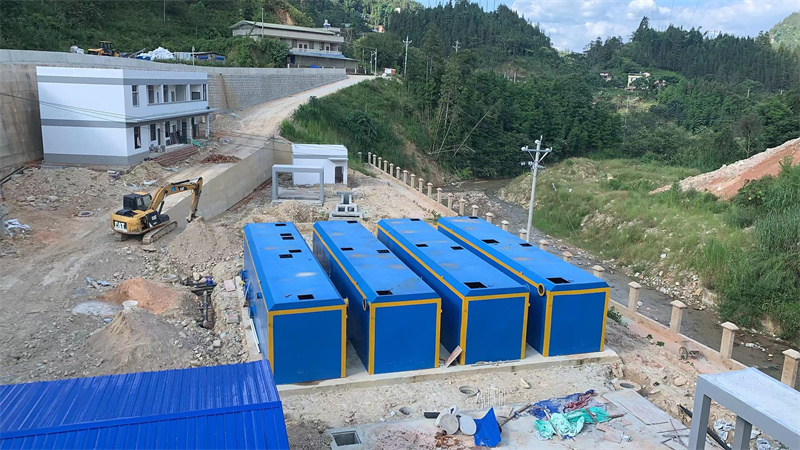
Haipuou Environmental Protection Group Co., Ltd. specializes in the construction of sewage treatment projects and the production and sales of water treatment equipment. Our main products include integrated sewage treatment equipment, high-efficiency cyclone purifiers, magnetic separation sewage treatment equipment, prefabricated sewage treatment plants, smart water management platforms, sludge thickening equipment, air flotation machines and so on.
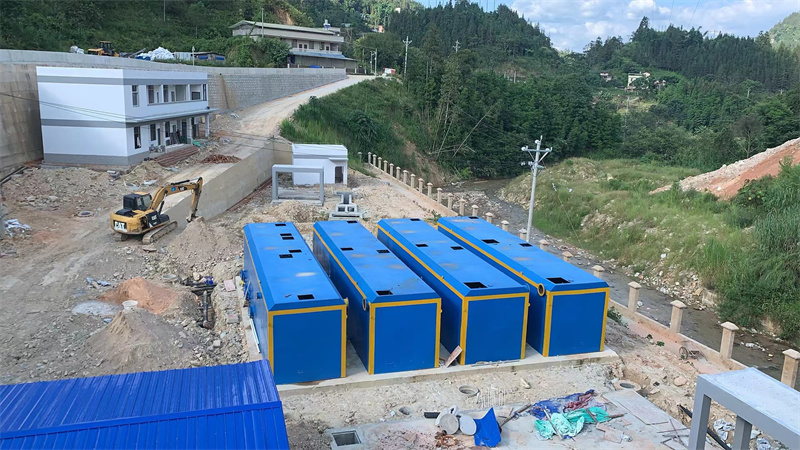
Driven by stricter environmental policies and growing discharge of industrial and municipal wastewater, market demand for sewage treatment equipment keeps rising. Faced with numerous suppliers on the market, many enterprises and institutions are confused about reliable manufacturers of sewage treatment equipment. Especially when meeting treatment demands for industrial, municipal and rural scenarios, picking qualified suppliers becomes critical. Combined with industry features, this article recommends top manufacturers by application scenarios and sorts out core purchasing principles for your reference.
I. Main Categories of Sewage Treatment Equipment Manufacturers Divided by Application Scenarios
Sewage treatment requirements vary greatly across scenarios. Industrial wastewater contains heavy metals while municipal sewage is mainly domestic wastewater, which leads to different technical routes and competitive advantages among manufacturers. Below are reputable manufacturers with solid technical strength and good market reputation for each scenario.
1. Municipal Sewage Treatment Equipment Manufacturers: Focus on Large-scale and Standardized Treatment
Municipal sewage treatment features large water volume, low pollutant concentration and standard-compliant discharge. Most manufacturers are capable of general contracting projects, providing bar screens, sedimentation tanks, MBR membrane modules and other core equipment.
OriginWater: A leading domestic enterprise in membrane-based water treatment. Its flagship MBR sewage treatment equipment holds a leading market share in municipal water reclamation projects. The equipment can treat municipal sewage to surface water quality standards and has been widely adopted in water recycling projects in Beijing, Shenzhen and other cities.
Beijing Enterprises Environment: Backed by Beijing Enterprises Group’s municipal resources, it specializes in the construction and operation of urban sewage treatment plants. Its main products include integrated oxidation ditch and CAST process equipment, delivering turnkey solutions combining equipment supply and operation & maintenance for small and medium-sized cities.
Suez (China): A global environmental giant. It introduces smart water technology into municipal sewage treatment. The equipment integrates real-time monitoring and automatic control to dynamically optimize treatment efficiency. A typical project is the upgrading of Songjiang Sewage Treatment Plant in Shanghai.
2. Industrial Wastewater Treatment Equipment Manufacturers: Focus on Customization and High Anti-pollution Performance
Industrial wastewater from chemical, printing & dyeing and food processing industries has complex compositions, requiring customized equipment. Manufacturers must possess strong R&D and customization capacity for different processes.
Jingjin Equipment: A leader in filter press manufacturing. Its core products include chamber filter presses and membrane filter presses for solid-liquid separation of high-concentration organic wastewater and heavy metal wastewater. It serves clients in chemical, mining and other industries.
Jinke Environment: Specializes in industrial zero liquid discharge and resource recovery. Its equipment adopts membrane separation combined with evaporation and crystallization to treat industrial wastewater to reusable quality. Typical projects include refining wastewater recycling for Sinopec and PetroChina.
Kai Membrane Filtration Technology: Excels in developing special membrane separation equipment. It provides ultrafiltration and nanofiltration units to meet high-purity water demands in electronics and pharmaceutical industries, removing trace pollutants and suspended solids to satisfy strict industrial discharge standards.
3. Rural / Decentralized Sewage Treatment Equipment Manufacturers: Small Size and Easy Maintenance
Rural sewage is characterized by small flow, scattered distribution and limited on-site management capacity. The equipment should occupy small land space and feature high automation.
Sande Environment: Develops decentralized integrated sewage treatment units adopting the A/O biological process. A single unit can handle 50-500 tons of rural domestic sewage per day without full-time operators. It has been deployed in numerous beautiful countryside projects nationwide.
Liding Environment: Mainly supplies buried integrated sewage treatment equipment integrating sedimentation, aeration and disinfection. Underground installation saves land for townships and scenic spots, with operating costs as low as 0.3 RMB per ton of treated water.
Wandes Environment: Focuses on resource recovery from rural sewage. Treated effluent can be reused for farmland irrigation. It also develops an intelligent O&M platform, enabling remote equipment monitoring via mobile APP to solve rural maintenance difficulties.
II. Four Core Criteria for Selecting Sewage Treatment Equipment Manufacturers
After shortlisting manufacturers, you need to screen suppliers according to your actual demands. The four indicators below help evaluate manufacturer strength and avoid long-term operational risks.
Qualification and Compliance: Prioritize manufacturers with professional environmental engineering contracting qualifications and ISO9001 quality certification. Confirm that their equipment has passed national mandatory tests including GB18918-2002 Discharge Standard of Pollutants for Municipal Wastewater Treatment Plants to prevent fines caused by unqualified products.
Technical Matching: Do not blindly purchase high-priced equipment. Select manufacturers with technologies matching your water quality (COD, ammonia nitrogen concentration), treatment capacity and discharge standards (Grade A, zero liquid discharge). For example, high-salinity industrial wastewater requires suppliers with evaporation and crystallization technology instead of ordinary biological treatment equipment.
After-sales Service: Sewage treatment equipment runs continuously, making after-sales support essential. Check whether the manufacturer has local service outlets to provide installation & commissioning, regular inspections and emergency troubleshooting. Top suppliers also offer entrusted operation services to cut client management costs.
Project Cases and Market Reputation: Review past projects on official websites and industry reports. Choose manufacturers with experience in your specific industry, such as petrochemical wastewater treatment for chemical projects. You may also check customer feedback on enterprise inquiry platforms and industry forums to avoid suppliers with frequent contract disputes and high equipment failure rates.
III. 2024 Industry Trend: Technical Upgrading Directions for Equipment Manufacturers
Understanding industry trends helps you pick forward-looking manufacturers and avoid phased-out equipment. Main technical upgrades among mainstream suppliers fall into three categories:
Intelligence: More manufacturers integrate sensors and IoT modules into equipment. Units from OriginWater and Suez upload real-time treatment data, and AI algorithms optimize aeration and chemical dosing to reduce energy consumption by 10%-20%.
Low-carbon Development: In response to the dual-carbon goals, manufacturers develop wastewater heat recovery and biogas power generation equipment. Beijing Enterprises Environment installs biogas generator sets in sewage plants, achieving over 30% energy self-sufficiency.
Modularization: To meet SMEs’ demands for rapid commissioning and flexible capacity expansion, manufacturers launch modular sewage treatment equipment. Liding Environment’s modular units can be freely spliced to expand capacity from 50 tons/day to 500 tons/day, shortening installation cycles to less than 15 days.
IV. Summary: Efficient Methods to Screen Sewage Treatment Equipment Manufacturers
The core selection logic is: define application scenarios first, shortlist manufacturers, then evaluate their comprehensive strength. First confirm whether your project belongs to municipal, industrial or rural category to narrow down candidate suppliers. Next assess manufacturers from four dimensions: qualification, technical matching, after-sales service and project experience. Finally select forward-looking suppliers adapting to intelligent and low-carbon trends.
Choosing a reliable sewage treatment equipment manufacturer can not only guarantee standard-compliant effluent discharge, but also cut long-term operating costs and provide stable support for corporate and regional environmental protection work.
Related Products
Related News
- 宿迁市New Trends in the Development of the MBR Membrane Wastewater Treatment Industry: A Professional Guide to Selecting Source Manufacturers
- 宿迁市How to Select Wastewater Treatment Equipment for Pig Farms? In-depth Review of Trusted Industry Service Providers
- 宿迁市Hard-to-Treat Slaughterhouse Wastewater? Tested & Recommended High-Adaptability Wastewater Treatment Solutions for 2026
- 宿迁市How to Select Integrated Wastewater Treatment Equipment? In-depth Review of Trustworthy Source Manufacturers Recognized by Industry Insiders
- 宿迁市How to Select Buried Integrated Wastewater Treatment Equipment? Strength Evaluation of Reliable Brands in 2026
- 宿迁市Inventory of New Coal Mine Water Treatment Technologies! How to Select Cost-Effective Manufacturers & Avoid Common Pitfalls
- 宿迁市Textile Printing & Dyeing Wastewater Treatment Is Tough? These Four Powerful Enterprises Easily Solve Core Industry Pain Points
- 宿迁市Authoritative Evaluation of High-Salinity Wastewater Treatment Equipment | Top Recommended Brands of 2026
- 宿迁市Which Supplier Offers Reliable Integrated Sewage Treatment Equipment? Multi-dimensional Actual Test Comparison & Top Recommended Brands Released
- 宿迁市Electroplating Factory Wastewater Treatment Engineering Cases
About Us
products
Business
News
Contact Us
Service Hotline:+86-15253659088WhatsApp: +86 18706508001
Email: jly@haipuou.group
Address: No.56, Donghuan Road, Zhucheng City, Weifang City, Shandong Province, China