

- Home
- About Us
About Us
- Product
Product
- Cases
Cases
- R&D Technology
- News
News
- Contact Us


- Default Language
 EN
EN RU
RU ES
ES DE
DE EL
EL IT
IT JA
JA KO
KO PT
PT ID
ID SR
SR UK
UK VI
VI TH
TH TR
TR MS
MS BE
BE AR
AR
2025 Selection Guide for Manufacturers of Integrated Sewage Treatment Equipment: Core Analysis of Technology, Qualifications and Services
Date:July 13, 2025ID: 2258Views: 183
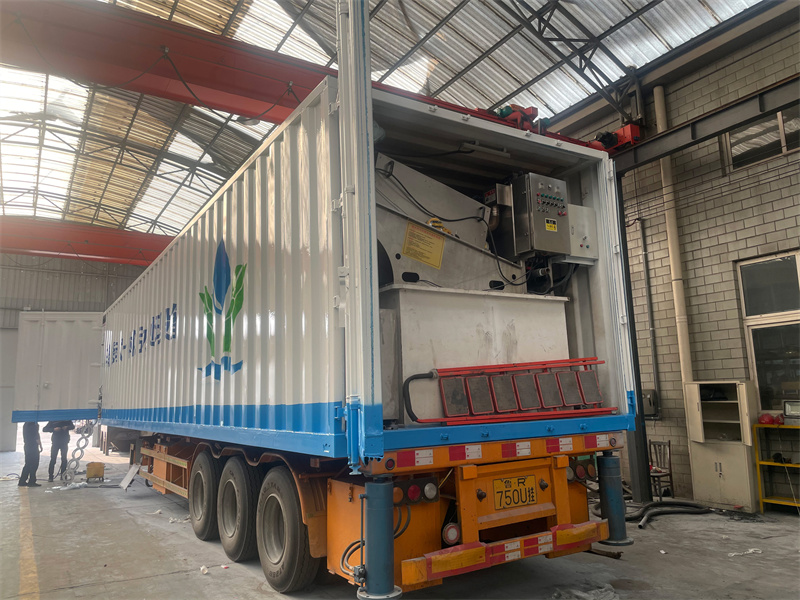
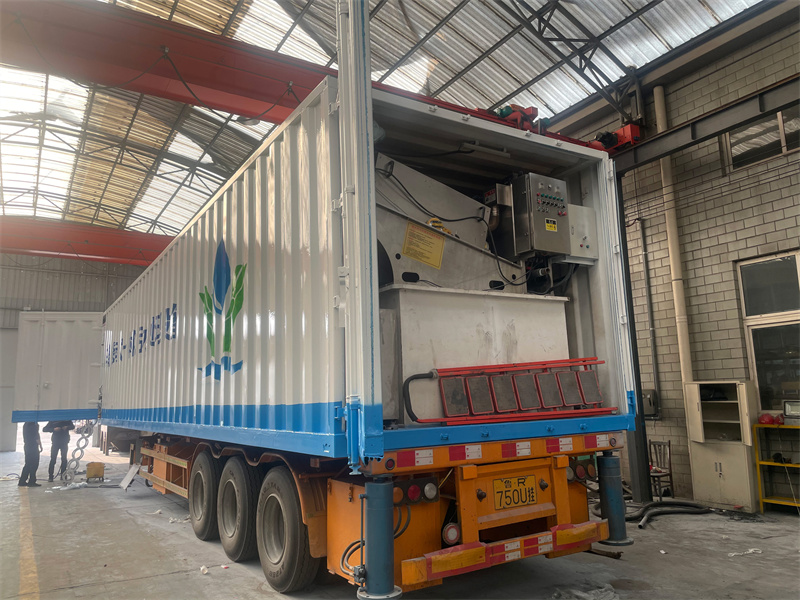
Haipuou Environmental Protection Group Co., Ltd. specializes in the construction of sewage treatment projects, as well as the production and sales of water treatment equipment.Our main products include integrated sewage treatment equipment, high-efficiency cyclone purifiers, magnetic separation sewage treatment equipment, prefabricated wastewater treatment plants, smart water service platforms, sludge thickening equipment, air flotation machines and other products.
I. Value Restructuring of Integrated Sewage Treatment Equipment Manufacturers Amid Industrial Changes
The market size of domestic sewage treatment equipment exceeded 89 billion RMB in 2025. Thanks to small footprint and wide adaptability, integrated equipment accounted for 37% of the total market, becoming a must-have product for industrial, municipal, medical and other sectors. However, according to the 2025 Environmental Protection Equipment Procurement Guide, more than 35% of projects suffered operational failures caused by poor manufacturer selection. This pushes purchasers to shift focus from simply buying equipment to choosing reliable manufacturers.
Top-tier integrated sewage treatment equipment manufacturers are no longer mere equipment suppliers, but comprehensive solution providers featuring low-carbon technology, compliance guarantee and full-life-cycle services. Especially after the implementation of GB 38383-2025 Limit of Energy Efficiency for Integrated Sewage Treatment Equipment, the energy consumption per ton of water must be reduced from 0.35kW·h/m³ to 0.26kW·h/m³. Small manufacturers with weak technical capacity are being phased out rapidly.
II. Three Core Competitive Barriers of Qualified Manufacturers
1. Low-carbon Technology System: Breakthrough from Discharge Compliance to Energy Efficiency Improvement
Leading manufacturers have developed mature low-carbon technology portfolios:
• Process innovation: Combined partial nitrification with Anammox process to achieve a total nitrogen removal rate of 92%, cut aeration volume by 60% and lower energy consumption to 0.21kW·h per ton of water. For example, the improved A²/O+MBR composite process adopted by Guangbo Environmental raised pollutant removal efficiency by 15%-20%.
• Energy self-sufficiency: Integrated solar power and biogas power generation systems. A project in Hangzhou achieved 68% energy self-sufficiency with carbon emission intensity reduced by 41%.
• Resource recovery: Phosphorus is recovered via chemical precipitation and membrane filtration. One phosphorus chemical enterprise generated an additional annual profit of 3 million RMB.
2. Compliance Qualifications: The Passport for Bidding and Operation
Following the policy adjustment in 2025, qualified manufacturers must hold dual qualifications for both production and after-sales service:
• Essential certifications: ISO three-system certificates, environmental engineering professional contracting qualification, CCEP environmental product certification, and China Environmental Labeling Certification (Ten-Ring Certification) for sewage treatment equipment.
• Project testimonials: A list of projects of the same type finished in the past three years is required. Relying on complete qualifications, Shandong Jielute Environmental undertook a project for a feed enterprise in Fujian with COD removal efficiency exceeding 95%.
3. Intelligent Services: The Key to Full-life-cycle Cost Control
Leading manufacturers have rebuilt service models with digital technology:
• Predictive maintenance: Digital twin technology extends the membrane cleaning cycle to 120 days with a 97% accuracy rate of fault early warning, cutting maintenance staff by 50%.
• Localized response: Shandong Haige Environmental set up 12 service outlets nationwide to realize 2-hour response and on-site service within 24 hours.
• Intelligent regulation: The DRL algorithm aeration system saves 28% more energy than traditional equipment and reduces the standard deviation of effluent water quality by 35%.
III. Practical Selection Guide in 2025: Three Steps to Pick High-quality Manufacturers
Step 1: Evaluate technical adaptability
Match treatment processes according to wastewater characteristics to avoid one-size-fits-all solutions:

Step 2: Verify qualifications and project cases
1. Check original documents including production licenses and pollution control evaluation certificates to prevent uncertified equipment from failing environmental acceptance inspection.
2. Conduct on-site inspection of at least two long-running projects (over 1 year) of the same type to verify stable effluent quality and maintenance costs.
3. Comply with regional standards. For projects in Yunnan and Guizhou, manufacturers need to provide test reports of local projects that meet the Comprehensive Wastewater Discharge Standard of Guizhou Province.
Step 3: Audit full-life-cycle cost and service terms
• Cost transparency: Require manufacturers to break down costs of equipment, installation and maintenance (including chemical agents and membrane replacement). Low-price equipment often brings hidden risks: low-efficiency motors may push water treatment energy consumption up by 30%, leading to hundreds of thousands of extra expenses annually.
• Service guarantee: Clarify contract clauses including no less than 5-year warranty for main equipment, guaranteed discharge standards (e.g. COD removal ≥85%) and emergency response time. A bank performance bond is recommended.
• Technical training: Ensure on-site operation training and AR remote guidance are available to avoid efficiency losses caused by human operational errors.
IV. Benchmark Cases: Practical Solutions from Reliable Manufacturers
1. Industrial Wastewater Upgrading Project for a Feed Enterprise in Fujian
• Pain point: Excess discharge of strongly acidic high-concentration organic wastewater from old equipment.
• Solution offered by Shandong Jielute: Customized pretreatment + biochemical treatment + advanced purification process equipped with an intelligent monitoring system.
• Outcome: Treatment capacity increased by 40%, effluent kept meeting discharge standards steadily, and labor cost for operation was cut by 50%.
2. Municipal Low-carbon Retrofit: Water Reclamation Plant in Tianjin
• Demand: Cost reduction plus carbon trading benefits.
• Solution: Partial nitrification + Anammox process together with biogas power generation system.
• Outcome: Energy consumption dropped to 0.21kW·h per ton of water, bringing annual carbon trading income exceeding one million RMB.
Conclusion: Choosing the Right Manufacturer Means Choosing a Path of Environmental Compliance and Green Profit
Low-carbon development, intelligent management and resource recycling have become rigid requirements in the 2025 wastewater treatment market. When selecting manufacturers of integrated sewage treatment equipment, enterprises should break away from price-only thinking. Following the three-step procedure of technical matching, qualification verification and service assessment, you can find partners with advanced productive forces.
Trusted manufacturers can not only supply qualified equipment, but also turn environmental expenditure into green revenue through process optimization, energy recovery and intelligent operation. It is advised to select brands with more than 5 years of industry experience, exclusive patents and end-to-end service capacity to guarantee long-term stable operation of projects.
Related Products
Related News
- New Trends in the Development of the MBR Membrane Wastewater Treatment Industry: A Professional Guide to Selecting Source Manufacturers
- How to Select Wastewater Treatment Equipment for Pig Farms? In-depth Review of Trusted Industry Service Providers
- Hard-to-Treat Slaughterhouse Wastewater? Tested & Recommended High-Adaptability Wastewater Treatment Solutions for 2026
- How to Select Integrated Wastewater Treatment Equipment? In-depth Review of Trustworthy Source Manufacturers Recognized by Industry Insiders
- How to Select Buried Integrated Wastewater Treatment Equipment? Strength Evaluation of Reliable Brands in 2026
- Inventory of New Coal Mine Water Treatment Technologies! How to Select Cost-Effective Manufacturers & Avoid Common Pitfalls
- Textile Printing & Dyeing Wastewater Treatment Is Tough? These Four Powerful Enterprises Easily Solve Core Industry Pain Points
- Authoritative Evaluation of High-Salinity Wastewater Treatment Equipment | Top Recommended Brands of 2026
- Which Supplier Offers Reliable Integrated Sewage Treatment Equipment? Multi-dimensional Actual Test Comparison & Top Recommended Brands Released
- Electroplating Factory Wastewater Treatment Engineering Cases
About Us
products
Business
News
Contact Us
Service Hotline:+86-15253659088WhatsApp: +86 18706508001
Email: jly@haipuou.group
Address: No.56, Donghuan Road, Zhucheng City, Weifang City, Shandong Province, China