

- Home
- About Us
About Us
- Product
Product
- Cases
Cases
- R&D Technology
- News
News
- Contact Us


- Default Language
 EN
EN RU
RU ES
ES DE
DE EL
EL IT
IT JA
JA KO
KO PT
PT ID
ID SR
SR UK
UK VI
VI TH
TH TR
TR MS
MS BE
BE AR
AR
2025 Selection Guide for Wastewater Equipment Manufacturers: In-depth Analysis of Qualifications, Technology and Risk Avoidance Logic
Date:July 13, 2025ID: 2256Views: 195
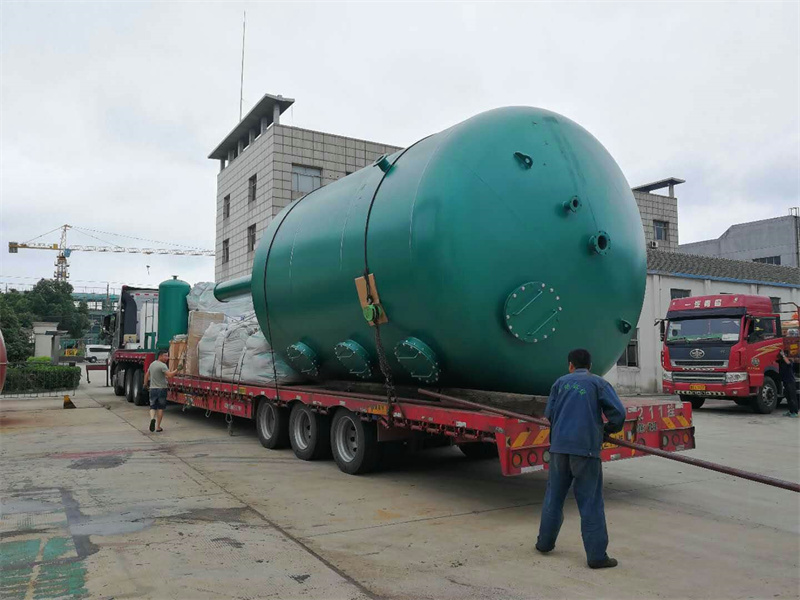
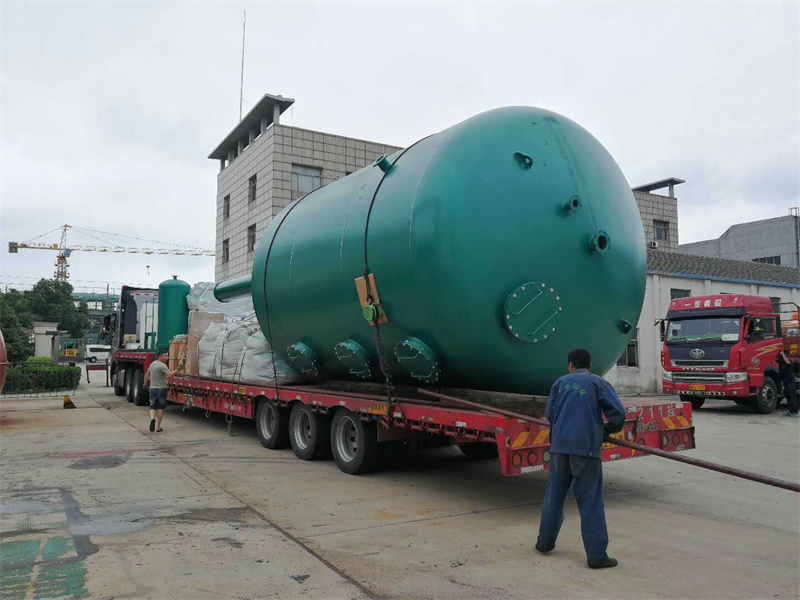
Haipuou Environmental Protection Group Co., Ltd. is specialized in undertaking sewage treatment projects, and manufacturing and selling water treatment equipment.
Our main products cover integrated sewage treatment equipment, high-efficiency cyclone purifiers, magnetic separation wastewater treatment equipment, prefabricated sewage treatment plants, smart water management platforms, sludge thickening equipment, air flotation machines, etc.
I. New Requirements Amid Industrial Transformation: Restructuring the Core Value of Sewage Equipment Manufacturers
The global market size of sewage treatment equipment exceeded 100 billion US dollars in 2025. Driven by the Dual Carbon goals and new national standards, the domestic market is undergoing a three-dimensional transformation featuring low carbonization, intelligent upgrading and resource recovery. The Standard GB 38383-2025 Limit of Energy Efficiency for Integrated Sewage Treatment Equipment stipulates that energy consumption per cubic meter of water must be cut from 0.35kW·h/m³ down to 0.26kW·h/m³, pushing manufacturers to accelerate technological upgrading.
Corporate procurement priorities have shifted from merely meeting discharge standards to cost reduction, efficiency improvement and resource recycling. For instance, a phosphorus chemical enterprise achieved a phosphorus recovery rate of 95% with customized equipment, generating 3 million RMB in annual economic benefits. Manufacturers with proprietary technology and full-cycle service capabilities have become mainstream players, while small-and-medium enterprises relying solely on low-price competition are gradually being phased out.
II. Three Core Competitive Advantages of High-quality Sewage Equipment Manufacturers
1. Low-carbon Technology System: From Emission Reduction to Economic Benefits
Leading manufacturers have built a mature low-carbon technology system to form differentiated competitiveness:
• Energy saving via process innovation: Manufacturers adopting combined partial nitrification and Anammox process can reach a total nitrogen removal rate of 92%, reduce aeration volume by 60% and lower energy consumption to 0.21kW·h per ton of water;
• Integrated self-power supply: Equipment equipped with complementary biogas power generation and solar energy systems achieved 68% energy self-sufficiency in a Hangzhou project, cutting carbon emission intensity by 41%;
• Profitable resource recovery: Phosphorus can be recycled through chemical precipitation and membrane filtration. Alternatively, sludge pyrolysis technology can produce biochar to create extra profits for enterprises.
2. Qualification & Compliance: The Admission Ticket for Bidding and Operation
After the 2025 qualification policy adjustment, compliant manufacturers need dual qualification systems covering both production and after-sales services. The core certifications are listed below:

Qualified manufacturers such as Shandong Jielute Environmental won the bidding for a renovation project of a feed enterprise in Fujian with complete qualifications. The customized equipment achieved a COD removal rate above 95%.
3. Intelligent Service Capacity: Key to Full Life-cycle Cost Control
Top manufacturers have remodeled service modes with digital technology:
• Predictive maintenance: Equipment built on the digital twin model extends the membrane cleaning cycle to 120 days, with a 97% accuracy rate of fault early warning and a 50% reduction in maintenance staff;
• Precision regulation: The aeration system with DRL algorithm saves 28% more energy than traditional systems and reduces the standard deviation of effluent water quality by 35%;
• Localized on-site support: With nationwide production bases and cloud platforms, 24-hour operation and maintenance service is available to solve the problem of delayed cross-regional support.
III. Avoid Pitfalls in Equipment Procurement in 2025: Ten Common Buying Mistakes
Wrong purchasing decisions may lead to compliance risks and cost overruns. The following traps should be strictly avoided:
1. Inadequate demand assessment: Selecting equipment without calculating wastewater flow rate and composition. For example, applying ordinary MBR equipment to high-salinity wastewater will result in treatment failure;
2. Ignoring qualification matching: Purchasing equipment without production licenses that cannot pass environmental acceptance. A Fujian enterprise once faced rectification penalties for this reason;
3. Falling for low-price traps: Low-cost equipment often uses low-efficiency motors, whose energy consumption per ton of water is 30% higher than the industry average, bringing extra annual operating costs of hundreds of thousands RMB;
4. Neglecting long-term maintenance costs: Failing to confirm membrane replacement cycles and chemical consumption in advance will lead to hidden expenses exceeding the initial investment;
5. No reserved expansion space: Equipment without upgrade room requires repurchasing after production expansion, causing repeated investment;
6. Skipping pilot tests: Launching projects without lab-scale tests leads to mismatches between processes and water quality, cutting treatment efficiency down to only 50% of expectation;
7. Poor technical compatibility: New equipment cannot connect with the original system, requiring additional renovation fees;
8. Trusting verbal promises: Without writing discharge standards and maintenance response time into contracts, enterprises will face difficulties safeguarding their rights once disputes arise;
9. Omitting operator training: Operators unfamiliar with intelligent systems cannot keep equipment running under optimal parameters;
10. Disregarding regional standards: Failing to adapt to local emission requirements. For instance, equipment without thermal insulation will suffer sharp efficiency drops in winter when used in northern cold regions.
IV. Benchmark Cases: Practical Solutions to Industry Pain Points
1. Industrial Wastewater Renovation Case
A feed enterprise in Fujian encountered illegal discharge due to equipment breakdown. It chose Shandong Jielute Environmental for a customized solution:
• A combined process of "pretreatment + biochemical treatment + advanced purification" was adopted for strongly acidic high-concentration organic wastewater;
• The equipment was equipped with an intelligent monitoring system for 24-hour automatic operation, lifting treatment capacity by 40%;
• After commissioning, the effluent consistently met discharge standards. The enterprise avoided environmental penalties and cut labor costs for operation and maintenance.
2. Municipal Low-carbon Retrofit Case
A water reclamation plant in Tianjin cooperated with a leading manufacturer and adopted the partial nitrification + Anammox process:
• Carbon source dosage was reduced by 50%, and water treatment energy consumption fell to 0.21kW·h per cubic meter;
• Combined with carbon trading, the carbon emission reduction brought extra annual income of more than one million RMB.
3. Special Scenario Adaptation Case
An underground buried unit with air-source heat pumps was selected for a project in Heilongjiang:
• The polyurethane insulation layer and spiral baffles ensured the treatment efficiency remained above 80% even at -40℃;
It achieved 35% energy saving compared with traditional heating equipment, perfectly fitting the alpine climate.
V. Conclusion: Three-step Decision-making Method for Choosing a Reliable Manufacturer
When selecting sewage equipment manufacturers, enterprises should follow the logic of "technical matching → qualification inspection → service verification". First, select low-carbon processes according to wastewater types (industrial high-salinity wastewater or domestic sewage). Second, check core documents including production licenses and pollution control evaluation certificates. Finally, verify after-sales response and intelligent operation capacity through real project cases. In 2025, cooperating with manufacturers featuring advanced productive forces has become the key path for enterprises to realize environmental compliance and green profits.
Related Products
Related News
- New Trends in the Development of the MBR Membrane Wastewater Treatment Industry: A Professional Guide to Selecting Source Manufacturers
- How to Select Wastewater Treatment Equipment for Pig Farms? In-depth Review of Trusted Industry Service Providers
- Hard-to-Treat Slaughterhouse Wastewater? Tested & Recommended High-Adaptability Wastewater Treatment Solutions for 2026
- How to Select Integrated Wastewater Treatment Equipment? In-depth Review of Trustworthy Source Manufacturers Recognized by Industry Insiders
- How to Select Buried Integrated Wastewater Treatment Equipment? Strength Evaluation of Reliable Brands in 2026
- Inventory of New Coal Mine Water Treatment Technologies! How to Select Cost-Effective Manufacturers & Avoid Common Pitfalls
- Textile Printing & Dyeing Wastewater Treatment Is Tough? These Four Powerful Enterprises Easily Solve Core Industry Pain Points
- Authoritative Evaluation of High-Salinity Wastewater Treatment Equipment | Top Recommended Brands of 2026
- Which Supplier Offers Reliable Integrated Sewage Treatment Equipment? Multi-dimensional Actual Test Comparison & Top Recommended Brands Released
- Electroplating Factory Wastewater Treatment Engineering Cases
About Us
products
Business
News
Contact Us
Service Hotline:+86-15253659088WhatsApp: +86 18706508001
Email: jly@haipuou.group
Address: No.56, Donghuan Road, Zhucheng City, Weifang City, Shandong Province, China