

- Home
- About Us
About Us
- Product
Product
- Cases
Cases
- R&D Technology
- News
News
- Contact Us


- Default Language
 EN
EN RU
RU ES
ES DE
DE EL
EL IT
IT JA
JA KO
KO PT
PT ID
ID SR
SR UK
UK VI
VI TH
TH TR
TR MS
MS BE
BE AR
AR
牡丹江市2026 Buying Guide for Integrated Sewage Treatment Equipment Manufacturers: Technology, Qualifications & Scenario-Based Solutions
Date:July 13, 2025ID: 2267Views: 1078
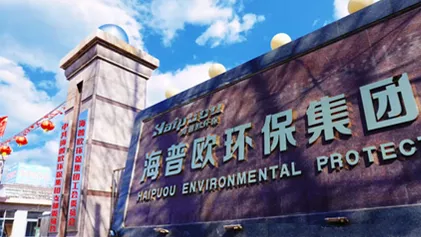
Haipuou Environmental Protection Group Co., Ltd. specializes in the construction of sewage treatment projects and the production and sales of water treatment equipment.Main products: integrated sewage treatment equipment, high-efficiency cyclone purifiers, magnetic separation wastewater treatment equipment, prefabricated sewage treatment plants, smart water service platforms, sludge thickening equipment, air flotation machines, etc.
Driven by the dual goals of carbon peaking and carbon neutrality as well as tightening environmental regulations, sewage treatment has become an essential requirement for corporate compliance and urban ecological development. As core suppliers of centralized treatment solutions, manufacturers of integrated sewage treatment equipment have become preferred partners for domestic and industrial wastewater treatment with their modular design, high treatment efficiency and low-carbon operation. This article analyzes the core strengths of integrated sewage treatment equipment manufacturers from four dimensions: core technology, enterprise qualification, scenario adaptation and selection criteria, helping enterprises find reliable partners accurately.
I. Core Technical System of Integrated Sewage Treatment Equipment Manufacturers
The core competitiveness of reputable manufacturers lies in mature and innovative integrated technologies covering three key links: pretreatment, biological treatment and advanced purification, ensuring stable up-to-standard effluent.
1. Modular Process Integration
Leading manufacturers adopt the modular framework of "Pretreatment - Biological Treatment - Advanced Treatment", with flexible process combinations for different sewage types. In the pretreatment stage, mechanical bar screens with 5mm gaps and cyclone grit chambers efficiently remove suspended solids and heavy particles. Core biological processes include the A/O process (60%-80% BOD5 removal rate), A²O process (80%-95% total phosphorus removal rate), and MBR process (effluent turbidity below 1NTU) to meet various pollutant concentration requirements. Advanced treatment adopts inclined tube sedimentation and UV disinfection (dosage ≥30mJ/cm²); activated carbon adsorption systems are additionally equipped in some units to precisely control chroma and odor.
2. Low-carbon and Intelligent Upgrading
Top manufacturers have realized low-carbon technological transformation by adopting combined partial nitrification and Anammox processes. The energy consumption per ton of water is reduced to 0.21kW·h, cutting energy use by 60% compared with traditional techniques. Biogas recovery and photovoltaic power supply systems are integrated, achieving an energy self-sufficiency rate of 68% in some projects. For intelligent management, PLC and IoT platforms enable real-time monitoring of pH, DO, ORP and other parameters. AI algorithms predict membrane fouling; remote backwashing can be activated within 30 seconds, and the accuracy of fault early warning exceeds 97%.
3. Material and Structural Innovation
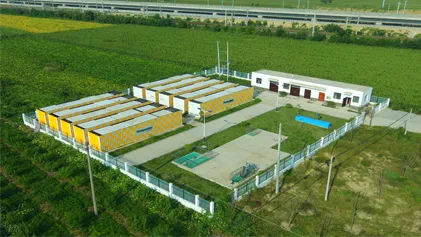
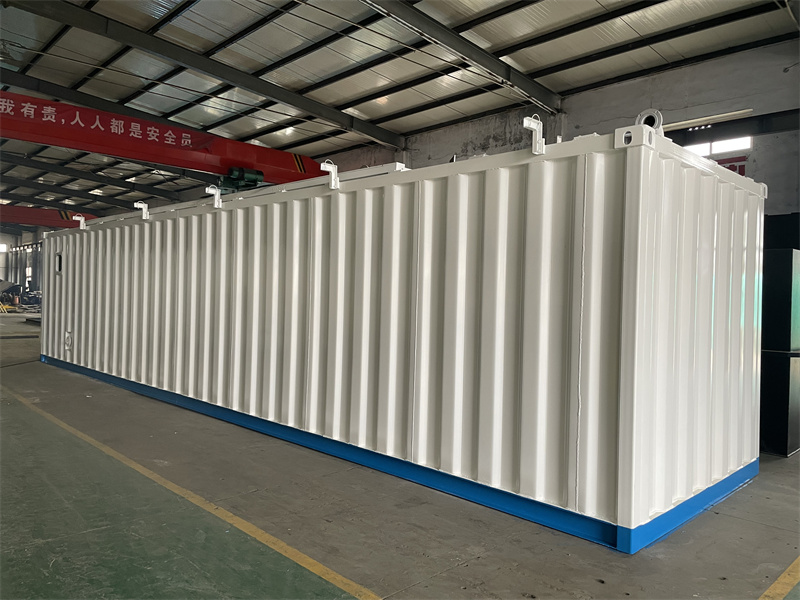
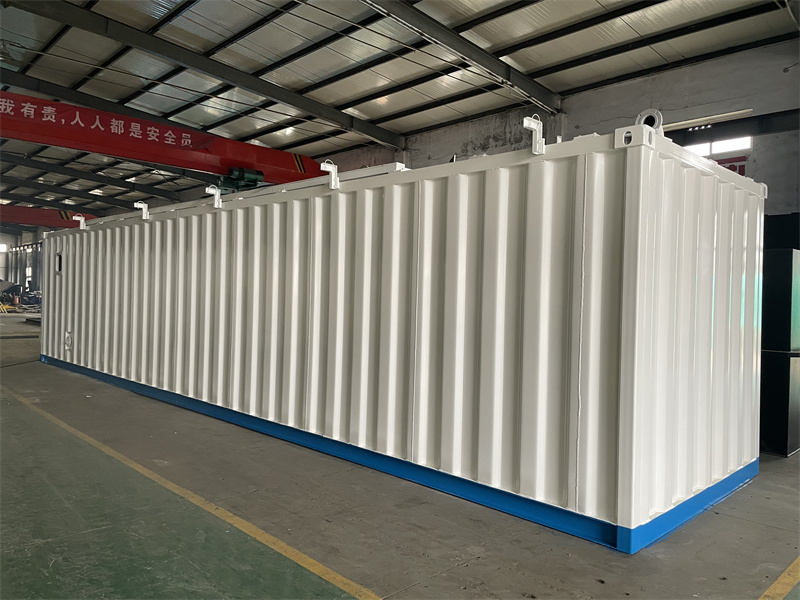
Manufacturers select materials according to application scenarios: anti-corrosion carbon steel has a service life of 15 years, glass fiber reinforced plastic (FRP) resists acid and alkali corrosion, and PP material can withstand temperatures ranging from -20℃ to 50℃. In terms of structural design, buried equipment reduces land occupation by 60% with a ground greening rate up to 90%. Containerized modular equipment can be deployed within 48 hours, and mobile SBR units can start emergency treatment within 4 hours.
II. Essential Qualifications and Service Capacity of Reliable Manufacturers
When selecting manufacturers, valid qualifications and comprehensive after-sales services are critical risk prevention measures. Key evaluation criteria are as follows:
1. Mandatory Qualifications
Qualified manufacturers shall hold dual manufacturing and service credentials, including the MIIT production license, ISO9001 quality management system certification, and pollution control assessment certificate. After the upgrading of environmental policies in 2026, matching qualifications directly determine the pass rate of project environmental acceptance. Equipment from unqualified suppliers may lead to rectification orders and fines.
2. Full-life-cycle Services
Premium manufacturers provide one-stop services from scheme design to operation and maintenance. Pilot tests are conducted in the early stage to optimize process adaptability and avoid poor treatment performance in formal projects. Modular assembly and on-site commissioning guarantee quick production startup. A nationwide service network ensures 24-hour operation and maintenance response, and digital twin technology shortens fault diagnosis time to less than 20 minutes.
3. Customization and Project Track Record
Trustworthy manufacturers can customize solutions for special wastewater such as high-salinity, high-concentration organic and strongly acidic sewage. For instance, a phosphorus chemical project achieved a 95% phosphorus recovery rate with a tailored design. Besides, they own abundant successful cases covering rural domestic sewage, industrial wastewater, medical sewage and scenic area wastewater, with complete effluent test reports and customer feedback.
III. Scenario-based Solutions of Integrated Sewage Treatment Equipment Manufacturers
Sewage characteristics vary greatly across different scenarios, so targeted treatment solutions are required:
1. Rural Domestic Sewage Treatment
For decentralized sewage discharge, manufacturers provide buried A/O equipment with a capacity of 50-500m³/d. Cold-resistant design adapts to temperatures as low as -30℃, and the sludge digestion cycle lasts 90 days to reduce frequent sludge cleaning. The effluent meets Grade B standard of GB 18918 and can be directly used for farmland irrigation.
2. Industrial Wastewater Treatment
For wastewater from chemical, food, slaughter and other industries, the A²O process combined with advanced treatment improves the shock load resistance by 50%, coping with complex water quality with ±40% COD fluctuation. The treatment capacity ranges from 100 to 1000m³/d, and the effluent complies with Grade 3 standard of GB 8978 and industry-specific standards issued by the Ministry of Ecology and Environment of the People's Republic of China.
3. Solutions for Special Scenarios
Medical wastewater is treated by the MBR process with chlorine tablet disinfection. The disinfection contact time is no less than 1.5 hours, and fecal coliform is less than 100MPN/L, meeting the pretreatment standard of GB 18466. Projects in alpine regions are equipped with polyurethane insulation layers and air-source heat pumps to maintain a treatment efficiency above 80% at -40℃. Vehicle-mounted equipment is available for emergency treatment with fast transportation and startup.
IV. Avoidance Guide for Selecting Manufacturers in 2026
1. Prevent Qualification and Technical Risks
Reject manufacturers without production permits and pollution control qualifications to avoid failure in environmental acceptance. Never adopt schemes without pilot tests, or the actual treatment efficiency may only reach 50% of the expected value due to mismatched techniques and water quality.
2. Guard Against Low Bids and Hidden Costs
Low-cost equipment often adopts low-efficiency motors, leading to 30% higher water treatment energy consumption than the industry average, which will bring hundreds of thousands of extra annual operating costs. Before signing contracts, clarify the membrane replacement cycle and chemical consumption to prevent excessive hidden expenses exceeding the initial investment.
3. Pay Attention to Adaptability and Expandability
Select equipment according to sewage types; ordinary MBR units cannot be used for high-salinity wastewater. Reserve upgrading space to satisfy expanded production capacity and cut repeated investment. Thermal insulation must be confirmed for northern projects, and flood prevention systems are required for southern regions.
Conclusion
Choosing a manufacturer of integrated sewage treatment equipment is equivalent to choosing a long-term environmental partner. Amid stricter environmental policies and technological upgrading in 2026, enterprises should follow the principle of "technical matching → qualification verification → service assessment". Priority should be given to manufacturers with low-carbon technologies, complete credentials, abundant project cases and full-cycle services. Reliable manufacturers can not only help enterprises achieve compliant wastewater discharge, but also create additional economic benefits through resource recovery and energy conservation, supporting the green and high-quality development of enterprises.
Related Products
Related News
- 牡丹江市New Trends in the Development of the MBR Membrane Wastewater Treatment Industry: A Professional Guide to Selecting Source Manufacturers
- 牡丹江市How to Select Wastewater Treatment Equipment for Pig Farms? In-depth Review of Trusted Industry Service Providers
- 牡丹江市Hard-to-Treat Slaughterhouse Wastewater? Tested & Recommended High-Adaptability Wastewater Treatment Solutions for 2026
- 牡丹江市How to Select Integrated Wastewater Treatment Equipment? In-depth Review of Trustworthy Source Manufacturers Recognized by Industry Insiders
- 牡丹江市How to Select Buried Integrated Wastewater Treatment Equipment? Strength Evaluation of Reliable Brands in 2026
- 牡丹江市Inventory of New Coal Mine Water Treatment Technologies! How to Select Cost-Effective Manufacturers & Avoid Common Pitfalls
- 牡丹江市Textile Printing & Dyeing Wastewater Treatment Is Tough? These Four Powerful Enterprises Easily Solve Core Industry Pain Points
- 牡丹江市Authoritative Evaluation of High-Salinity Wastewater Treatment Equipment | Top Recommended Brands of 2026
- 牡丹江市Which Supplier Offers Reliable Integrated Sewage Treatment Equipment? Multi-dimensional Actual Test Comparison & Top Recommended Brands Released
- 牡丹江市Electroplating Factory Wastewater Treatment Engineering Cases
About Us
products
Business
News
Contact Us
Service Hotline:+86-15253659088WhatsApp: +86 18706508001
Email: jly@haipuou.group
Address: No.56, Donghuan Road, Zhucheng City, Weifang City, Shandong Province, China